
Latest News
B-52 bombers ‘arrived in region’ as withdrawal process begins: Kirby

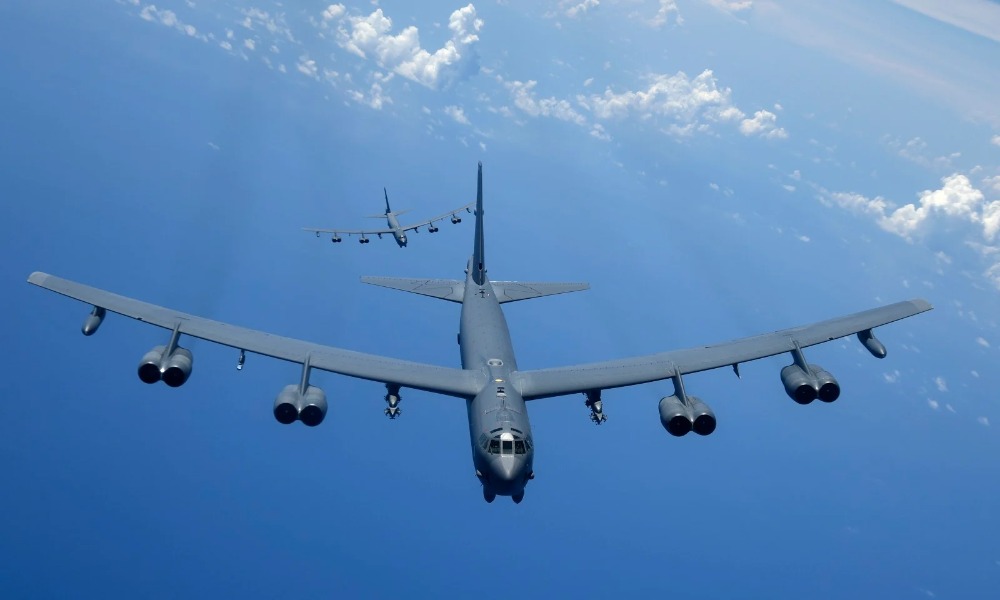
US Defense Department spokesman John Kirby said on Friday that measures are being taken to safeguard US troops while they withdraw from Afghanistan and that already two B-52 bombers have arrived in the region for this purpose.
The Pentagon has also approved the deployment of hundreds of maritime, air and land forces to the region to ensure security for American and NATO forces as well as contractors as they withdraw, officials meanwhile told CNN.
According to Kirby, Secretary of Defense Lloyd Austin approved the extension of the USS Eisenhower aircraft carrier’s mission to “remain in the Central Command area of responsibility for a period of time,” and approved “the addition of some long-range bombers” to the region in preparation for US troops to withdraw from Afghanistan.
Two B-52 bombers have arrived in the region already, Kirby said.
“I think it’s reasonable to assume as I’ve said before that there could be temporary additional force protection measures and enablers that we would require to make sure again that this drawdown goes smoothly and safely,” Kirby said during his Friday press briefing.
Officials meanwhile told CNN that the immediate focus is on continuing to ship out unneeded equipment and supplies that are either not being destroyed in place or transferred to Afghan forces.
“Obsolete” equipment will be destroyed, the official said adding that the movement of personnel out of Afghanistan will still not begin “for a few weeks,” and that the US will “retain our ability to defend the force and provide support” to Afghan units.
CNN reported that several hundred ground troops will also be sent to Afghanistan to provide “force protection” for troops leaving the nation. Under the Defense Department approval, no more than 1,000 ground forces will be sent.
According to CNN, there is particular concern about the safety of troops as they leave more remote locations around Kandahar, Jalalabad, and some special operations force locations in eastern Afghanistan.
Currently, there are 2,500 US conventional forces in Afghanistan plus hundreds of additional special operations forces that are not publicly acknowledged.
CNN reported that the military also plans to maintain combat air patrols over Afghanistan throughout the withdrawal to maintain security.
Several defense officials told CNN that informally there will be an effort to conduct as much of the withdrawal as possible before the September 11 deadline set by US President Joe Biden.












Kazakhstan’s Foreign Minister Mukhtar Tileuberdi has called for pragmatic and coordinated international engagement with Afghanistan, saying the country’s long-term stability is closely linked to the security and sustainable development of Central Asia.
Speaking during the general debate of the 81st session of the United Nations General Assembly in New York on Friday, Tileuberdi said humanitarian assistance to Afghanistan remains essential but alone cannot break the cycle of poverty, displacement and dependency.
He said Kazakhstan supports a “pragmatic, coordinated and step-by-step” approach to international engagement with Afghanistan, with the United Nations playing a central role.
Tileuberdi also said Kazakhstan is working with the UN to operationalize the United Nations Regional Centre for the Sustainable Development Goals for Central Asia and Afghanistan in Almaty.
He said the success of the centre should be measured by the results and assistance it delivers to the region.


Abu Muslim Farah defeat Khurasan Faryab 2-0 in ACL season six

Saar: Concerns over Pakistan’s political crisis discussed

Afghanistan Champions League: Omar Zawak Herat beat Toofan Herat 1-0

Blast in Pakistan’s Dera Ismail Khan kills 11, injures 30

Ariana Afghan Airlines increases Kabul-Delhi cargo flights

Saudi energy group signs major Afghanistan deals covering gas exploration and pipeline plans

Trump floats idea of renaming Atlantic or Pacific Ocean

US hits Egyptian bank branches with Iran sanctions as war marks six months

Nepal flood rescue mission enters critical phase as thousands remain missing

Iranian clubs to face Gulf opponents at neutral venues in Asian Champions League Elite
Saar: Concerns over Pakistan’s political crisis discussed

Exclusive interview with Abdul Latif Mansoor, Minister of MRRD

Tawsia: Overview of Afghanistan’s iron mines

Tahawol: Discussion on fresh Pakistani airstrikes on Afghanistan

Saar: Calls for international support for Afghanistan discussed
-

 World5 days ago
CNN, MS NOW and Politico sue Trump, challenging White House ban
-

 Latest News3 days ago
Ariana Afghan Airlines ranks seventh among 45 Central Asian airlines
-

 Latest News5 days ago
UN reiterates call for respect for international law after Kunar airstrikes
-

 Regional4 days ago
US and Iran hold first talks since June after Trump’s ‘annihilation’ threat
-

 Latest News3 days ago
Silk Road highway in Wakhan corridor now reaches the China border
-

 Latest News5 days ago
Afghan Official: Pakistan’s airstrikes will not go unanswered
-
 Regional5 days ago
G7 foreign ministers call on Iran to stop arming Houthis
-

 Regional3 days ago
Iran airlines cancel flights as US sanctions hit