
Latest News
Biden extends US national emergency over humanitarian crisis in Afghanistan
On February 11, 2022, Biden declared a national emergency to deal with Afghanistan’s “unusual and extraordinary threat to the national security and foreign policy of the United States”

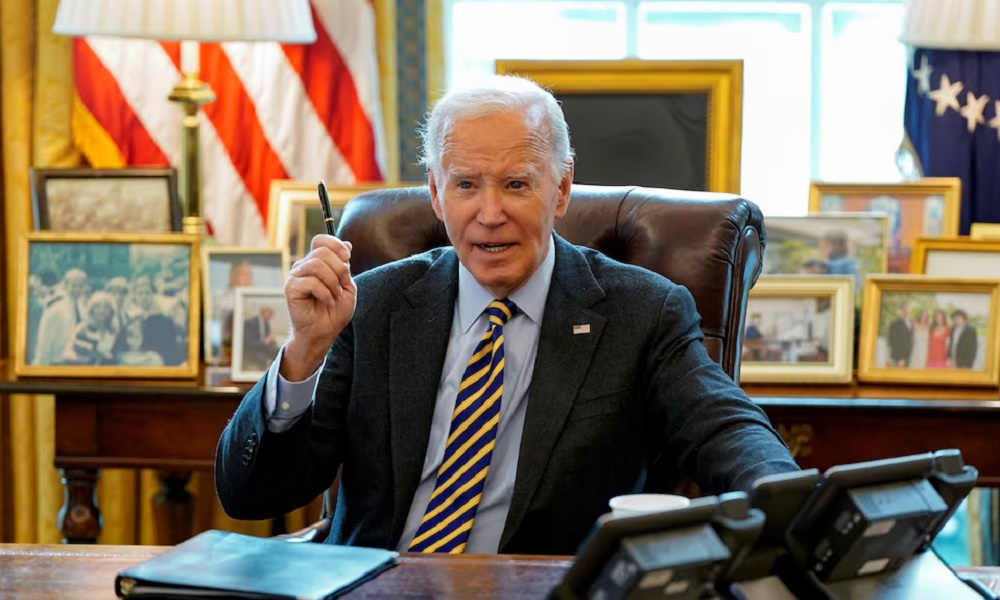
US President Joe Biden has extended for one more year the national emergency declared in his executive order with respect to the widespread humanitarian crisis in Afghanistan and the “potential for deepening economic collapse” in the country.
On February 11, 2022, Biden by an executive order declared a national emergency to deal with the “unusual and extraordinary threat to the national security and foreign policy of the United States” constituted by the widespread humanitarian crisis in Afghanistan and the potential for a deepening economic collapse in the country, the White House said.
“The widespread humanitarian crisis in Afghanistan — including the urgent needs of the people of Afghanistan for food security, livelihoods support, water, sanitation, health, hygiene, and shelter and settlement assistance, among other basic human needs — and the potential for a deepening economic collapse in Afghanistan continue to pose an unusual and extraordinary threat to the national security and foreign policy of the United States,” White House said in a notice to the Congress released on January 15.
“In addition, the preservation of certain property of Da Afghanistan Bank (DAB) held in the United States by United States financial institutions is of the utmost importance to addressing this national emergency and the welfare of the people of Afghanistan,” the notice said.
“Various parties, including representatives of victims of terrorism, have asserted legal claims against certain property of DAB or indicated in public court filings an intent to make such claims. This property is blocked under Executive Order 14064.”






Latest News
Tajik foreign minister urges international community to help Afghanistan address its challenges
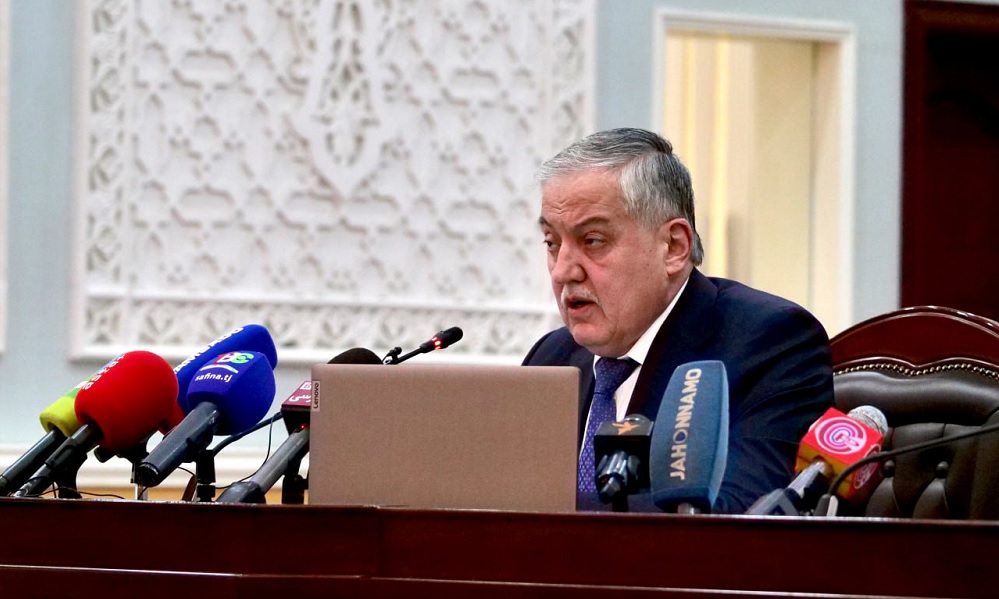
Tajikistan’s Minister of Foreign Affairs, Sirodjiddin Mukhriddin, has called on the international community to step up assistance for Afghanistan as the country continues to face challenges.
Speaking at a press conference, Mukhriddin said Tajikistan and Afghanistan maintain active coordination between their law enforcement agencies to prevent security incidents along their shared border. He noted that this cooperation remains essential, as the frequency of armed attacks and criminal activity in border regions has increased in recent months.
He said that Afghan authorities had assured Tajikistan they would take necessary measures to stop further incidents and would conduct thorough investigations into any violations.
Mukhriddin emphasized that Tajikistan supports constructive international engagement aimed at improving Afghanistan’s socio-economic conditions. He highlighted that Tajikistan has provided more than 6,000 tons of humanitarian aid to Afghanistan, including food and essential supplies delivered in 2025 to assist communities affected by devastating earthquakes.
The minister also pointed to growing economic cooperation between the two neighbors. Tajikistan has reopened border markets and continues to supply electricity to Afghanistan.
Tajikistan and Afghanistan share a border of more than 1,300 kilometers—over 1,100 km of which consists of waterways and about 190 km of land boundaries.
Meanwhile, Zafar Samad Director of the Drug Control Agency under the President of the Republic of Tajikistan, has said that last year, 17 incidents of clashes happened with drug smugglers along the border with Afghanistan. As a result, two Tajik forces and 10 Afghan nationals have been killed, he added.
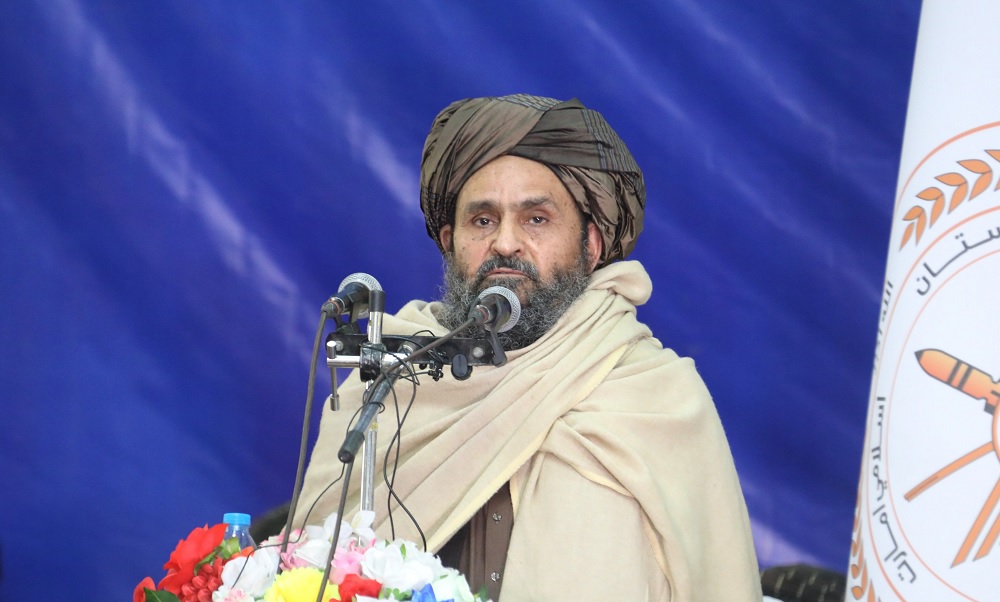
Mullah Abdul Ghani Baradar, Deputy Prime Minister for Economic Affairs, warned during a graduation ceremony for soldiers of the Ministry of National Defense that the Islamic Emirate will respond decisively to anyone with ill intentions toward Afghanistan.
He said the country is “not an easy target, but a bitter tree that has made the throats of empires bitter and newborns can never digest.”
Baradar also announced that in the coming days, the Islamic Emirate will introduce tax exemptions of one to five years for domestic and foreign investors, based on the level of investment in new sectors. He also said that the process of distribution of land to manufacturers will be accelerated.
Baradar called on countries to engage in political and economic relations according to the values and principles of the Islamic Emirate, emphasizing that energy and resources spent on conflict would be better used to support one another and strengthen common interests.
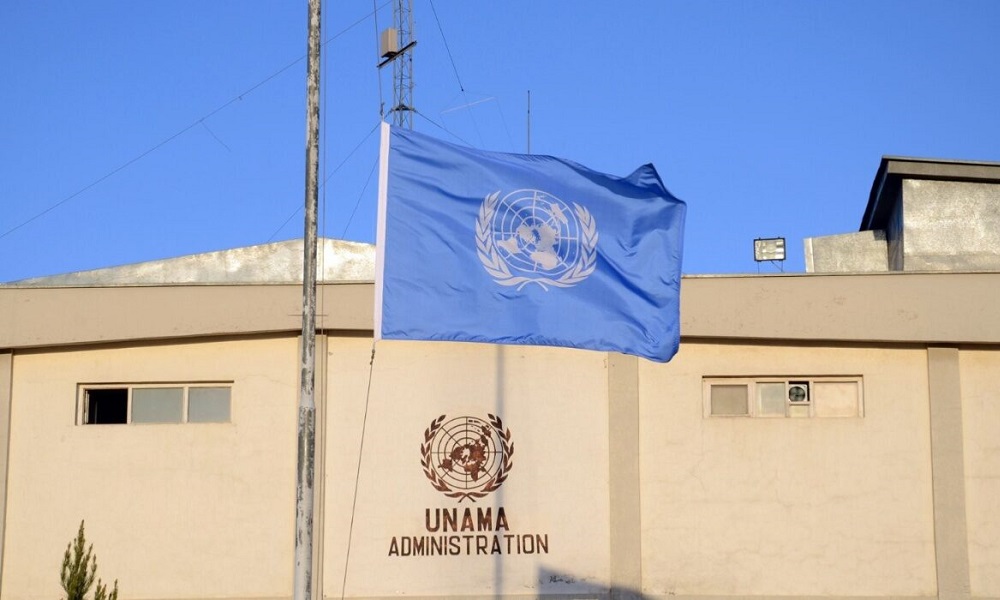
The United Nations Assistance Mission in Afghanistan (UNAMA), in its latest report on the human rights situation in Afghanistan, stated that 14 members of the former Afghan government forces were killed in the last three months of 2025.
The report noted that during this period, there were 28 cases of arbitrary arrest and detention, and at least seven cases of torture and ill-treatment targeting officials and personnel of the former Afghan government.
According to the report, some of the officials and forces who had recently returned to Afghanistan from Iran and Pakistan were among those subjected to extrajudicial killings, arbitrary arrests, and detentions.
The report also highlighted restrictions on women’s work and movement, executions and flogging of individuals, and disruptions to internet and telecommunications services.


Hong Kong tycoon Jimmy Lai sentenced to 20 years in jail in national security trial

Saar: Afghanistan’s relations and opportunities with regional countries

Winter Olympics gain momentum as medal table takes shape

Tajik foreign minister urges international community to help Afghanistan address its challenges

Baradar: Afghanistan is not an easy target, but a ‘bitter tree’

ICG report says Pakistan most impacted by IEA’s return in Afghanistan

Afghanistan–China joint market opens in Kabul

Pakistan approves re-export of stranded Afghan transit trade cargo

ATN secures broadcast rights to Carabao Cup semis across Afghanistan

Pakistan army orders evacuation of Tirah Valley, fears of mass displacement grow
Saar: Afghanistan’s relations and opportunities with regional countries

Tahawol: Kabul’s response to Pakistan’s new accusation discussed

Saar: Discussion on Iran-US talks in Oman

Tawsia: Afghanistan’s interest in buying Russian oil and gas

Tahawol: IEA calls UNSC’s Daesh concerns baseless
-

 Sport5 days ago
Hosts and heavyweights advance as AFC Futsal Asian Cup reaches semifinals
-
 Latest News4 days ago
Terrorist threat in Afghanistan must be taken seriously, China tells UNSC
-
 Latest News5 days ago
Uzbekistan, Pakistan advance Trans-Afghan railway project
-
 Latest News2 days ago
Afghanistan to grant one- to ten-year residency to foreign investors
-

 Sport5 days ago
Winter Olympics finally underway, ATN to broadcast exclusively across Afghanistan
-

 Sport5 days ago
Afghanistan beat West Indies in final T20 WC warm-up match
-

 Sport3 days ago
Indonesia shock Japan to reach historic AFC Futsal Asian Cup final
-
 Regional5 days ago
Pakistan sends helicopters, drones to end desert standoff; 58 dead