
Regional
China launches military drills around Taiwan, calls its president a ‘parasite’

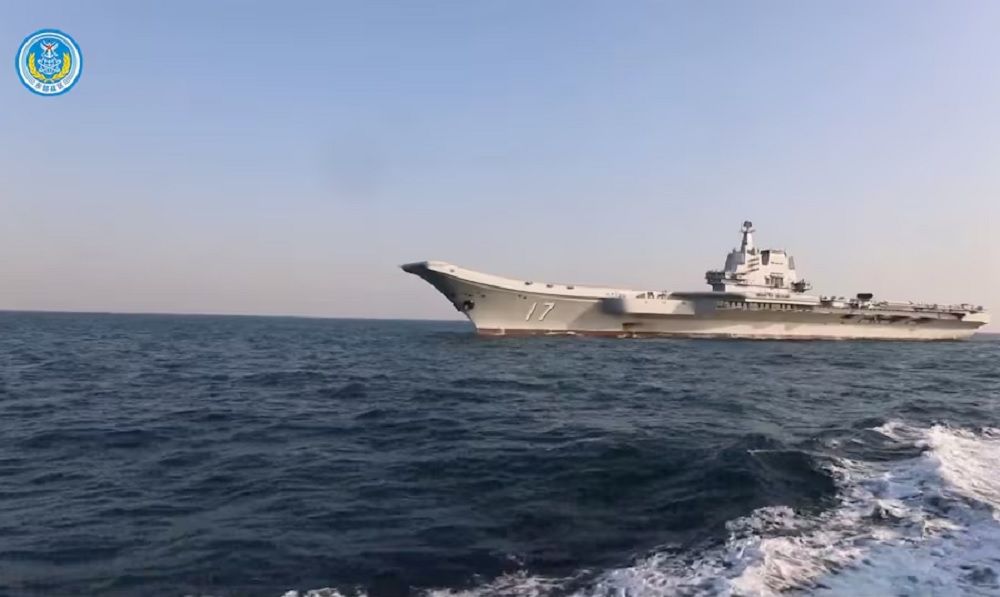
China began joint army, navy and rocket force exercises around Taiwan on Tuesday as a “stern warning” against separatism and called Taiwanese President Lai Ching-te a “parasite”, as Taiwan sent warships to respond to China’s navy approaching its coast.
The exercises around the democratically governed island, which China views as its own territory and has never renounced the use of force to bring under its control, come after Lai called Beijing a “foreign hostile force” last month, Reuters reported.
China detests Lai as a “separatist,” and in a video accompanying the Eastern Theatre Command’s announcement of the drills depicted him as cartoon bug held by a pair of chopsticks above a burning Taiwan, calling him in English a “parasite”.
“The focus is on exercises such as combat readiness patrols at sea and in the air, seizing comprehensive control, striking maritime and land targets, and imposing blockade controls on key areas and routes,” the Eastern Theatre Command said in a statement.
Taiwan’s government condemned the drills, with the presidential office saying China was “widely recognised by the international community as a troublemaker” and that the government has the confidence and ability to defend itself.
Taiwan’s government rejects Beijing’s sovereignty claims, saying only the island’s people can decide their future.
Two senior Taiwan officials told Reuters that more than 10 Chinese military ships had approached close to Taiwan’s 24 nautical mile (44 km) contiguous zone and Taiwan sent its own warships to respond.
However, Taiwan has not detected any live fire by the Chinese military, one of the officials said.
TAIWAN DISPATCHES WARSHIPS
Taiwan’s Defence Ministry said in a statement that China’s Shandong aircraft carrier group had entered the island’s response area on Monday, adding that it had dispatched military aircraft and ships and activated land-based missile systems in response.
The drills took place after U.S. Defense Secretary Pete Hegseth left the region following visits to Japan and the Philippines, where he criticised China and said Japan was “indispensable” for tackling Chinese aggression.
A senior Taiwan security official told Reuters, citing internal assessments, that Beijing needed to avoid any “perceived confrontation” with Washington prior to the U.S.-China trade talks, and thus Taiwan has become a pretext.
“Taiwan is their best excuse. That’s why they chose to launch such military drills as soon as the U.S. defence secretary left Asia,” the official said.
The de facto U.S. embassy, the American Institute in Taiwan, said the United States will continue to support the island.
“Once again, China has shown that it is not a responsible actor and has no problem putting the region’s security and prosperity at risk,” a spokesperson said in a statement.
“CLOSING IN”
China’s military released a series of propaganda videos in quick succession after the drill announcement, depicting Chinese warships and fighter jets encircling Taiwan, Taipei being aimed at from above, and military vehicles patrolling city streets.
A video of a poster accompanying the drills titled “Closing In,” and showing Chinese forces surrounding the island, was released on the Eastern Theatre Command’s Weibo.
This was followed by a video titled “Shell”, depicting president Lai as a green cartoon bug spawning parasites across the island, on the Eastern Theatre Command’s WeChat page.
“Parasite poisoning Taiwan island. Parasite hollowing Island out. Parasite courting ultimate destruction,” the animation said.
Taiwan Defence Minister Wellington Koo said such rhetoric was not conducive to peace and “shows their provocative character,” when asked about Lai’s cartoon depiction.
A third video, “Subdue Demons and Vanquish Evils”, featured Sun Wukong, the magical monkey king from the Ming Dynasty epic “Journey to the West” as he is depicted in the “Black Myth: Wukong” hit video game.
It opens with the video’s title flashing across the screen and the Chinese mythical warrior riding on clouds before cutting to footage of Chinese fighter jets.
“The joint exercise and training conducted by the Eastern Theatre of the Chinese People’s Liberation Army (PLA) in the vicinity of Taiwan Island is a resolute punishment for the Lai Ching-Te authorities’ rampant ‘independence’ provocations,” said Zhu Fenglian, a spokesperson for China’s Taiwan Affairs Office.
Taiwan’s Koo told reporters the PLA should focus first on resolving its issues with corruption instead of destroying peace and stability in the region.
China’s military has undergone a sweeping anti-corruption purge over the past few years, which saw former Chinese Defence Minister Li Shangfu ousted in October 2024.
China’s defence ministry did not immediately respond to a request for comment on Koo’s remarks.
The Taiwan security source, citing internal intelligence assessments, said China was trying to busy its military with exercises as a way of distracting and stopping its soldiers from discussing the corruption crackdown amongst themselves on base.
China’s coast guard said it was also taking part in the drills, saying it was simulating “inspection and capture, interception and detention operations against unwarranted vessels” to show its exercise of “legitimate jurisdiction” over Taiwan.
The Global Times, which is owned by the People’s Daily newspaper of the governing Chinese Communist Party, said the drill had not been given a code name to show that Chinese military forces surrounding the island “has become a normal practice,” citing Zhang Chi of National Defence University.
“Through a series of exercises held in the Taiwan Strait in recent years, the PLA has strongly enhanced its ability to prepare for war and fight battles,” the article on the paper’s Weixin social media page added.
China has staged several rounds of war games around Taiwan since then-U.S. House Speaker Nancy Pelosi visited Taipei in 2022.




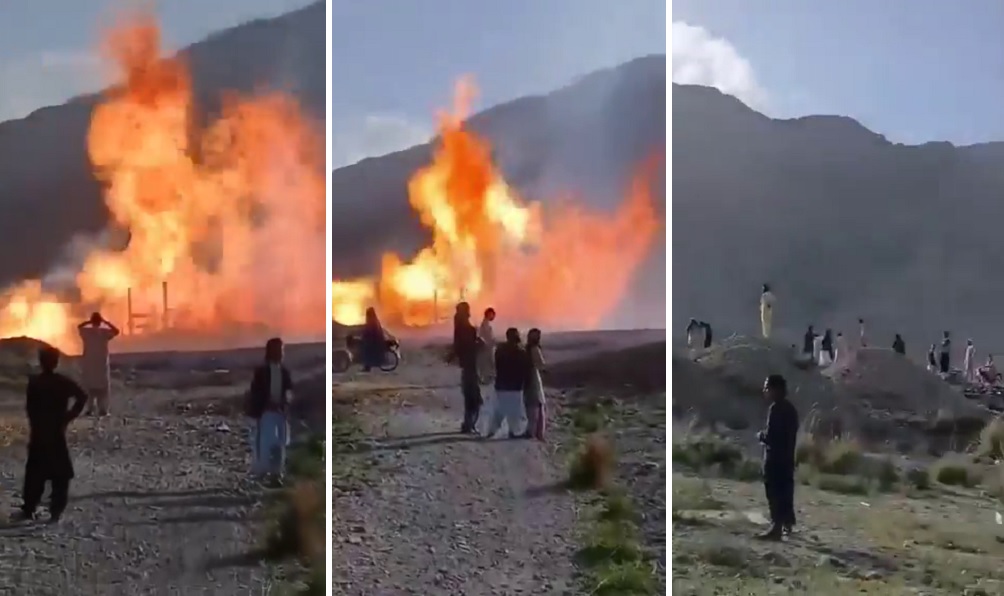
A natural gas pipeline was blown up in southern Pakistan on Monday, suspending supply to several districts, an official said.
No one has claimed responsibility for the attack.
An 18-inch-diameter main gas supply pipeline was blown up by unknown people on the outskirts of Quetta city, the capital of restive Balochistan province, a spokesman for Sui Southern Gas Company said, Reuters reported.
It suspended gas supply to several parts of the city and at least five more districts, he said.
Separatist insurgents and militants operate in the region.
The separatists have long been fighting against the state, targeting the government and military, and blame the central government in Islamabad for depriving the locals of what they say is their due share in the region’s mineral-rich resources.
Engineers were working to repair the pipeline, the SSGC spokesman said.
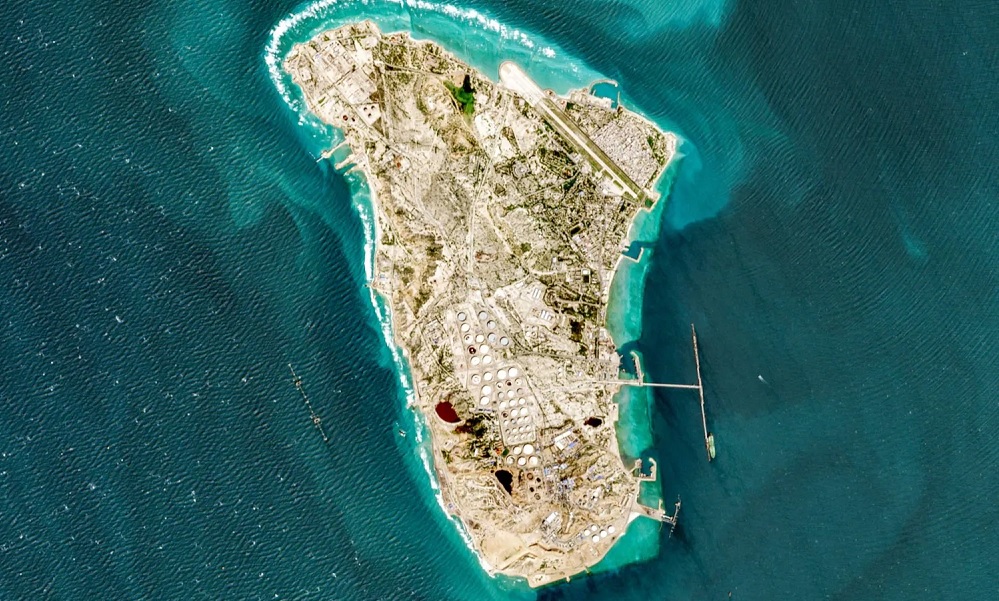
A small but strategically critical island in the Persian Gulf has emerged as a potential flashpoint in escalating tensions between the United States and Iran, with analysts warning that any attempt to seize it could have far-reaching economic and military consequences.
Kharg Island, which accounts for the vast majority of Iran’s oil exports, has reportedly been discussed within US policy circles as a possible target. The island, located about 26 km Iran’s coast near the Strait of Hormuz, plays a central role in the country’s energy trade and government revenue, Reuters reported.
According to reports, US President Donald Trump has deployed thousands of US troops to the Middle East, while leaving open the possibility of a ground operation. In recent remarks, he suggested that control of Iran’s oil infrastructure could form part of Washington’s strategy, even as diplomatic efforts are publicly emphasised.
Military analysts say that while US forces could potentially capture the island quickly, holding it would be significantly more difficult and could prolong the conflict.
Former US Central Command chief Joseph Votel noted that although a relatively small force might secure the island initially, sustaining operations would require extensive logistical support and expose troops to considerable risk.
Iran has reportedly reinforced defences on Kharg Island, deploying additional air defence systems and laying mines in surrounding waters. Officials in Tehran have also issued strong warnings, with senior figures threatening severe retaliation if US ground forces attempt to land.
Iran’s Speaker of Parliament Mohammad Bagher Ghalibaf said recently Iran was prepared for such a scenario, accusing the US of signalling negotiations publicly while preparing for military escalation behind the scenes.
Regional allies have also expressed concern, cautioning that any ground invasion could trigger wider retaliation across the Gulf, potentially targeting energy infrastructure and civilian sites.
Despite speculation, the White House has maintained that no decision has been taken to deploy ground troops, stressing that all options remain under consideration.
Experts say however that seizing Kharg Island could effectively cut off Iran’s primary source of income, dealing a severe blow to its economy. However, they warn that such a move could also destabilise global energy markets and escalate the conflict further.
The situation is compounded by disruptions in the Strait of Hormuz, where shipping traffic has slowed significantly amid rising tensions. Analysts caution that prolonged disruption could have serious implications for global supply chains and oil prices.
While some policymakers view control of the island as a potential bargaining chip in future negotiations, others argue it could entrench a prolonged standoff, with Iran retaining control over production while the US controls export routes.
Energy and foreign policy experts warn that any attempt to seize the island would likely send shockwaves through global markets and risk drawing the region into a broader and more sustained conflict.
Regional
Pakistan hosts regional powers for Iran talks, with focus on Hormuz proposals
Dar said all sides had expressed confidence in Pakistan’s role, adding that China “fully supports” the initiative.
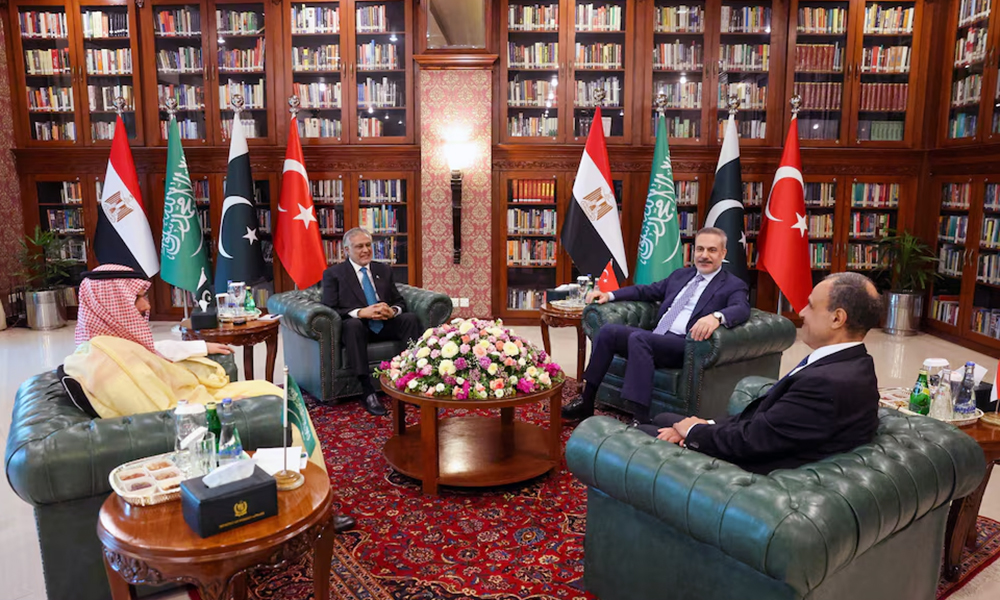
Pakistan hosted talks with Turkey, Egypt and Saudi Arabia on Sunday as part of its efforts to broker an end to the Iran war, with initial discussions focused on proposals to reopen the Strait of Hormuz to shipping, sources familiar with the matter said.
At the end of the first day of talks in Islamabad, Pakistan’s Foreign Minister Ishaq Dar said foreign ministers from the regional powers had discussed “possible ways to bring an early and permanent end to the war in the region,” and had been briefed on potential U.S.-Iran talks in Islamabad, Reuters reported.
The talks were held as Iran warned the U.S. against launching a ground attack and global oil prices surged amid continued fighting between Iran, the U.S. and Israel.
The countries meeting in Pakistan have floated proposals to Washington tied to maritime traffic in the Gulf, five sources familiar with the matter told Reuters, as part of wider efforts to stabilise shipping flows.
The Strait of Hormuz was previously a conduit for about a fifth of global oil and liquefied natural gas supplies, but Iran has effectively halted shipping flows through it in response to the U.S. and Israeli air strikes that began a month ago.
Dar said all sides had expressed confidence in Pakistan’s role, adding that China “fully supports” the initiative.
Pakistan, which like Turkey borders Iran, has leveraged its close ties to both Tehran and Washington to emerge as a key diplomatic channel in the conflict, while Ankara and Cairo have also played a role.
A source from Pakistan said proposals, including from Egypt, had been forwarded to the White House before Sunday’s meeting and that they included Suez Canal-style fee structures.
Two other Pakistani sources said Turkey, Egypt and Saudi Arabia could form a consortium to manage oil flows through the waterway, and had asked Pakistan to participate. The first Pakistani source said Islamabad had not been formally asked to join and maintains that it will not, read the report.
The proposal for a management consortium had been discussed with the U.S. and Iran, the sources said. The first Pakistani source said the country’s army chief Asim Munir had been in regular contact with U.S. Vice President JD Vance.
Egypt’s and Pakistan’s foreign ministries did not respond to a request for comment on the reported proposals. The Saudi government media office and the White House did not immediately reply to a comment request.
A Turkish diplomatic source said Ankara’s priority was securing a ceasefire.
“Ensuring the safe passage of ships could serve as an important confidence-building measure in this regard,” the source said, requesting anonymity.
Earlier on Sunday, Dar held separate one-on-one meetings with his Turkish and Egyptian counterparts, his office said.
He said in a post on X that Iran had agreed to allow 20 more Pakistani-flagged ships through the Strait of Hormuz.


ATN secures broadcast rights for inaugural Afghanistan Wrestling Premier League

UN report: Human rights situation in Afghanistan ‘deteriorating dramatically’

Russia backs Uzbekistan–Afghanistan trade hub, praises regional economic cooperation

Islamic Relief Worldwide urges Afghanistan–Pakistan de-escalation, calls for aid to displaced

Trump tells aides he is willing to end Iran war without reopening Hormuz, WSJ reports

Prominent Muslim scholar issues fatwa calling for Afghanistan-Pakistan ceasefire

Afghan air force strikes key Pakistani military installations in retaliatory operation

IEA Supreme Leader issues Eid-ul-Fitr message urging unity and support for Islamic system

14 Pakistani soldiers killed after military post falls along Durand line: MoD

Ronaldo’s private jet flies out of Saudi Arabia following US Embassy drone strike in Riyadh

Tahawol: Pakistani military shelling in Kunar

Saar: Impact of Middle East conflict on Afghanistan

Tahawol: Efforts for Kabul-Islamabad de-escalation

Saar: Restrictions on girls’ education in Afghanistan discussed

Tahawol: Concerns over spread of Middle East crisis discussed
-

 Latest News4 days ago
Russia deems US military presence in Afghanistan unacceptable
-
 Latest News5 days ago
Tajikistan shifts stance on Afghanistan amid rising border tensions
-
 Latest News4 days ago
IEA says Iranian drivers no longer need visas to enter Afghanistan
-
 Latest News3 days ago
Afghan defense forces stand ready to protect national sovereignty: MoD
-
 Sport5 days ago
Myanmar trump Afghanistan 2-1 in Asian Cup Qualifier
-

 Sport5 days ago
Afghanistan to face Myanmar in crucial AFC clash
-
 Latest News5 days ago
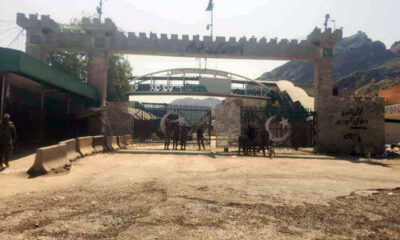
Torkham crossing reopens for returning Afghan migrants
-

 International Sports2 days ago
Injury concerns mount ahead of FIFA World Cup 2026 as stars sidelined