
Regional
Death toll from blast at Iran’s Bandar Abbas port rises to 40
Government spokesperson Fatemeh Mohajerani cautioned against “premature speculation”, saying final assessments would be shared after investigations.

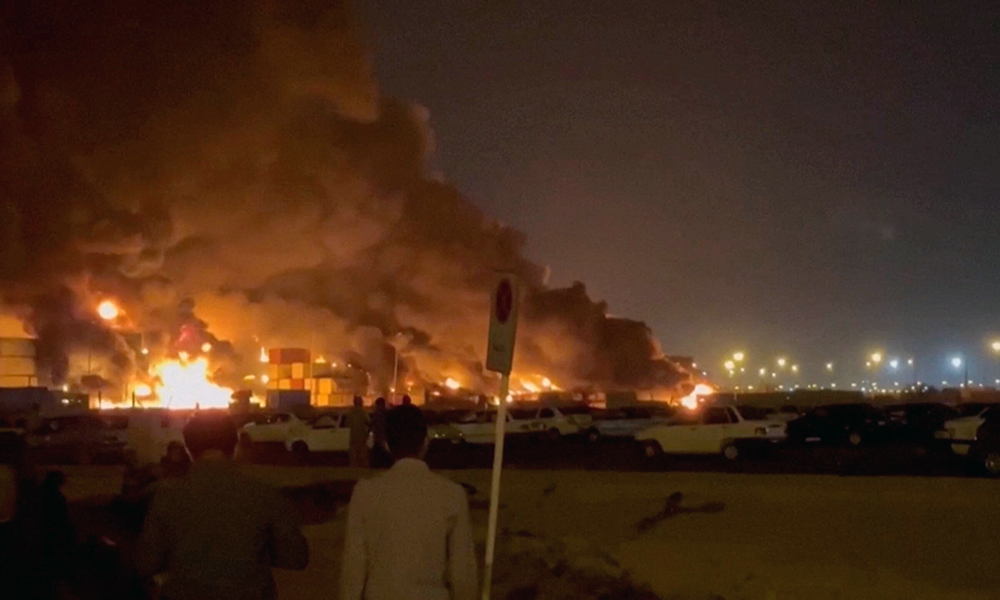
The death toll from a powerful explosion at Iran’s biggest port of Bandar Abbas has risen to at least 40, with more than 1,200 people injured, state media reported on Sunday, as firefighters worked to fully extinguish the fire, Reuters reported.
Saturday’s blast took place in the Shahid Rajaee section of the port, Iran’s biggest container hub, shattering windows for several kilometres around, tearing metal strips off shipping containers and badly damaging goods inside, state media said.
The incident occurred as Iran held a third round of nuclear talks with the United States in Oman.
Fires kept breaking out in different parts of the affected area as of Sunday night, according to state media, with helicopters and fire fighters continuing efforts to extinguish them.
Chemicals at the port were suspected to have fuelled the explosion, but the exact cause was not clear and Iran’s Defence Ministry denied international media reports that the blast may be linked to the mishandling of solid fuel used for missiles.
A spokesperson for the ministry told state TV the reports were “aligned with enemy psyops”, saying that the blast-hit area did not contain any military cargo.
The Associated Press cited British security firm Ambrey as saying the port in March had received sodium perchlorate, which is used to propel ballistic missiles and whose mishandling could have led to the explosion.
The Financial Times newspaper reported in January the shipment of two Iranian vessels from China containing enough of the ingredient to propel as many as 260 mid-range missiles, helping Tehran to replenish its stocks following its direct missile attacks on its arch-foe Israel in 2024.
Plumes of black smoke rose above the site on Sunday and pieces of twisted metal and debris lay scattered across the blast site, read the report.
By early afternoon, the head of Iran’s Red Crescent Society told state media the fire was 90% extinguished and officials said port activities had resumed in unaffected parts of Shahid Rajaee.
A spokesperson for the country’s crisis management organisation appeared on Saturday to blame the explosion on poor storage of chemicals in containers at Shahid Rajaee, adding that earlier warnings had highlighted potential safety risks.
Government spokesperson Fatemeh Mohajerani cautioned against “premature speculation”, saying final assessments would be shared after investigations.
Negligence has often been blamed in a series of deadly incidents that have hit Iranian energy and industrial infrastructure in recent years.
“Did we really have to hold the container here for 3-4 months… until we had 120-140 thousand containers stored in this place?”, Iran’s President Masoud Pezeshkian said after arriving in Bandar Abbas on Sunday.
Incidents in the country have included refinery fires, a gas explosion at a coal mine, and an emergency repair incident at Bandar Abbas that killed one worker in 2023.
Iran has blamed some other incidents on Israel, which has carried out attacks on Iranian soil targeting Iran’s nuclear programme in recent years and last year bombed the country’s air defences.




Regional
US used mobile launchers for missiles at Qatar base as Iran tensions rose, satellite pictures show
At al-Udeid, the Patriot missiles were visible parked mounted into M983 Heavy Expanded Mobility Tactical Trucks (HEMTT) at the start of February, Goodhind said.
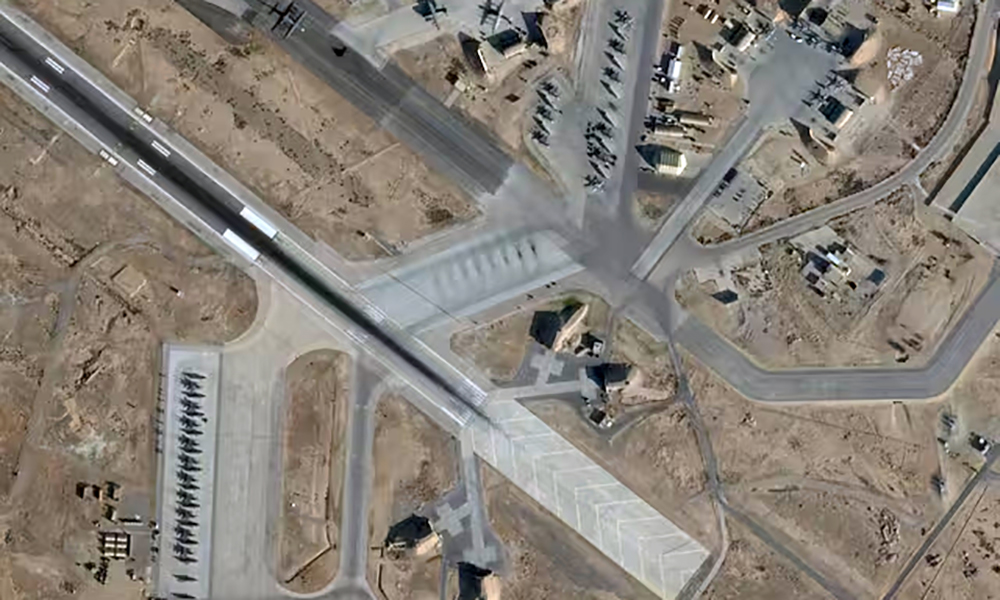
U.S. forces in Qatar’s al-Udeid, the biggest U.S. base in the Middle East, put missiles into truck launchers as tensions with Iran ratcheted up since January, analysis of satellite images showed, meaning they could be moved more quickly, Reuters reported.
The decision to keep the Patriot missiles in mobile trucks rather than semi-static launcher stations — meaning they could rapidly deploy to strike or be moved defensively in case of an Iranian attack — shows how risks heightened as frictions grew.
U.S. President Donald Trump has threatened to bomb Iran over its nuclear and ballistic missile programmes, its backing for allied groups in the Middle East and crushing of internal dissent, though talks to avert a war continue.
There are also U.S. bases in Iraq, Jordan, Kuwait, Saudi Arabia, Qatar, Bahrain, the United Arab Emirates, Oman, Turkey and on Diego Garcia in the Indian Ocean.
Iran’s Revolutionary Guards have warned that in case of strikes on Iranian territory, they could retaliate against any U.S. base.
A comparison of satellite photographs in early February with those taken in January shows a recent build-up of aircraft and other military equipment across the region, said William Goodhind, a forensic imagery analyst with Contested Ground.
At al-Udeid, the Patriot missiles were visible parked mounted into M983 Heavy Expanded Mobility Tactical Trucks (HEMTT) at the start of February, Goodhind said.
“The decision to do so gives the Patriots much greater mobility, meaning they can be moved to an alternative site or repositioned with greater speed,” he said.
It was not clear on Tuesday whether the missiles were still in the HEMTTs.
A spokesperson for the Pentagon was not immediately available for comment.
Iran says it has replenished its missile stocks after two weeks of conflict last summer when Israel bombed its nuclear facilities and some other military targets, a campaign that the United States joined late on, read the report.
Iran has underground missile complexes near Tehran, as well as at Kermanshah, Semnan and near the Gulf coast.
The Iranian naval drone carrier IRIS Shahid Bagheri was visible in satellite photographs on January 27 at sea some 5 km from Bandar Abbas. It was also visible near Bandar Abbas on February 10.
Here are changes at U.S. Middle East bases observed in satellite pictures:
AL-UDEID, QATAR:
Images from February 1 showed an RC-135 reconnaissance aircraft, three C-130 Hercules aircraft, 18 KC 135 Stratotankers and seven C-17s. On January 17 there had been 14 Stratotankers and two C-17s.
Up to 10 MIM-104 Patriot air defence systems were parked in HEMTTs.
MUWAFFAQ, JORDAN:
Images from February 2 of one location in Muwaffaq showed 17 F15-E strike aircraft, 8 A-10 Thunderbolt aircraft, four C-130s and four unidentified helicopters. Images from January 16 were low resolution and it was not possible to identify all aircraft there.
February 2 images of a second location in Muwaffaq showed a C-17 and a C-130, as well as four EA-18G Growler electronic warfare aircraft. Pictures of that location on January 25 had not shown any aircraft.
OTHER BASES:
At Prince Sultan base in Saudi Arabia, images on February 2 showed a C-5 Galaxy and a C-17 aircraft. Images on December 6 showed five aircraft that appeared to be C-130s.
Satellite images from February 6 showed seven more aircraft than had been observed on January 31 at Diego Garcia in the Indian Ocean.
Images taken on January 25 and February 10 showed an increase in aircraft at Dukhan base in Oman.
Regional
Arab states condemn Israel’s move to expand powers in occupied West Bank
Israel’s security cabinet approved measures that will make it easier for Jewish settlers to purchase land in the West Bank and grant Israeli authorities greater powers in areas under Palestinian control.
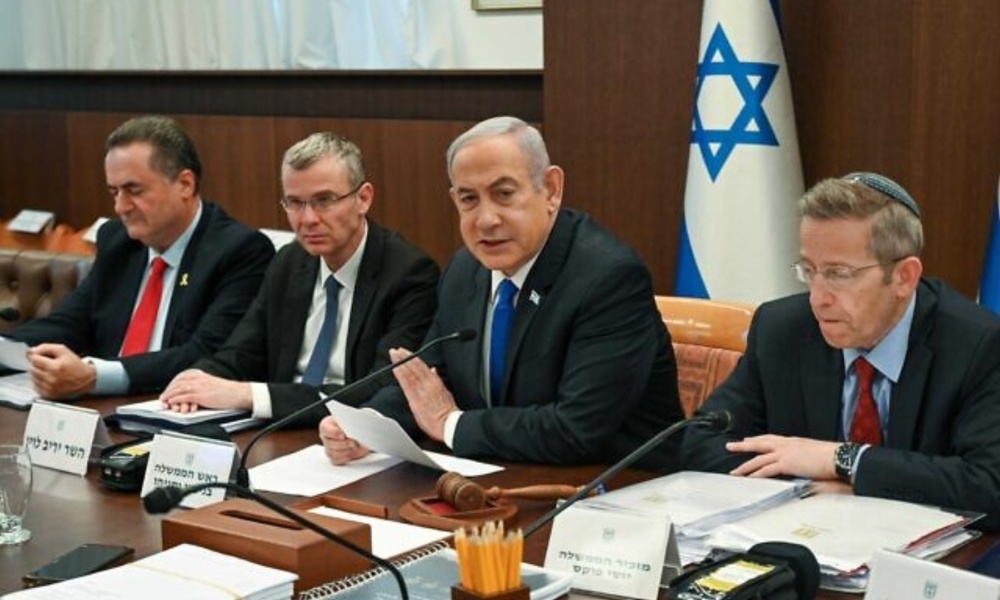
Saudi Arabia, Jordan and the United Arab Emirates led regional condemnation on Monday of Israel’s decision to ease settlement expansion and broaden its authority across the occupied West Bank, a move critics say amounts to de facto annexation.
Israel’s security cabinet approved measures on Sunday that will make it easier for Jewish settlers to purchase land in the West Bank and grant Israeli authorities greater powers in areas nominally under Palestinian control, Reuters reported citing two senior Israeli ministers.
Finance Minister Bezalel Smotrich, an ultranationalist figure in Prime Minister Benjamin Netanyahu’s coalition, said the decisions would “continue to kill the idea of a Palestinian state.”
In a joint statement, foreign ministers from several Middle Eastern and Muslim-majority countries — including Egypt and Turkey — denounced the measures as illegal under international law and warned they would undermine prospects for a two-state solution and regional stability.
Jordan, Egypt, the UAE and Turkey all maintain diplomatic ties with Israel, while Saudi Arabia has said it will not normalise relations without the establishment of a Palestinian state.
Most countries view the West Bank, occupied by Israel since 1967, as the core of a future Palestinian state.
Israeli Defence Minister Israel Katz and Smotrich said the cabinet had repealed a pre-1967 Jordanian-era law that kept land registries confidential and scrapped a permit requirement for land purchases, steps they said would simplify transactions for Jewish buyers.
Settlement watchdog Peace Now said the move violated international law and marked a significant step toward annexation. “This treats the West Bank as normal Israeli territory rather than occupied land,” said Hagit Ofran of the group.
The cabinet also expanded Israeli enforcement powers over water use, archaeological sites and environmental issues into Areas A and B of the West Bank — zones that, under the 1993 Oslo accords, are under Palestinian or joint control. Peace Now said the changes could pave the way for wider demolitions of Palestinian property and further restrictions on Palestinian development.
U.N. Secretary-General Antonio Guterres expressed “grave concern,” warning the measures were eroding the viability of a two-state solution, his spokesperson said.
In Hebron, Palestinians said the decisions would accelerate settlement growth and home demolitions. “It becomes easier to confiscate land, expand settlements and demolish Palestinian homes,” said Issa Amr of the group Youth Against Settlements.
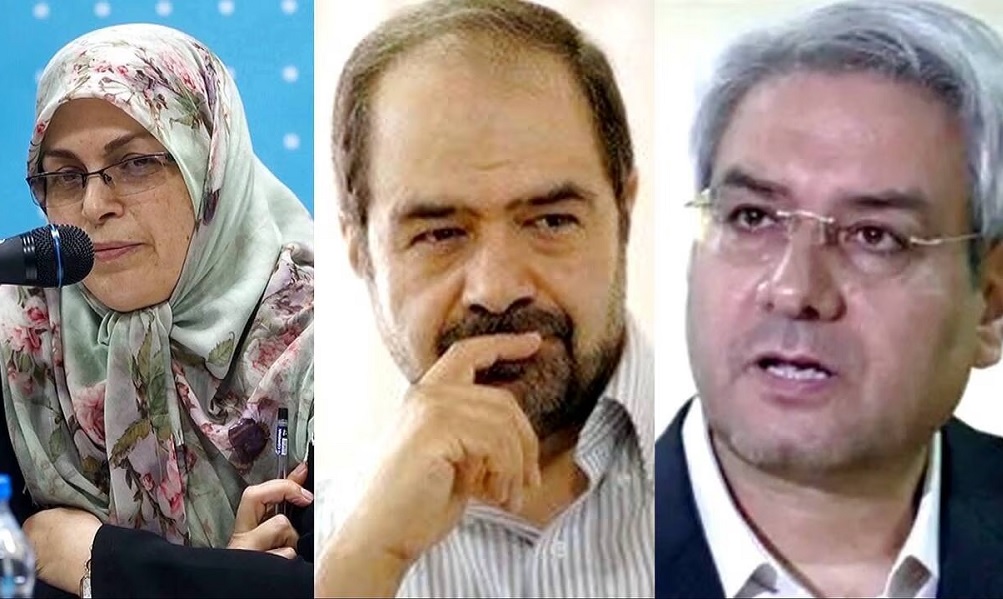
The Islamic Iran Nation’s Union Party sought the release of secretary-general Azar Mansouri, the Shargh newspaper said on Monday, after her arrest along with other members of the Reform Front, an umbrella body of Iranian reformists and moderates.
A campaign of mass arrests and intimidation has led to the arrests of thousands as authorities seek to deter further protests after last month’s crackdown on the bloodiest unrest since the 1979 Islamic Revolution.
On Sunday, state media said three senior figures from Iran’s Reform Front were arrested, among them Ebrahim Asgharzadeh, Mohsen Aminzadeh, and Azar Mansouri, who acts as the front’s head, according to Reuters.
Shargh said at least two more Reform Front members were asked to report to the prosecutor’s office in Tehran’s Evin prison on Tuesday.
The Reform Front’s spokesperson, Javad Emam, was also arrested, Mansouri’s lawyer, Hojjat Kermani, said on Monday, adding that it was unclear what charges faced those detained.
“We basically don’t know what caused these arrests, because the Reform Front has not yet issued a statement about the recent events (protests),” Kermani told the Iranian Labour News Agency (ILNA). “Individuals may have commented on their own.”
On Sunday, the judiciary’s media outlet Mizan said “four important political elements supporting the Zionist (regime) and the United States” were indicted, but gave no details.
Tehran has blamed unrest-related violence on “rioters and armed terrorists” it says were backed by its key enemies, Israel and the United States.
Past Reform Front statements have been highly critical of authorities. After the 12-day war against Israel, its members warned that “incremental collapse” awaited the country if it did not adopt fundamental reforms.
Kermani said the recent arrests were not related to a judicial case launched against the Front after that statement, however.


U.S. says review of Afghanistan policy still underway

Tahawol: IEA’s rejection of global corruption index report discussed

Pakistan appoints two consuls general in Kandahar and Mazar-e-Sharif

Saar: Pakistan’s double game in Afghan war discussed

Karzai: Development of human society requires women’s and girls’ access to education

Pakistan approves re-export of stranded Afghan transit trade cargo

Pakistan army orders evacuation of Tirah Valley, fears of mass displacement grow

Afghan traders sign deal to import pharmaceuticals from Bangladesh

Uzbekistan pushes forward with Trans-Afghan railway project

AFC Futsal Asian Cup 2026: Day One Review
Tahawol: IEA’s rejection of global corruption index report discussed
Saar: Pakistan’s double game in Afghan war discussed

Tahawol: Tajikistan’s expanding relations with Afghanistan reviewed

Saar: Criticism of Pakistan’s policies on Afghanistan discussed

Tahawol: Pakistan’s Foreign Policy Failure of Towards Afghanistan discussed
-
 Latest News5 days ago
Afghanistan to grant one- to ten-year residency to foreign investors
-

 Sport5 days ago
Iran clinch AFC Futsal Asian Cup 2026 in penalty shootout thriller
-
 International Sports4 days ago
Winter Olympics gain momentum as medal table takes shape
-
 Latest News5 days ago
Traffic police receive new cars
-

 Sport3 days ago
Champions League Elite action continues as qualification race tightens
-
 Latest News4 days ago
Tajik foreign minister urges international community to help Afghanistan address its challenges
-
 Latest News4 days ago
Afghan counter-narcotics delegation travels to Indonesia
-
 Latest News3 days ago
Terrorist activities observed along Afghanistan borders, says Lavrov