
World
Elon Musk leaving Trump administration, capping turbulent tenure
While Musk remains close to the president, his exit comes after a gradual, but steady slide in standing.


Billionaire Tesla, CEO Elon Musk is leaving the Trump administration after leading a tumultuous efficiency drive, during which he upended several federal agencies, but ultimately failed to deliver the generational savings he had sought, Reuters reported.
His “off-boarding will begin tonight,” a White House official told Reuters late Wednesday, confirming Musk’s departure from government. Musk earlier on Wednesday took to his social media platform X to thank President Donald Trump as his time as a special government employee with the Department of Government Efficiency draws to an end.
His departure was quick and unceremonious. He did not have a formal conversation with Trump before announcing his exit, according to a source with knowledge of the matter, who added that his departure was decided “at a senior staff level.”
While the precise circumstances of his exit were not immediately clear, he leaves a day after criticizing Trump’s marquee tax bill, calling it too expensive and a measure that would undermine his work with the U.S. DOGE Service.
Some senior White House officials, including Deputy Chief of Staff Stephen Miller, were particularly irked by those comments, and the White House was forced to call Republican senators to reiterate Trump’s support for the package, a source familiar with the matter said, read the report.
While Musk remains close to the president, his exit comes after a gradual, but steady slide in standing.
After Trump’s inauguration, the billionaire quickly emerged as a powerful force in Trump’s orbit: hyper-visible, unapologetically brash and unfettered by traditional norms. At the Conservative Political Action Conference in February, he brandished a red metallic chainsaw to wild cheers. “This is the chainsaw for bureaucracy,” he declared.
On the campaign trail, Musk had said DOGE would be able to cut at least $2 trillion in federal spending. He did not hide his animus for the federal workforce, and he predicted that revoking “the COVID-era privilege” of telework would trigger “a wave of voluntary terminations that we welcome.”
But some cabinet members who initially embraced Musk’s outsider energy grew wary of his tactics, sources said. Over time, they grew more confident pushing back against his job cuts, encouraged by Trump’s reminder in early March that staffing decisions rested with department secretaries, not with Musk, Reuters reported.
Musk clashed with three of Trump’s most senior cabinet members – Secretary of State Marco Rubio, Transportation Secretary Sean Duffy and Treasury Secretary Scott Bessent. He called Trump’s trade adviser Peter Navarro a “moron” and “dumber than a sack of bricks.” Navarro dismissed the insults, saying, “I’ve been called worse.”
At the same time, Musk began to hint that his time in government would come to a close, while expressing frustration at times that he could not more aggressively cut spending.
In an April 22 Tesla conference call, he signaled he would be significantly scaling back his government work to focus on his businesses.
Musk’s 130-day mandate as a special government employee in the Trump administration was set to expire around May 30. The administration has said DOGE’s efforts to restructure and shrink the federal government will continue.
“The DOGE mission will only strengthen over time as it becomes a way of life throughout the government,” Musk said.
Trump and DOGE have managed to cut nearly 12%, or 260,000, of the 2.3 million-strong federal civilian workforce largely through threats of firings, buyouts and early retirement offers, a Reuters review of agency departures found.
Musk on Tuesday criticized the price tag of Republicans’ tax and budget legislation making its way through Congress.
“I was disappointed to see the massive spending bill, frankly, which increases the budget deficit, not just decreases it, and undermines the work that the DOGE team is doing,” Musk told CBS News.
His political activities have drawn protests and some investors have called for him to leave his work as Trump’s adviser and more closely manage Tesla, which has seen falls in sales and its stock price.
Musk, the world’s richest person, has defended his role as an unelected official who was granted unprecedented authority by Trump to dismantle parts of the U.S. government.
Having spent nearly $300 million to back Trump’s presidential campaign and other Republicans last year, he said earlier this month he would substantially cut his political spending, read the report.
“I think I’ve done enough,” Musk said at an economic forum in Qatar.






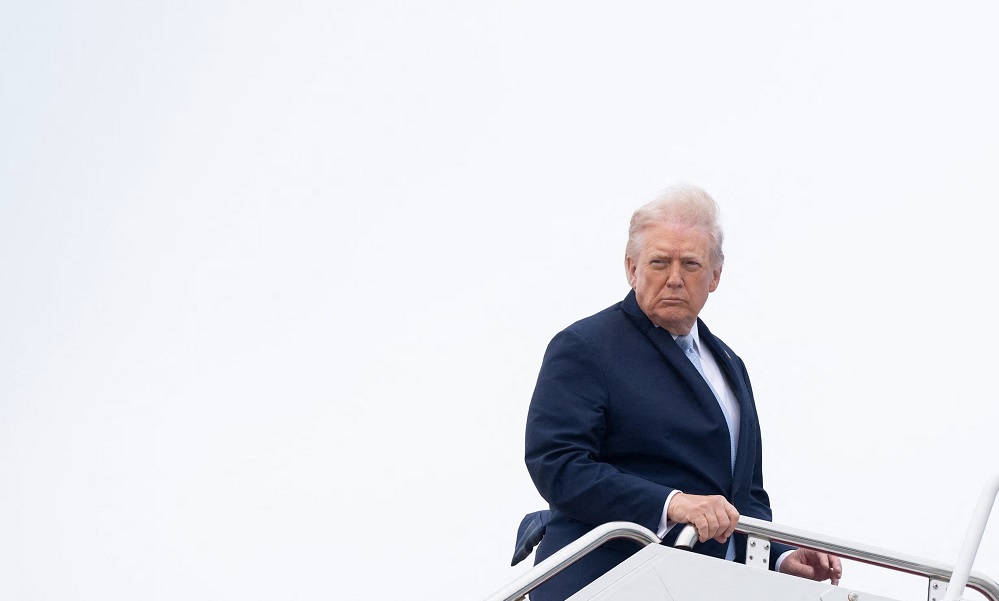
U.S. President Donald Trump on Saturday threatened to “obliterate” Iran’s power plants if Tehran does not fully reopen the Strait of Hormuz within 48 hours, a significant escalation barely a day after he talked about “winding down” the war.
“If Iran doesn’t FULLY OPEN, WITHOUT THREAT, the Strait of Hormuz, within 48 HOURS from this exact point in time, the United States of America will hit and obliterate their various POWER PLANTS, STARTING WITH THE BIGGEST ONE FIRST!” Trump said on social media, Reuters reported.
Trump’s ultimatum would expand the scope of U.S. strikes to infrastructure that affects daily civilian life in Iran.
The threat of Iranian attacks has kept most ships from getting through the strait, a narrow waterway that serves as the conduit for around a fifth of global oil and liquefied natural gas supplies, threatening a global energy shock. Its near-closure sent European gas prices surging as much as 35% last week.
Iran’s Khatam al-Anbiya military command headquarters said Sunday that if the U.S. attacks Iran’s fuel and energy infrastructure, then Iran would target all U.S. energy, information technology and desalination infrastructure in the region.
Energy prices spiked last week after Iran responded to an Israeli attack on its major gas field by hitting Qatar’s Ras Laffan Industrial City, which processes around a fifth of the world’s liquefied natural gas, causing damage that will take years to repair.
The threats to Gulf infrastructure came as the conflict entered dangerous new territory.
Israeli officials said Iranian forces had for the first time fired long-range missiles, expanding the risk of attacks beyond the Middle East, even as an Iranian strike injured dozens of people not far from Israel’s nuclear site.
Iran launched two ballistic missiles with a range of 4,000 km (2,500 miles) at the U.S.-British military base at Diego Garcia in the Indian Ocean, Israeli military chief Eyal Zamir said. The Israeli military said it was the first time Iran had used long-range missiles since the United States and Israel began attacking Iran on February 28.
“These missiles are not intended to strike Israel. Their range reaches European capitals – Berlin, Paris, and Rome are all within direct threat range,” Zamir said in a statement on Saturday.
A source at Britain’s defense ministry said the attack had occurred before the government gave specific authorization on Friday for the U.S. to use British military bases to carry out strikes on Iranian missile sites.
More than 2,000 people have been killed during the war. In Israel, 15 people have been killed in Iranian strikes.
TRUMP SENDS MIXED SIGNALS
Trump and his administration have sent mixed messages about U.S. goals throughout the war, now in its fourth week, leaving U.S. allies struggling to respond.
Trump’s ultimatum on Saturday was the most abrupt shift yet. Trump’s rhetoric pivoted from a drawdown to an explicit 48-hour countdown to strike Iran’s power infrastructure, even as U.S. Marines and heavy landing craft continue heading to the region.
Iran’s largest power plants include the Damavand power plant near Tehran (2,868 megawatts of capacity), the Kerman plant in southeastern Iran (1,910 MW), and the Ramin steam power plant in Khuzestan province (1,890 MW), according to industry and energy databases.
The country’s sole nuclear plant at Bushehr on Iran’s southern coast produces about 1,000 MW.
Earlier this month, Trump raised the idea of destroying Iran’s power grid even while downplaying the notion. “We could take apart their electric capacity within one hour, and it would take them 25 years to rebuild,” Trump told reporters on March 11. “So ideally, we’re not going to be doing that.”
U.S. voters appear increasingly concerned that the war could expand. Energy price shocks are fuelling inflation, hitting consumers and businesses hard, a major political liability for Trump as he seeks to justify the war to the public before November elections in which control of Congress is at stake.
Trump had also accused NATO allies of cowardice over their reluctance to help open the strait. Some allies have said they will consider it, but most say they are reluctant to join a war that Trump started without consulting them.
IRANIAN STRIKES HIT SOUTHERN ISRAEL
The Israeli military said on Sunday that it is conducting strikes in Tehran, hours after attacks on southern Israel.
Late on Saturday, Iranian missiles hit the southern Israeli cities of Dimona and Arad, injuring dozens of people, including children, in separate strikes. Iran’s Revolutionary Guards said in a statement early Sunday that they targeted “military installations” and security centers in southern Israel.
Israeli military spokesperson Brigadier General Effie Defrin said in a post on X that the country’s air defenses were functioning but did not intercept the strikes. “We will investigate the incident and learn from it,” he said.
Israel’s secretive nuclear reactor is about 13 km (8 miles) southeast of Dimona. Both cities lie near several military sites, including Nevatim Air Base, one of the country’s largest.
“This has been a very difficult evening in the battle for our future,” Israeli Prime Minister Benjamin Netanyahu said in a statement released by his office following the strike on Arad.
“We are determined to continue striking our enemies on all fronts,” the statement said.
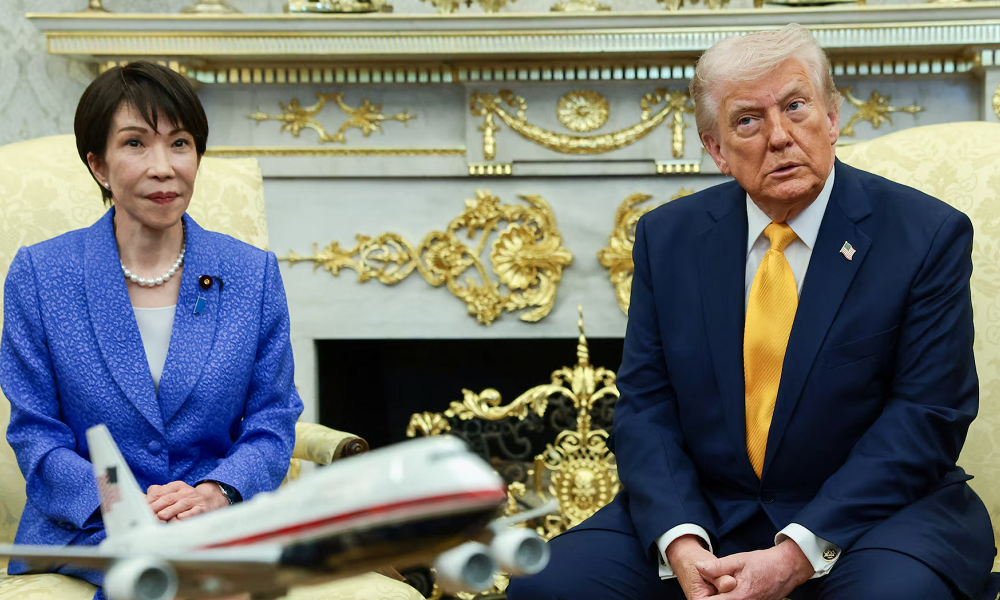
U.S. President Donald Trump on Thursday compared recent U.S. strikes on Iran to Japan’s 1941 attack on Pearl Harbor, as he defended his administration’s military actions during a meeting with Japanese Prime Minister Sanae Takaichi at the White House.
Responding to a question about why allies were not informed in advance, Trump said the element of surprise was intentional. “We wanted surprise. Who knows better about surprise than Japan?” he said, referencing the attack on Attack on Pearl Harbor.
The remark appeared to catch Takaichi off guard, as she reacted visibly during the Oval Office meeting.
Japan’s 1941 attack on the U.S. naval base in Hawaii killed more than 2,300 Americans and led the United States to enter World War II. Then-President Franklin D. Roosevelt famously described the day as “a date which will live in infamy.”
The war ended in 1945 after U.S. atomic bombings of Atomic bombings of Hiroshima and Nagasaki.
Trump’s comments drew mixed reactions in Japan. Some observers said the comparison was inappropriate given its historical sensitivity, while others downplayed it as a joke.
Speaking in Tokyo, engineer Yuta Nakamura said Takaichi had been placed in a difficult position but handled the moment carefully. Meanwhile, retiree Tokio Washino said the reference made him feel uneasy, given Japan’s wartime history.
World
US weighs troop deployment as Iran war enters new phase
The administration is also weighing options to secure Iran’s stockpiles of highly enriched uranium, a move that experts say would be highly complex and dangerous even for elite forces.
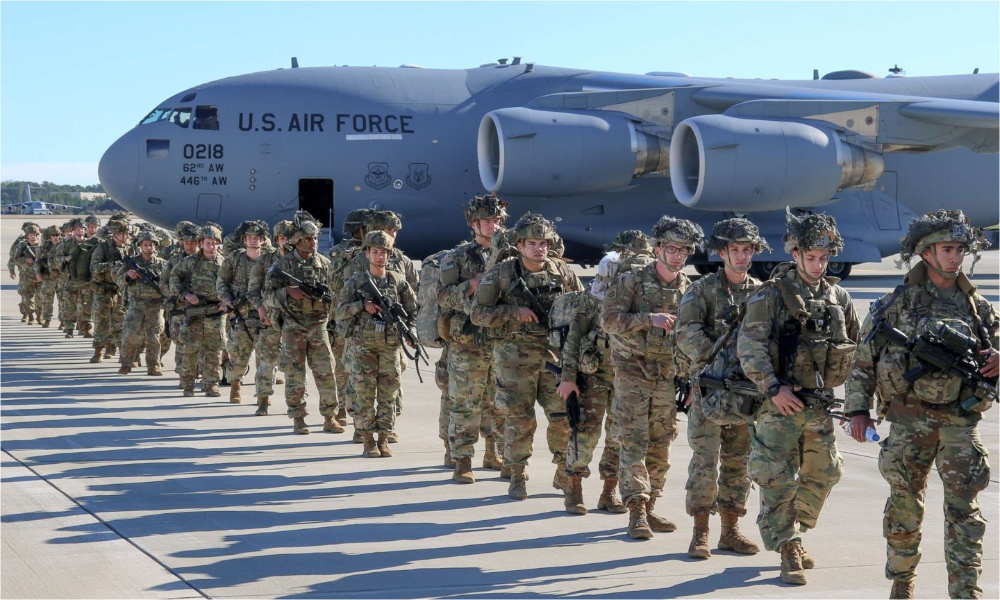
The United States is considering sending thousands of additional troops to the Middle East as the war with Iran enters a potentially more complex stage, according to U.S. officials and sources familiar with the discussions.
The move would give US President Donald Trump broader military options as the conflict, now in its third week, continues to escalate. While no final decision has been made, officials say the administration is exploring scenarios that could expand the scope of current operations, Reuters reported.
Among the options under review is securing commercial shipping through the Strait of Hormuz, a critical corridor for global energy supplies. While such a mission would rely largely on naval and air power, it could also involve deploying U.S. forces along Iran’s coastline.
Another proposal under discussion includes sending ground forces to Kharg Island, which handles the vast majority of Iran’s oil exports.
U.S. strikes have already targeted military sites on the island, but analysts say controlling the facility could be seen as more strategically valuable than destroying it outright.
Officials caution, however, that such an operation would carry significant risks due to Iran’s missile and drone capabilities.
The administration is also weighing options to secure Iran’s stockpiles of highly enriched uranium, a move that experts say would be highly complex and dangerous even for elite forces.
A White House official said no decision has been taken on deploying ground troops, emphasizing that “all options remain on the table” as the administration pursues its military objectives, including weakening Iran’s missile and naval capabilities and preventing it from acquiring nuclear weapons.
The discussions come as U.S. forces intensify their campaign against Iran. Since the start of hostilities in late February, Washington says it has conducted thousands of strikes targeting Iran’s military infrastructure, including its navy, missile systems and defense industry.
According to U.S. Central Command, more than 120 Iranian vessels have been damaged or destroyed.
Despite the scale of operations, the conflict has also taken a toll on U.S. forces. At least 13 American troops have been killed and around 200 wounded, though most injuries are reported to be minor.
Any decision to deploy ground troops could carry political consequences for Trump, who has previously pledged to avoid new foreign wars and faces skepticism among parts of the American public over deeper involvement in the Middle East.
Complicating matters further, the U.S. military is set to lose the presence of one of its key aircraft carriers, the USS Gerald R. Ford, which is being sent for maintenance following a fire.
While an amphibious ready group with more than 2,000 Marines is expected to arrive in the region, officials say broader reinforcement plans are still under consideration.
Trump has also sent mixed signals on whether the U.S. should take responsibility for securing the Strait of Hormuz, at times suggesting allies should take the lead or even questioning continued American involvement.
As military planning continues, officials stress that no immediate ground deployment is expected, but acknowledge that the situation remains fluid as Washington evaluates its next steps in the conflict.


Tahawol: Possibility of US ground forces entering Iran war discussed

Water crisis deepens in Afghanistan as families struggle for access

Saar: Using US prisoners as political pressure

Afghani strengthens nearly 10% against US dollar amid banking sector reforms

Iran says Hormuz open to all but ‘enemy-linked’ ships

Pakistani military jet downed in Afghanistan’s Jalalabad, pilot captured alive

Afghan Air Force conducts airstrikes in Islamabad, other cities

Prominent Muslim scholar issues fatwa calling for Afghanistan-Pakistan ceasefire

Afghan air force strikes key Pakistani military installations in retaliatory operation

IEA: Special circle in Pakistan has launched mission to destabilize region
Tahawol: Possibility of US ground forces entering Iran war discussed
Saar: Using US prisoners as political pressure

Tahawol: Pakistan’s efforts to destabilise Afghanistan

Saar: Decline in international assistance to Afghanistan

Tawsia: Assessment of Afghanistan’s economic activities in 1404
-

 Latest News4 days ago
IEA announces temporary pause in defensive operations against Pakistan for Eid
-
 Latest News5 days ago
Pakistan opposes normal Afghanistan–India relations: Shaheen
-
 Latest News4 days ago
Pakistani shelling hits Kunar districts despite ‘pause in hostility’ over Eid
-
 Latest News5 days ago
Karzai accuses Pakistan of seeking to destabilise Afghanistan after Kabul strike
-
 Regional5 days ago
Iran strikes Tel Aviv with cluster warheads in retaliation for killing of security chief
-

 Sport3 days ago
Afghanistan national buzkashi falls short in Kokpar World Championship semifinals
-
 Regional3 days ago
Pakistan among top nuclear threats to America, US intelligence chief tells senate
-

 Latest News5 days ago
Muslim scholars condemn Kabul hospital attack, urge ceasefire