
Latest News
French envoy says Taliban will ‘never have total control of the people’

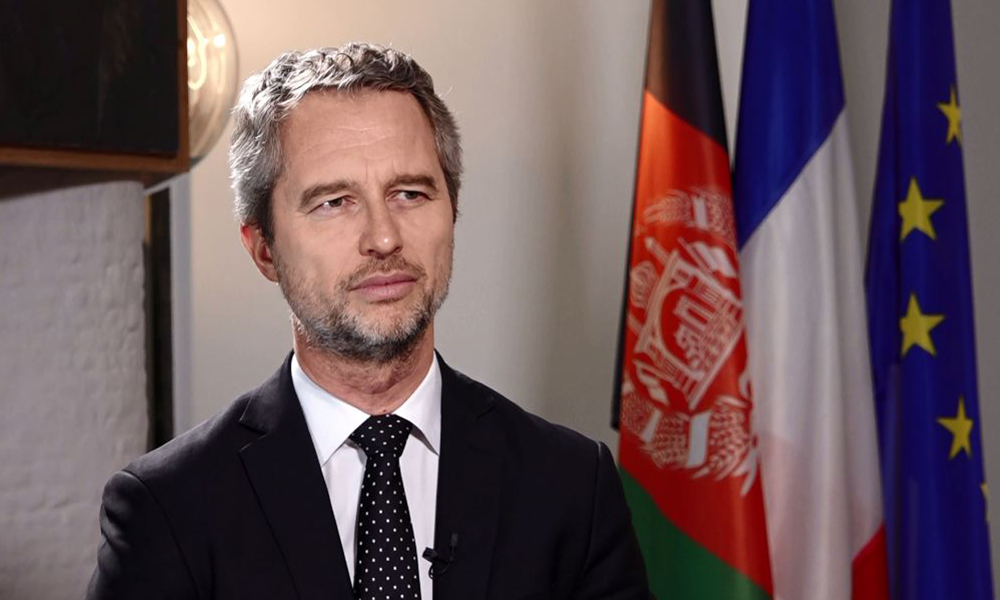
David Martinon, the French Ambassador to Kabul said this week that France is very disappointed in the slow progress around the peace talks but that the Afghan Republic has made huge concessions while the Taliban has not done the same.
In an exclusive interview with Ariana News, he said: “We felt a very strong willingness from the republican side to try and find common ground. We have seen that the republic has made huge concessions, we are still expecting the concessions from the Talib side. The Republic agreed on the demand of the US to release 50,000 prisoners; we also made sacrifices at the time,” he said adding that some of the prisoners released were “murderers of French citizens”.
“It gives us the impression that the Taliban are just in a way faking the negotiations and buying time and that they favor of [their] military action; we were disappointed by that,” he said.
“We called the Taliban to stop their military offensives and to stop their violations of human rights, especially women’s rights; whatever they believe that they can achieve but force, they will never have a total control of the Afghan people like that,” he said adding that this is why France believes there is a need for a political settlement.
He said everything that the Taliban has been doing over the past three months points to the group wanting to seize power by force.
On this point, he said “we call the Taliban to stop their military offensive,” to stop everything they are doing in the areas they control, “the looting, the killing of civilians, the repression of women’s rights; everything we get reports on is incredibly concerning,” he said.
Martinon noted that the Taliban should “think twice about what they are trying to achieve in Afghanistan” and that they should start to consider what would be good for their country and for the people.
He questioned whether the looting, destroying critical infrastructure like power lines and power grids, telecommunications networks, and roads and bridges was really in the interests of the Afghan people.
“I have my doubts and I guess everyone in the country has doubts about that,” he said.
Martinon pointed out that the Afghan people have spent the past 20 years rebuilding the country and that “if the Taliban believe that the population in Afghanistan is not attached to them (the achievements made in this time) they will be heavily surprised.”
He said “should the Taliban decide to try and destroy this heritage this legacy, this democratic legacy, should they keep on taking their distance with the values of the republic, again, the right to vote, democratic gains, freedom of expression, freedom of the press, equality for all and especially equality between men and women, well then why would we keep on supporting the country.”
He said the French leaders would not support a regime that does not respect human rights.
“I’m talking about a scenario that we should prevent, this is not the future we want for Afghanistan, we want the preservation and the strengthening of the Islamic Republic of Afghanistan.
However, France’s top envoy to Afghanistan spoke about the horrors that are being committed by the Taliban around the country.
Clearly disturbed by images and videos sent to him, he said: “I have never been I have never seen more disturbing images than the ones I keep on receiving.”
“I see videos of beheadings, you know, Afghan citizens being beheaded like goats. I saw images of a young man being stoned to death. I see images of a young man whose hand is being cut.
“I mean is that what they want for the future of their country? Really do they believe that they will be, they will gain international legitimacy by doing so?”
“This is unbearable; these are atrocities; these are videos you can’t even watch,” he said.
He pointed out however that Afghanistan should not always blame their neighboring countries for their “intrusions and interferences” and that in the event of strong national unity within Afghanistan “no neighboring country would dare to intrude into domestic policies in Afghanistan
But he said that given the current situation, all the neighboring countries have interests in common “and this is why they should step up; they should get together and try to express to the two parties that these interests need to meet some responses from them”.
He said that it is obvious that China, Iran, Tajikistan, Uzbekistan, Turkmenistan are extremely concerned about the frontier they have
with Afghanistan for several reasons.
We have to listen to what their leaders say, he said adding “they are concerned of the terrorist threats; they are concerned about migrations; there are concerns about narco-trafficking; all these concerns should in a way lead them to have a more constructive dialogue with them and to try to engage in probably in a stronger way with the two parties in conflict in Afghanistan, and probably with mostly with the Taliban,” he said.
He also stated that Afghanistan and Pakistan need each other and that their historical ties are very strong and one example is that strong trade links between the two countries.
“But if you want to establish stability and to build prosperity in the region it is obvious that both countries have to understand what can be the long-term economic interest and obviously they should work even more together.”
He said however that he did not think there was any country in the region that “welcome the establishment of a Taliban regime in Afghanistan”.
“The Taliban have to understand that any form of the long-lasting disorder plus violations of human rights and no respect for democracy, the democratic legacy of the republic, can only have devastating consequences on the neighbors and the neighbors won’t accept that because they won’t be able to handle you know waves of Afghan migrants trying to escape that strange regime (Taliban) from another century,” he said.
Martinon said that everything the Taliban is doing is being scrutinized by the neighboring countries and even by Iran, and by China – who is also concerned about their frontier.






Latest News
Tajikistan shifts stance on Afghanistan amid rising border tensions
Earlier this month, Tajik lawmakers approved a $57 million deal for China to finance and build nine new border posts, underscoring Beijing’s expanding role in regional security.
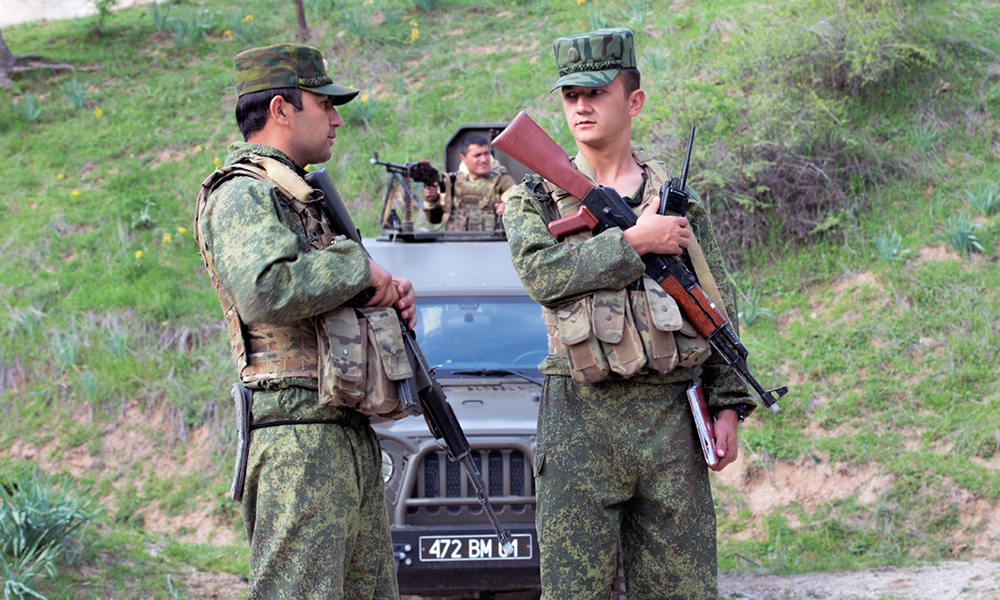
A surge in violence along the Tajikistan–Afghanistan border is prompting Tajikistan to recalibrate its policy toward Afghanistan, combining tighter security measures with cautious diplomatic engagement.
Earlier this month, Tajik lawmakers approved a $57 million deal for China to finance and build nine new border posts, underscoring Beijing’s expanding role in regional security.
The move follows a series of deadly incidents, including attacks that killed five Chinese nationals and clashes with smugglers that left several Afghan civilians and Tajik guards dead.
The violence reflects growing instability along the rugged frontier, much of it tracing the Panj River, with armed incidents rising sharply and drug seizures increasing significantly, according to Tajik authorities.
Alongside bolstering border infrastructure, Dushanbe is stepping up engagement with the Islamic Emirate. Recent months have seen unprecedented high-level contacts, including calls and meetings between Amir Khan Muttaqi and Sirojiddin Muhriddin, as well as talks with Tajik envoy Sadi Sharifi.
Once a staunch critic of the Islamic Emirate, Tajikistan’s President Emomali Rahmon’s government is gradually adopting a more pragmatic approach. Since the reopening of border markets in 2023, trade and security contacts have quietly expanded, with officials now openly acknowledging cooperation on energy and border security.
Analysts say the shift reflects a mix of rising security threats, regional pressure from partners like China and Russia, and the reality that the Islamic Emirate remain firmly in control in Kabul. While China funds infrastructure and Russia continues to support military training, experts describe the arrangement as a “division of labor” rather than a shift in regional influence.
Despite lingering concerns, observers note a clear warming in ties between Dushanbe and Kabul, driven as much by necessity as by strategy.
Latest News
Torkham crossing reopens for returning Afghan migrants
According to reports, the reopening has allowed the flow of Afghan returnees from Pakistan to resume, with many families entering Afghanistan through the crossing.
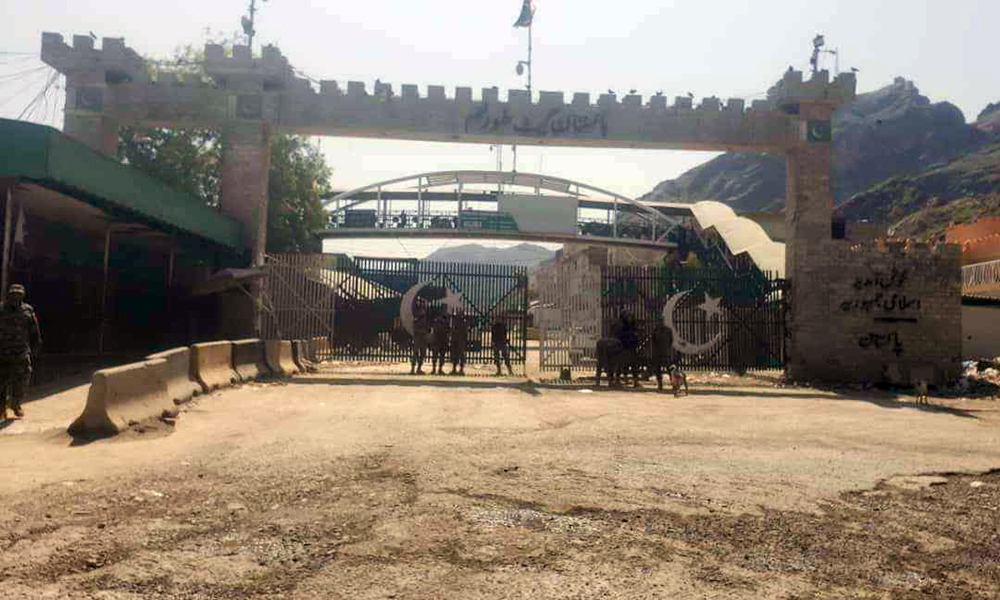
The Torkham border crossing was reopened on Thursday at 2 p.m. for Afghan migrants returning to the country after nearly a month of closure.
According to reports, the reopening has allowed the flow of Afghan returnees from Pakistan to resume, with many families entering Afghanistan through the crossing.
Torkham is considered one of the most important crossing gateways between Afghanistan and Pakistan.
Its closure had created significant challenges for migrants and disrupted crossing movement.
Latest News
Two killed, hundreds affected in severe floods in Kandahar
Tragically, two people, including a five-year-old child, lost their lives in Daman district as a result of the floodwaters.
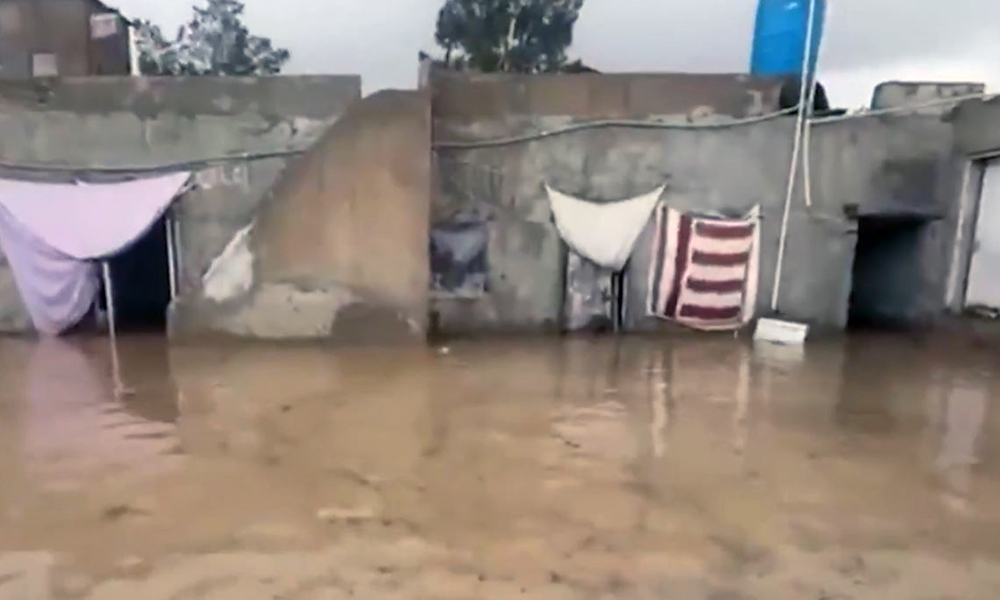
Heavy rainfall and subsequent flooding in Kandahar have caused significant destruction, leaving dozens of families affected, according to the province’s Department for Disaster Response and Preparedness.
Officials reported that approximately 85 homes in Kandahar city were either completely or partially destroyed due to the severe weather. Additionally, around 90 families living in temporary shelters were also impacted by the floods.
Tragically, two people, including a five-year-old child, lost their lives in Daman district as a result of the floodwaters.
Authorities confirmed that joint response teams have been dispatched to the affected areas to assess the damage and provide urgent humanitarian assistance to the displaced and affected families.
The local administration emphasized the need for coordinated relief efforts to help the flood-affected population recover from the disaster.


Tajikistan shifts stance on Afghanistan amid rising border tensions

Torkham crossing reopens for returning Afghan migrants

Afghanistan to face Myanmar in crucial AFC clash

Two killed, hundreds affected in severe floods in Kandahar

Afghanistan highlights water diplomacy at Tashkent ministerial forum

Pakistani military jet downed in Afghanistan’s Jalalabad, pilot captured alive

Afghan Air Force conducts airstrikes in Islamabad, other cities

Prominent Muslim scholar issues fatwa calling for Afghanistan-Pakistan ceasefire

Afghan air force strikes key Pakistani military installations in retaliatory operation

IEA: Special circle in Pakistan has launched mission to destabilize region

Tahawol: Efforts to release Mohammad Rahim from Guantanamo Bay Detention Camp

Saar: End of ceasefire between Afghanistan-Pakistan reviewed

Tahawol: Escalating threats between Iran-US discussed

Tahawol: Possibility of US ground forces entering Iran war discussed

Saar: Using US prisoners as political pressure
-
 Latest News4 days ago
Deadly violence likely without dialogue between Afghanistan and Pakistan: ICG
-
 Latest News3 days ago
Pakistan seeks Russian mediation to resolve Afghanistan tensions
-

 International Sports4 days ago
FIFA World Cup 2026: Play-Off Tournament takes centre stage
-
 Sport4 days ago
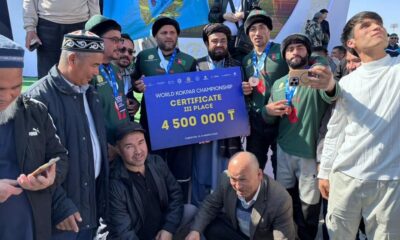
Afghanistan secures third place at 2026 World Kokpar Championship
-
 Business4 days ago
Afghani strengthens nearly 10% against US dollar amid banking sector reforms
-
 Latest News3 days ago
World must re-engage to prevent all-out Afghanistan-Pakistan war: Financial Times
-
 Regional5 days ago
Trump says US considering ‘winding down’ Iran war
-

 Sport2 days ago
Afghanistan squad hit by withdrawals ahead of AFC Asian Cup Qualifiers