
Latest News
Ghani Sets ‘a Month of Ceasefire’ as Pre-condition for Talks with Taliban

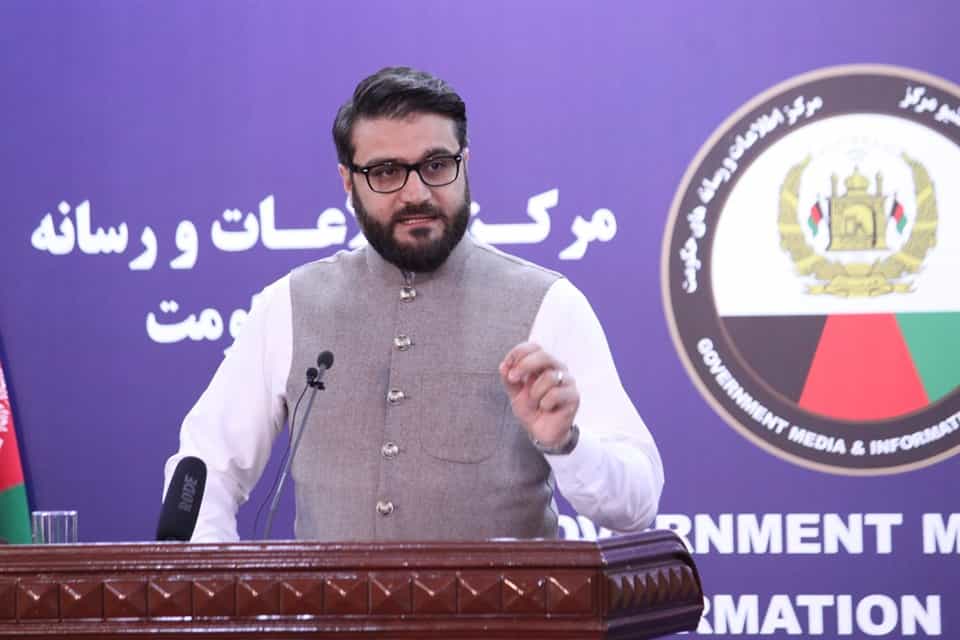
Afghan National Security Advisor Hamdullah Mohib publicly shared details of President Ashraf Ghani’s peace plan on Tuesday.
Speaking at a press conference, Mohib said the new plan requires Taliban to announce at least a month of ceasefire before the start of any negotiations.
For the past couple of years, the government was ready for negotiations with the Taliban without any pre-condition. On Tuesday, Mohib said that has changed now.
President Ghani’s national security advisor added that by announcing a ceasefire the Taliban political leaders should prove their control over their commanders and fighters.
He further said that the plan has been shared with the international community including the United States of America.
In addition to Taliban, the plan emphasizes on negotiation with Pakistan.
“Peace talks will not have a result until Pakistan gives a guarantee to Afghanistan that they will not support or substitute Taliban with other groups,” Mohib reiterated.
Meanwhile, NSA Mohib said the U.S. Special Envoy for Afghanistan Reconciliation Zalmay Khalilzad, who was in Kabul during the last couple of days, did not focus on peace talks.
He said Khalilzad was in Kabul to discuss the release of two foreign professors who were kidnapped by Taliban in 2016.
“[Khalilzad] wanted to discuss the release of two professors who are under custody of the Haqqani Network. There was no discussion about peace,” he said.
This comes as the Taliban has repeatedly announced that the group is not ready to hold direct talks with the Afghan government, calling it a “U.S. puppet.”







Latest News
Hajj minister attends closing ceremony of hajj season in Mecca
In a statement posted on X on Saturday, the ministry said the ceremony was held in the holy city of Mecca to mark the successful conclusion of this year’s Hajj operations.
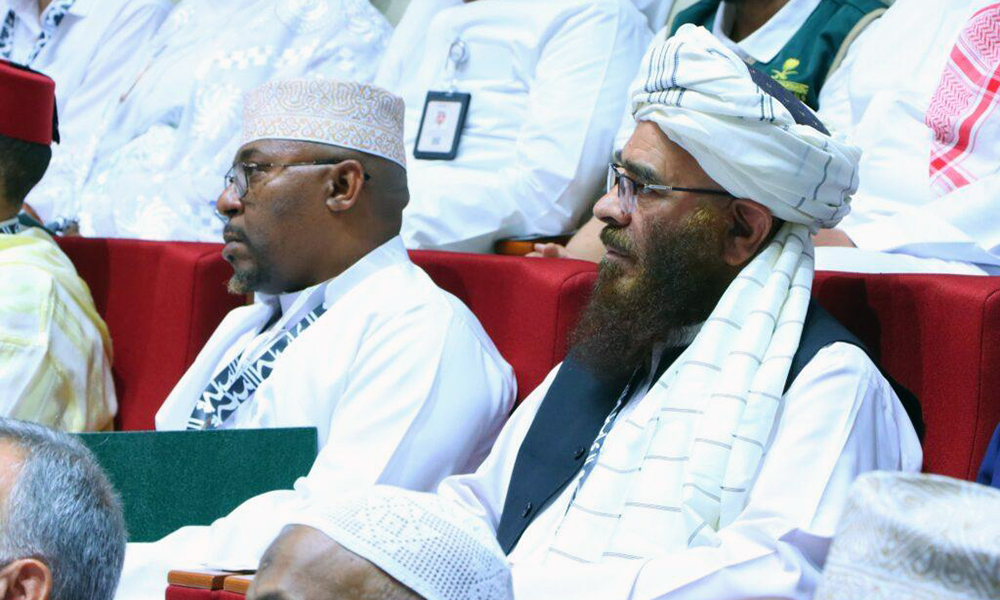
Afghanistan’s Minister of Hajj and Religious Affairs attended the international closing ceremony of this year’s Hajj season at the invitation of Saudi Arabia’s Ministry of Hajj and Umrah and held meetings with Hajj ministers and officials from several countries.
In a statement posted on X on Saturday, the ministry said the ceremony was held in the holy city of Mecca to mark the successful conclusion of this year’s Hajj operations.
According to the statement, Saudi Minister of Hajj and Umrah Dr. Tawfiq bin Fawzan Al-Rabiah commended the efforts and effective management of Hajj missions from various countries, including Afghanistan.
The statement added that Al-Rabiah announced the start of preparations for next year’s Hajj season and provided representatives of participating countries with preliminary planning documents and a timetable for the upcoming pilgrimage.
Afghanistan’s Minister of Hajj and Religious Affairs, Noor Mohammad Saqib, thanked the Saudi government, the Ministry of Hajj and Umrah, and service providers for the facilities and services extended to pilgrims.
On the sidelines of the event, Saqib also met with several Hajj ministers and officials from other countries, exchanging views and information on matters of mutual interest and developments in their respective countries, the statement said.
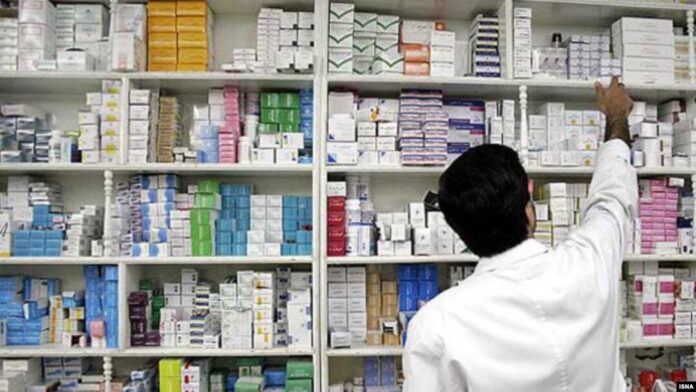
A delegation from Afghanistan’s pharmaceutical sector has signed a $5 million agreement with five major Uzbek pharmaceutical companies to import medicines from Uzbekistan, officials said.
The 35-member delegation from Balkh province signed the agreements during a visit to Tashkent aimed at expanding pharmaceutical trade between the two countries.
Officials at the Balkh Chamber of Commerce and Investment said the deal could help meet up to 25 percent of Afghanistan’s medicine demand through imports from Uzbekistan.
Mohammad Sadiq Mohammadi, head of the pharmaceutical union in Balkh, said contracts worth nearly $5 million had been finalized with Uzbek companies for the supply of medicines to Afghanistan.
The Balkh Chamber of Commerce and Investment also described Uzbek medicines as affordable for Afghan traders and said the agreements could help address a significant portion of the country’s pharmaceutical needs.
Economic analysts said medicines produced in Uzbekistan are considered high-quality and reasonably priced, while also emphasizing the importance of strengthening domestic pharmaceutical production in Afghanistan.
Afghanistan continues to rely heavily on imported medicines, and reduced trade with Pakistan has increased the country’s dependence on pharmaceutical imports from alternative markets.
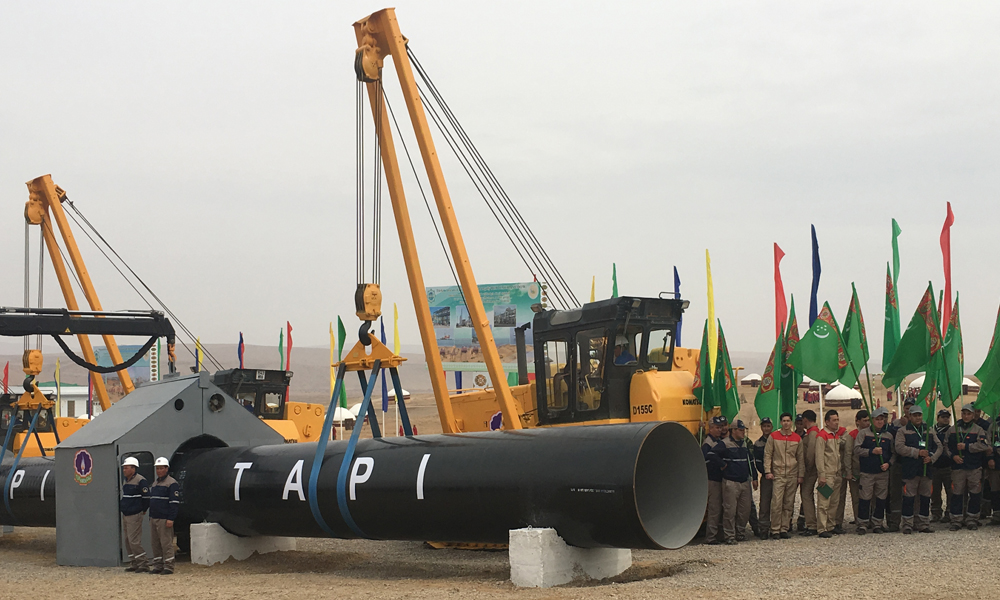
Officials of the Islamic Emirate say that despite recent tensions between Afghanistan and Pakistan, regional economic projects have not been negatively affected and implementation efforts continue as planned.
The spokesman for the Islamic Emirate, Zabihullah Mujahid, said that work on all major projects linking Central and South Asia is continuing in an organized manner. He stressed that IEA remains committed to implementing and completing regional economic development projects.
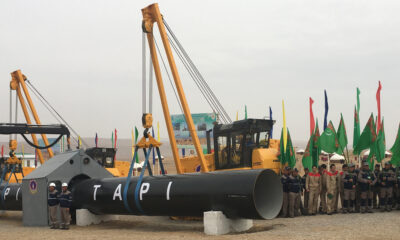
According to Mujahid, although recent tensions between Afghanistan and Pakistan have somewhat affected political and economic relations between the two countries, projects such as TAPI, TAP, CASA-1000, and the Trans-Afghan railway project are still progressing and could play an important role in the region’s economic development.
“The TAPI project is under implementation inside Afghanistan, the work is progressing normally and has even accelerated. The TAP project and some other projects are in the survey phase, their assessments have been completed, and there are no obstacles facing them. We are trying to ensure that major projects move forward normally,” Mujahid said.
Members of the private sector also stated that the implementation and coordination of major regional projects in Afghanistan are progressing well. They called on other partner countries involved in the projects to increase cooperation in order to speed up implementation and create greater economic momentum in the region.
Zabihullah Nazari, a member of the Chamber of Industries and Mines, said accelerating major regional economic projects could help build trust among neighboring and regional countries while also creating tens of thousands of direct and indirect jobs.
Economic analysts say the Islamic Emirate has so far fulfilled its role in advancing these regional projects in line with international principles, which could help attract global investment to the region. However, they added that some partner countries, due to what they described as incorrect policies, continue to create obstacles and delays in the implementation process.
According to the analysts, if all partners in projects such as TAPI, TAP, CASA-1000, and the Trans-Afghan project begin implementation sincerely and practically, it could pave the way for major economic initiatives and positive economic movement across the region, including Afghanistan.


Hajj minister attends closing ceremony of hajj season in Mecca

Pentagon chief sounds ‘alarm’ over China’s buildup, urges allies to boost defence spend

Iran’s strongest card in nuclear talks: its highly enriched uranium

Tawsia: Afghanistan’s weekly economic roundup reviewed

Afghanistan signs $5 million deal to import medicines from Uzbekistan

New Afghanistan-China transport corridor launched via Turkmenistan

Afghanistan signs $46 million deal to develop standard laboratory complexes

Germany to launch online visa system for Afghan study and work applicants in Pakistan

Large blast near Beit Shemesh part of pre-planned test: Israeli defense firm

Trump returns from China with stability but little progress
Tawsia: Afghanistan’s weekly economic roundup reviewed

Tahawol: Kabul Pursuing Constructive Regional Diplomacy

Saar: Afghanistan, Russia sign military cooperation agreement

Saar: IEA seeking Sharia-based global engagement

Tahawol: Islamic Emirate defense minister’s visit to Russia
-
 Sport3 days ago
Afghanistan announce squad for India series
-
 Latest News2 days ago
Afghanistan, Russia sign military cooperation agreement
-
 Latest News3 days ago
‘We will never bow our heads before infidels,’ says IEA Supreme Leader
-

 Sport5 days ago
IPL 2026 Playoffs Confirmed: RCB, GT, SRH and RR reach top four
-
 Latest News4 days ago
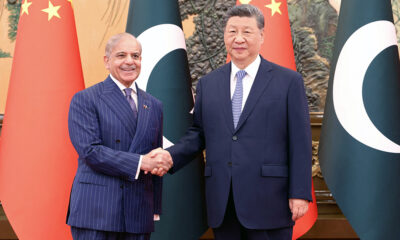
China and Pakistan deepen Afghanistan cooperation after Beijing talks
-
 Latest News2 days ago
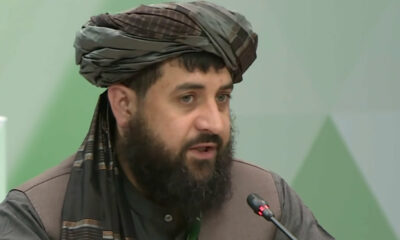
Mujahid calls for stronger Afghanistan-Russia relations during Moscow meeting
-
 Business2 days ago
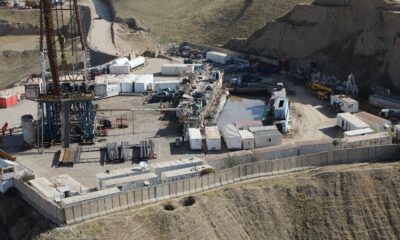
Afghanistan expands oil production as investment in Amu Darya fields grows
-

 Sport3 days ago
ATN secures exclusive rights to broadcast Afghanistan Tour of India