
Latest News
Govt, UK and Canada stand firm on preserving media freedom

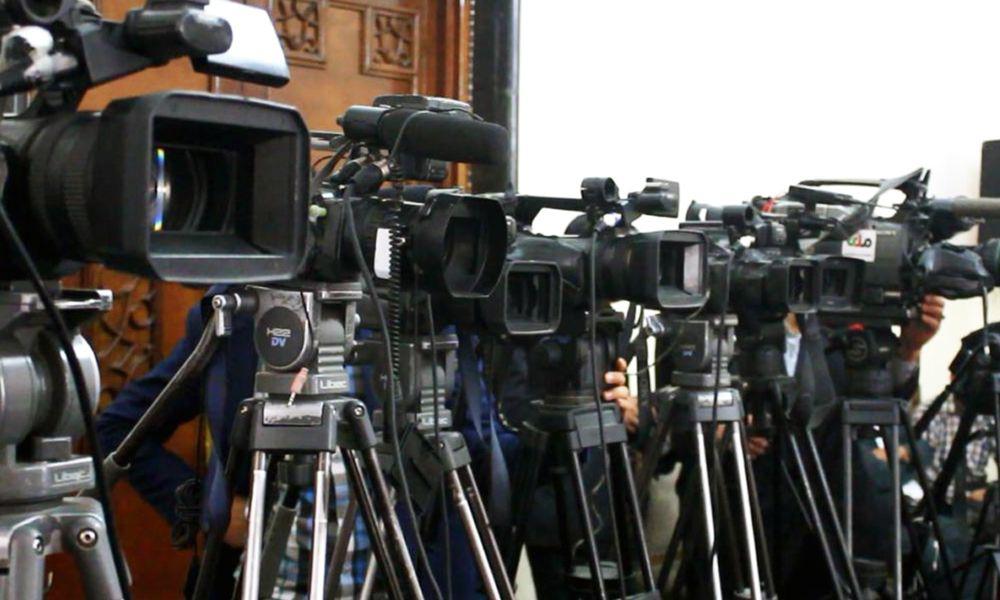
Deputy Minister of Interior Affairs for Strategy and Policies Sediq Sediqqi said in a tweet Wednesday afternoon that the Afghan government will deter any attempt by the enemy to silence Afghanistan’s media.
He said: “The Afghan government will deter enemies’ any attempt to falter or silence our media.
“We will stand firm to uphold one of our best gains of the past twenty years with our international allies who helped us to achieve it. No to dark ages [of the Taliban regime],” he said.
This comes after a joint press release was issued by embassies of the UK and Canada in Afghanistan on Wednesday marking the first anniversary of Afghanistan signing the Global Pledge on Media Freedom and joining the Media Freedom Coalition.
The Coalition is a partnership of 37 countries working to defend media freedom wherever it is threatened.
As co-chairs of the Global Campaign for Media Freedom, the UK and Canada stated it was reflecting Wednesday on the progress made to defend media freedom in Afghanistan.
“In July 2020, the Afghan Lower House of Parliament rejected amendments to the Mass Media Law, which would have had concerning implications for Afghan press freedom.
“Members of Afghanistan’s media community came together in solidarity, and we welcome the government’s decision to consult with them on any future changes,” the statement read.
However, the embassies stated that the threats to the safety of journalists and media professionals in the country remains one of the obstacles to the full implementation of the right to freedom of expression in Afghanistan.
“Unfortunately, Afghan journalists have faced growing levels of violence and insecurity over the past year. Members of the media, human rights activists, and other prominent members of civil society have been threatened, injured, or killed in targeted attacks – many of which are attributable to the Taliban and their proxies.
“We condemn all acts of violence, threats, censorship and intimidation towards those who are fighting to create a safer, fairer Afghanistan.” the statement from the embassies read.
It also noted that media outlets work tirelessly to uncover the truth and bravely report on it.
As such, “there must be full and transparent investigations into these heinous targeted attacks.
“All parties to the conflict in Afghanistan have a moral responsibility to end violence as a demonstration of their commitment to peace. We expect parties to the Afghan peace negotiations, including the Taliban, to publicly condemn the targeted attacks on members of the media, civil society organizations and the government.
“We also call for greater support from each side for the protection of journalists and the freedom of expression.
“Freedom of media and expression is a cornerstone of a democratic society and is essential for the protection of fundamental human rights and freedoms. Attacks on media freedom are attacks on human rights,” the statement read.
The embassies stated that the vibrant Afghan media scene has been one of the biggest successes of the last two decades, and, according to the British and Candadian embassies it cannot be allowed to falter in the face of growing insecurity.
The UK and Canada stated their reiterate their commitment to working collaboratively with Afghanistan to defend its wide-ranging media landscape and protect its courageous journalists.
“Where media representatives are free to do their work safely, societies are more prosperous and resilient,” the statement read.












Kazakhstan’s Foreign Minister Mukhtar Tileuberdi has called for pragmatic and coordinated international engagement with Afghanistan, saying the country’s long-term stability is closely linked to the security and sustainable development of Central Asia.
Speaking during the general debate of the 81st session of the United Nations General Assembly in New York on Friday, Tileuberdi said humanitarian assistance to Afghanistan remains essential but alone cannot break the cycle of poverty, displacement and dependency.
He said Kazakhstan supports a “pragmatic, coordinated and step-by-step” approach to international engagement with Afghanistan, with the United Nations playing a central role.
Tileuberdi also said Kazakhstan is working with the UN to operationalize the United Nations Regional Centre for the Sustainable Development Goals for Central Asia and Afghanistan in Almaty.
He said the success of the centre should be measured by the results and assistance it delivers to the region.


Abu Muslim Farah defeat Khurasan Faryab 2-0 in ACL season six

Saar: Concerns over Pakistan’s political crisis discussed

Afghanistan Champions League: Omar Zawak Herat beat Toofan Herat 1-0

Blast in Pakistan’s Dera Ismail Khan kills 11, injures 30

Ariana Afghan Airlines increases Kabul-Delhi cargo flights

Saudi energy group signs major Afghanistan deals covering gas exploration and pipeline plans

Trump floats idea of renaming Atlantic or Pacific Ocean

US hits Egyptian bank branches with Iran sanctions as war marks six months

Nepal flood rescue mission enters critical phase as thousands remain missing

Iranian clubs to face Gulf opponents at neutral venues in Asian Champions League Elite
Saar: Concerns over Pakistan’s political crisis discussed

Exclusive interview with Abdul Latif Mansoor, Minister of MRRD

Tawsia: Overview of Afghanistan’s iron mines

Tahawol: Discussion on fresh Pakistani airstrikes on Afghanistan

Saar: Calls for international support for Afghanistan discussed
-

 World5 days ago
CNN, MS NOW and Politico sue Trump, challenging White House ban
-

 Latest News4 days ago
Ariana Afghan Airlines ranks seventh among 45 Central Asian airlines
-

 Latest News5 days ago
UN reiterates call for respect for international law after Kunar airstrikes
-

 Regional4 days ago
US and Iran hold first talks since June after Trump’s ‘annihilation’ threat
-

 Latest News4 days ago
Silk Road highway in Wakhan corridor now reaches the China border
-

 Regional3 days ago
Iran airlines cancel flights as US sanctions hit
-

 Latest News5 days ago
Afghan Official: Pakistan’s airstrikes will not go unanswered
-
 Regional5 days ago
G7 foreign ministers call on Iran to stop arming Houthis