
Latest News
ICG spells out US policy challenges involving peace talks and Taliban

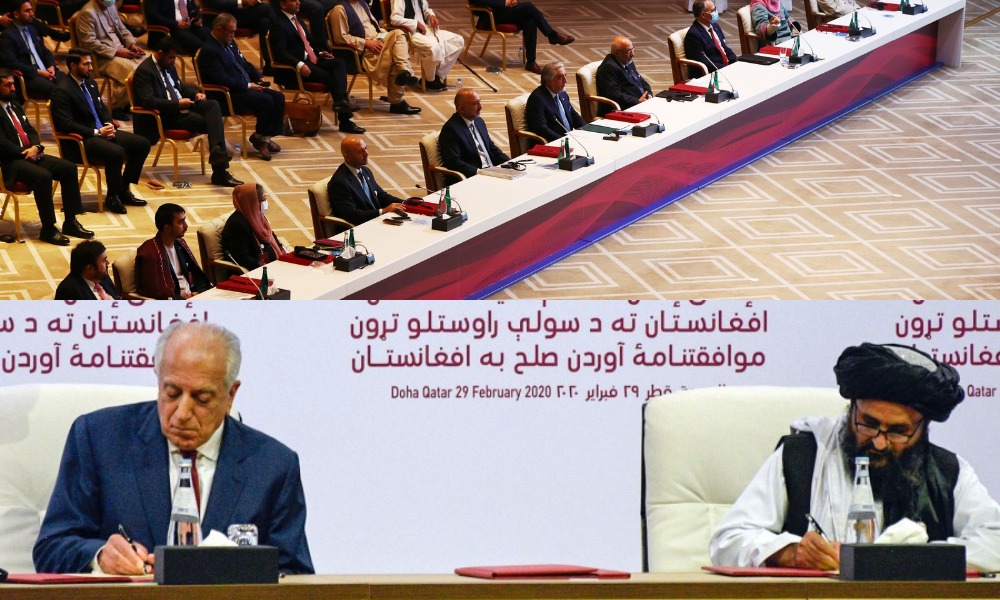
While peace talks present an opportunity for the US to extricate itself from a decades-old conflict in Afghanistan, they will also pose one of the greatest foreign policy challenges for the Biden administration, the International Crisis Group reported in its latest briefing this week.
The ICG stated that after the February 2020 deal between the US and the Taliban, peace talks took six months to start – and have only inched forward slightly. According to the group in light of this, “it is far from clear where negotiations are headed.”
The group pointed out that in accordance with the agreement, the US agreed to withdraw international forces from Afghanistan in return for the Taliban cutting ties with terrorist organizations, reducing violence and entering negotiations with Afghanistan.
But while violence levels have remained high, it has also emerged that there are wide divergences among negotiating parties on substantive issues and the Taliban are resistant to scaling back attacks while talks proceed, the group’s briefing read.
“At the moment, discussions are virtually stalled while the parties wait for signals from the new US administration on its commitment, or lack thereof, to the nascent peace process.”
The ICG stated that a political settlement is the best solution and that there is a path open to achieving this – albeit a narrow path.
They urged the Biden administration however to urgently signal its commitment to continue supporting the peace process.
The group stated: “President Biden has little to lose in continuing to test the feasibility of reaching a political settlement. Conversely, an abandonment of negotiations would incur high costs: the likely return of the Taliban to unrestricted warfare (including targeting US personnel), as well as the loss of at least tacit support for US policy from Iran, Pakistan, Russia, China and other neighbours.”
But with this in mind, the ICG said the Biden administration will need to seek an extension to the troop withdrawal deadline.
“This is not enough time for the new administration to set its policy course and evaluate Taliban compliance with the counter-terrorism assurances it provided in the February deal.
“Nor is it sufficient time for the Afghan parties – who, for instance, spent three months negotiating a brief set of procedural rules for talks – to notch any meaningful agreements,” the group stated in its briefing.
They suggested this be extended by at least six months – also as the new administration needs to establish a regional diplomatic framework to support the peace process and the outcome of any peace settlement.
ICG pointed out that the new Biden administration also needs to determine whether it intends to maintain an indefinite, if small, military presence in Afghanistan for counter-terrorism purposes.
“A decision in favour of a persistent military presence would, at some point, be the death knell of the peace process because the Taliban are unlikely to consent to it,” ICG stated.
In addition, Russia, China and Iran would reject a continued US presence and could take steps to complicate it, the group stated.
“For Biden to keep troops in Afghanistan under those circumstances would make his administration the author of the next chapter of the so-called forever wars that began after the 11 September attacks, which will enter their third decade later this year,” the group stated.
However, it was suggested that the Biden administration’s top priority should be to keep the peace process going and buy the time it will need to face the decisions coming its way.












Kazakhstan’s Foreign Minister Mukhtar Tileuberdi has called for pragmatic and coordinated international engagement with Afghanistan, saying the country’s long-term stability is closely linked to the security and sustainable development of Central Asia.
Speaking during the general debate of the 81st session of the United Nations General Assembly in New York on Friday, Tileuberdi said humanitarian assistance to Afghanistan remains essential but alone cannot break the cycle of poverty, displacement and dependency.
He said Kazakhstan supports a “pragmatic, coordinated and step-by-step” approach to international engagement with Afghanistan, with the United Nations playing a central role.
Tileuberdi also said Kazakhstan is working with the UN to operationalize the United Nations Regional Centre for the Sustainable Development Goals for Central Asia and Afghanistan in Almaty.
He said the success of the centre should be measured by the results and assistance it delivers to the region.


Abu Muslim Farah defeat Khurasan Faryab 2-0 in ACL season six

Saar: Concerns over Pakistan’s political crisis discussed

Afghanistan Champions League: Omar Zawak Herat beat Toofan Herat 1-0

Blast in Pakistan’s Dera Ismail Khan kills 11, injures 30

Ariana Afghan Airlines increases Kabul-Delhi cargo flights

Saudi energy group signs major Afghanistan deals covering gas exploration and pipeline plans

Trump floats idea of renaming Atlantic or Pacific Ocean

US hits Egyptian bank branches with Iran sanctions as war marks six months

Nepal flood rescue mission enters critical phase as thousands remain missing

Iranian clubs to face Gulf opponents at neutral venues in Asian Champions League Elite
Saar: Concerns over Pakistan’s political crisis discussed

Exclusive interview with Abdul Latif Mansoor, Minister of MRRD

Tawsia: Overview of Afghanistan’s iron mines

Tahawol: Discussion on fresh Pakistani airstrikes on Afghanistan

Saar: Calls for international support for Afghanistan discussed
-

 World5 days ago
CNN, MS NOW and Politico sue Trump, challenging White House ban
-

 Latest News4 days ago
Ariana Afghan Airlines ranks seventh among 45 Central Asian airlines
-

 Latest News5 days ago
UN reiterates call for respect for international law after Kunar airstrikes
-

 Regional4 days ago
US and Iran hold first talks since June after Trump’s ‘annihilation’ threat
-

 Latest News4 days ago
Silk Road highway in Wakhan corridor now reaches the China border
-

 Regional3 days ago
Iran airlines cancel flights as US sanctions hit
-

 Latest News5 days ago
Afghan Official: Pakistan’s airstrikes will not go unanswered
-

 Sport5 days ago
Afghan boxing referee heads to China for international festival