
Latest News
Imran Khan says Taliban won’t talk peace unless Ghani goes

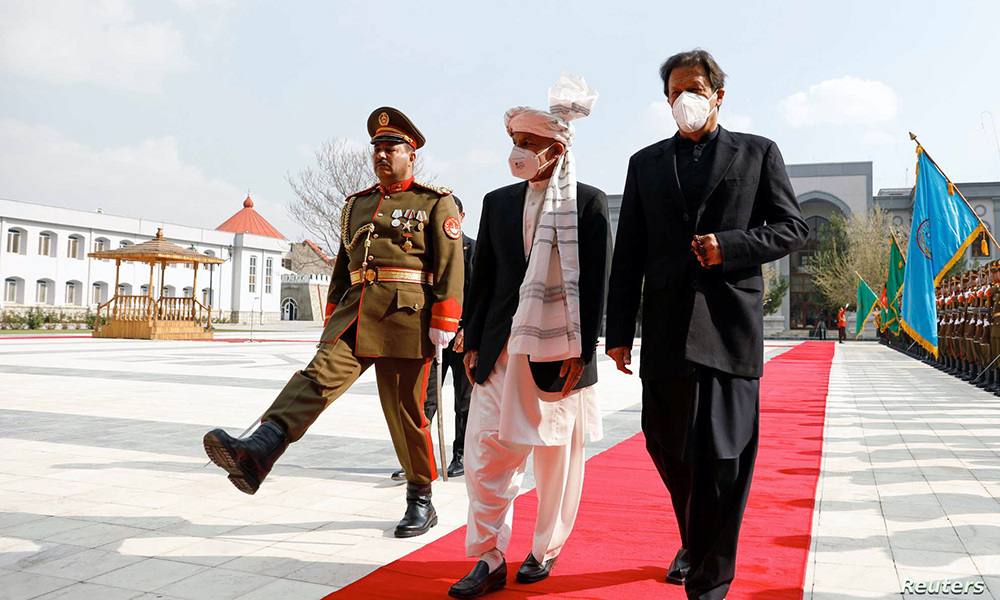
Taliban leaders have said they will not negotiate with the Afghan government as long as Ashraf Ghani remains president, Pakistani Prime Minister Imran Khan said on Wednesday (August 11), Reuters reported.
With peace talks stalled, violence in Afghanistan has escalated spiked sharply as the insurgent group makes rapid territorial gains. A U.S. defence official said on Wednesday that Taliban fighters could take over Kabul in 90 days.
Khan said a political settlement was looking difficult under current conditions.
“I tried to persuade the Taliban… three to four months back when the Taliban senior leadership came here,” Khan told foreign journalists at his home in Islamabad.
“The condition is that as long as Ashraf Ghani is there, we (Taliban) are not going to talk to the Afghan government,” Khan said, quoting the Taliban leaders as telling him.
According to Reuters peace talks between the Taliban, who view Ghani and his government as puppets of the United States, and a team of Kabul-nominated Afghan negotiators started last September but have made no substantive progress.
Representatives of a number of countries, including the United States, are currently in the Qatari capital of Doha talking to both sides in a last-ditch push for a ceasefire before Aug 31 – the day all foreign forces officially exit Afghanistan.
The Pakistani prime minister said he felt the Afghan government was now trying to convince the United States to come back and intervene again, Reuters reported.
“They’ve been here for 20 years… What will they do now that they did not do for 20 years?” he said.
U.S. forces have continued to use airstrikes to support Afghan forces against Taliban advances, but it remains unclear if such support will continue after Aug 31.
Khan said Pakistan had “made it very clear” that it does not want any American military bases in Pakistan after U.S. forces exit Afghanistan.





Latest News
Iran executes at least 20 Afghan nationals in 2026; rights groups raise concerns
Most of the documented executions reportedly took place at Adelabad Prison in Shiraz, Taybad Prison, Yazd Prison and Dastgerd Prison in Isfahan.
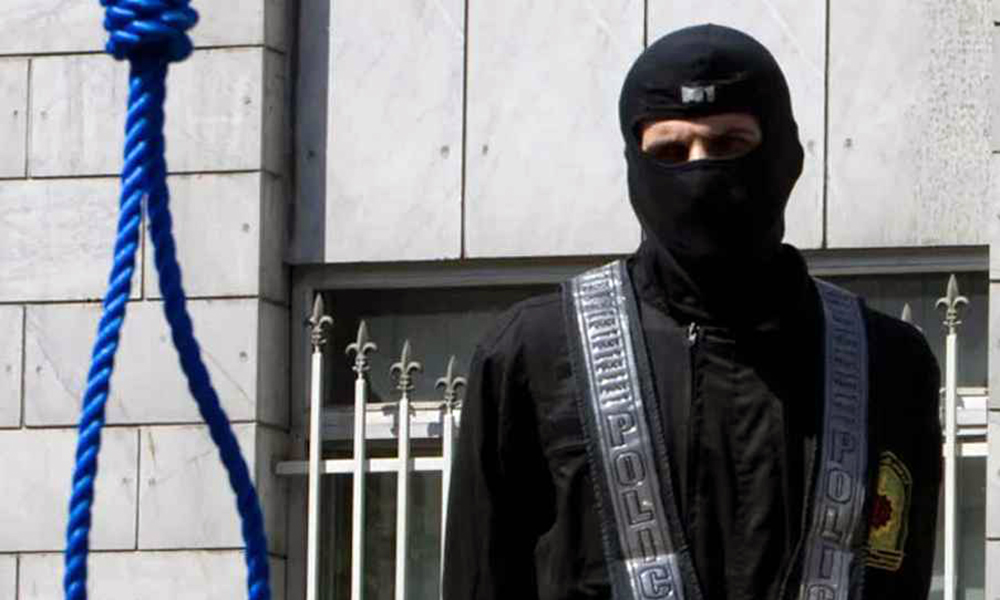
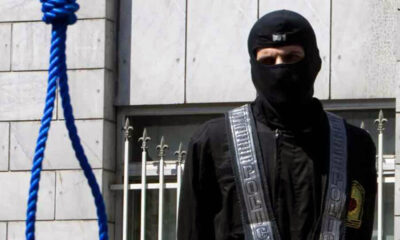
Iran has executed at least 20 Afghan nationals by hanging since the beginning of 2026, according to human rights organizations monitoring executions in the country.
Reports reviewed by the groups indicate that executions of Afghan citizens have been recorded in almost every month of the year. The reported charges include drug-related offenses, murder, espionage on behalf of Israel, and participation in anti-government protests.
Human rights organizations have raised concerns over whether defendants in these cases received fair trials, citing questions surrounding access to legal representation, judicial transparency and effective opportunities to defend themselves.
According to the reports, at least three other Afghan nationals have also been sentenced to death.
Most of the documented executions reportedly took place at Adelabad Prison in Shiraz, Taybad Prison, Yazd Prison and Dastgerd Prison in Isfahan.
Among the cases highlighted by rights groups are those of two cousins, Gol Mohammad Mohammadi and Qayem Hosseini, who were sentenced to death following trials linked to anti-government protests in Isfahan in January.
Human Rights Organization Iran and Hengaw also reported that three Afghan nationals — Afshar Shah-Ahmadi, Iman Shafayi and Sadruddin Ahmadzadeh — were executed in July after being convicted of involvement in the burning of a police station.
Rights groups say their concerns extend beyond the executions themselves, pointing to alleged shortcomings in investigations, access to legal counsel and transparency in capital punishment cases.
Activists also say some executions in Iran are carried out without official announcements, making it difficult to determine the full number of Afghan nationals executed in the country.
According to Hengaw, at least 85 Afghan citizens were executed in Iran in 2025.
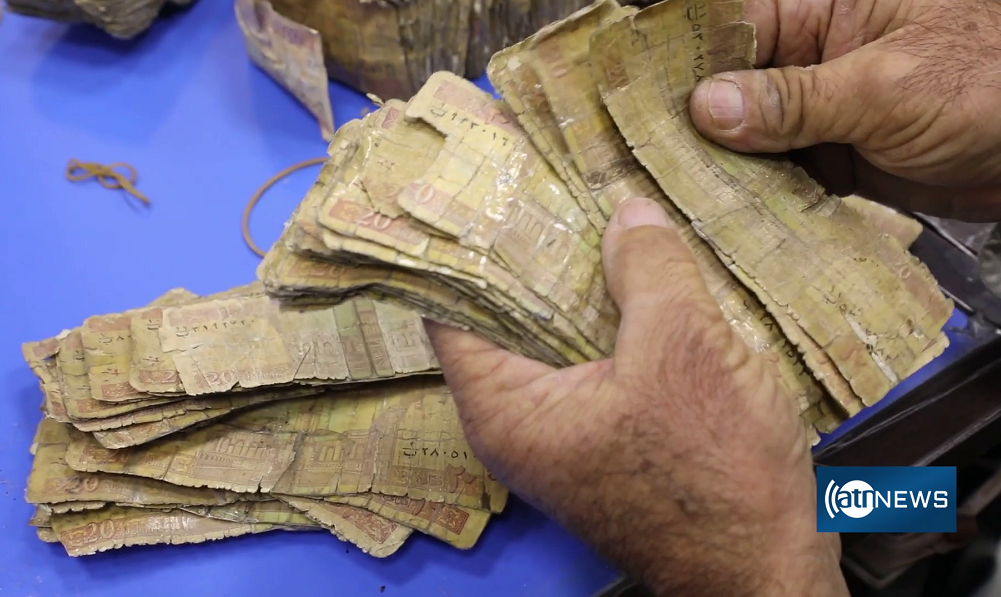
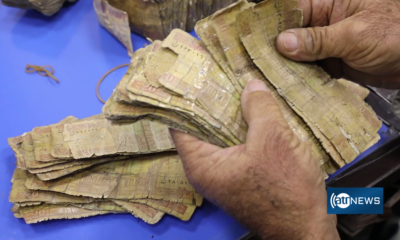
Da Afghanistan Bank (central bank) says it has collected and destroyed worn-out banknotes worth around AFN 2.5 billion over the past year as part of efforts to maintain the quality of currency in circulation.
Hasibullah Noori, spokesperson for Da Afghanistan Bank, said citizens can exchange worn banknotes for new ones by visiting the central bank or commercial banks.
The move comes as some citizens and money changers report an increase in worn banknotes in the market. They say such notes are often difficult to use in daily transactions, with some people refusing to accept them.
Money changers say the situation has created difficulties in routine transactions and called for more worn banknotes to be removed from circulation.
Da Afghanistan Bank has urged citizens to take better care of Afghan currency to prevent banknotes from becoming worn before the end of their expected lifespan. The bank says premature replacement and printing of banknotes imposes additional costs.
Bank officials said new banknotes are being injected into circulation based on monetary policy and market demand.
Latest News
IEA spokesman says government will resolve issue of girls’ education
He said one in every four Afghans is currently engaged in education, adding that expanding education, developing higher education, strengthening scientific research and improving human resources remain among the government’s priorities.
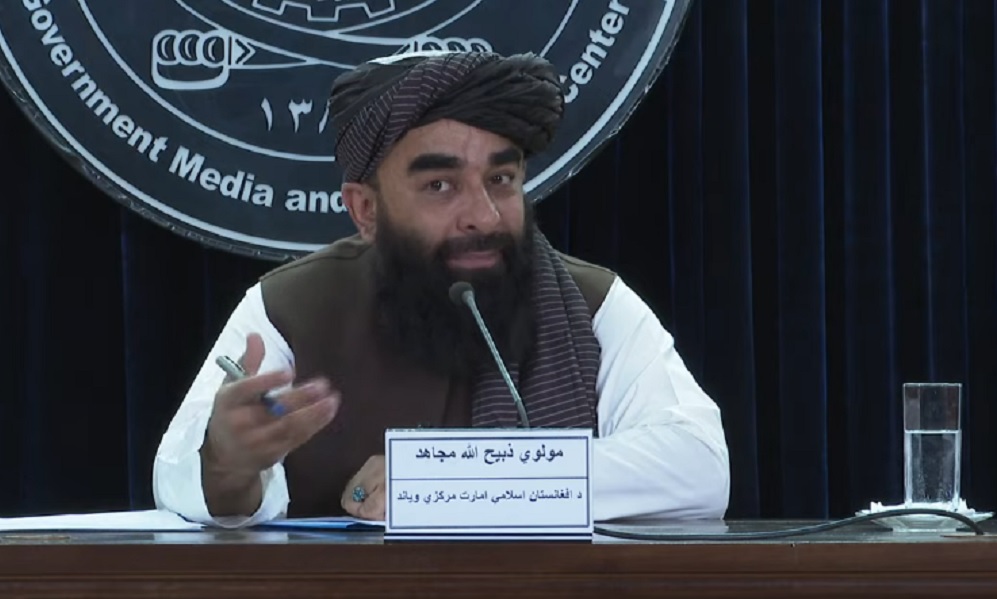
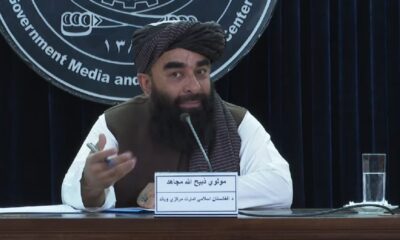
Zabihullah Mujahid, spokesperson for the Islamic Emirate of Afghanistan (IEA), says the government is working to resolve the issue of girls’ education beyond grade six.
Speaking on the “Government in the Media Mirror” program on Sunday, Mujahid said the issue remains under review and efforts are ongoing to address what he described as a gap in the country’s education system.
He said one in every four Afghans is currently engaged in education, adding that expanding education, developing higher education, strengthening scientific research and improving human resources remain among the government’s priorities.
Mujahid’s remarks come as girls above grade six have remained barred from secondary schools in Afghanistan since the IEA returned to power in 2021. The authorities have repeatedly said the issue is being considered but have not announced a timeline for reopening secondary schools to girls.
According to Mujahid, 238 new schools and religious schools were built across Afghanistan over the 1447 Islamic Hijri year, while 970 others were renovated or rebuilt.
He said more than 38,000 public and private schools are currently operating across the country, with more than 7.62 million students enrolled. More than 2.4 million students are also studying at religious schools, he added.
Mujahid further said more than 212,000 students are enrolled in public and private universities, while over 77,855 students are studying at technical and vocational schools and institutes.
He also said the General Directorate of Examinations held 53 university entrance examination sessions last year, with 189,169 candidates participating.
On scientific research, Mujahid said 14 research projects were completed and 164 scientific papers were published by the Academy of Sciences during the past year. He added that 100 conferences and six scientific seminars were also held, while work continues on 192 research projects.


Iran executes at least 20 Afghan nationals in 2026; rights groups raise concerns

Tahawol: Latest on Stalled Kabul-Islamabad Talks

Saar: Afghanistan’s Relations with Regional Countries

AFN 2.5 billion in worn banknotes removed from circulation over past year

IEA spokesman says government will resolve issue of girls’ education

AFC confirms clubs for 2026/27 competitions; draw set for August 18

Only two days to go before Afghanistan and Ireland begin ODI series

Four mediators struggle to secure lasting Pakistan-Afghanistan ceasefire

Kabul opens cardiac hospital for children

Heavy monsoon rains claim lives across India as flooding and landslides continue
Tahawol: Latest on Stalled Kabul-Islamabad Talks
Saar: Afghanistan’s Relations with Regional Countries

Tahawol: Islamic Emirate seeks to normalize US ties

Saar: Discussion on ensuring Afghanistan’s border security

Tawsia: Afghanistan’s efforts to boost production and exports disucssed
-
 Latest News4 days ago
Pakistan open to state-to-state dialogue with Afghanistan on terrorism
-
 Sport4 days ago
ATN secures exclusive rights to broadcast T20I series in India across Afghanistan
-

 World5 days ago
Trump administration issues pause on visa appointments for applicants worldwide
-

 International Sports5 days ago
Tottenham face Charlton as ATN brings live EFL Cup action to Afghan fans
-
 World5 days ago
US spy chief visits Russia for meetings, media reports
-

 Regional4 days ago
Qatar PM to visit Tehran to pursue mediation efforts
-
 Latest News4 days ago
Standardized orthography for Dari and Pashto languages is essential: official
-
 Latest News4 days ago
Trump says overnight US withdrawal from Bagram left Afghanistan vulnerable to collapse