
Regional
India strikes Pakistan over Kashmir tourist killings
A Pakistani military spokesperson said eight people had been killed in the Indian strikes, 35 were injured and two were missing.

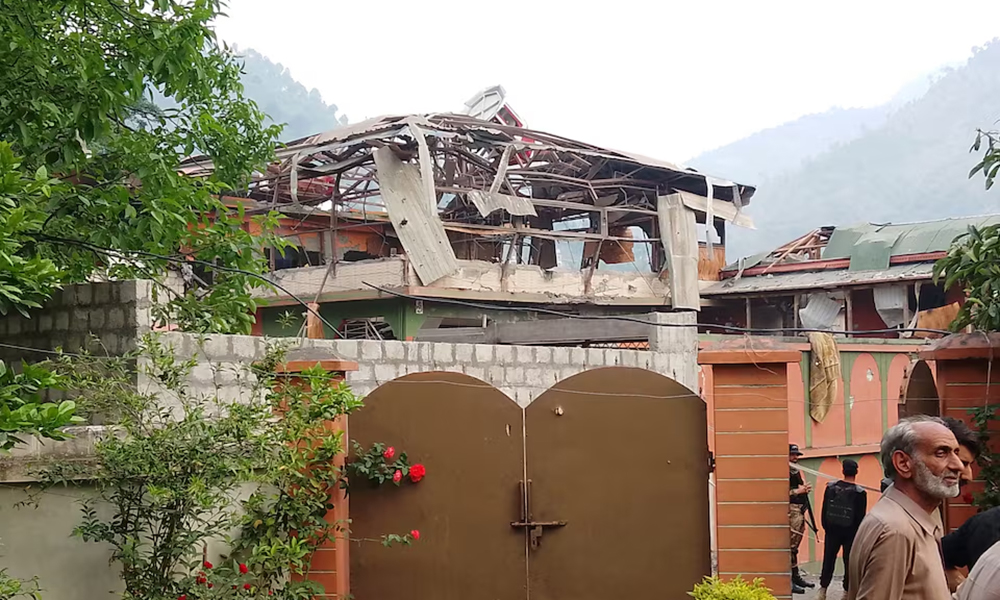
India attacked Pakistan and Pakistani Kashmir on Wednesday and Pakistan said it had shot down five Indian fighter jets in the worst fighting in more than two decades between the nuclear-armed enemies, Reuters reported.
India said it struck nine Pakistani “terrorist infrastructure” sites, some of them linked to an attack by Islamist militants on Hindu tourists that killed 26 people in Indian Kashmir last month. Islamabad said six Pakistani locations were targeted, with eight people killed.
Indian forces attacked the headquarters of Islamist militant groups Jaish-e-Mohammed and Lashkar-e-Taiba, an Indian defence source told Reuters.
“India has demonstrated considerable restraint in selection of targets and method of execution,” the Indian defence ministry said in a statement.
Pakistan said Indian missiles hit three sites and a military spokesperson told Reuters five Indian aircraft had been shot down, a claim not confirmed by India.
“All of these engagements have been done as a defensive measure,” military spokesperson Ahmed Sharif Chaudhry said. “Pakistan remains a very responsible state. However, we will take all the steps necessary for defending the honour, integrity and sovereignty of Pakistan, at all cost.”
Islamabad called the assault a “blatant act of war” and said it had informed the U.N. Security Council that Pakistan reserved the right to respond appropriately to Indian aggression, read the report.
The nuclear-armed South Asian neighbours also exchanged intense shelling and heavy gunfire across much of their de facto border in the Himalayan region of Kashmir, police and witnesses told Reuters.
India and Pakistan have fought two wars since 1947 over Muslim-majority Kashmir, which both sides claim in full and control in part.
Since a 2003 ceasefire, to which both countries recommitted in 2021, targeted strikes between the neighbours are extremely rare, especially Indian strikes on Pakistani areas outside Pakistani Kashmir.
But analysts said the risk of escalation is higher than in the recent past due to the severity of India’s attack, which New Delhi called “Operation Sindoor”.
U.S. President Donald Trump called the situation “a shame” and added, “I hope it ends quickly.”
U.N. Secretary-General Antonio Guterres called for maximum military restraint from both countries, a spokesperson said.
A Pakistani military spokesperson said eight people had been killed in the Indian strikes, 35 were injured and two were missing.
The Pakistani army’s shelling across the frontier in Kashmir killed three civilians, the Indian army said.
Indian TV channels showed videos of explosions, fire, large plumes of smoke in the night sky and people fleeing in several places in Pakistan and Pakistani Kashmir. Reuters could not independently verify the footage.
Pakistani Prime Minister Shehbaz Sharif said Islamabad was responding to the Indian attacks but did not provide details. Pakistan’s populous province of Punjab declared an emergency, its chief minister said, and hospitals and emergency services were on high alert.
A Pakistani military spokesperson told broadcaster Geo that two mosques were among the sites hit by India. The Pakistani defence minister told Geo that all the sites were civilian and not militant camps.
He said India’s claim of targeting “camps of terrorists is false”.
After India’s strikes, the Indian army said in a post on X on Wednesday: “Justice is served.”
A spokesperson for the Indian Embassy in Washington told Reuters that evidence pointed “towards the clear involvement of Pakistan-based terrorists in this terror attack,” referring to the April tourist killings.
India said two of three suspects in that attack were Pakistani nationals but had not detailed its evidence. Pakistan denied that it had anything to do with the April killings.
News of the strikes impacted Indian stock futures mildly, with the GIFT NIFTY at 24,311, 0.3% below the NIFTY 50’s (.NSEI), last close of 24,379.6 on Tuesday.
Several airlines including India’s largest airline, IndiGo (INGL.NS), Air India and Qatar Airways canceled flights in areas of India and Pakistan due to closures of airports and airspace
Indian National Security Advisor Ajit Doval spoke to U.S. Secretary of State Marco Rubio and other senior Indian officials briefed counterparts in Britain, Russia, Saudi Arabia and the United Arab Emirates, an Indian source told Reuters.
The Indian strike goes far beyond New Delhi’s response to previous attacks in Kashmir blamed on Pakistan. Those include India’s 2019 air strike on Pakistan after 40 Indian paramilitary police were killed in Kashmir and India’s retaliation for the deaths of 18 soldiers in 2016, Reuters reported.
“Given the scale of the Indian strike, which was far greater than what we saw in 2019, we can expect a sizable Pakistani response,” said Michael Kugelman, a Washington-based South Asia analyst and writer for the Foreign Policy magazine.
“All eyes will be on India’s next move. We’ve had a strike and a counter strike, and what comes next will be the strongest indication of just how serious a crisis this could become,” he said.






Regional
Trump backs down on strikes on Iran’s power network, says US and Tehran holding talks
Iranian attacks have effectively closed the Strait, which carries a fifth of global oil and liquefied natural gas.
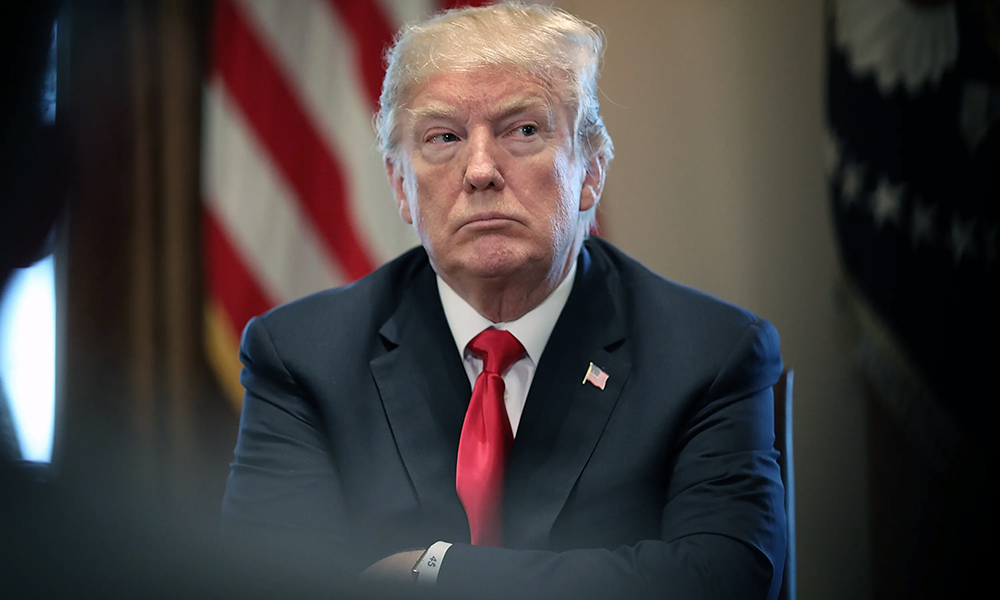
President Donald Trump backed down on targeting Iran’s power network on Monday, saying the U.S. and Iran have held constructive talks and that he would postpone any strikes on power plants and energy infrastructure, Reuters reported.
Trump’s statement came after Iran threatened to attack Israel’s power plants and those supplying U.S. bases across the Gulf region if the U.S. targets Iran’s power network.
The dollar plunged and stocks surged following Trump’s post.
The United States and Iran “have had, over the last two days, very good and productive conversations regarding a complete and total resolution of our hostilities in the Middle East,” Trump wrote in a post on Truth Social.
“I have instructed the Department of War to postpone any and all military strikes against Iranian power plants and energy infrastructure for a five-day period, subject to the success of the ongoing meetings and discussions.”
On Saturday, Trump warned that Iranian power plants would be destroyed if Tehran failed to “fully open” the Strait of Hormuz to all shipping within 48 hours. Trump set a deadline of around 7:44 p.m. EDT (2344 GMT) on Monday.
Iranian attacks have effectively closed the Strait, which carries a fifth of global oil and liquefied natural gas, read the report.
More than 2,000 people have been killed in the war the U.S. and Israel launched on February 28, which has upended markets, driven up fuel costs, fuelled global inflation fears and convulsed the postwar Western alliance.
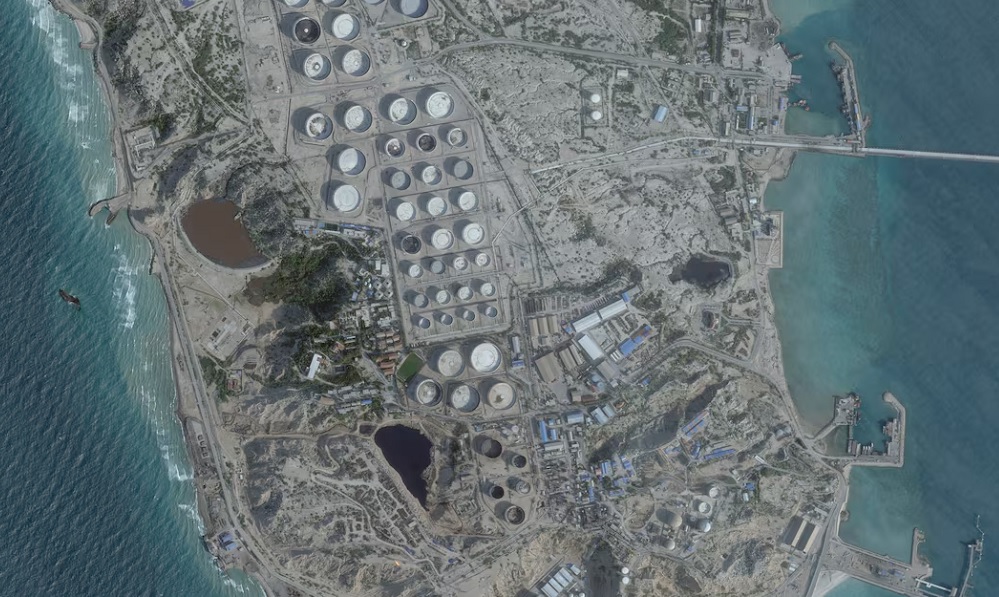
An attack on Iran’s southern coast and islands will lead to Gulf routes being cut with the laying of sea mines, the country’s Defence Council said on Monday according to state media, Reuters reported.
The U.S. is considering plans to occupy, opens new tab or blockade Iran’s Kharg Island, the country’s main oil export hub, to pressure Tehran to reopen the Strait of Hormuz to all shipping, according to Axios.
“Any attempt to attack Iran’s coasts or islands will cause all access routes in the Gulf (…) to be mined with various types of sea mines, including floating mines that can be released from the coast,” the statement read.
“In this case, the entire Gulf will practically be in a situation similar to the Strait of Hormuz for a long time (…) One should not forget the failure of more than 100 minesweepers in the 1980s in removing a few sea mines.”
The Defence Council recalled that non-belligerent states can only pass through the Strait of Hormuz by coordinating passage with Iran.
Regional
Iran says Hormuz open to all but ‘enemy-linked’ ships
The threat of Iranian attacks during the U.S.-Israeli war on Iran has kept most ships from getting through the narrow strait, the conduit for around a fifth of global oil and liquefied natural gas supplies, threatening a global energy shock.
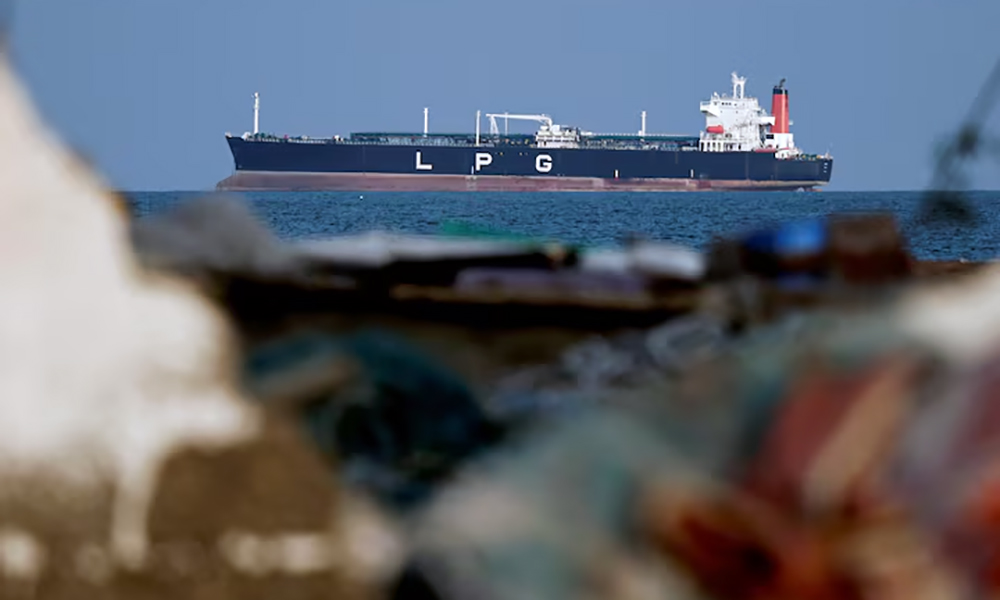
The Strait of Hormuz remains open to all shipping except vessels linked to “Iran’s enemies”, Iranian media reports published on Sunday quoted Iran’s representative to the U.N. maritime agency as saying.
Ali Mousavi’s comments came from an interview published on Friday by Chinese news agency Xinhua, before U.S. President Donald Trump’s threat to target Iranian power plants if the strait was not “fully open” within 48 hours.
The threat of Iranian attacks during the U.S.-Israeli war on Iran has kept most ships from getting through the narrow strait, the conduit for around a fifth of global oil and liquefied natural gas supplies, threatening a global energy shock.
Mousavi, who is also Iran’s ambassador to the UK, was also quoted as saying that Tehran would continue to cooperate with the International Maritime Organisation (IMO) to improve maritime safety and protect seafarers in the Gulf, adding that ships not belonging to “Iran’s enemies” could pass the strait by coordinating security and safety arrangements with Tehran.
“Diplomacy remains Iran’s priority. However, a complete cessation of aggression as well as mutual trust and confidence are more important,” Mousavi said, adding that Israeli and U.S. attacks against Iran were at the “root of the current situation in the Strait of Hormuz”.


Airstrike on Kabul drug rehabilitation centre sparks legal concerns

Trump backs down on strikes on Iran’s power network, says US and Tehran holding talks

Iran says coastal attack will lead to full Gulf closure and mine-laying

Afghanistan expresses condolences after deadly helicopter crash in Qatar

IPL 2026: Ishan Kishan named Sunrisers’ interim captain ahead of opening clash

Pakistani military jet downed in Afghanistan’s Jalalabad, pilot captured alive

Afghan Air Force conducts airstrikes in Islamabad, other cities

Prominent Muslim scholar issues fatwa calling for Afghanistan-Pakistan ceasefire

Afghan air force strikes key Pakistani military installations in retaliatory operation

IEA: Special circle in Pakistan has launched mission to destabilize region

Tahawol: Possibility of US ground forces entering Iran war discussed

Saar: Using US prisoners as political pressure

Tahawol: Pakistan’s efforts to destabilise Afghanistan

Saar: Decline in international assistance to Afghanistan

Tawsia: Assessment of Afghanistan’s economic activities in 1404
-

 Latest News5 days ago
IEA announces temporary pause in defensive operations against Pakistan for Eid
-
 Latest News4 days ago
Pakistani shelling hits Kunar districts despite ‘pause in hostility’ over Eid
-

 Sport3 days ago
Afghanistan national buzkashi falls short in Kokpar World Championship semifinals
-

 Regional4 days ago
Pakistan among top nuclear threats to America, US intelligence chief tells senate
-

 Sport2 days ago
Ireland to host Afghanistan for ODI series in August
-
 Latest News4 days ago
Peshawar High Court grants bail to 68 detained Afghan nationals, including minors
-
 World4 days ago
US weighs troop deployment as Iran war enters new phase
-
 Latest News4 days ago
Security Sources: Pakistani military shelling in Kunar and Nuristan leaves female doctor dead