
Regional
Iran declares support for Hezbollah with wider peace deal in doubt
Israel has kept up strikes in southern Lebanon, and has said its forces would not withdraw or halt operations in the country amid increasing friction with the U.S.

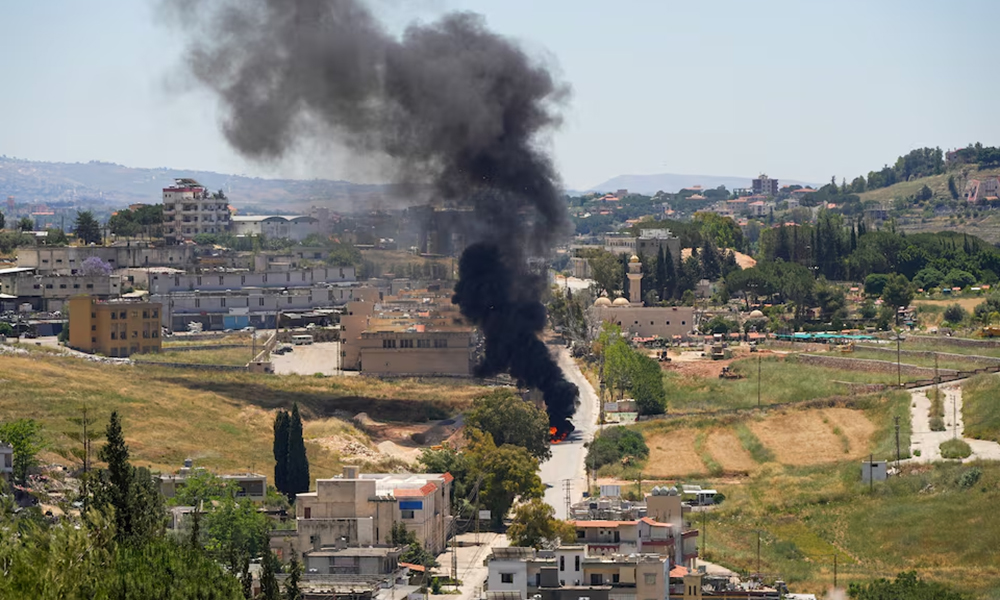
Iran has reaffirmed support for its Lebanese ally Hezbollah and demanded that Israel withdraw from southern Lebanon, underscoring complications facing an interim deal to end the broader conflict between the U.S. and Iran, Reuters reported.
Tehran has made a ceasefire between Israel and Hezbollah a condition for any peace deal with Washington to resolve the regional war, now in its fourth month, and restart shipping through the Strait of Hormuz.
The latest round of fighting between Hezbollah and Israel erupted at the start of March, two days after the U.S. and Israel launched strikes against Iran. Hezbollah said its actions were in support of Tehran.
“This war will end only when it ends in Lebanon as well,” Iranian Foreign Minister Abbas Araqchi told Lebanese TV station Al Mayadeen late on Thursday.
“The end of the war on Lebanon must be accompanied by the withdrawal of Israeli forces from the territories they have occupied,” he said.
The comments came after Hezbollah leader Naim Qassem rejected a U.S.-brokered pact between Israel and the Lebanese government to halt the fighting in Lebanon. The deal did not provide for an Israeli withdrawal and Hezbollah had not been party to the negotiations.
Israel has kept up strikes in southern Lebanon, and has said its forces would not withdraw or halt operations in the country amid increasing friction with the U.S.
Hezbollah said on Friday it had carried out two attacks on Israeli troops in south Lebanon, including near the recently captured Beaufort Castle, while Lebanese security services said Israeli airstrikes hit towns across southern Lebanon, read the report.
Mohsen Rezaei, an adviser to Iran’s supreme leader, said Hezbollah had “made great sacrifices in the recent war and it is our ally. Therefore, we support Hezbollah and remain firmly committed to our obligations toward it.”
In comments reported by the semi-official Mehr news agency, Rezaei cautioned Israel against following through on threats to resume strikes against Beirut, the Lebanese capital.
“Today we again warn this sinister regime to leave Lebanon. They should know that Lebanon will be an inseparable part of any agreement and any ceasefire,” he said.
Lebanon’s parliament speaker and Hezbollah ally Nabih Berri said on Friday he would agree to the withdrawal of the Iran-backed group from southern Lebanon if Israeli troops simultaneously left territory they occupy in the country.
Lebanon’s President Joseph Aoun on Friday accused Iran’s Revolutionary Guards of using Lebanon as a “bargaining chip” in negotiations with the U.S., telling CNN this was “unacceptable”.
Along with Lebanon, residents of Gaza, northern Israel and Kuwait have all been under fire this week, despite U.S.-arranged ceasefires that President Donald Trump said involved “shooting in a more moderate manner”, rather than a total halt to fighting.
On Friday, Iran’s navy said it had fired warning shots at U.S. destroyers in the Gulf of Oman to counter “maritime mischief and harassment and the hijacking of commercial vessels and oil tankers”. Earlier, U.S. forces said they had boarded an oil tanker in the Indian Ocean and that they would continue to block “vessels providing material support to Iran”.
The U.S. Central Command denied Iran’s claims.
“Iranian forces did NOT attack or fire at U.S. Navy warships. Doing so would be a gross violation of the ceasefire,” Central Command said in a statement on X.
In Oman, an alleged drone attack forced the suspension of oil loading at the Mina al Fahal terminal after an explosion, sources said, before normal operations resumed.
After the U.S. and Israel launched the war against Iran on February 28, Tehran fired missiles and drones against Gulf states hosting U.S. bases and largely stopped shipping through the Strait of Hormuz.
Trade remains at a fraction of its former levels through the waterway, which previously carried about a fifth of global oil and liquefied natural gas supplies.
The conflict has driven up oil prices and disrupted supply chains for other products. The U.N. World Food Programme said on Friday that it was pushing millions of people closer to hunger due to rising fuel and transport costs, Reuters reported.
The U.S. and Iran have been engaged in largely indirect negotiations to secure an interim deal to halt the war that would leave issues including Iran’s nuclear programme to further negotiations.
As part of any agreement, Tehran wants access to billions of dollars in oil revenue, waivers on sanctions on crude exports, the lifting of a U.S. blockade on its ports and leverage over the strait.
Trump, who faces domestic pressure over an unpopular war, has said his top priority is to stop Iran from acquiring nuclear weapons. Iran says its atomic program is for peaceful purposes.
Iranian parliament deputy speaker Hamid-Reza Haji Babaei said on Friday that uranium enrichment was Iran’s right, and that Trump had failed to understand that Iran’s “most powerful atomic bomb” was the Strait of Hormuz.





Regional
Iranian tanker hit by US attack near Iran’s Kharg Island, Tasnim says
Tasnim quoted local sources as saying there were no casualties and the tanker’s crew was being evacuated.
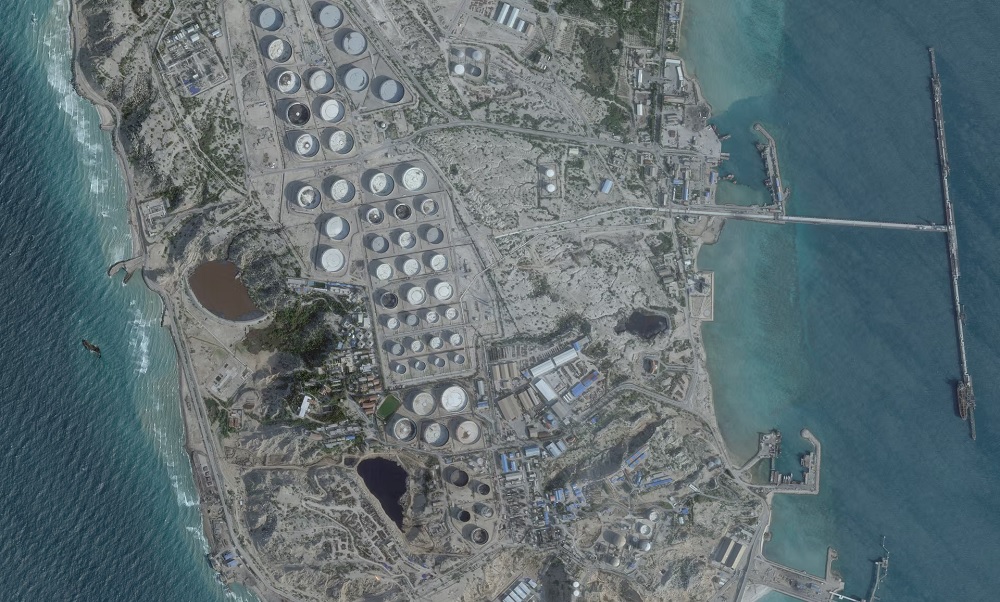
An Iranian tanker was hit by U.S. forces on Saturday near Iran’s key oil export hub, Kharg Island, in the Gulf, the semi-official Iranian news agency Tasnim reported.
According to a Tasnim correspondent from Kharg, the tanker was hit by four U.S. missiles in the area of Kharg Island’s anchorage, Reuters reported.
Tasnim quoted local sources as saying there were no casualties and the tanker’s crew was being evacuated.
There was no immediate official announcement by Iranian authorities and U.S. Central Command did not immediately respond to a request for comment.
U.S. President Donald Trump said on August 31 in a one-line social media post accompanied by an AI-generated video that Kharg Island was being “blown to smithereens”. Iranian authorities have vowed a strong response if Kharg is attacked.
Iran is the third-largest producer in the Organization of the Petroleum Exporting Countries and exported 90% of its crude via Kharg Island before the war, but flows have been disrupted since a U.S. blockade of Iranian oil exports began in mid-April.
Trump said on June 11 that he wanted to take over Kharg Island, but then said a threatened U.S. military operation there was off the table for now, days before Tehran and Washington signed an interim agreement aimed at ending the war on June 17.
A U.S. attack on Kharg would heap further pressure on Iran’s oil industry and its wider economy, which is already reeling from the U.S. naval blockade.
The U.S. imposed its blockade on Iranian ports after Iran effectively shut the Strait of Hormuz, a key waterway that carried one-fifth of the world’s oil supply before the war.

Syria has begun destroying remnants of a clandestine chemical weapons programme dating from the rule of former President Bashar al-Assad, which were recovered in May, a Syrian envoy and a United Nations representative said on Thursday.
The destruction marks the first such operation in Syria in a decade. Reuters reported in May that Syria’s new leadership had discovered remnants of Assad’s chemical weapons programme, including raw materials and munitions similar to those used in deadly gas attacks during the country’s civil war.
Izumi Nakamitsu, the UN High Representative for Disarmament Affairs, told the Security Council that, for the first time since 2014, the Organisation for the Prohibition of Chemical Weapons (OPCW) had verified the destruction of chemical munitions in Syria.
Following the May discovery, Syrian authorities identified an additional chemical weapons production facility, a previously unknown chemical used in the production of nerve agents and empty chemical munitions, Nakamitsu said.
Syria also declared two chemical weapons storage facilities where the newly discovered materials had been stored, she added.
Last month, the OPCW deployed a team to Syria to verify the destruction of category-three chemical weapons, which include unfilled munitions and other equipment used to release chemical agents. The team verified the “irreversible destruction of 42 aerial bombs”, Nakamitsu said.
Syria’s ambassador to the UN, Ibrahim Olabi, told the council that the country’s efforts were aimed at “protecting the world and the region”.
However, Olabi strongly criticised Israel, saying repeated Israeli attacks had disrupted some search-and-destruction operations and exposed Syrian teams involved in the work to danger.
“We cannot safeguard the security of the region if our security is exposed to attacks at the hands of Israel,” Olabi said, accusing Israel of undermining regional security and violating international conventions and treaties.
The Israeli military did not immediately respond to a Reuters request for comment.
Olabi also said Syria was preparing to hold the first court hearing for people suspected of involvement in the chemical weapons programme.
Syrian authorities earlier this year detained 18 suspects over alleged involvement in Assad’s chemical weapons programme, including senior military, political and technical officials.
Regional
Iran war escalation raises concern over civilian death toll
The U.S. has reported 18 military personnel killed and more than 750 wounded.
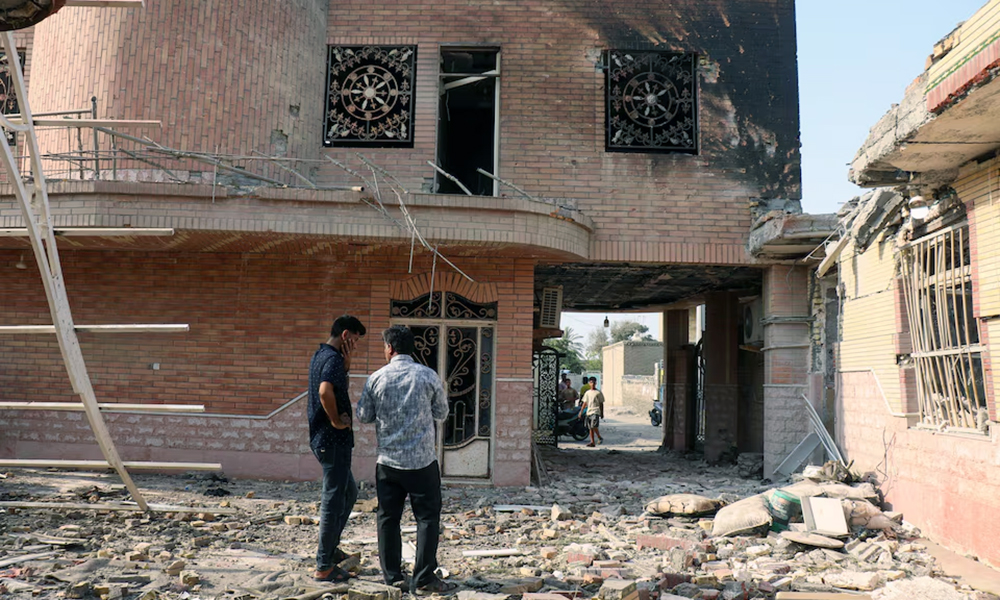
The sudden recent escalation of the Iran war has cast renewed attention on its civilian toll after Iran reported 18 dead in the last U.S. assault, including four killed and dozens wounded at a wedding, Reuters reported.
Iran’s health minister said 18 people were killed and 108 wounded in Tuesday night’s U.S. strikes across Iran. The Iranian Red Crescent said four people were killed and 67 wounded at a wedding ceremony near the coast of the Strait of Hormuz.
The return of combat operations has alarmed countries throughout the region, as Iran launched missile and drone attacks against what it said were U.S. assets in Bahrain, Jordan, Kuwait and Iraq. Kuwait’s army reported further missile and drone attacks early Thursday, saying they were intercepted by air defense systems.
The guns had largely gone silent since the previous exchange in July, although peace talks failed to advance in the interim. U.S. President Donald Trump threatened to unleash yet more military force, even though the war is unpopular at home and has driven up the cost of gasoline.
Top aides to Trump are pushing to keep the war from escalating before November’s midterm elections to staunch Republican electoral losses, and White House officials will consider ramping up military action after the vote on November 3, four people familiar with the discussions said.
Iran, for its part, has remained defiant, despite suffering heavy military and economic losses.
United Nations Secretary-General Antonio Guterres was “deeply alarmed by reports of civilian casualties, including a strike that reportedly hit a wedding ceremony in Iran,” and called for an immediate cessation of military action, his spokesperson Stephane Dujarric said.
“The Secretary-General condemns all attacks against civilians. He recalls that all parties must respect their obligations under international humanitarian law, including the principles of distinction, proportionality, and precaution,” Dujarric said.
The deaths would be in addition to the 3,636 people documented as killed in Iran as of April 7, including 1,701 civilians, according to the Human Rights Activists News Agency (HRANA), an independent Iranian rights group, read the report.
The U.S. has reported 18 military personnel killed and more than 750 wounded.
“We are aware of reports, which originated from Iranian state media. The U.S. military never targets civilians, unlike the IRGC,” U.S. Navy Captain Tim Hawkins, a spokesperson for the U.S. military’s Central Command, said in an email.
The Iranian Red Crescent Society released video showing debris strewn on the ground next to a building with a large hole in the roof, accompanied by still images showing people, some in Red Crescent vests, at a damaged building and a utility tower lying on the ground.
Reuters was able to verify the location using satellite imagery, which showed the fallen tower was 136 metres (149 yards) from the damaged building.
The wedding incident recalled the blast at a school in Minab that killed 160 peopleat a girls’ school on the first day of the war.
The Pentagon has yet to issue an official finding on the Minab strike, which would be the U.S. military’s largest civilian casualty incident in decades. It may have been the result of U.S. use of outdated targeting data, two sources familiar with the matter told Reuters.
Democratic members of the U.S. Congress have called on the administration to release findings of its investigation of the incident, but the report has not been sent to lawmakers.
U.S. defenders of the Iran war also point to civilian deaths that resulted from Iranian attempts to put down street protests that embroiled the country in December and January, before the U.S. and Israel attacked Iran on February 28. HRANA has put that death toll at more than 7,000, while Iranian exile groups claim the number is much higher.
Trump has cited an incentive for Iranians to overthrow their government as one reason for the war, in addition to seeking to halt Iran’s nuclear program and ending its support for militant groups abroad such as Hamas, Hezbollah and the Houthis.
Iran has also responded to the U.S. attacks by threatening any oil tankers that transit the Strait of Hormuz without Iranian authorization, severely curtailing traffic in a waterway that before the war carried 20% of the world’s oil supply.


Tahawol: Afghanistan and great power rivalry in Central Asia discussed

Muttaqi and Khalilzad discuss expanding Afghanistan-US relations

Saar: Iran-US ongoing tensions in Middle East discussed

Australian tourist dies of heart attack in Wakhan, Badakhshan

Iranian tanker hit by US attack near Iran’s Kharg Island, Tasnim says

Four mediators struggle to secure lasting Pakistan-Afghanistan ceasefire

HesabPay unveils new visa card and digital payment app in Kabul

AFC Champions League Elite draw nears as Al-Nassr seeded above Al-Hilal

Afghanistan secure direct qualification for 2027 Men’s ODI World Cup

WHO warns aid cuts disrupting healthcare services across Afghanistan
Tahawol: Afghanistan and great power rivalry in Central Asia discussed
Saar: Iran-US ongoing tensions in Middle East discussed

Tahawol: US rejection of Islamic Emirate’s proposal discussed

Saar: Pakistan’s conditions for improving ties with Afghanistan discussed

Tahawol: Shifting regional views on Islamic Emirate discussed
-
 Regional5 days ago
Pakistan, Saudi Arabia and Türkiye strengthen new Mecca Defence Alliance
-

 International Sports4 days ago
Iranian clubs to face Gulf opponents at neutral venues in Asian Champions League Elite
-

 Latest News4 days ago
Putin: Russia in close contact with Tajikistan over Afghanistan security
-

 Latest News5 days ago
Germany allows IEA officials to enter country to coordinate deportations
-

 Sport4 days ago
Ariana Television Network secures exclusive rights to Afghanistan’s 2026/27 cricket series
-
 Regional5 days ago
Pakistan to assume SCO presidency as Shehbaz signs summit declaration
-
 Latest News5 days ago
Afghan envoy says Kabul will not allow Afghan soil to be used against Pakistan
-
 Latest News2 days ago
Khyber Chamber demands reopening of Torkham crossing