
Latest News
Iran may release hundreds of thousands of Afghan refugees into Iraq and Turkey


Iran is considering releasing hundreds of thousands of Afghan refugees across its western borders with Iraq and Turkey.
According to The Guardian, it would be part of what officials describe as a necessarily more offensive and unpredictable strategy in the wake of the bombing of its nuclear sites and the European reimposition of UN sanctions.
The multi-pronged offensive includes expansion of its missile programme, strengthening air defenses, suspending cooperation with the UN weapons inspectorate and on 18 October blocking the establishment of a UN committee to oversee the administration of the reimposed sanctions. Officials remain opposed to reopening talks with the US, believing the talks would fail.
The threat to send refugees towards the west as well as the east has echoes of the warning issued by the Turkish president, Recep Tayyip Erdoğan, who threatened to send millions of Syrian refugees towards Europe.
Iran has at times had to accommodate as many as 6 million Afghan refugees, but Amnesty International reports that in 2025 a million Afghan refugees have been sent back to Afghanistan, having fled either due to poverty or the Islamic Emirate rule.
Amnesty claimed the mass expulsions had been scaled up in the wake of Israel’s 12 June attacks on Iran’s leadership and nuclear sites. It estimates 500,000 Afghans have been sent back over the border since June.
Until March 2025, several million Afghans had been permitted to temporarily legalize their stay in Iran by obtaining a “headcount” document. Those granted this document could access limited services, including access to state healthcare, public education, work authorization, banking and ability to enter into rental agreements. But the authorities nullified these headcount documents.
The Iranian authorities have given different figures about the number of Afghan refugees in the country, but it is thought a minimum of 2 million are in Iran illegally. The UN high commissioner for refugees has predicted that up to 4 million Afghans may be sent back to Afghanistan this year.



Latest News
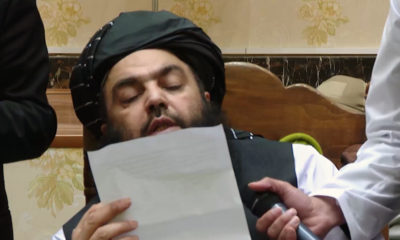
Kabir: Afghanistan will defend its sovereignty and territorial integrity
The minister strongly condemned recent attacks by Pakistani regime, describing them as violations of international and Islamic principles.
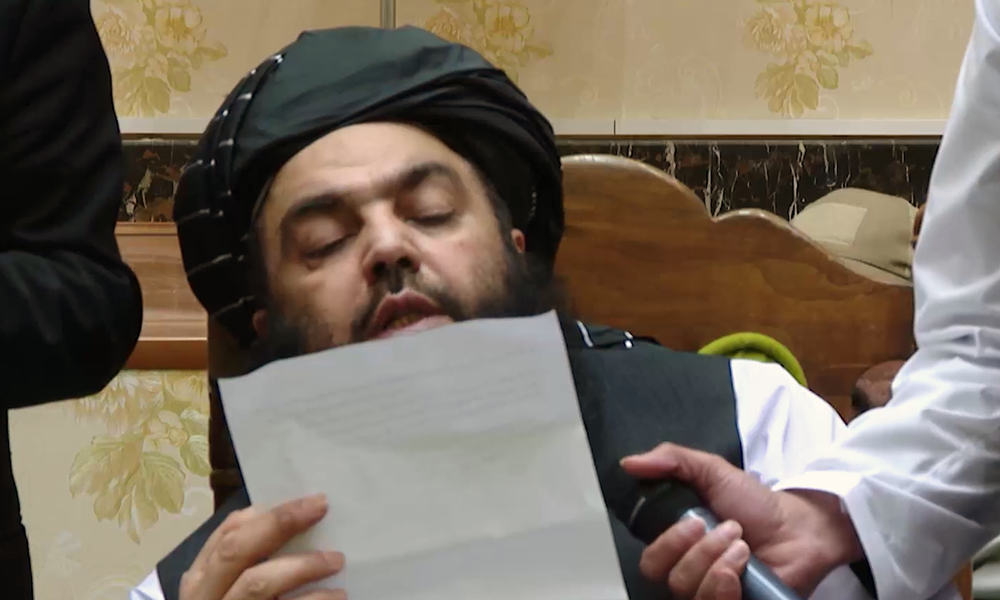
Mawlavi Abdul Kabir, Minister of Refugees and Repatriation, emphasized Thursday that Afghanistan will steadfastly defend its national sovereignty and territorial integrity.
His remarks came during the Eid al-Fitr prayers held at the Presidential Palace.
The ceremony was attended by Amir Khan Muttaqi, Minister of Foreign Affairs, senior officials of the Islamic Emirate, ambassadors and diplomats of countries based in Kabul, religious scholars, and mujahideen.
Addressing the gathering, Kabir congratulated citizens on Eid and noted that this year’s celebrations come amid regional and global turbulence, which continues to pose a serious threat to peace and stability in the region.
He underscored that strengthening the Islamic system, implementing Sharia law, promoting justice, and fostering national unity remain top priorities of the Islamic Emirate.
The minister also highlighted key government development plans, including implementing major regional projects, expanding trade, activating transit corridors, ensuring transparent management of natural resources, promoting agriculture, and developing infrastructure.
Kabir said Afghanistan has the potential to serve as a key economic bridge between South and Central Asia. He emphasized that the country’s policy is economic, balanced, and guided by principles of good neighborliness, seeking relations with all countries based on mutual respect and shared interests.
The minister strongly condemned recent attacks by Pakistani regime, describing them as violations of international and Islamic principles. He stressed that war serves no one’s interest and called on Pakistan’s scholars and citizens to prevent the relationship between the two Muslim nations from being sacrificed over the agendas of foreign powers.
He also expressed gratitude to countries that have worked to facilitate diplomatic dialogue between Afghanistan and Pakistan, noting that Kabul keeps its doors open for negotiations but is fully prepared to respond to any aggression, with Afghan forces ready to protect national sovereignty and territorial integrity.
Kabir further stated that Afghanistan is currently absorbing millions of returnees from Iran, Pakistan, and other countries. Commenting on regional developments, he condemned violence in the Persian Gulf and attacks on Iran by the United States and Israel, urging Islamic countries not to remain indifferent to such events.
Latest News
Pakistani shelling hits Kunar districts despite ‘pause in hostility’ over Eid
The incident comes amid a series of recent exchanges between Pakistan and Afghanistan, which have heightened security concerns in regions along the disputed Durand Line.
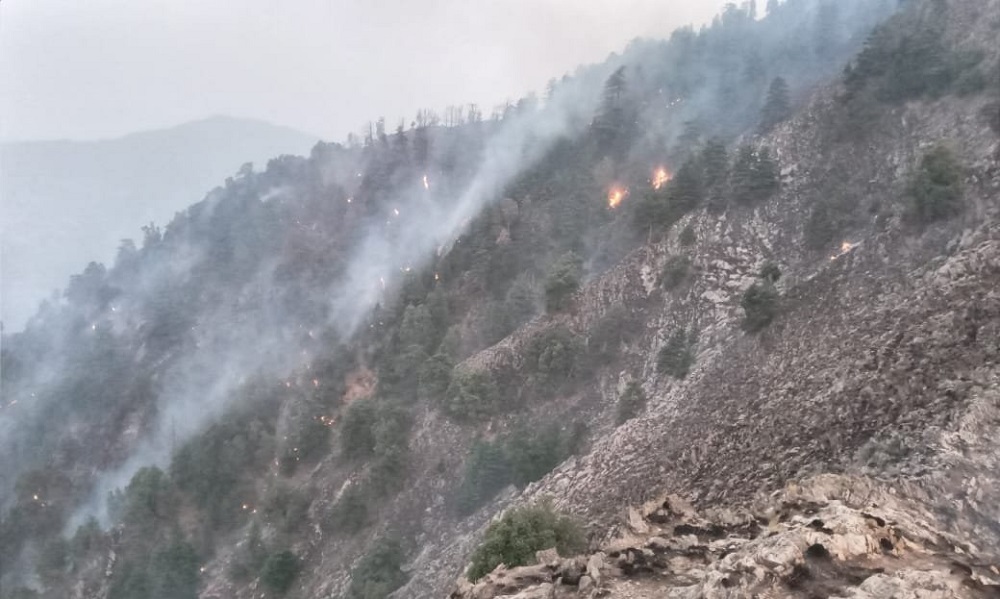
Pakistani military forces fired more than 70 artillery shells into eastern Afghanistan’s Kunar province, local officials said, in the latest incident underscoring rising cross Durand Line tensions.
Zia-ur-Rahman Spin Ghar, head of information at Kunar’s Department of Information and Culture, said 35 shells struck areas including Dokalam, Barikot and Tsongalai in Narai district. A further 37 shells were reported in parts of Manogai district.
No casualties have been reported so far, according to local authorities. However, Spin Ghar warned Thursday morning that shelling in Narai was ongoing, with some rounds reportedly landing near civilians returning to their homes.
Residents have been urged to remain alert and seek shelter in safer areas as officials continue to monitor the situation.
The incident comes amid a series of recent exchanges between Pakistan and Afghanistan, which have heightened security concerns in regions along the disputed Durand Line.
Afghan officials have repeatedly accused Pakistan of targeting civilian areas, while Islamabad has previously said its operations are aimed at militant groups operating near the border.
The shelling also coincided with Eid al-Fitr, one of the most significant holidays in the Islamic calendar. In Kandahar, the Islamic Emirate’s supreme leader, Sheikh Hibatullah Akhundzada, led Eid prayers attended by thousands.
In his sermon, Akhundzada stressed the importance of justice and accountability, calling on officials to act with integrity and warning against misconduct. He also reiterated themes of national sovereignty, expressing opposition to foreign influence and emphasizing Afghanistan’s independence.
The shelling coincided with Eid al-Fitr, during which both sides had announced a temporary pause in hostilities.
The Islamic Emirate of Afghanistan said on Wednesday it would halt its “Rad al-Zulm” defensive operations for the holiday at the request of mediating countries including Saudi Arabia, Qatar and Turkey.
In a statement, spokesperson Zabihullah Mujahid said the pause reflected goodwill toward mediation efforts, while stressing that Afghan forces would “respond bravely” to any aggression threatening national security, territorial integrity, or civilian lives.
Pakistan also confirmed a temporary suspension of its military operations for Eid, with Information Minister Ataullah Tarar stating the move was made at the request of the same regional mediators.
Qatar welcomed the truce, describing it as a constructive step toward de-escalation and expressing hope it could lead to a more lasting agreement to protect civilians and stabilize the region.
Latest News
Qatar welcomes temporary Eid truce between Afghanistan and Pakistan
The Ministry of Foreign Affairs of Qatar said the temporary truce is a constructive gesture that could help de-escalate the situation and promote calm along the border.
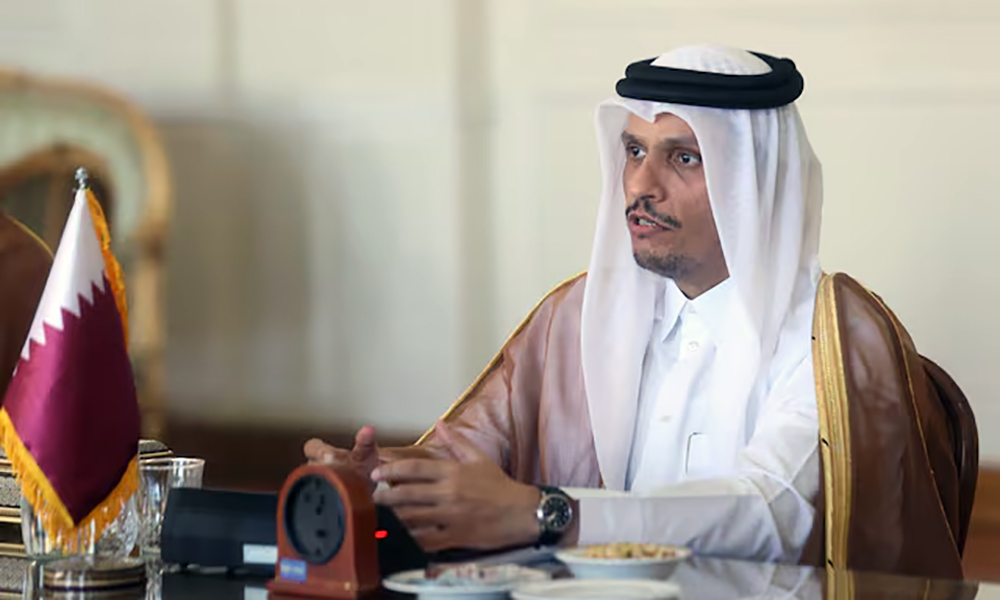
Qatar has welcomed the announcement of a temporary ceasefire between Afghanistan and Pakistan on the occasion of Eid al-Fitr, describing the move as a positive step toward easing tensions between the two neighbors.
In a statement issued on March 18 in Doha, the Ministry of Foreign Affairs of Qatar said the temporary truce is a constructive gesture that could help de-escalate the situation and promote calm along the border.
The ministry expressed hope that the short-term ceasefire would pave the way for a sustainable and lasting agreement that protects civilian lives and contributes to long-term security and stability in the region.
Qatar also commended both sides for responding to calls by Qatar, Saudi Arabia, and Turkey to implement the Eid truce, emphasizing that dialogue and peaceful solutions remain the best approach for resolving disputes.
The Qatari Foreign Ministry further reiterated Doha’s commitment to continuing diplomatic efforts, in coordination with regional and international partners, to support de-escalation and strengthen peace and stability in the region.
The spokesman for the Islamic Emirate of Afghanistan announced Wednesday that the security and defense forces of the Islamic Emirate are announcing a temporary halt to the “Rad-ul Zulm” defense operations on the occasion of Eid al-Fitr and at the request of Saudi Arabia, Turkey, and Qatar.
Zabihullah Mujahid wrote in X: “While appreciating the goodwill of friendly and mediating countries, the Islamic Emirate notes that maintaining the national security of Afghanistan, the privacy and safety of Afghans’ lives is its national and religious duty, and will respond courageously to any aggression if threatened.”
This is while Attaullah Tarar, Pakistan’s Minister of Information and Broadcasting, has also announced that the country has temporarily halted its attacks on Afghanistan on the occasion of Eid al-Fitr at the request of Saudi Arabia, Qatar, and Turkey.


Kabir: Afghanistan will defend its sovereignty and territorial integrity

Pakistani shelling hits Kunar districts despite ‘pause in hostility’ over Eid

US weighs troop deployment as Iran war enters new phase

Qatar welcomes temporary Eid truce between Afghanistan and Pakistan

Peshawar High Court grants bail to 68 detained Afghan nationals, including minors

Pakistani military jet downed in Afghanistan’s Jalalabad, pilot captured alive

Afghan Air Force conducts airstrikes in Islamabad, other cities

IEA releases three Pakistani soldiers to mark Ramadan

Afghanistan’s Chief of Armed Forces underscores readiness and equipment for national defense

Afghanistan welcomes investment and technology partnerships with India

Tahawol: Global reactions to Pakistan’s recent attacks discussed

Saar: Consequences of Pakistani airstrikes on Afghans discussed

Tahawol: Pakistan’s new attacks on Kabul hospital discussed

Saar: Pakistani military’s airstrike on Kabul hospital discussed

Tahawol: China’s efforts for Afghanistan-Pakistan talks
-
 Latest News3 days ago
IEA Supreme Leader issues Eid-ul-Fitr message urging unity and support for Islamic system
-
 Latest News4 days ago
Regional criticism grows amid Pakistan strikes inside Afghanistan
-
 Latest News4 days ago
Afghan airstrike targets a military camp in South Waziristan
-

 Business3 days ago
Turkmenistan, Afghanistan discuss steps to speed up land acquisition for TAPI pipeline
-

 Sport4 days ago
IPL 2026 kicks off in under two weeks; Afghan players set to shine
-

 Business4 days ago
Afghanistan expands exports through Lapis Lazuli Corridor
-

 Latest News5 days ago
India condemns Pakistani airstrikes on Afghanistan
-
 Latest News20 hours ago
IEA announces temporary pause in defensive operations against Pakistan for Eid