
Latest News
Jeff Bezos, world’s richest man, carries out inaugural space voyage

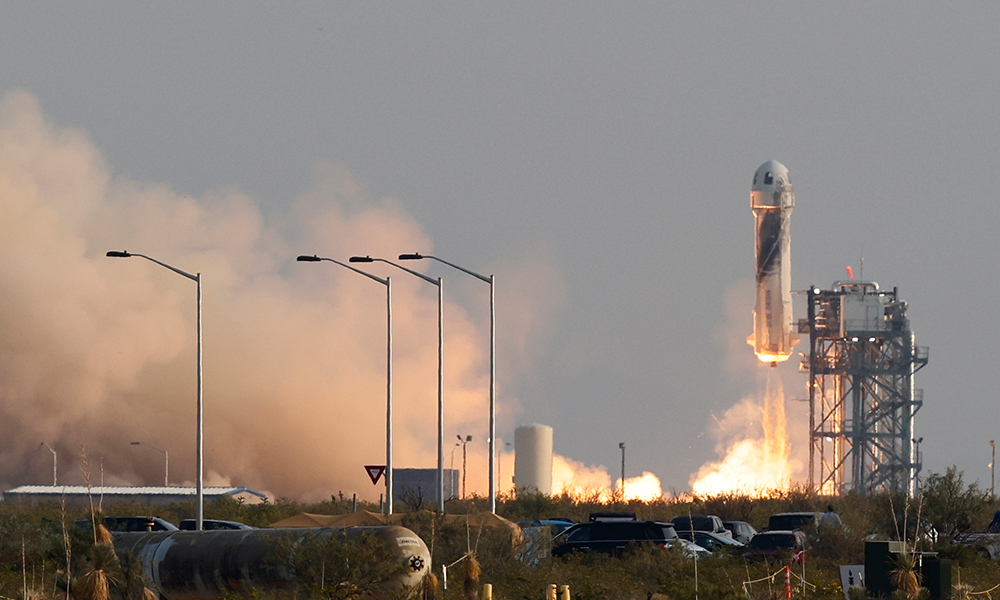
Jeff Bezos, the world’s richest man, and three crewmates soared high above the Texas desert aboard his space venture Blue Origin‘s New Shepard launch vehicle on Tuesday and returned safely to Earth, a historic suborbital flight that helps to inaugurate a new era of private commercial space tourism.
The spacecraft ignited its BE-3 engines for a liftoff from Blue Origin’s Launch Site One facility about 20 miles (32 km) outside the rural town of Van Horn, flying about 66.5 miles (107 km) above the planet’s surface. There were generally clear skies with a few patchy clouds on a cool morning for the launch.
The 57-year-old American billionaire flew on a voyage lasting about 10 minutes and 20 seconds to the edge of space, nine days after Briton Richard Branson was aboard his competing space tourism company Virgin Galactic’s successful inaugural suborbital flight from New Mexico.
New Shepard was designed to hurtle at speeds upwards of 2,200 miles (3,540 km) per hour to an altitude beyond the so-called Kármán line – 62 miles (100 km) – set by an international aeronautics body as defining the boundary between Earth’s atmosphere and space.
After the capsule separates from the booster, the crew was due to have unbuckled for a few minutes of weightlessness. Then the capsule returned to Earth under parachutes, using a last-minute retro-thrust system that expelled a “pillow of air” for a soft landing in the Texas desert.

Bezos gave a thumbs-up sign from inside the capsule after landing on the desert floor before stepping out, wearing a cowboy hat and blue flight suit, and giving company employees high fives.
The mission was part of a fiercely competitive battle between Bezos’ Blue Origin and fellow billionaire Richard Branson’s Virgin Galactic to tap a potentially lucrative space tourism market the Swiss bank UBS estimates will be worth $3 billion annually in a decade.
Bezos and the other passengers climbed into an SUV vehicle for a short drive to the launch pad before walking up a tower and getting aboard the gleaming white spacecraft, with a blue feather design on its side. Each passenger rang a shiny bell before boarding the craft’s capsule.
Branson got to space first, but Bezos was due to fly higher – 62 miles (100 km) for Blue Origin compared to 53 miles (86 km) for Virgin Galactic – in what experts call the world’s first unpiloted space flight with an all-civilian crew. It represents Blue Origin’s first crewed flight to space.
Bezos, founder of ecommerce company Amazon.com Inc, and his brother Mark Bezos, a private equity executive, were joined by two others. Pioneering female aviator Wally Funk, 82, and recent high school graduate Oliver Daemen, 18, become the oldest and youngest people to reach space.
Bezos embraced Funk after the landing.
The flight coincides with the anniversary of Americans Neil Armstrong and Edwin “Buzz” Aldrin becoming the first humans to walk on the moon, on July 20, 1969. New Shepard is named for Alan Shepard, who in 1961 became the first American in space.
Funk was one of the so-called Mercury 13 group of women who trained to become NASA astronauts in the early 1960s but was passed over because of her gender. Daemen, Blue Origin’s first paying customer, is set to study physics and innovation management in the Netherlands. His father, who heads investment management firm Somerset Capital Partners, was on site to watch his son fly to space.
The launch was witnessed by members of the Bezos family and Blue Origin employees, and a few spectators gathered along the highway before dawn. Spectators applauded during the flight.
MINUTES OF WEIGHTLESSNESS
New Shepard is a 60-foot-tall (18.3-meters-tall) and fully autonomous rocket-and-capsule combo that cannot be piloted from inside the spacecraft. It is completely computer-flown and had none of Blue Origin’s staff astronauts or trained personnel onboard.
Virgin Galactic used a spaceplane with a pair of pilots on board.
The reusable Blue Origin booster had previously flown twice to space.
The launch represented another step in the race to establish a space tourism sector that Swiss investment bank UBS estimates will reach $3 billion annually in a decade. Another billionaire tech mogul, Elon Musk, plans to send an all-civilian crew on a several-day orbital mission on his Crew Dragon capsule in September.
On Twitter, Musk wished the Blue Origin crew “best of luck” hours before the launch.
Blue Origin aims for the first of two more passenger flights this year to happen in September or October.
Blue Origin appears to have a reservoir of future customers. More than 6,000 people from at least 143 countries entered an auction to become the first paying customer. The auction winner, who made a $28 million bid, dropped out of Tuesday’s flight, opening the way for Daemen. Virgin Galactic has said 600 people have booked reservations, priced at about $250,000 per ticket.
Branson has said he aims ultimately to lower the price to about $40,000 per seat.
Bezos has a net worth of $206 billion according to the Bloomberg Billionaires. He stepped down this month as Amazon CEO but remains its executive chairman.

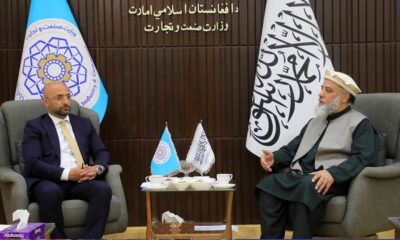






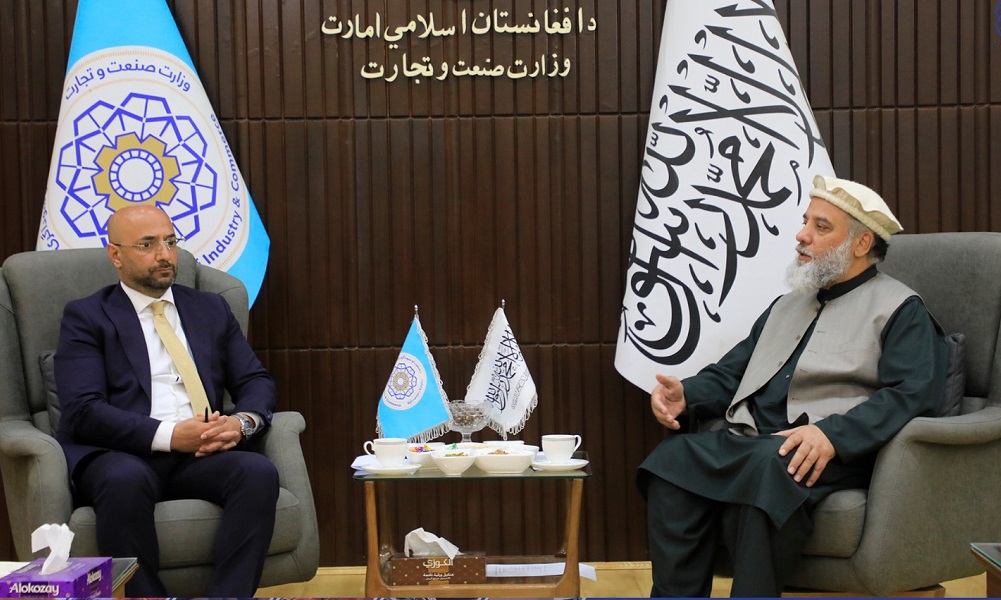
Nooruddin Azizi, Minister of Industry and Commerce of the Islamic Emirate of Afghanistan, met on Thursday with Sadin Ayyıldız, Chargé d’Affaires of the Turkish Embassy in Kabul. During the meeting, Ayyıldız invited the Minister of Industry and Commerce to participate in Turkey’s Antalya Diplomacy Forum.
According to a statement from the Ministry of Industry, the meeting also emphasized the economic, trade, and historical relations between Kabul and Ankara, as well as the export of Afghan goods to Turkey.
The two sides discussed increasing trade volume between the two countries, strengthening economic relations, facilitating and enhancing commercial activities, cooperation in road transport along various routes, activating the Lapis Lazuli Corridor, and regional cooperation.
Azizi, while thanking Turkey for inviting the Islamic Emirate to the Antalya Diplomacy Forum, introduced the Ministry’s technical team to ensure better coordination and planning.
The Antalya Diplomacy Forum is an international conference held annually in Turkey, aimed at examining global challenges and finding joint solutions through dialogue and diplomacy. It hosts representatives from more than 100 countries, including presidents, leaders, high-ranking officials, international organizations, analysts, and media from various countries.
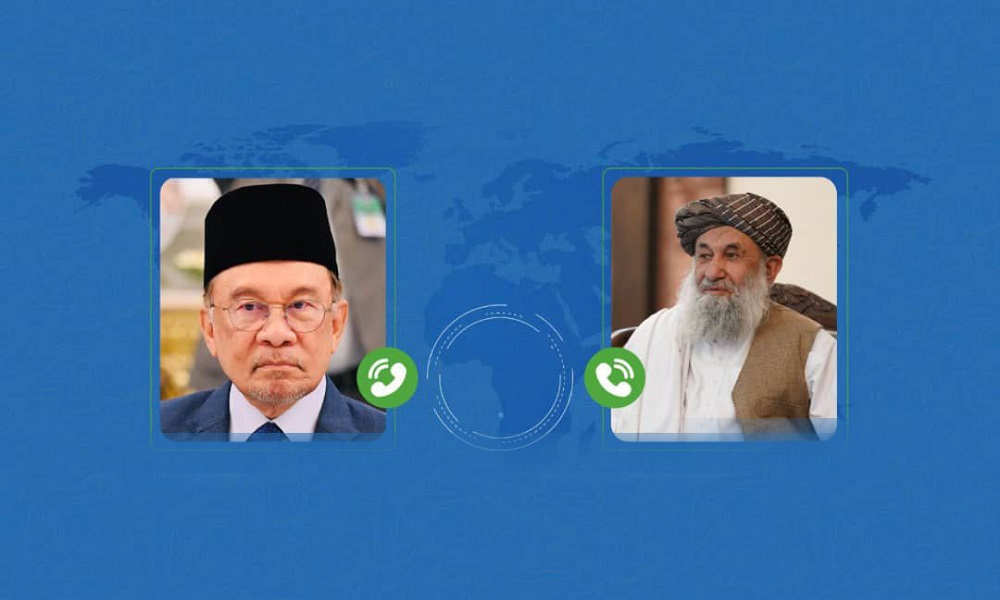
Mullah Mohammad Hassan Akhund, Prime Minister of the Islamic Emirate, in a telephone conversation initiated by Mohammad Anwar Ibrahim, Prime Minister of Malaysia, discussed regional developments, particularly the recent situation between Pakistan and Afghanistan.
Zabihullah Mujahid, spokesperson for the Islamic Emirate, said in a statement that Hassan Akhund stated during the call that the Islamic Emirate of Afghanistan’s principled position is clear and that it believes in resolving issues through mutual understanding and cooperation.
Hassan Akhund added that during Eid al-Fitr, at the request of Saudi Arabia, Turkey, and Qatar, the Islamic Emirate demonstrated its goodwill by respecting a pause in defensive operations.
He stated that violence benefits no party and that actions that increase tensions should be avoided, emphasizing that wisdom and rationality must guide efforts to resolve problems.
He also expressed concern over rising regional tensions following the US and Israeli attacks on Iran.
The Malaysian Prime Minister also expressed concern about the regional situation and hoped that the temporary halt in hostilities between Afghanistan and Pakistan would continue, and that existing problems could be resolved through sincere negotiations and understanding.
He added that Malaysia aims to play a positive role in facilitating understanding between both parties.
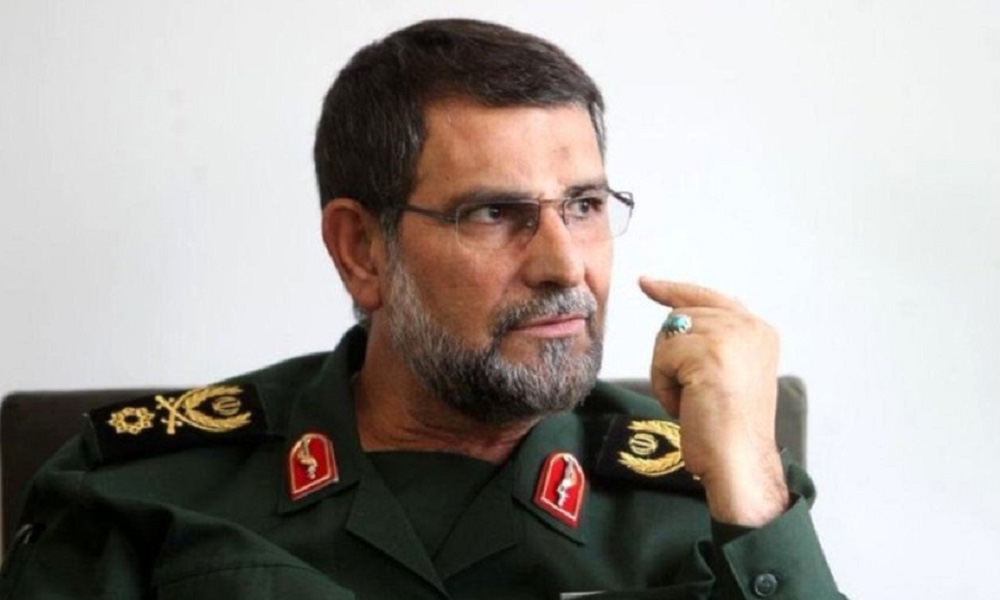
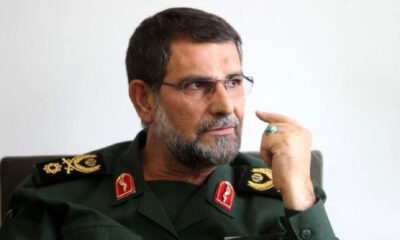
Israel’s defence minister says that an Israeli air strike has killed Alireza Tangsiri, commander of the Iranian Revolutionary Guards’ navy.
The killing was carried out “last night, in a precise and lethal operation” and targeted other “senior officers of the naval command”, said Israel Katz, in a video statement.
“The man who was directly responsible for the terrorist operation of mining and blocking the Strait of Hormuz to shipping was blown up and eliminated,” he claimed.
Since the start of the joint US-Israeli war on Iran on February 28, Israel has announced the assassination of several top Iranian officials, including Supreme Leader Ali Khamenei and the Islamic Republic ‘s powerful security chief, Ali Larijani.
Al Jazeera’s Tohid Asadi, reporting from Tehran, said there was no official Iranian confirmation yet of Tangsiri’s killing.
“But if it’s true it’s going to be another major blow for a country that has already experienced a lot of military commanders being killed” since the war began, he said.
The head of the Basij paramilitary forces, Brigadier General Gholamreza Soleimani, and Intelligence Minister Esmail Khatib were also assassinated in Israeli attacks.
Moreover, in recent days, Israeli forces have carried out several strikes targeting the naval assets of Iran.
Last week, Israeli airstrikes hit several Iranian naval ships in the Caspian Sea, including ones equipped with missile systems, support vessels, and patrol craft.


Tahawol: Discussion on day 27 of Iran–US war

Turkey invites IEA’s commerce minister to Antalya Diplomacy Forum

Saar: Islamic Emirate confident of Durand Line control

Afghan, Malaysian PMs discuss situation between Kabul and Islamabad

Myanmar trump Afghanistan 2-1 in Asian Cup Qualifier

Pakistani military jet downed in Afghanistan’s Jalalabad, pilot captured alive

Afghan Air Force conducts airstrikes in Islamabad, other cities

Prominent Muslim scholar issues fatwa calling for Afghanistan-Pakistan ceasefire

Afghan air force strikes key Pakistani military installations in retaliatory operation

IEA: Special circle in Pakistan has launched mission to destabilize region
Tahawol: Discussion on day 27 of Iran–US war
Saar: Islamic Emirate confident of Durand Line control

Tahawol: Efforts to release Mohammad Rahim from Guantanamo Bay Detention Camp

Saar: End of ceasefire between Afghanistan-Pakistan reviewed

Tahawol: Escalating threats between Iran-US discussed
-

 Latest News4 days ago
Deadly violence likely without dialogue between Afghanistan and Pakistan: ICG
-

 Latest News3 days ago
Pakistan seeks Russian mediation to resolve Afghanistan tensions
-

 International Sports5 days ago
FIFA World Cup 2026: Play-Off Tournament takes centre stage
-
 Sport5 days ago
Afghanistan secures third place at 2026 World Kokpar Championship
-
 Business4 days ago
Afghani strengthens nearly 10% against US dollar amid banking sector reforms
-
 Latest News4 days ago
World must re-engage to prevent all-out Afghanistan-Pakistan war: Financial Times
-

 Sport3 days ago
Afghanistan squad hit by withdrawals ahead of AFC Asian Cup Qualifiers
-
 Latest News2 days ago
Around 2.3 million tourists visited Afghanistan’s recreational areas during Eid: Ghufran