
Latest News
Karzai says Pakistan must not interfere in Afghanistan’s affairs

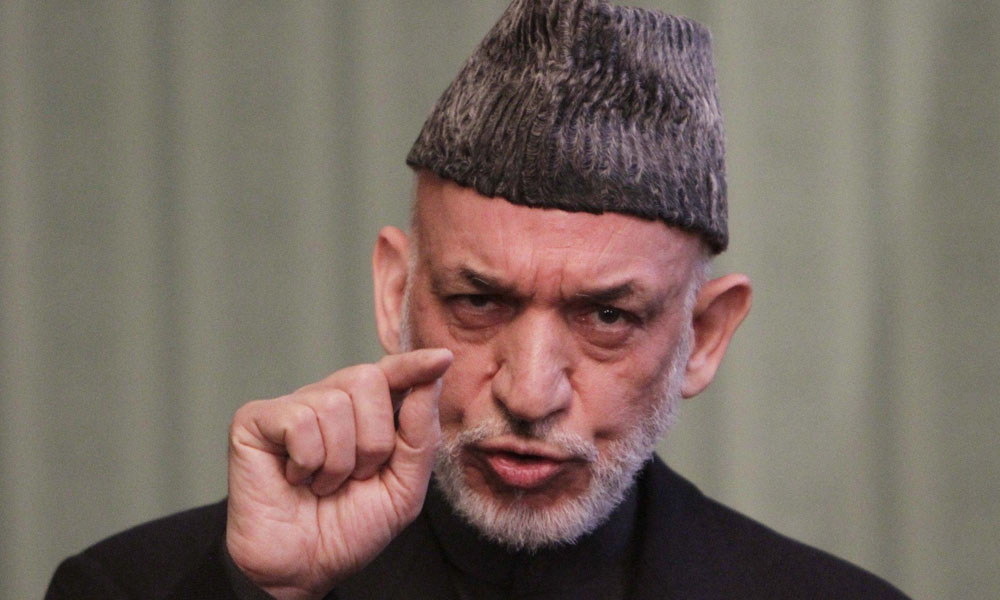
Former Afghanistan President Hamid Karzai said the current Islamic Emirate of Afghanistan’s (IEA) government in needs internal legitimacy in order for it to gain international recognition and that Pakistan should not interfere in Afghanistan’s affairs.
In an interview with VOA, Karzai said that internal legitimacy could only be achieved through the expression of the will of the Afghan people, either in the form of elections or holding the Loya Jirga, a traditional grand council.
He said that Afghanistan is at a critical juncture in its history and Afghans have a responsibility to “unite” and create a government premised on “the expression of the will of the Afghan people.”
“Legitimacy within our own country for this government (IEA) or for any other government is the foundation of recognition by countries and the international community,” Karzai said.
Pakistani leaders, including Prime Minister Imran Khan and Foreign Minister Shah Mahmood Quresh, have advocated for the IEA and have urged the international community to work with the new government in Kabul.
“If we neglect Afghanistan right now, there’s a huge humanitarian crisis looming ahead, and this will have serious repercussions not just for the neighbors of Afghanistan, but it will have repercussions everywhere,” Imran Khan told the U.N. General Assembly in September.
“We must strengthen this current government, stabilize it, for the sake of the people of Afghanistan. What have the Taliban (IEA) promised? They will respect human rights, they will have an inclusive government, they will not allow this soil to be used by terrorists,” Khan added.
Karzai told VOA that Pakistan is not the representative of the Afghan people.
“My message to Pakistan, our brotherly country, is that they should not try to represent Afghanistan. On the contrary, the country should try to establish a civil relationship with our country,” he said.
“We have deep people-to-people relations with Pakistan. … Our hope from Pakistan is that the country should not try to maintain its relations with us through interference, the encouragement of extremism and terrorism or by force, but rather establish relations with Afghanistan through civil principles and principles of international relations, and we will happily maintain that relationship with them,” he added.
Karzai also voiced concerns about the Islamic State (Daesh) terror group’s uptick in violence in Afghanistan and deemed it a threat to both Afghanistan and the region.
The militant group’s local branch, known as the Islamic State Khorasan, has claimed responsibility for several vicious attacks in recent weeks in Kabul, Kunduz and Kandahar provinces, where more than 100 civilians have been killed and many others wounded.
“As proven by the unfortunate bomb blasts — rather, suicide attacks in the mosque in Kabul two weeks ago, then in Kunduz last week, and then in Kandahar yesterday (October 15) — this has proven that Daesh is a threat to Afghanistan and to the life and livelihood of the Afghan people,” Karzai said.
Karzai showed optimism that the region will support Afghanistan in its fight against Daesh because it could pose a threat to their security. In addition, he said he hopes that regional powers would seek common ground in Afghanistan,.
He said it is Afghanistan’s responsibility to work with other countries in the region in a way that results in peace and stability.





Latest News
Muttaqi heads to Moscow for 8th Moscow format meeting
Takal added that the Moscow Format meeting is scheduled to begin on Monday, October 5, in Moscow.
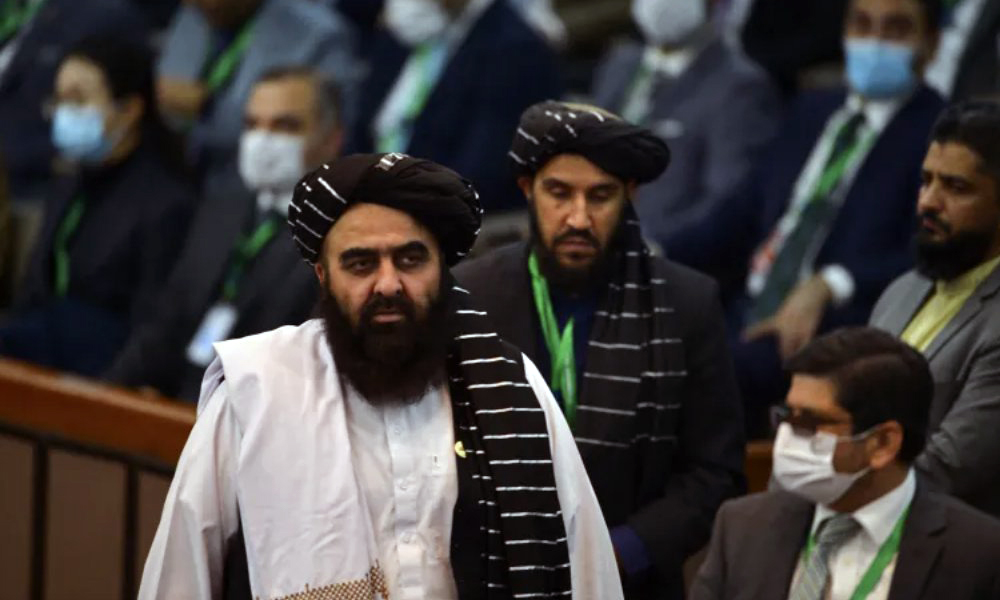
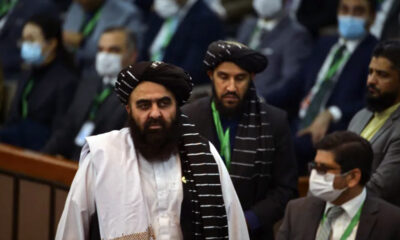
Afghanistan’s Foreign Minister Amir Khan Muttaqi has traveled to Moscow to participate in the eighth meeting of the Moscow Format on Afghanistan.
According to Afghanistan’s Ministry of Foreign Affairs, Muttaqi is expected to meet with Russian Foreign Minister Sergey Lavrov and other senior officials during his visit to discuss issues related to Afghanistan.
Hafiz Zia Ahmad Takal, head of the ministry’s public relations department, said discussions at the eighth consultative meeting will focus on Afghanistan’s current situation and the country’s relations with the region.
Takal added that the Moscow Format meeting is scheduled to begin on Monday, October 5, in Moscow.
Latest News
Mansour: Unjustified bloodshed is forbidden, whether Afghan or Pakistani
At the same time, Mansour stressed that the situation should not escalate into indiscriminate bloodshed.
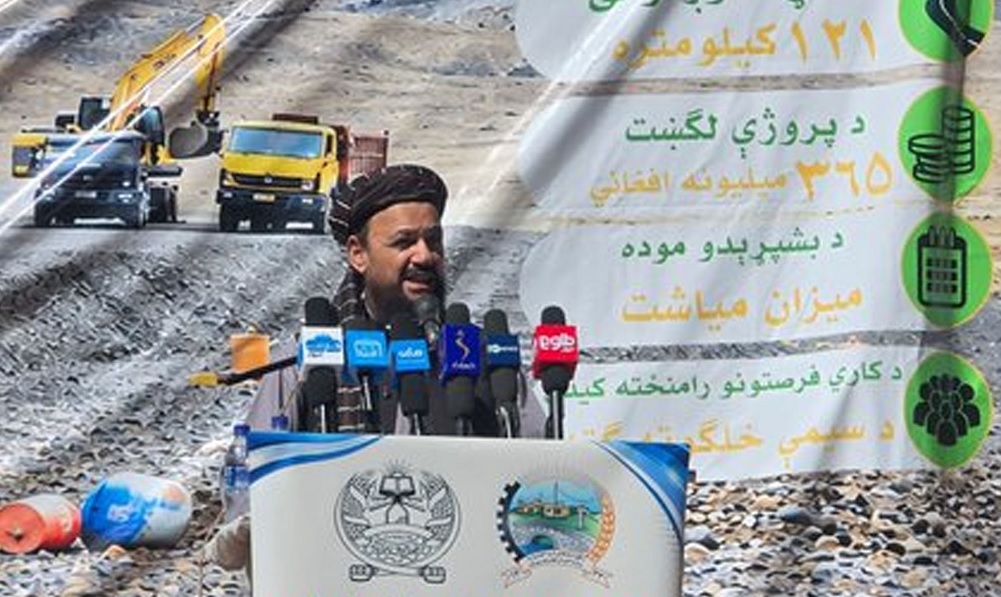
Abdul Latif Mansour, Afghanistan’s Minister of Rural Rehabilitation and Development, says the Islamic Emirate considers the unjustified shedding of Afghan and Pakistani blood forbidden, as both sides are Muslims.
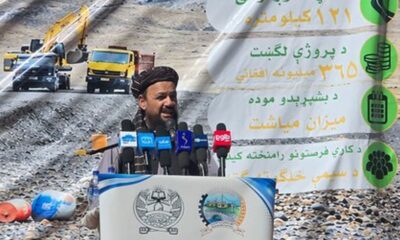
Mansour made the remarks at the inauguration of the Wakhan road in Badakhshan on Sunday, while responding to Pakistan’s recent attacks on Afghanistan.
He said some people become emotional over Pakistani bombings, but stressed that Afghanistan needs to become self-reliant enough to defend its citizens.
“We must build this system to the point where we become self-reliant and can defend every Afghan in such a way that we can neutralize the person causing harm in his own country,” Mansour said.
He acknowledged that the current system has not yet achieved full self-reliance, but said efforts are underway to strengthen Afghanistan’s ability to defend its people.
At the same time, Mansour stressed that the situation should not escalate into indiscriminate bloodshed.
“We consider the unjustified shedding of our own people’s blood forbidden, and we also consider the shedding of Pakistani blood forbidden because they are Muslims,” he said.
Pakistani military officials have repeatedly accused Afghanistan of allowing militant attacks on Pakistan to be planned or carried out from Afghan territory.
The Islamic Emirate has rejected the allegations, saying Afghanistan is not responsible for Pakistan’s security problems.
Latest News
Afghanistan inaugurates 121 km Wakhan road to China border
Mansour described the project as politically, strategically and economically important.
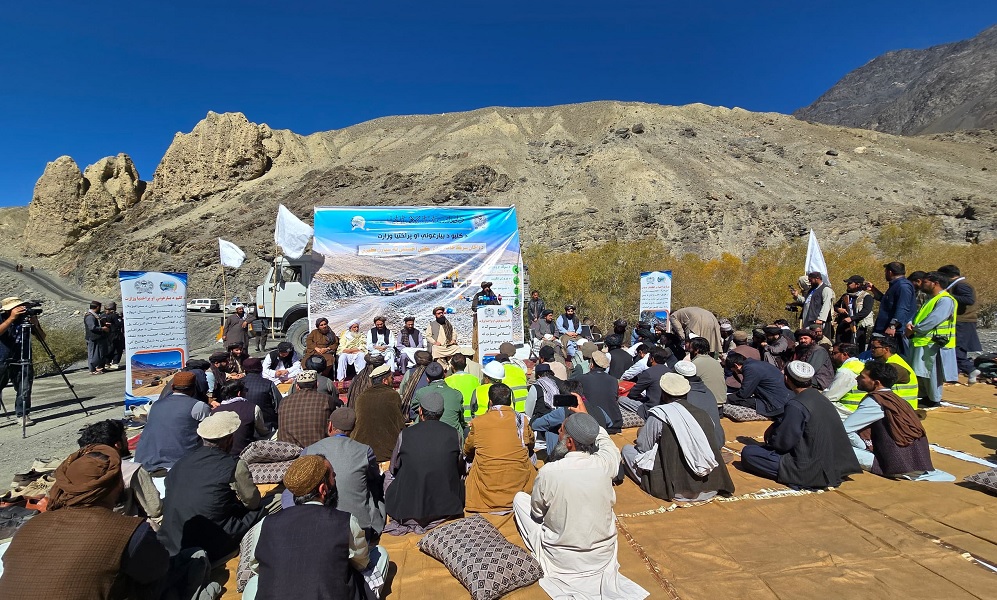
A 121-kilometer gravel road from the Sarhad-e Broghil in Wakhan district of Badakhshan to the Chinese border was officially opened today, Sunday, October 4.
Abdul Latif Mansour, Minister of Rural Rehabilitation and Development, said at the inauguration ceremony that the road includes 66 culverts and four major bridges, while a total of 3,100 meters of retaining walls have been built along parts of the route.
According to Mansour, 365 million afghanis from the Islamic Emirate’s development budget were spent on the construction and graveling of the road.
Mansour described the project as politically, strategically and economically important.
Rahmatullah Najib, governor of Badakhshan, also said at the ceremony that security has been ensured across the province and that there are no security problems in any part of Badakhshan.


ACL: Sorkh Poshan extend perfect run with 1-0 win over Khurasan

Tahawol: Doha process seeks new cooperation opportunities

ACL: Toofan Herat crush Sarsabz Yashlar 3-0

Saar: Moscow forum 8th consultative meeting on Afghanistan

Muttaqi heads to Moscow for 8th Moscow format meeting

Saudi energy group signs major Afghanistan deals covering gas exploration and pipeline plans

Khalilzad: Afghanistan ready to attract major investment

Messi returns to Inter Miami after Argentina retirement

Imam Abu Hanifa exhibition to draw exhibitors from more than 20 countries

Maryam Nawaz says Punjab faces greater security threats from neighbouring provinces
Tahawol: Doha process seeks new cooperation opportunities
Saar: Moscow forum 8th consultative meeting on Afghanistan

Tahawol: Escalation of internal political crisis in Pakistan discussed

Saar: Continuation of crisis in the Middle East discussed

Tawsia: Review of three key economic developments in Afghanistan
-
 Latest News3 days ago
Four members of one family killed in Helmand in Pakistan airstrike
-
 Regional5 days ago
US imposes sanctions on 13 tied to Iran weapons procurement
-
 Sport2 days ago
ACB announces Afghanistan squads for Bangladesh, Zimbabwe series
-
 Business4 days ago
Afghanistan, Tajikistan seek stronger trade and investment ties
-
 Latest News3 days ago
Moscow to host 8th meeting of Afghanistan consultations on October 5
-
 Latest News4 days ago
WATCH: Woman rescued after 14 years of alleged confinement in Helmand
-
 Latest News2 days ago
Russia expects to ease Afghanistan-Pakistan tensions at Moscow Format meeting
-
 Sport3 days ago
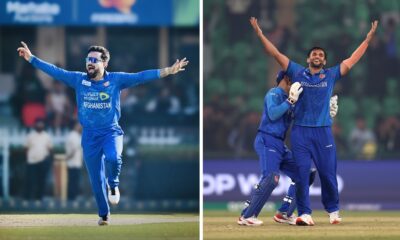
Rashid Khan, Azmatullah Omarzai maintain top spots in ICC ODI rankings