
Regional
Lebanon, Israel could agree to ceasefire within days, Lebanese prime minister says
Hezbollah did not immediately comment on the leaked ceasefire proposal.

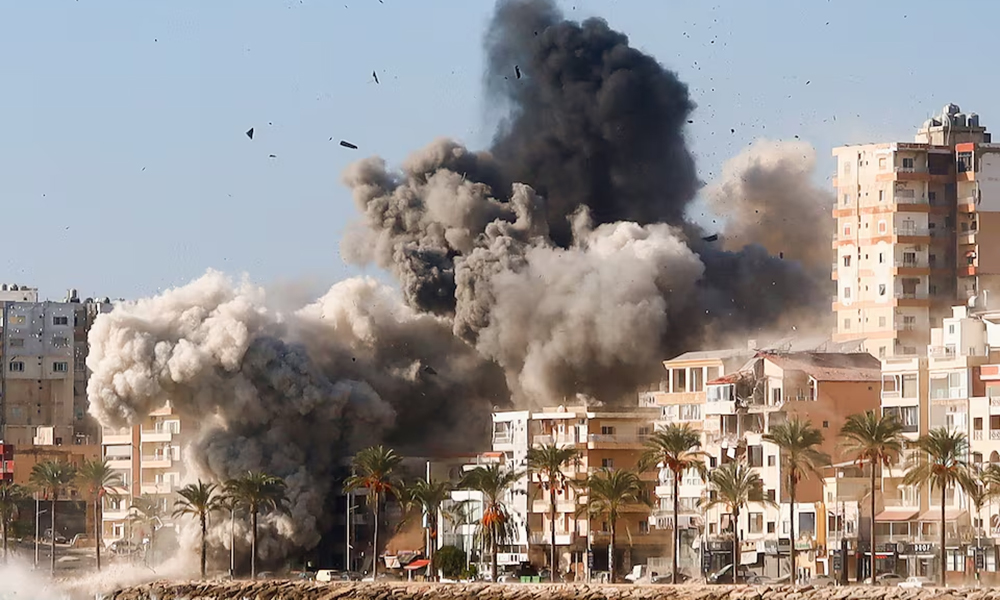
Lebanon’s prime minister expressed hope on Wednesday that a ceasefire deal with Israel would be announced within days as Israel’s public broadcaster published what it said was a draft agreement providing for an initial 60-day truce.
The document, which broadcaster Kan said was a leaked proposal written by Washington, said Israel would withdraw its forces from Lebanon within the first week of the 60-day ceasefire. It largely aligned with details reported earlier by Reuters based on two sources familiar with the matter.
Lebanese caretaker Prime Minister Najib Mikati said he had not believed a deal would be possible until after Tuesday’s U.S. presidential election. But he said he became more optimistic after speaking on Wednesday with U.S. envoy for the Middle East Amos Hochstein, who was due to travel to Israel on Thursday.
“Hochstein, during his call with me, suggested to me that we could reach an agreement before the end of the month and before Nov. 5th,” Mikati told Lebanon’s Al Jadeed television.
“We are doing everything we can and we should remain optimistic that in the coming hours or days, we will have a ceasefire,” Mikati said.
The draft published by Kan was dated Saturday. When asked to comment, White House national security spokesperson Sean Savett said: “There are many reports and drafts circulating. They do not reflect the current state of negotiations.”
But Savett did not respond to a query on whether the version published by Kan was at least the basis for further negotiations.
The Israeli network said the draft had been presented to Israel’s leaders. Israeli officials did not immediately comment.
Israel and Lebanese armed group Hezbollah have been fighting for the past year in parallel with Israel’s war in Gaza after Hezbollah struck Israeli targets in solidarity with its ally Hamas in Gaza.
The conflict in Lebanon has dramatically escalated over the last five weeks, with most of the 2,800 deaths reported by the Lebanese health ministry for the past 12 months occurring in that period.
Hezbollah did not immediately comment on the leaked ceasefire proposal.
Earlier on Wednesday, the group’s new leader, Naim Qassem, said the Iran-backed armed group would agree to a ceasefire within certain parameters if Israel wanted to stop the war, but that Israel had so far not agreed to any proposal that could be discussed.
It was Qassem’s first speech as secretary-general, a day after Hezbollah announced his election to the post after Israel assassinated the group’s longtime leader Hassan Nasrallah.
Israel’s operation against heavily armed Hezbollah in Lebanon continued to expand on Wednesday as the Israeli army launched heavy airstrikes on the eastern city of Baalbek, famed for its Roman temples, and nearby villages, security sources told Reuters.
Tens of thousands of Lebanese, including many who sought shelter in Baalbek from other areas, fled after an Israeli evacuation warning.
Bilal Raad, regional head of the Lebanese civil defence, said the scene was chaotic. “The whole city is in a panic trying to figure out where to go, there’s a huge traffic jam,” he said ahead of the bombardment.
Lebanon’s health ministry said 19 people were killed in Israeli strikes on two towns in the Baalbek area on Wednesday.
It said 2,822 people have been killed in Israel’s military campaign in Lebanon since October 2023. More than 1.2 million people have been displaced.
Following the airstrikes, the Israeli military said it had targeted Hezbollah fuel reservoirs in the Bekaa Valley region.
Responding to a question about Israel’s bombardment of Baalbek, the U.S. State Department reiterated on Wednesday that Washington supports Israel’s right to go after legitimate Hezbollah targets in Lebanon. But it said Israel must do so in a way that does not threaten civilians, critical civilian infrastructure and significant cultural heritage sites.
For a third straight day, Hezbollah reported intense fighting with Israeli forces in or around the southern town of Khiyam – the deepest Israel’s troops are reported to have penetrated into Lebanon since fighting escalated five weeks ago.
Hezbollah also said it had targeted a military camp southeast of Tel Aviv in Israel with missiles.
The White House said U.S. security official Brett McGurk would visit Israel on Thursday along with Hochstein. A U.S. official had said they would be there to discuss a range of issues “including Gaza, Lebanon, hostages, Iran and broader regional matters”.
The Lebanese prime minister did not comment on the draft proposal published by the Israeli network, which called for a permanent ceasefire to take effect after the initial 60-day period based on implementation of United Nations resolutions 1701 and 1559.
Mikati said Lebanon was ready to fully implement 1701, passed in 2006, which directed the demilitarisation of southern Lebanon and established a U.N. peacekeeping mission there.
Earlier this month, Hochstein told reporters in Beirut that better mechanisms for enforcement were needed as neither Israel nor Lebanon had fully implemented the 18-year-old resolution. The draft leaked on Wednesday called for creating an independent, international arrangement to oversee the ceasefire.
Resolution 1559 was adopted in 2004 and called for disbanding and disarming all militias in Lebanon.



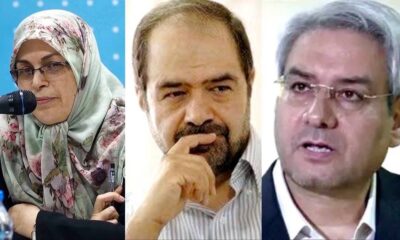



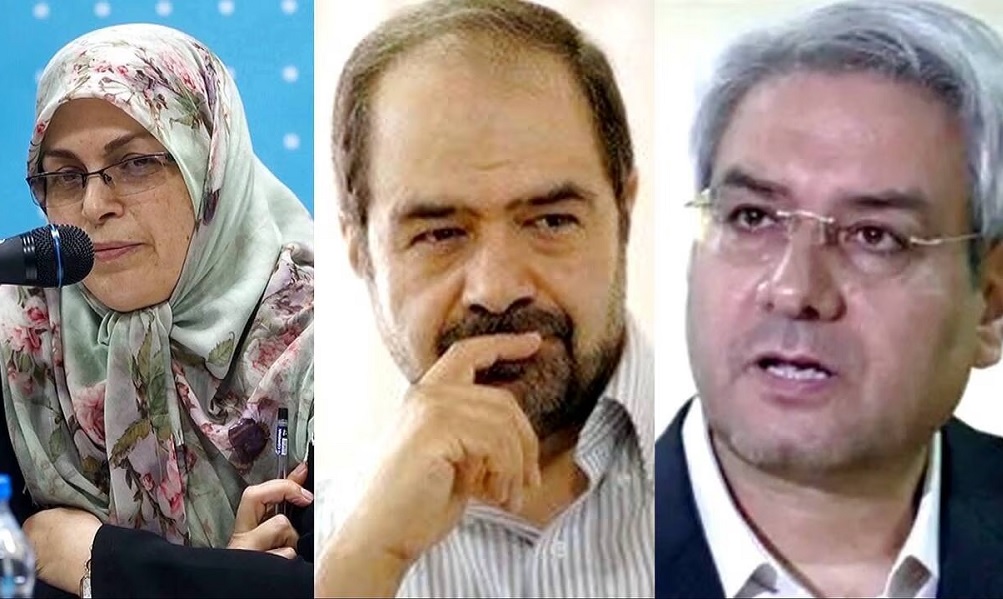
The Islamic Iran Nation’s Union Party sought the release of secretary-general Azar Mansouri, the Shargh newspaper said on Monday, after her arrest along with other members of the Reform Front, an umbrella body of Iranian reformists and moderates.
A campaign of mass arrests and intimidation has led to the arrests of thousands as authorities seek to deter further protests after last month’s crackdown on the bloodiest unrest since the 1979 Islamic Revolution.
On Sunday, state media said three senior figures from Iran’s Reform Front were arrested, among them Ebrahim Asgharzadeh, Mohsen Aminzadeh, and Azar Mansouri, who acts as the front’s head, according to Reuters.
Shargh said at least two more Reform Front members were asked to report to the prosecutor’s office in Tehran’s Evin prison on Tuesday.
The Reform Front’s spokesperson, Javad Emam, was also arrested, Mansouri’s lawyer, Hojjat Kermani, said on Monday, adding that it was unclear what charges faced those detained.
“We basically don’t know what caused these arrests, because the Reform Front has not yet issued a statement about the recent events (protests),” Kermani told the Iranian Labour News Agency (ILNA). “Individuals may have commented on their own.”
On Sunday, the judiciary’s media outlet Mizan said “four important political elements supporting the Zionist (regime) and the United States” were indicted, but gave no details.
Tehran has blamed unrest-related violence on “rioters and armed terrorists” it says were backed by its key enemies, Israel and the United States.
Past Reform Front statements have been highly critical of authorities. After the 12-day war against Israel, its members warned that “incremental collapse” awaited the country if it did not adopt fundamental reforms.
Kermani said the recent arrests were not related to a judicial case launched against the Front after that statement, however.
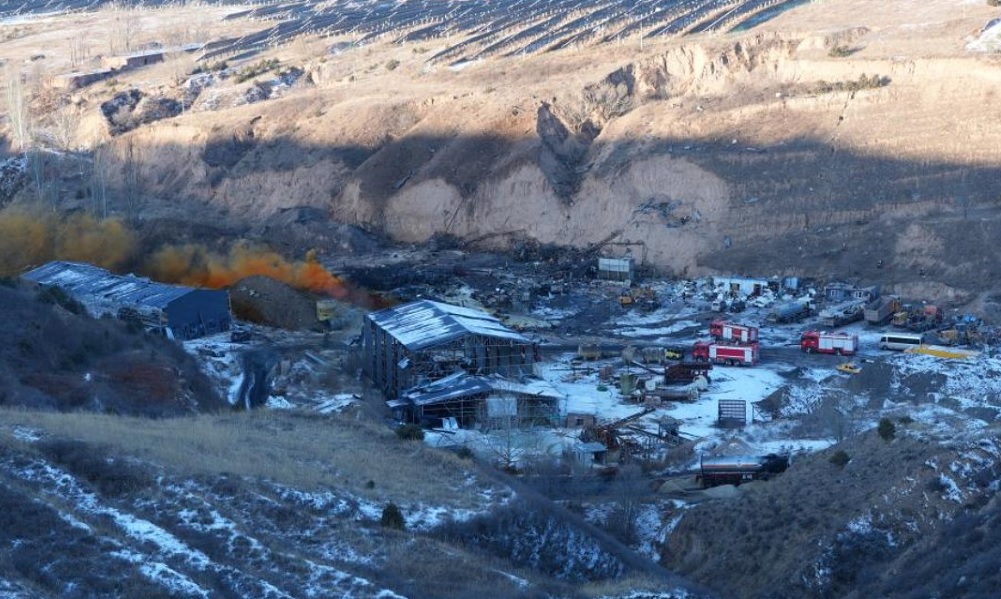
An explosion at a small biotech company in northern China early Saturday killed eight people, China’s state media reported on Sunday.
The explosion occurred in Shuoyang in the Shanxi province in the early morning of Saturday, state media reported, according to Reuters.
The legal representative of Jiapeng Biotechnology has been detained and the city has set up an accident investigation team, Xinhua News Agency reported.
The firm is located in a mountain hollow and dark yellow smoke was seen billowing from the accident site, Xinhua said.
Reuters was not able to contact the company, which does not maintain a website. The cause of the reported explosion was not immediately clear.
Founded in June 2025, Jiapeng Biotechnology conducts research on animal feed, coal products and building materials, according to its corporate registration.
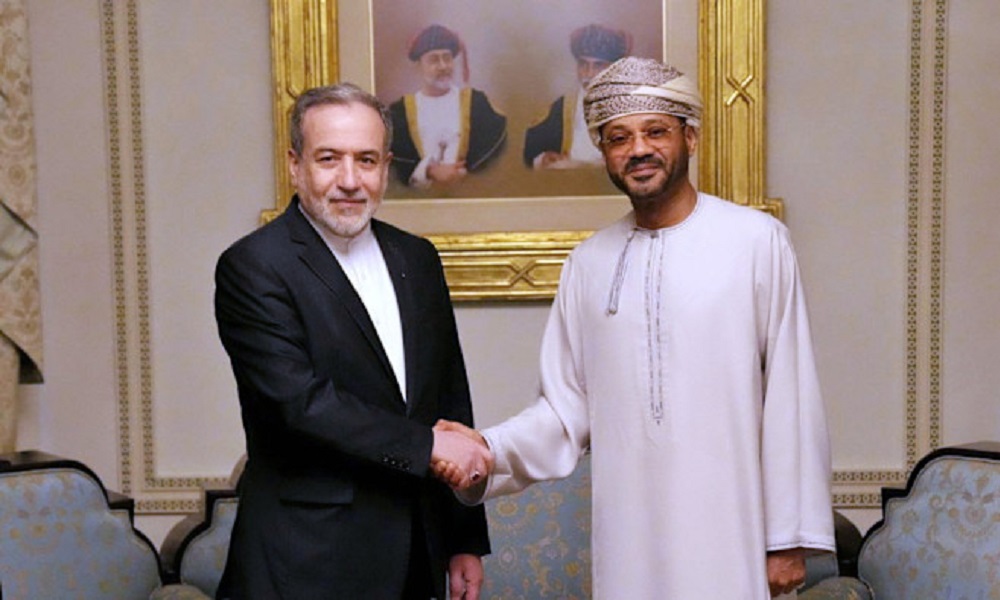
Iran’s foreign minister on Friday described talks with the United States in Oman as a “good start,” saying the negotiations “can also have a good continuation,” Iranian state media reported.
The discussions, mediated by Oman, marked a resumption of nuclear diplomacy between Tehran and Washington. Iranian state media said the current round of talks concluded on Friday, with both delegations returning to their respective capitals.
Speaking to state media reporters in Muscat, Iranian Foreign Minister Abbas Araghchi said the talks’ progress depends on the U.S. and on decisions made in Tehran.
Araghchi said a “significant challenge” remains, citing a prevailing atmosphere of distrust. He said Iran’s priority is to overcome this distrust and then establish an agreed framework for the talks and the issues on the table.
He described the talks as a fresh round of dialogue after eight turbulent months that included a war, saying the accumulated distrust presents a major obstacle to negotiations.
“If this same approach and perspective are maintained by the other side, we can reach an agreed framework in future sessions,” Araghchi said, adding that he did not want to judge prematurely.
Iranian Foreign Ministry spokesman Esmaeil Baqaei also confirmed on the social media platform X that both sides agreed to continue talks and would decide the next round in consultation with their capitals.


Tahawol: Pakistan’s Foreign Policy Failure of Towards Afghanistan discussed

Saar: Regional Problems, Opportunities, and Challenges discussed

Pakistan to repatriate nearly 20,000 Afghans awaiting US resettlement

Terrorist activities observed along Afghanistan borders, says Lavrov

Afghan border minister holds phone talks with Iran’s deputy foreign minister

Afghanistan–China joint market opens in Kabul

Pakistan approves re-export of stranded Afghan transit trade cargo

ATN secures broadcast rights to Carabao Cup semis across Afghanistan

Pakistan army orders evacuation of Tirah Valley, fears of mass displacement grow

Afghan traders sign deal to import pharmaceuticals from Bangladesh
Tahawol: Pakistan’s Foreign Policy Failure of Towards Afghanistan discussed
Saar: Regional Problems, Opportunities, and Challenges discussed

Saar: Afghanistan’s relations and opportunities with regional countries

Tahawol: Kabul’s response to Pakistan’s new accusation discussed

Saar: Discussion on Iran-US talks in Oman
-
 Latest News3 days ago
Afghanistan to grant one- to ten-year residency to foreign investors
-
 Latest News5 days ago
Terrorist threat in Afghanistan must be taken seriously, China tells UNSC
-

 Sport4 days ago
Indonesia shock Japan to reach historic AFC Futsal Asian Cup final
-

 Sport5 days ago
Milano Cortina 2026 Winter Olympics: What You Need to Know
-
 Sport3 days ago
Iran clinch AFC Futsal Asian Cup 2026 in penalty shootout thriller
-
 Latest News5 days ago
US Justice Department to seek death penalty for Afghan suspect in National Guard shooting
-
 Latest News3 days ago
Afghanistan says Pakistan is shifting blame for its own security failures
-
 Latest News5 days ago
Uzbekistan, Kazakhstan discuss cooperation on Afghanistan