
Latest News
Mujahid reacts to American-Pakistani scholar’s claims against IEA


Zabihullah Mujahid, spokesman of the Islamic Emirate of Afghanistan (IEA), on Monday reacted to claims made by Hassan Abbas, an American-Pakistani scholar, in his book titled “The Return of the Taliban.”
The book claims that the IEA is not independent and it is under the control of the intelligence and military of another country.
“This intelligence officer is not aware of the fact that the Islamic Emirate has a proud history of winning, maintaining and nurturing its independence, any rational person who wants to investigate the independence and freedom of the Islamic Emirate will easily and quickly come to the conclusion that this line and these officials are at the last limit of freedom and independence,” Mujahid said in a statement.
“We believe that this person named Hassan Abbas is a mercenary hired by an intelligence agency who tried to defile sea (muddy the waters) with his own failed attempt.” Mujahid added.
He said that the IEA has “sacrificed so much to gain its independence and freedom.”
“It is also ready to make sacrifices to preserve it, and will not involve its independence in any country or intelligence network at any cost,” he added.
Some Afghan professors also believe that the content of this book suggests a relationship between the author and the intelligence organizations, but they maintain that it is the responsibility of the IEA to present an accurate narrative of the country’s security and political issues to avoid such claims.
“We Afghans need to write books about wars, history, politics and social developments so that people like Hassan Abbas don’t have the opportunity to receive information and write books based on the interests of their country,” Faiz Mohammad Zeland, a university professor, said.
Hassan Abbas is a Professor of International Security Studies at the US National Defense University’s College of International Security Affairs. He is a former Pakistani government official who served in the administrations of Prime Minister Benazir Bhutto (1995–1996) and President Pervez Musharraf (1999–2000).

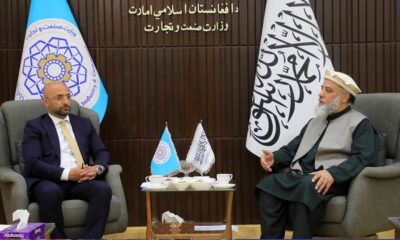






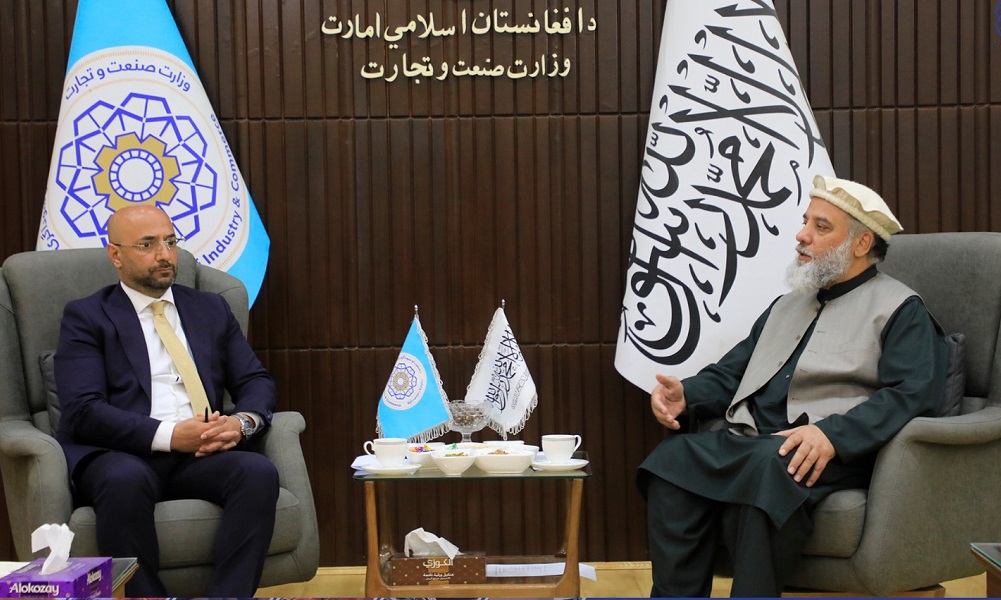
Nooruddin Azizi, Minister of Industry and Commerce of the Islamic Emirate of Afghanistan, met on Thursday with Sadin Ayyıldız, Chargé d’Affaires of the Turkish Embassy in Kabul. During the meeting, Ayyıldız invited the Minister of Industry and Commerce to participate in Turkey’s Antalya Diplomacy Forum.
According to a statement from the Ministry of Industry, the meeting also emphasized the economic, trade, and historical relations between Kabul and Ankara, as well as the export of Afghan goods to Turkey.
The two sides discussed increasing trade volume between the two countries, strengthening economic relations, facilitating and enhancing commercial activities, cooperation in road transport along various routes, activating the Lapis Lazuli Corridor, and regional cooperation.
Azizi, while thanking Turkey for inviting the Islamic Emirate to the Antalya Diplomacy Forum, introduced the Ministry’s technical team to ensure better coordination and planning.
The Antalya Diplomacy Forum is an international conference held annually in Turkey, aimed at examining global challenges and finding joint solutions through dialogue and diplomacy. It hosts representatives from more than 100 countries, including presidents, leaders, high-ranking officials, international organizations, analysts, and media from various countries.
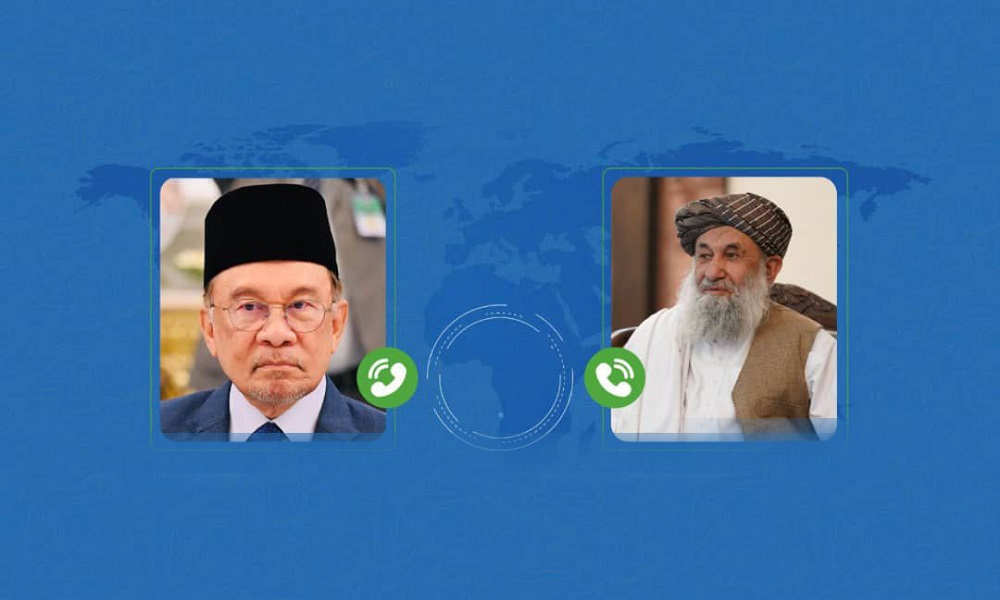
Mullah Mohammad Hassan Akhund, Prime Minister of the Islamic Emirate, in a telephone conversation initiated by Mohammad Anwar Ibrahim, Prime Minister of Malaysia, discussed regional developments, particularly the recent situation between Pakistan and Afghanistan.
Zabihullah Mujahid, spokesperson for the Islamic Emirate, said in a statement that Hassan Akhund stated during the call that the Islamic Emirate of Afghanistan’s principled position is clear and that it believes in resolving issues through mutual understanding and cooperation.
Hassan Akhund added that during Eid al-Fitr, at the request of Saudi Arabia, Turkey, and Qatar, the Islamic Emirate demonstrated its goodwill by respecting a pause in defensive operations.
He stated that violence benefits no party and that actions that increase tensions should be avoided, emphasizing that wisdom and rationality must guide efforts to resolve problems.
He also expressed concern over rising regional tensions following the US and Israeli attacks on Iran.
The Malaysian Prime Minister also expressed concern about the regional situation and hoped that the temporary halt in hostilities between Afghanistan and Pakistan would continue, and that existing problems could be resolved through sincere negotiations and understanding.
He added that Malaysia aims to play a positive role in facilitating understanding between both parties.
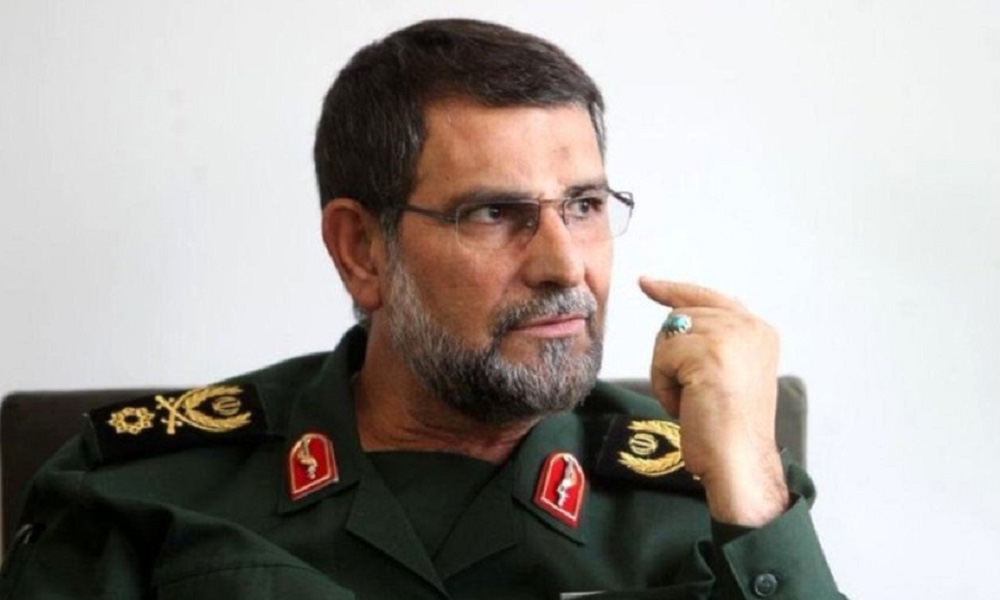
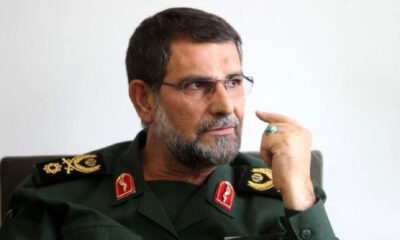
Israel’s defence minister says that an Israeli air strike has killed Alireza Tangsiri, commander of the Iranian Revolutionary Guards’ navy.
The killing was carried out “last night, in a precise and lethal operation” and targeted other “senior officers of the naval command”, said Israel Katz, in a video statement.
“The man who was directly responsible for the terrorist operation of mining and blocking the Strait of Hormuz to shipping was blown up and eliminated,” he claimed.
Since the start of the joint US-Israeli war on Iran on February 28, Israel has announced the assassination of several top Iranian officials, including Supreme Leader Ali Khamenei and the Islamic Republic ‘s powerful security chief, Ali Larijani.
Al Jazeera’s Tohid Asadi, reporting from Tehran, said there was no official Iranian confirmation yet of Tangsiri’s killing.
“But if it’s true it’s going to be another major blow for a country that has already experienced a lot of military commanders being killed” since the war began, he said.
The head of the Basij paramilitary forces, Brigadier General Gholamreza Soleimani, and Intelligence Minister Esmail Khatib were also assassinated in Israeli attacks.
Moreover, in recent days, Israeli forces have carried out several strikes targeting the naval assets of Iran.
Last week, Israeli airstrikes hit several Iranian naval ships in the Caspian Sea, including ones equipped with missile systems, support vessels, and patrol craft.


Tahawol: Discussion on day 27 of Iran–US war

Turkey invites IEA’s commerce minister to Antalya Diplomacy Forum

Saar: Islamic Emirate confident of Durand Line control

Afghan, Malaysian PMs discuss situation between Kabul and Islamabad

Myanmar trump Afghanistan 2-1 in Asian Cup Qualifier

Pakistani military jet downed in Afghanistan’s Jalalabad, pilot captured alive

Afghan Air Force conducts airstrikes in Islamabad, other cities

Prominent Muslim scholar issues fatwa calling for Afghanistan-Pakistan ceasefire

Afghan air force strikes key Pakistani military installations in retaliatory operation

IEA: Special circle in Pakistan has launched mission to destabilize region
Tahawol: Discussion on day 27 of Iran–US war
Saar: Islamic Emirate confident of Durand Line control

Tahawol: Efforts to release Mohammad Rahim from Guantanamo Bay Detention Camp

Saar: End of ceasefire between Afghanistan-Pakistan reviewed

Tahawol: Escalating threats between Iran-US discussed
-

 Latest News5 days ago
Deadly violence likely without dialogue between Afghanistan and Pakistan: ICG
-
 Latest News4 days ago
Pakistan seeks Russian mediation to resolve Afghanistan tensions
-

 International Sports5 days ago
FIFA World Cup 2026: Play-Off Tournament takes centre stage
-
 Sport5 days ago
Afghanistan secures third place at 2026 World Kokpar Championship
-
 Business4 days ago
Afghani strengthens nearly 10% against US dollar amid banking sector reforms
-
 Latest News4 days ago
World must re-engage to prevent all-out Afghanistan-Pakistan war: Financial Times
-

 Sport3 days ago
Afghanistan squad hit by withdrawals ahead of AFC Asian Cup Qualifiers
-
 Latest News3 days ago
Around 2.3 million tourists visited Afghanistan’s recreational areas during Eid: Ghufran