
Latest News
Officials cry foul over ethnicity and tribe categories for ID cards

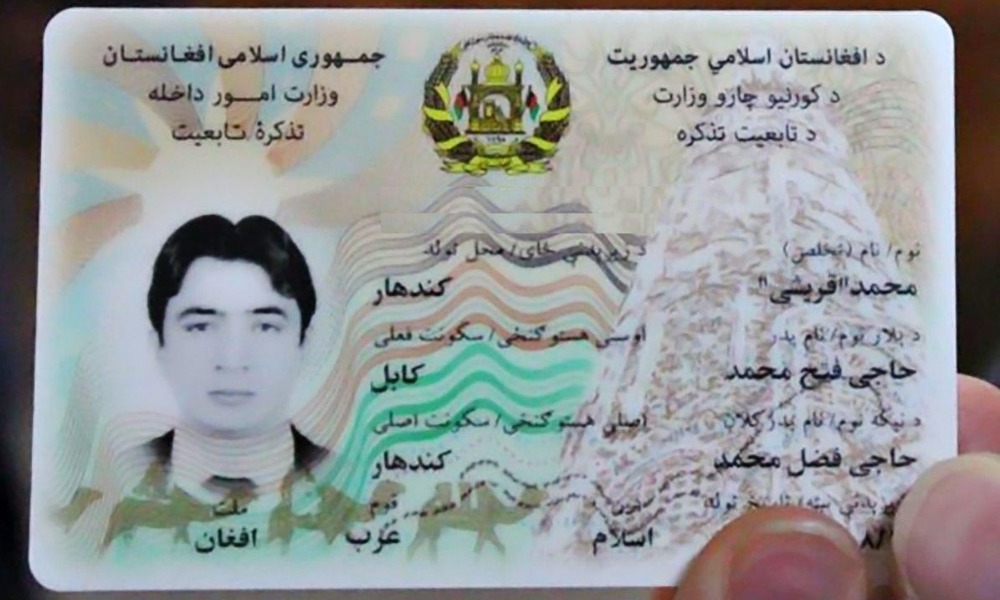
The Afghan National Statistics and Information Authority (NSIA) has allegedly classified a number of ethnic groups and tribes into categories – in a move met with a strong backlash by Afghans including some government officials.
The categorized list of ethnicities and tribes is included in an online platform for registration for the new electronic national ID cards.
Based on the list, all Pashtuns in Afghanistan are classified into one ethnic group but the rest of the groups such as Tajiks, Hazaras, and Uzbeks are each divided into several tribes.
Some politicians believe that the NSIA’s list “deliberately” fuels disunity among the people of Afghanistan as the organization has categorized ethnic groups based on their “villages, districts and tribes.”
Second Vice President Sarwar Danish said the list lacks “scientific and practical” elements and this in itself could lead to disputes in the country.
“Hasty decisions would question the government and create divisions and mistrust among our people,” Mohammad Hedayat, the head of Danish’s media office said.
Meanwhile, former Foreign Minister Salahuddin Rabbani stated that the NSIA has intentionally planned to divide ethnicities based on districts and villages.
Atta Mohammad Noor, Chief Executive of Jamiat-e-Islami Party, claimed that the NSIA is not “aware of the difference between an ethnicity and place of residency.”
“This government organization is not yet aware of this important fact that there is a huge difference between an ethnicity and the residence of a group, and you can never count the name of the location as the ethnicity of a specific people,” said Ahmad Afzal Hadid, Head of Balkh Provincial Council.
Abdullah Abdullah, Chairman of the High Council for National Reconciliation, also spoke out against the NSIA’s decision and called the list a “mistake.”
Abdullah called on the organization to rectify the issue.
The NSIA, however, claimed that its decision was made at the request of the people.
“This decision was made as per the request of a number of tribal elders and the interpretation of the third part of Article 4 of the Constitution,” said Roeina Shahabi, the spokesperson for the NSIA.
Shahabi stated: “According to the statement (tribal elders) requested through various official sources the inclusion of their tribes in the electronic ID card, which was not clearly mentioned in the Constitution.”
Article 4 of the Constitution reads: National sovereignty in Afghanistan shall belong to the nation, manifested directly and through its elected representatives. The nation of Afghanistan is composed of all individuals who possess citizenship of Afghanistan.
The nation of Afghanistan shall be comprised of Pashtun, Tajik, Hazara, Uzbek, Turkman, Baluch, Pachaie, Nuristani, Aymaq, Arab, Qirghiz, Qizilbash, Gujur, Brahwui, and other tribes.
The word Afghan shall apply to every citizen of Afghanistan. No individual of the nation of Afghanistan shall be deprived of citizenship. Citizenship and asylum-related matters shall be regulated by law.




Latest News
Water crisis deepens in Afghanistan as families struggle for access
Traditional sources such as wells and karezes—underground channels that have sustained communities for generations—are now under severe strain.

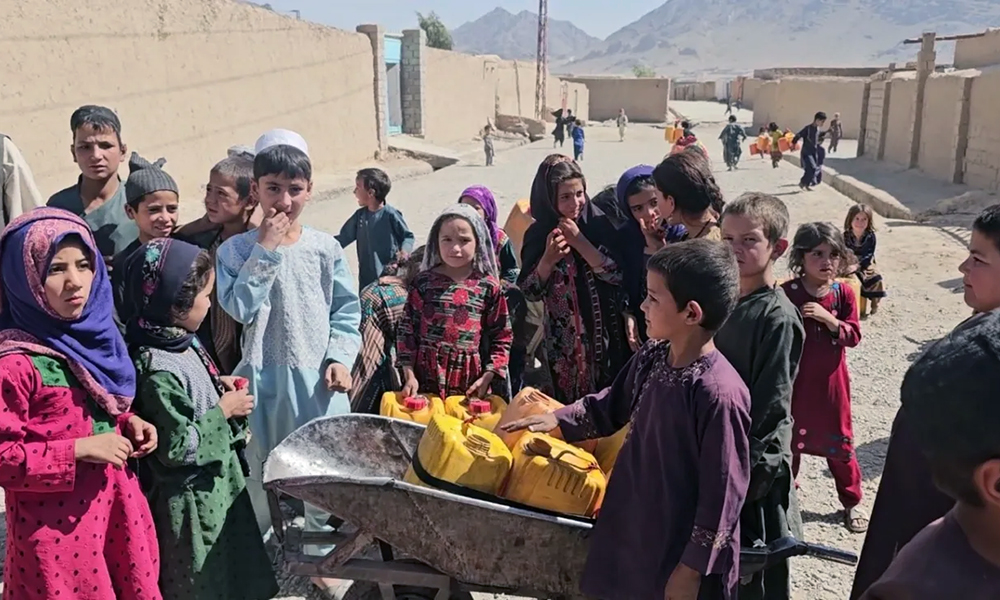
As the world marks World Water Day, Afghanistan is facing a worsening water crisis, with millions of people struggling to access safe and reliable supplies.
Years of drought, declining rainfall, rapid population growth and the return of families from neighbouring countries have placed increasing pressure on already fragile water systems.
Traditional sources such as wells and karezes—underground channels that have sustained communities for generations—are now under severe strain.
In many rural areas, families are forced to rely on unsafe surface water or travel long distances to meet daily needs. Women and children are most affected, often spending hours each day collecting water.
Urban centres, including Kabul, Mazar-e-Sharif and Kandahar, are also grappling with shortages. Rapid population growth and unregulated groundwater extraction have led to significant depletion, leaving many households dependent on private wells or water deliveries.
The situation in Kandahar is particularly severe. Reports indicate that numerous wells have dried up, while others have dropped to depths of more than 100 metres.
Local community leader Fazil Rahman described water shortages as the most pressing challenge in his area, noting that even deep boreholes are failing to produce sufficient supply. He added that the crisis is disrupting education and livelihoods, as children are often forced to spend hours fetching water instead of attending school.
In response, the International Committee of the Red Cross (ICRC), in partnership with the Urban Water Supply and Sewage State-Owned Corporation, launched a water infrastructure project in Kandahar in 2025. The initiative aims to improve access for more than 100,000 residents through expanded pipelines, new household connections and solar-powered pumping systems.
The ICRC has also upgraded a major water pumping station in Herat, now supplying water to more than 400,000 people through tens of thousands of household connections.
Beyond urban areas, water scarcity is also affecting agriculture, the backbone of many rural livelihoods. Reduced irrigation has led to lower crop yields and increased risks of food insecurity and malnutrition.
To support affected communities, the ICRC has rehabilitated irrigation canals, karezes and flood protection systems in several provinces, including projects in Parwan Province.
Despite these efforts, humanitarian organisations warn that aid alone will not be enough. Long-term investment in infrastructure, improved water management and stronger policies will be essential to address the crisis.
Without sustained and coordinated action, experts caution that water shortages could continue to threaten public health, food security and stability across Afghanistan.
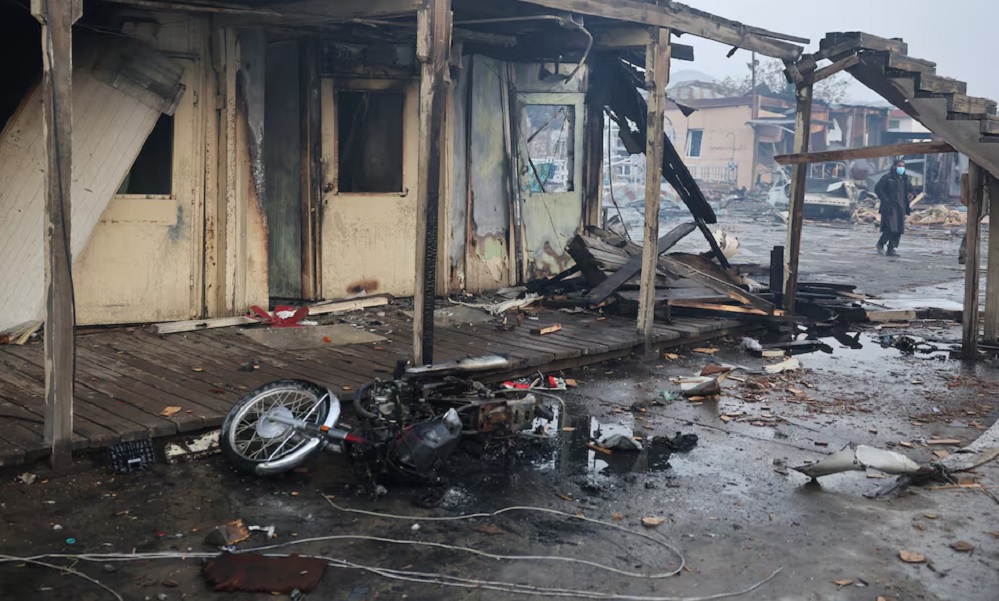
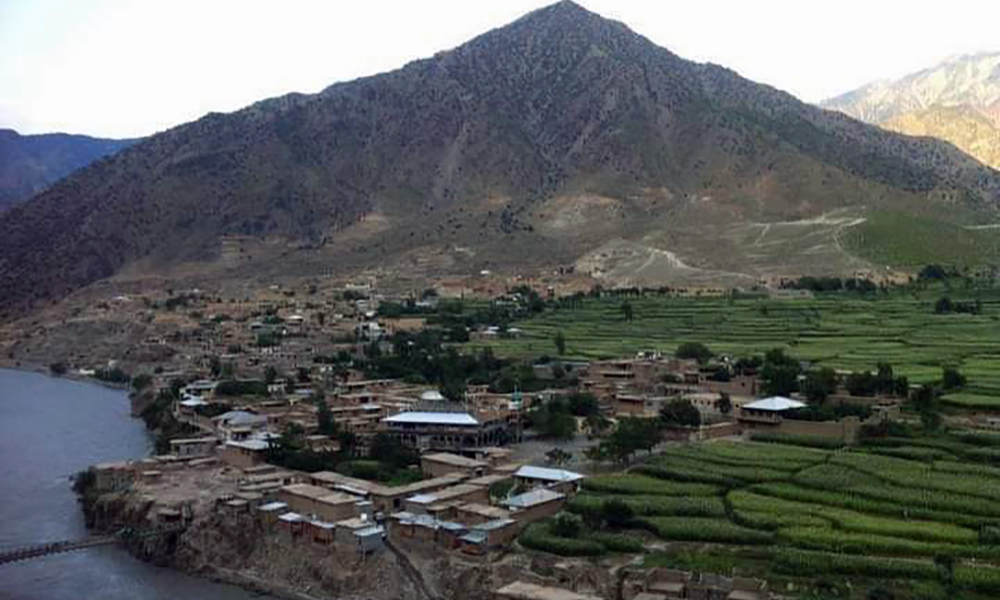
Hamdullah Fitrat, deputy spokesman of the Islamic Emirate, said that a mortar shell of the Pakistani military regime hit Shanpat area of Nari district of Kunar province at 9:30 am on Sunday, killing one civilian and wounding another.
The injured person is a woman, he said.
Pakistani forces also opened fire on a civilian vehicle in Shakin district of Paktika province, but no casualties were reported, Fitrat said.
The Pakistani government had earlier announced that it would halt its attacks on Afghanistan until Monday night on the occasion of Eid-ul-Fitr.


North Korea’s Kim Jong Un reappointed as president of state affairs, KCNA says

Tahawol: Possibility of US ground forces entering Iran war discussed

Water crisis deepens in Afghanistan as families struggle for access

Saar: Using US prisoners as political pressure

Afghani strengthens nearly 10% against US dollar amid banking sector reforms

Pakistani military jet downed in Afghanistan’s Jalalabad, pilot captured alive

Afghan Air Force conducts airstrikes in Islamabad, other cities

Prominent Muslim scholar issues fatwa calling for Afghanistan-Pakistan ceasefire

Afghan air force strikes key Pakistani military installations in retaliatory operation

IEA: Special circle in Pakistan has launched mission to destabilize region
Tahawol: Possibility of US ground forces entering Iran war discussed
Saar: Using US prisoners as political pressure

Tahawol: Pakistan’s efforts to destabilise Afghanistan

Saar: Decline in international assistance to Afghanistan

Tawsia: Assessment of Afghanistan’s economic activities in 1404
-
 Latest News4 days ago
IEA announces temporary pause in defensive operations against Pakistan for Eid
-
 Latest News5 days ago
Pakistan opposes normal Afghanistan–India relations: Shaheen
-
 Latest News5 days ago
Karzai accuses Pakistan of seeking to destabilise Afghanistan after Kabul strike
-
 Latest News4 days ago
Pakistani shelling hits Kunar districts despite ‘pause in hostility’ over Eid
-
 Regional5 days ago
Iran strikes Tel Aviv with cluster warheads in retaliation for killing of security chief
-
 Sport3 days ago
Afghanistan national buzkashi falls short in Kokpar World Championship semifinals
-

 Regional4 days ago
Pakistan among top nuclear threats to America, US intelligence chief tells senate
-
 Latest News5 days ago
Muslim scholars condemn Kabul hospital attack, urge ceasefire