
Latest News
OIC Kabul mission chief meets German envoy to discuss Afghanistan situation

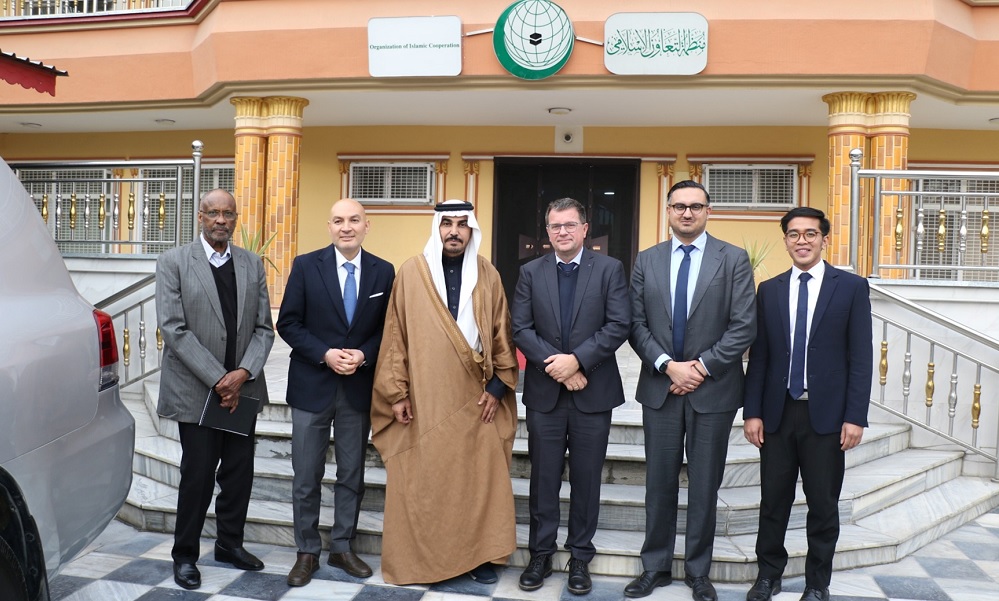
The Director General of the OIC Mission in Kabul, Mohammed Saeed Alayyash, met on Sunday with Rolf Dieter Reinhard, Head of the German Liaison Office for Afghanistan in Doha and Acting Chargé d’Affaires of the German Embassy in Afghanistan.
During the discussion, both sides exchanged views on the latest developments in Afghanistan. They focused on the security situation, as well as the humanitarian and economic conditions faced by the Afghan people.
The two officials also reviewed recent political developments and broader challenges in the country, highlighting the need for continued international engagement and support.
The meeting emphasized the importance of ongoing cooperation and coordination between the OIC Mission and the German side in addressing Afghanistan’s challenges and in supporting efforts to promote stability and improve the humanitarian situation.

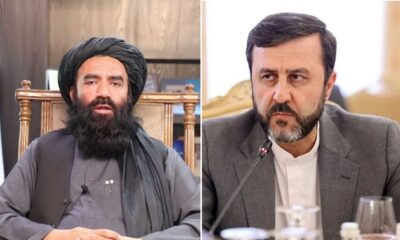




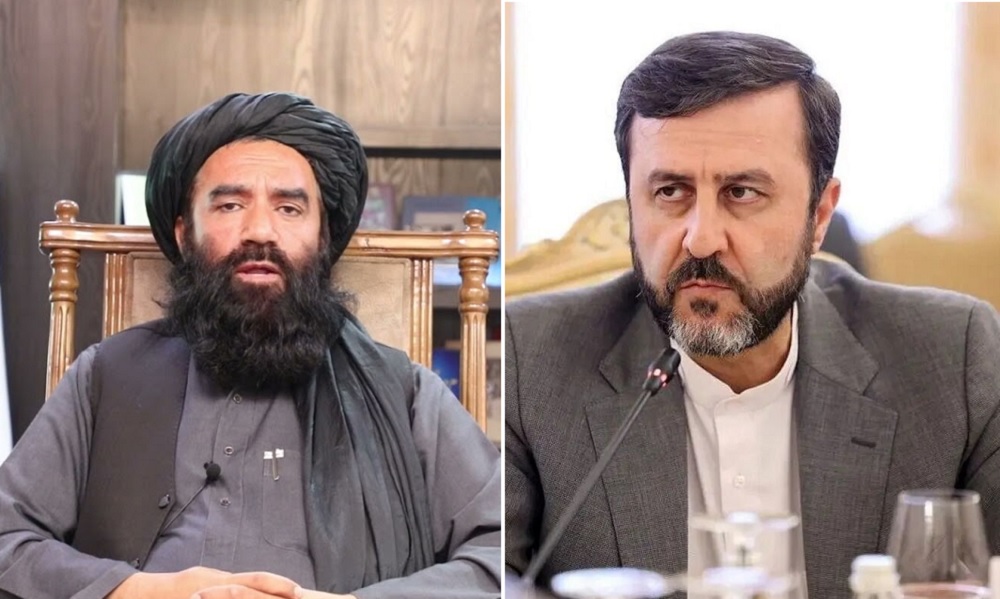
Noorullah Noori, Afghanistan’s Minister of Borders and Tribal Affairs, held a phone conversation with Kazem Gharibabadi, Iran’s Deputy Foreign Minister for Legal and International Affairs, to discuss bilateral border cooperation.
According to the Iranian news agency IRNA, both sides reaffirmed their commitment to strengthening border collaboration, with a particular focus on the ongoing renovation and updating of border markers. They also agreed to accelerate joint technical and legal meetings to enhance coordination.
As part of the agreement, the next meeting of senior border officials from Afghanistan and Iran is scheduled to take place in Iran in 1405 (2026–2027).
Latest News
Pakistan president claims situation in Afghanistan is ‘similar to or worse than pre-9/11’’
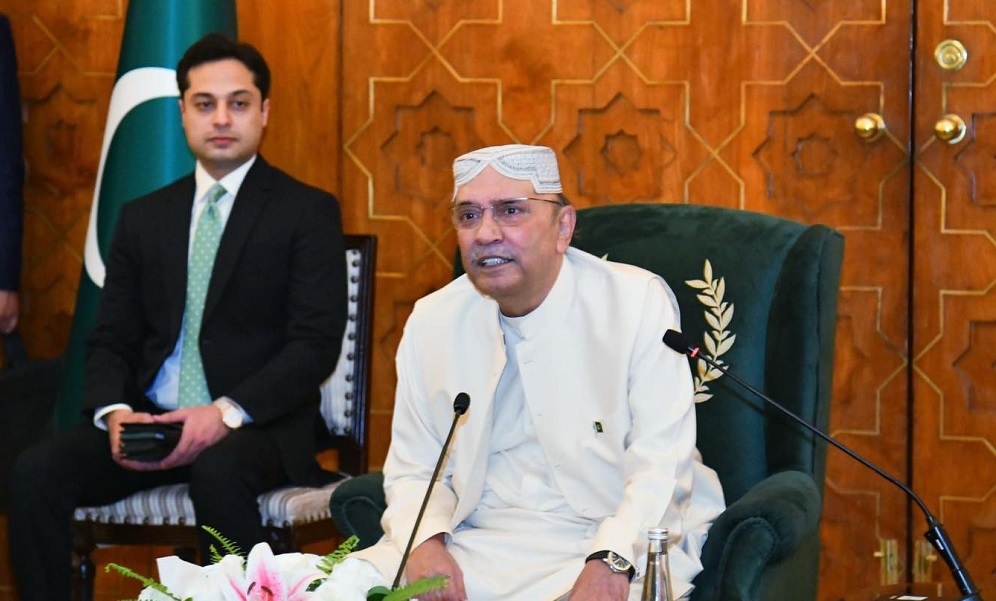
Pakistan’s President Asif Ali Zardari has warned that the presence of militant groups in the region poses risks to global peace, and repeated Islamabad’s concerns regarding what it describes as the activities of “terrorist organisations operating from Afghanistan.”
Zardari made the remarks in a statement issued Sunday, as he thanked world leaders for expressing solidarity with Pakistan following the recent attack on an imambargah in Islamabad, which left dozens dead and many others wounded. The incident was claimed by Daesh militant group.
According to the statement from the President’s Secretariat, Zardari said Pakistan remains committed to combating terrorism and stressed that no single country can address the threat alone.
“Pakistan has long maintained that terrorism cannot be confronted by a single country in isolation,” he was quoted as saying.
Citing Pakistan’s experience, he said in the statement that whenever “terrorist groups are allowed space, facilitation or impunity beyond national borders, the consequences are borne by innocent civilians all over the world.”
Zardari further claimed that the situation in Afghanistan under the Islamic Emirate authorities has created conditions “similar to or worse than pre-9/11,” and said this has influenced security developments across the region. IEA has repeatedly rejected such allegations, insisting that Afghan soil is not used against any country.
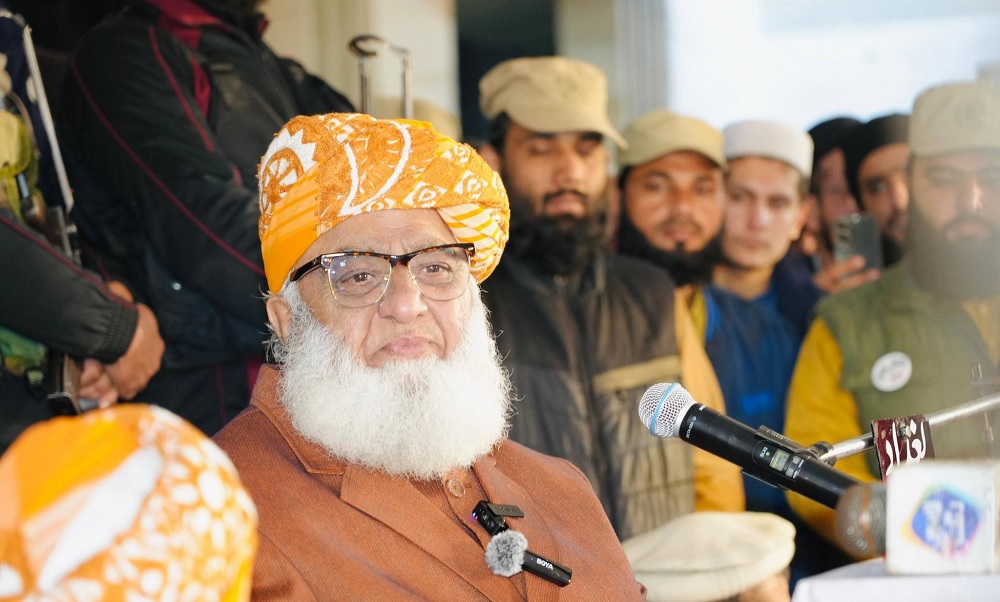
Maulana Fazlur Rehman, the leader of Pakistan’s Jamiat Ulema-e-Islam (JUI-F), has said that Afghanistan’s economic situation has become better than Pakistan’s, as Pakistan faces deepening financial hardship and increasing emigration.
Speaking at a gathering in Rawalpindi, Fazlur Rehman warned that business activity in Pakistan is collapsing and that many Pakistanis are leaving the country in search of stability. He sharply criticized Islamabad’s policies toward Afghanistan, describing them as “complete failures.”
Addressing Pakistan’s repeated claims that militants enter from Afghan territory, he said: “Authorities say terrorists are coming from there. If they are coming, stop them. If they are coming, eliminate them. The Afghan government has never objected to your actions.”
He also rejected the logic behind these allegations, pointing to the closure of key crossings between the two countries: “When not even a single pomegranate can enter Pakistan from Afghanistan today, how can militants enter?”
Fazlur Rehman argued that Pakistan’s foreign policy is shaped not by the civilian government, but by the military establishment: “One general comes and says we will negotiate; another comes and says we will wage war.”
Pakistani officials have long claimed that attacks inside Pakistan are planned from Afghan soil. The Islamic Emirate of Afghanistan has consistently denied this, saying Afghanistan cannot be blamed for Pakistan’s internal security failures.


Afghan border minister holds phone talks with Iran’s deputy foreign minister

OIC Kabul mission chief meets German envoy to discuss Afghanistan situation

Iran arrests at least four reform front politicians

Early medal leaders emerge as Winter Olympics continue in Italy

Champions League Elite action continues as qualification race tightens

ICG report says Pakistan most impacted by IEA’s return in Afghanistan

Afghanistan–China joint market opens in Kabul

Pakistan approves re-export of stranded Afghan transit trade cargo

ATN secures broadcast rights to Carabao Cup semis across Afghanistan

Pakistan army orders evacuation of Tirah Valley, fears of mass displacement grow

Saar: Afghanistan’s relations and opportunities with regional countries

Tahawol: Kabul’s response to Pakistan’s new accusation discussed

Saar: Discussion on Iran-US talks in Oman

Tawsia: Afghanistan’s interest in buying Russian oil and gas

Tahawol: IEA calls UNSC’s Daesh concerns baseless
-
 Latest News2 days ago
Afghanistan to grant one- to ten-year residency to foreign investors
-
 Latest News4 days ago
Terrorist threat in Afghanistan must be taken seriously, China tells UNSC
-
 Latest News5 days ago
Uzbekistan, Pakistan advance Trans-Afghan railway project
-
 Sport5 days ago
Winter Olympics finally underway, ATN to broadcast exclusively across Afghanistan
-
 Sport5 days ago
Afghanistan beat West Indies in final T20 WC warm-up match
-

 Sport3 days ago
Indonesia shock Japan to reach historic AFC Futsal Asian Cup final
-
 Sport4 days ago
Milano Cortina 2026 Winter Olympics: What You Need to Know
-
 Latest News5 days ago
Afghanistan hosts 4th Doha Process Counter-Narcotics Meeting, highlights progress