
Latest News
Pakistan ‘does not want armed conflict with Afghanistan’

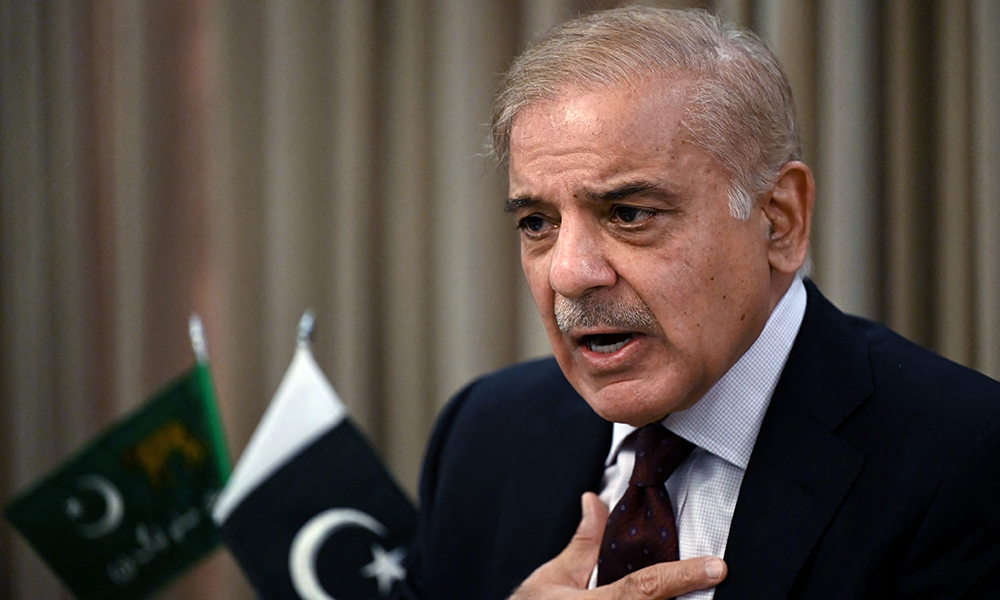
Following Pakistan’s airstrikes in Paktika and Khost provinces on Monday, Pakistan’s Prime Minister Shehbaz Sharif said Islamabad will not tolerate any form of cross border terrorism.
He said during a cabinet meeting on Wednesday: “We will not tolerate any form of terrorism from across the borders under any circumstances.”
Sharif emphasized that Pakistan’s borders are a red line against terrorism and that “terrorism must be eradicated.”
In the past year, Pakistan has consistently accused the Islamic Emirate of Afghanistan (IEA) of supporting terrorist groups such as the Tehreek- e-Taliban Pakistan (TTP) and has repeatedly urged the IEA to take serious action against this group and hand over its leaders to Pakistan.
However, the IEA has consistently denied Pakistan’s allegations.
Pakistan’s Defense Minister Khawaja Asif meanwhile says his country does not want to engage in an armed conflict with Afghanistan.
“Force is the last resort. We do not want to have an armed conflict with Afghanistan,” Asif said, speaking exclusively to VOA.
However, he warned that Islamabad could block the corridor it provides to landlocked Afghanistan for trade with India, saying Pakistan has the right to stop facilitating Kabul if it fails to curb anti-Pakistan terrorists operating on Afghan soil, VOA reported.
“If Afghanistan treats us like an enemy, then why should we give them a trade corridor?” he said.
This comes after Monday’s airstrikes against alleged militant hideouts in Paktika and Khost provinces in Afghanistan following an insurgent attack by Tehreek-e-Taliban (TTP) in Pakistan’s Waziristan on Saturday.
Pakistan claims Afghanistan’s leaders are not cracking down on TTP in the country – a claim the IEA rejects.
Five women and three children were killed in Monday’s airstrikes. IEA spokesperson Zabihullah Mujahid meanwhile warned of serious consequences earlier this week.
“Pakistan should not blame Afghanistan for the lack of control, incompetence and problems in its own territory. Such incidents can have very bad consequences, which will be out of Pakistan’s control,” Mujahid said in a statement.
Following the airstrikes, security forces along the Durand Line retaliated and targeted Pakistani military posts with “heavy weapons.”
Since Tuesday, a tense calm has prevailed along the 2,600-kilometer-long border.
Experts meanwhile say that while the IEA does not have the military might to attack Pakistan, the Islamic Emirate could use unconventional means, including actively supporting anti-Pakistan militants, to respond if aggression from Islamabad grows.
“If they can harm us, then we’ll be forced to [retaliate],” Asif said, while expressing hope that Afghanistan would meet the “single demand” of reining in TTP, preventing the need for future military strikes from Pakistan.
Reacting to Monday’s strikes, the U.S. State Department urged Pakistan and Afghan Taliban to take steps to address differences.
“We urge the Taliban to ensure that terrorist attacks are not launched from Afghan soil, and we urge Pakistan to exercise restraint and ensure civilians are not harmed in their counterterrorism efforts,” deputy spokesperson Vedant Patel told the media during a regular press briefing Monday.
Meanwhile, former Pakistani information minister Jan Achakzai warns that if the IEA keeps attacking Pakistan, Islamabad may seize the “Wakhan corridor.”
Achakzai wrote on his social media platform X on Wednesday that Pakistan would swiftly enter Afghanistan and annex the Wakhan corridor to gain access to the Central Asian countries.
The Wakhan Corridor is a narrow strip of land in northeastern Afghanistan, extending between Tajikistan, Pakistan, and China. It serves as a buffer zone between Afghanistan and its neighbors.
The Wakhan Corridor has historically been a significant trade route connecting Central Asia with South Asia and the Middle East. It played a crucial role in the ancient Silk Road network.












Kazakhstan’s Foreign Minister Mukhtar Tileuberdi has called for pragmatic and coordinated international engagement with Afghanistan, saying the country’s long-term stability is closely linked to the security and sustainable development of Central Asia.
Speaking during the general debate of the 81st session of the United Nations General Assembly in New York on Friday, Tileuberdi said humanitarian assistance to Afghanistan remains essential but alone cannot break the cycle of poverty, displacement and dependency.
He said Kazakhstan supports a “pragmatic, coordinated and step-by-step” approach to international engagement with Afghanistan, with the United Nations playing a central role.
Tileuberdi also said Kazakhstan is working with the UN to operationalize the United Nations Regional Centre for the Sustainable Development Goals for Central Asia and Afghanistan in Almaty.
He said the success of the centre should be measured by the results and assistance it delivers to the region.


Abu Muslim Farah defeat Khurasan Faryab 2-0 in ACL season six

Saar: Concerns over Pakistan’s political crisis discussed

Afghanistan Champions League: Omar Zawak Herat beat Toofan Herat 1-0

Blast in Pakistan’s Dera Ismail Khan kills 11, injures 30

Ariana Afghan Airlines increases Kabul-Delhi cargo flights

Saudi energy group signs major Afghanistan deals covering gas exploration and pipeline plans

Trump floats idea of renaming Atlantic or Pacific Ocean

US hits Egyptian bank branches with Iran sanctions as war marks six months

Nepal flood rescue mission enters critical phase as thousands remain missing

Iranian clubs to face Gulf opponents at neutral venues in Asian Champions League Elite
Saar: Concerns over Pakistan’s political crisis discussed

Exclusive interview with Abdul Latif Mansoor, Minister of MRRD

Tawsia: Overview of Afghanistan’s iron mines

Tahawol: Discussion on fresh Pakistani airstrikes on Afghanistan

Saar: Calls for international support for Afghanistan discussed
-

 World5 days ago
CNN, MS NOW and Politico sue Trump, challenging White House ban
-

 Latest News4 days ago
Ariana Afghan Airlines ranks seventh among 45 Central Asian airlines
-

 Latest News5 days ago
UN reiterates call for respect for international law after Kunar airstrikes
-

 Regional4 days ago
US and Iran hold first talks since June after Trump’s ‘annihilation’ threat
-

 Latest News4 days ago
Silk Road highway in Wakhan corridor now reaches the China border
-

 Regional3 days ago
Iran airlines cancel flights as US sanctions hit
-

 Latest News5 days ago
Afghan Official: Pakistan’s airstrikes will not go unanswered
-

 Sport5 days ago
Afghan boxing referee heads to China for international festival