
Latest News
Pakistan finalizes plans to detain and deport Afghans as deadline nears
Pakistan has granted Afghan migrants, both undocumented and those holding ACC cards, a deadline of March 31 to voluntarily leave the country.

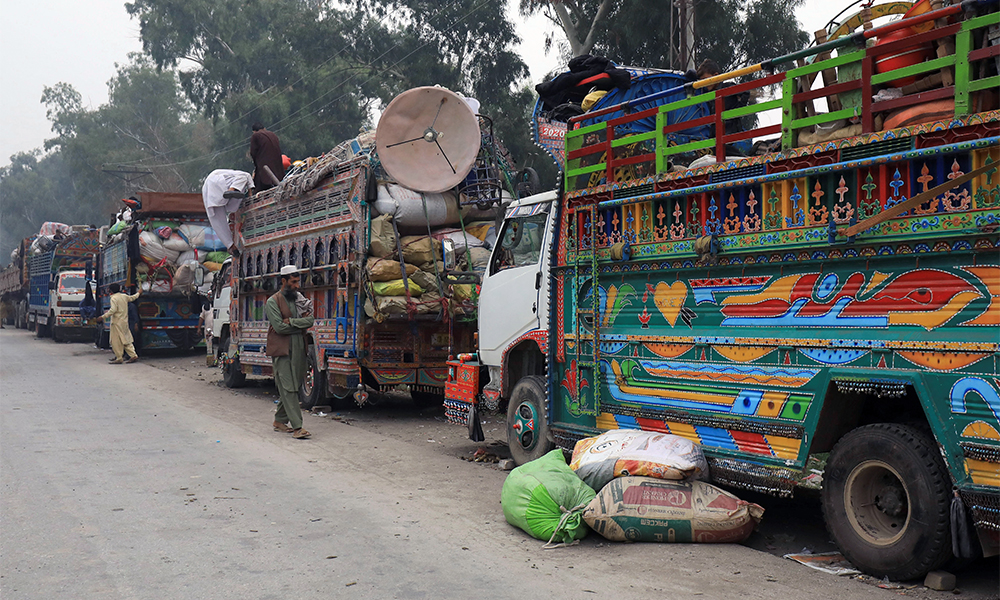
Officials in Pakistan have completed arrangements to detain and expel Afghan citizens following the March 31 deadline for their voluntary return to Afghanistan. This move is part of the country’s plan to address the growing concerns regarding the status of Afghan migrants in Pakistan.
A high-level meeting on Friday, chaired by Interior Minister Mohsin Naqvi, reviewed the measures to repatriate Afghan Citizen Card (ACC) holders. This meeting focused on ensuring the effective execution of the government’s deadline and the logistics surrounding the return process.
Despite requests from the Afghan government and human rights organizations, Pakistani authorities have firmly rejected extending the deadline for the return of ACC holders. The Pakistani government had initially set the deadline for the end of March, and the expulsion process will move forward as planned.
Mohsin Naqvi also revealed that Talal Chaudhry, the State Minister for Interior, would travel to the provinces to assess and address any challenges and potential issues in the process of Afghan migrants’ return.
Meanwhile, Pakistani security forces have detained at least 932 Afghan migrants in Rawalpindi, as the deadline for the expulsion of Afghan migrants with ACC cards approaches.
Human rights organizations have strongly condemned Pakistan’s recent decision to expel Afghan refugees, labeling it a violation of international law and a potential humanitarian crisis. They argue that many of these refugees, including human rights defenders, political activists, and victims of gender-based violence, fled Afghanistan to escape persecution and are now at risk of facing harm if deported.
The Human Rights Commission of Pakistan (HRCP) has expressed deep concern over the government’s ultimatum for undocumented immigrants to leave by March 31, warning that this could lead to a humanitarian disaster. They highlight that such forced repatriation violates international customary law and could adversely affect vulnerable groups, including women, children, the elderly, and individuals with disabilities.
Amnesty International has called on Pakistan to halt the detentions, deportations, and harassment of Afghan refugees, emphasizing that these actions violate the principle of non-refoulement, which prohibits returning individuals to places where they face risks of persecution. They stress that deporting Afghan refugees, especially women and girls, could deny them access to safety, education, and livelihoods.
Pakistan has granted Afghan migrants, both undocumented and those holding ACC cards, a deadline of March 31 to voluntarily leave the country.
However, Pakistani officials confirmed that Afghan migrants holding “PoR” cards are not at risk of being expelled until June 30.
Meanwhile, the International Organization for Migration (IOM) reported a sharp decline in Afghan returns and deportations during the first half of March. Between March 1 and 15, returns dropped by 67 per cent, while deportations fell by 50 per cent compared to the previous reporting period (February 16-28).







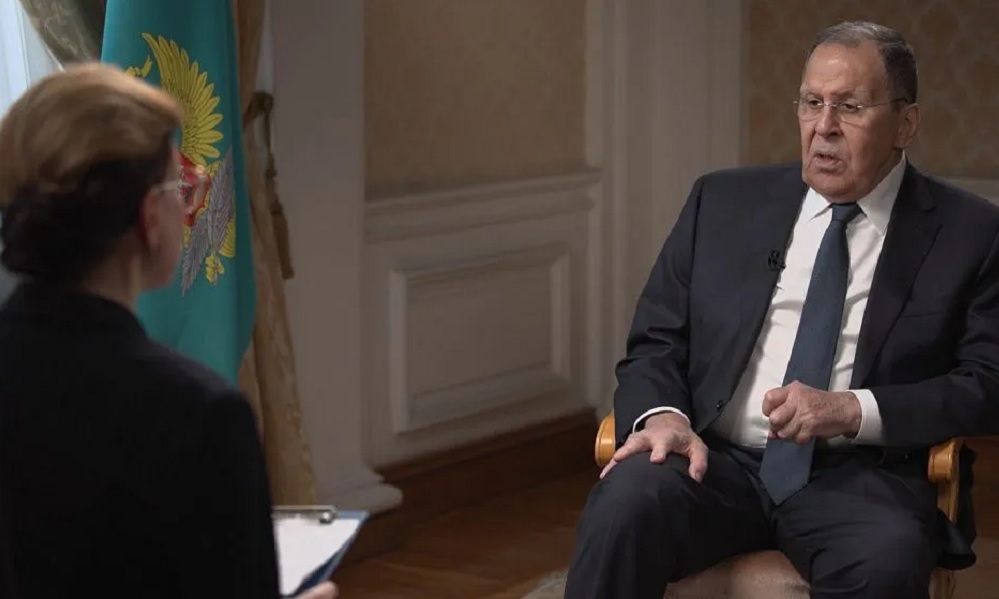
Terrorist activities continue to be observed along Afghanistan borders and along the India–Pakistan–Afghanistan corridor, Russian Foreign Minister Sergei Lavrov said in an interview published on Monday.
Speaking to Russia-based media outlet TV BRICS, Lavrov pointed to ongoing concerns in the Middle East, including its Asian regions.
He highlighted the importance of collaboration with India at the United Nations to advance a global counter-terrorism convention.
Lavrov stated that while the draft convention has already been prepared, consensus on its adoption has not yet been reached.
Russia has repeatedly expressed concern about militant threats from Afghanistan. The Islamic Emirate, however, has dismissed the concerns saying that it will not allow Afghanistan’s soil to be used against any country.
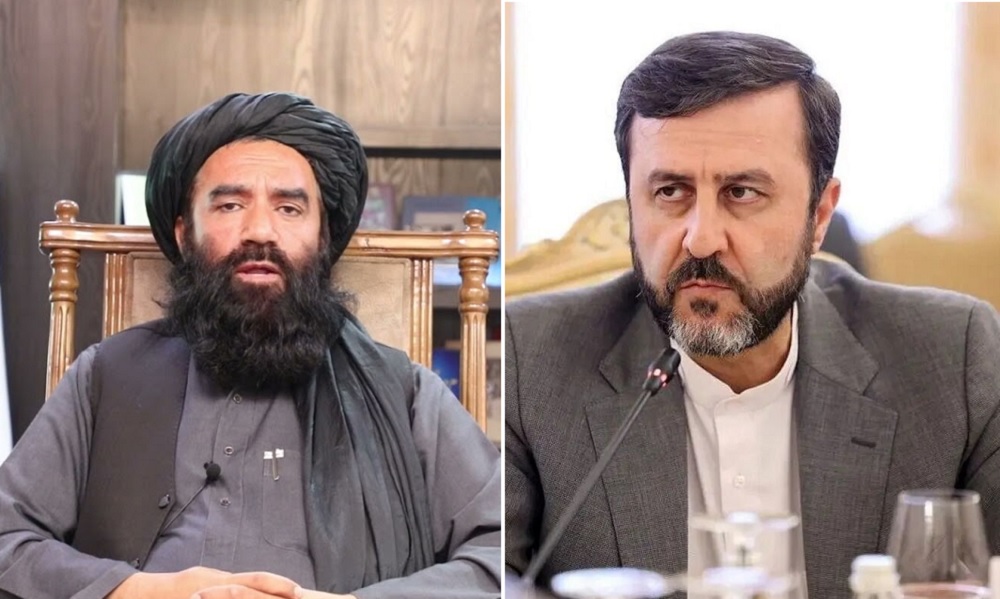
Noorullah Noori, Afghanistan’s Minister of Borders and Tribal Affairs, held a phone conversation with Kazem Gharibabadi, Iran’s Deputy Foreign Minister for Legal and International Affairs, to discuss bilateral border cooperation.
According to the Iranian news agency IRNA, both sides reaffirmed their commitment to strengthening border collaboration, with a particular focus on the ongoing renovation and updating of border markers. They also agreed to accelerate joint technical and legal meetings to enhance coordination.
As part of the agreement, the next meeting of senior border officials from Afghanistan and Iran is scheduled to take place in Iran in 1405 (2026–2027).
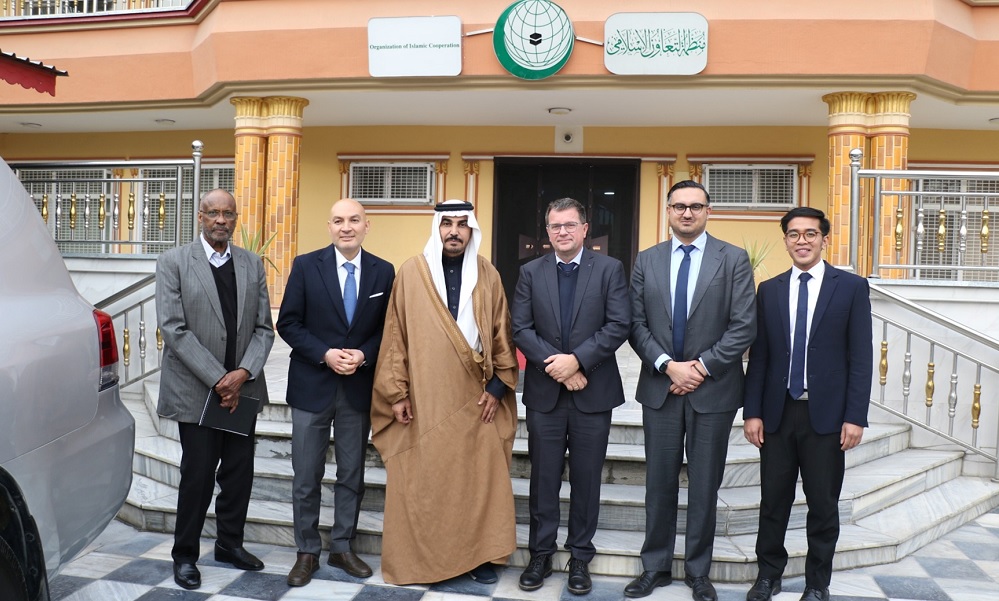
The Director General of the OIC Mission in Kabul, Mohammed Saeed Alayyash, met on Sunday with Rolf Dieter Reinhard, Head of the German Liaison Office for Afghanistan in Doha and Acting Chargé d’Affaires of the German Embassy in Afghanistan.
During the discussion, both sides exchanged views on the latest developments in Afghanistan. They focused on the security situation, as well as the humanitarian and economic conditions faced by the Afghan people.
The two officials also reviewed recent political developments and broader challenges in the country, highlighting the need for continued international engagement and support.
The meeting emphasized the importance of ongoing cooperation and coordination between the OIC Mission and the German side in addressing Afghanistan’s challenges and in supporting efforts to promote stability and improve the humanitarian situation.


Terrorist activities observed along Afghanistan borders, says Lavrov

Afghan border minister holds phone talks with Iran’s deputy foreign minister

OIC Kabul mission chief meets German envoy to discuss Afghanistan situation

Iran arrests at least four reform front politicians

Early medal leaders emerge as Winter Olympics continue in Italy

Afghanistan–China joint market opens in Kabul

Pakistan approves re-export of stranded Afghan transit trade cargo

ATN secures broadcast rights to Carabao Cup semis across Afghanistan

Pakistan army orders evacuation of Tirah Valley, fears of mass displacement grow

Afghan traders sign deal to import pharmaceuticals from Bangladesh

Saar: Afghanistan’s relations and opportunities with regional countries

Tahawol: Kabul’s response to Pakistan’s new accusation discussed

Saar: Discussion on Iran-US talks in Oman

Tawsia: Afghanistan’s interest in buying Russian oil and gas

Tahawol: IEA calls UNSC’s Daesh concerns baseless
-
 Latest News2 days ago
Afghanistan to grant one- to ten-year residency to foreign investors
-
 Latest News4 days ago
Terrorist threat in Afghanistan must be taken seriously, China tells UNSC
-
 Sport5 days ago
Afghanistan beat West Indies in final T20 WC warm-up match
-

 Sport3 days ago
Indonesia shock Japan to reach historic AFC Futsal Asian Cup final
-

 Sport4 days ago
Milano Cortina 2026 Winter Olympics: What You Need to Know
-

 Sport2 days ago
Iran clinch AFC Futsal Asian Cup 2026 in penalty shootout thriller
-

 Latest News4 days ago
US Justice Department to seek death penalty for Afghan suspect in National Guard shooting
-
 Latest News4 days ago
Uzbekistan, Kazakhstan discuss cooperation on Afghanistan