
Latest News
Pakistan PM Says Will Not Give Advice to Afghanistan Anymore

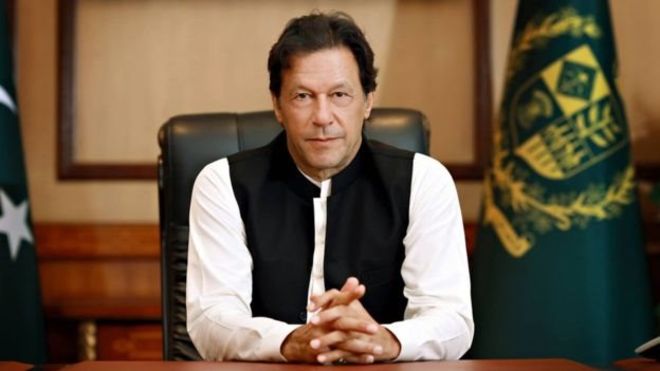
 Pakistan Prime Minister Imran Khan says he will not give advice to the Afghan government regarding peace and reconciliation anymore.
“Now I’m not giving any advice to the Afghan government, because it would call it interference,” Khan said while speaking at a public gathering in Khyber Pakhtunkhwa.
Pakistani PM added that he will pray for peace in Afghanistan, reminding that it has been 40 years since Afghans have been suffering from war.
Recently, Imran Khan suggested formation of an interim government in Afghanistan for the sake of peace which drew strong reactions from Afghanistan.
The Afghan government summoned the Pakistani Embassy’s Counselor in Kabul, saying it is a clear interference in internal affairs of Afghanistan.
Meanwhile, Afghanistan’s Second Vice President Mohammad Sarwar Danish said on Saturday that war in his country will not end without sincere cooperation of Pakistan.
“Our neighboring countries, especially Pakistan can have a constructive role than other countries in the Afghan peace process. We are calling on the government of Pakistan to play its serious role and support an intra-Afghan dialogue,” VP Danish said.
This comes as the Afghan and U.S. governments have always blamed Pakistan for supporting the terrorist groups in Afghanistan. It is widely believed in Afghanistan that the long-lasting war and violence in Afghanistan will not end unless Pakistan stops its support for terrorist groups.

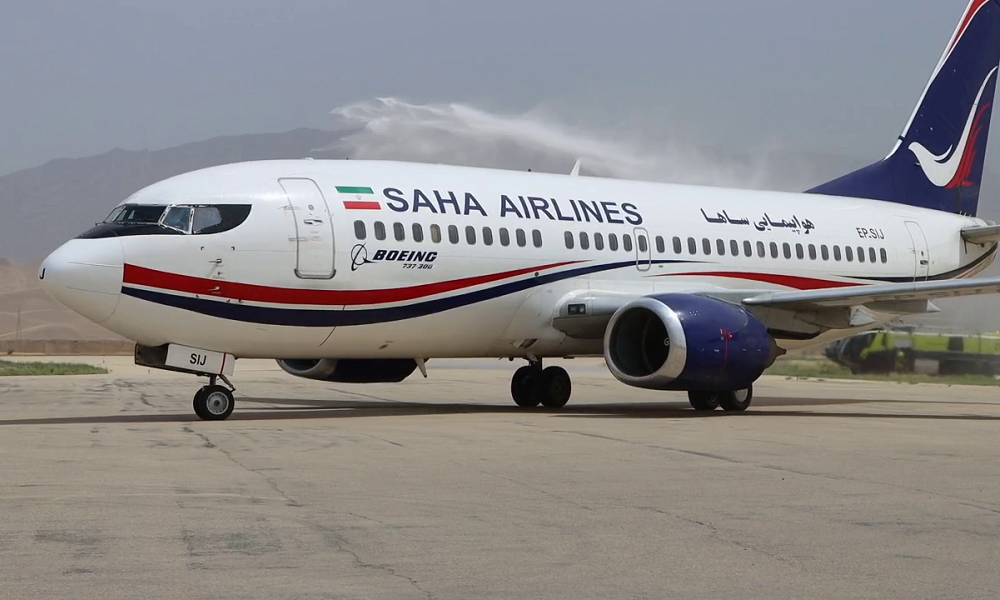
Iranian airline SAHA has launched direct flights between the cities of Mazar-e-Sharif, in northern Afghanistan, and Mashhad in Iran.
Airline officials said that 135 passengers were transported between Mazar-e-Sharif and Mashhad on the inaugural flight, adding that the flights are scheduled to operate once a week.
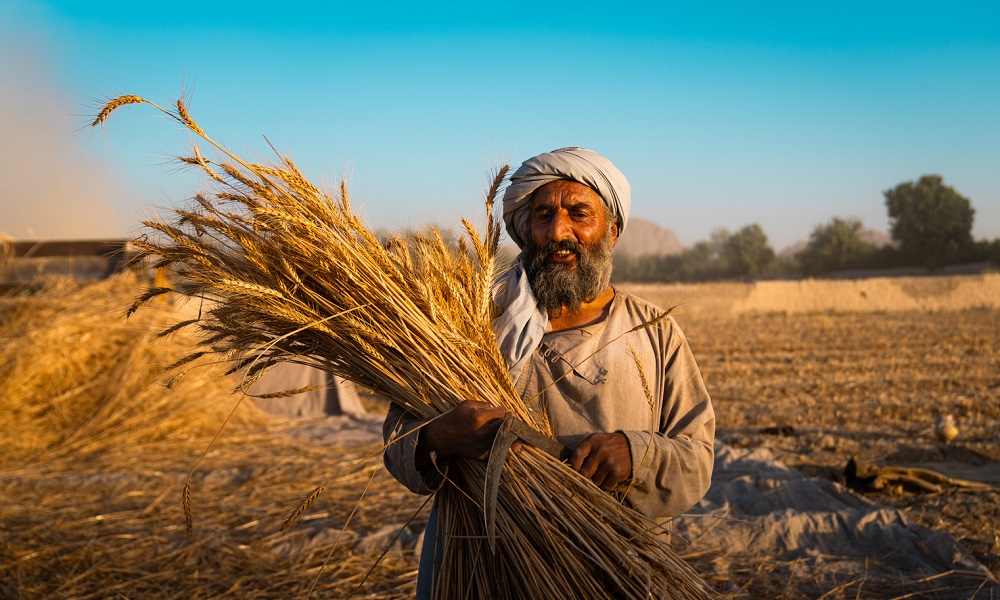
Five Afghan agribusinesses have been selected as the first recipients of co-investment matching grants under a joint initiative by the Food and Agriculture Organization and the World Bank Group aimed at revitalizing Afghanistan’s agricultural economy through private sector-led growth, job creation and stronger agricultural value chains.
The grants, announced on Wednesday, will support enterprises involved in seed production, saffron, dairy, soybean processing and food manufacturing across Herat, Kapisa, Kunduz, Logar and Takhar provinces.
The selected businesses will receive financial support alongside their own co-investment contributions to expand operations, improve processing capacity, strengthen market links for farmers and create employment opportunities in rural communities. Three of the five supported enterprises are women-led.
Planned investments include a soybean oil refining line in Kapisa, solar-powered dairy operations in Takhar and saffron processing equipment in Kunduz.
Officials said the projects are expected to generate both direct and indirect jobs in production, processing, logistics and marketing.
In addition to funding, the enterprises will receive technical support through a Business Development Services provider to improve business planning, investment management, workforce development and operational growth.
The initiative is being implemented under the Emergency Food Security Project (EFSP), funded by the World Bank and managed by the FAO. The matching grant scheme is designed to strengthen the role of Afghan small and medium-sized agribusinesses in driving rural economic growth, creating jobs and improving agricultural value chains.
The first five businesses are being supported under the program’s Window 1 category, which focuses on women-led and early-stage small agribusinesses. Additional funding windows are expected to support larger and export-oriented businesses with greater potential for value addition and employment generation.
“Across Afghanistan, farmers are still too often cut off from markets. What we’re doing here is supporting the businesses that can help change that,” said Richard Trenchard.
“These enterprises are already investing in their own growth. Our role, together with the World Bank, is to help them scale up, reach more farmers, create jobs in rural communities and build stronger connections between production and markets,” he added.
Agriculture remains the backbone of Afghanistan’s economy, supporting the livelihoods of around 80 percent of the population. More than half of Afghan women participating in the labor force are employed in the sector.
Officials said continued investment in agribusiness and market systems is critical as humanitarian funding declines while food insecurity and malnutrition remain widespread. They said strengthening the private sector could help create jobs, support farming communities and improve long-term food security across the country.
Latest News
Mullah Baradar launches $150 million Lajward residential complex in Balkh
He also encouraged business leaders to expand investments in the housing and construction sector.
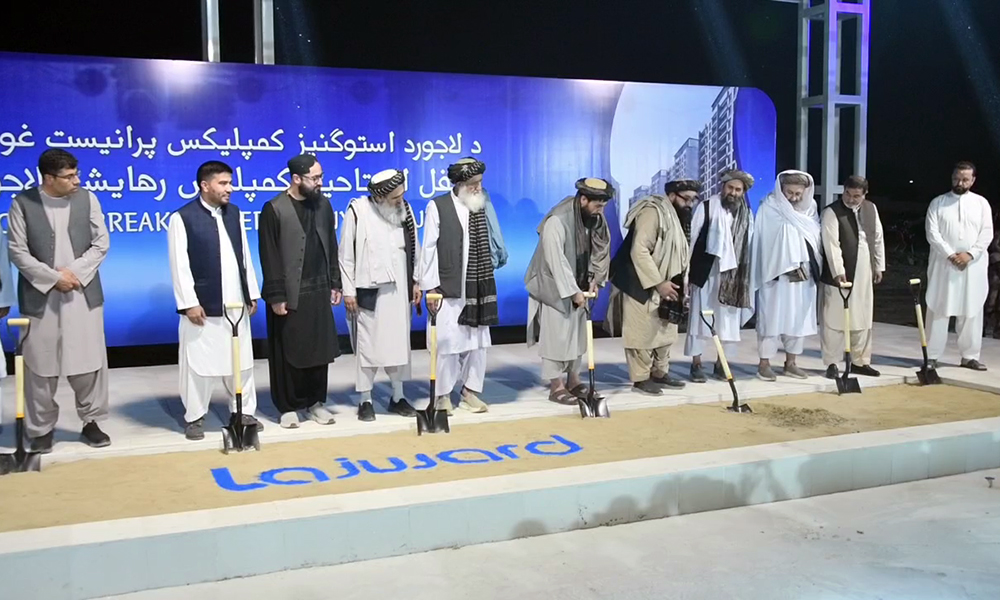
The foundation stone of the Lajward Residential Complex was laid on Tuesday in northern Balkh province by Mullah Abdul Ghani Baradar, Deputy Prime Minister for Economic Affairs.
Speaking at the inauguration ceremony, Baradar said the Islamic Emirate is placing special focus on achieving economic self-reliance, attracting domestic and foreign investment, and implementing major infrastructure projects across the country.
He described the Lajward Residential Complex as a significant example of ongoing development efforts and noted that large-scale projects in sectors including industry, transportation, electricity generation, and urban development are currently underway.
Baradar stated that practical work on master plans and urban expansion projects is continuing alongside national initiatives such as the Qosh Tepa project. He added that the Islamic Emirate considers it a responsibility to provide opportunities and facilities for both local and foreign investors in the construction sector.
According to his office, the Deputy Prime Minister emphasized that cooperation between the government and the private sector is essential for economic stability and the reconstruction of Afghanistan, while assuring continued support for investors.
He also encouraged business leaders to expand investments in the housing and construction sector.
During his visit to Balkh, Baradar said he would inspect commercial ports in the province to ensure the provision of 24-hour services and improve the efficiency of export and import operations.
The Deputy Prime Minister noted that senior officials from various institutions are accompanying him to closely assess economic activities, development projects, and challenges related to port operations in the province.
According to the Deputy Prime Minister for Economic Affairs Office, the Lajward Residential Complex will be built with a private sector investment of $150 million.
The project includes the construction of approximately 1,448 modern apartments and is expected to create around 7,000 jobs.
The complex will be developed on nearly 21 jeribs of land and will include schools, healthcare and commercial facilities, green areas, a mosque, sports and recreational centers, and other public amenities.


Tahawol: Call for handing over Afghanistan’s UN seat to IEA discussed

Iranian airline SAHA launches direct flights between Mazar-e-Sharif and Mashhad

Saar: Pakistan’s emphasis on peaceful ties with Kabul discussed

New dates announced for Afghanistan Wrestling Premier League

FAO, World Bank launch matching grants to support Afghan agribusinesses and rural jobs

New Afghanistan-China transport corridor launched via Turkmenistan

Afghanistan signs $46 million deal to develop standard laboratory complexes

Bayat Power extends gas supply deal with Afghan Gas

Germany to launch online visa system for Afghan study and work applicants in Pakistan

Afghanistan, Uzbekistan and Kyrgyzstan agree on framework to boost trade and transit
Tahawol: Call for handing over Afghanistan’s UN seat to IEA discussed
Saar: Pakistan’s emphasis on peaceful ties with Kabul discussed

Tahawol: Reason for postponing US attack on Iran reviewed

Saar: Talks between Afghanistan and Pakistan discussed

Tahawol: Central Asia’s security link to Afghanistan stability
-
 World4 days ago
Large blast near Beit Shemesh part of pre-planned test: Israeli defense firm
-
 World4 days ago
Trump returns from China with stability but little progress
-
 Latest News5 days ago
Russia asked to send medical teachers to Afghanistan: Overchuk
-

 Latest News5 days ago
U.S. reups $6 million reward for information on American missing in Afghanistan since 2014
-
 Business3 days ago
Chinese and Uzbek investors express interest in Afghanistan’s mining sector
-

 Sport5 days ago
IPL: Chennai Super Kings drop to sixth place after defeat against Lucknow Super Giants
-
 Regional2 days ago
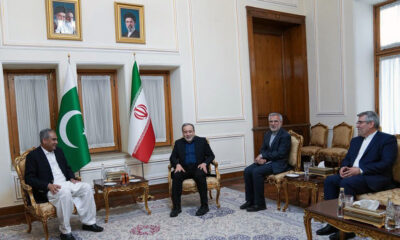
Revised Iranian proposal to end war shared with US, Pakistani source says
-
 Regional5 days ago
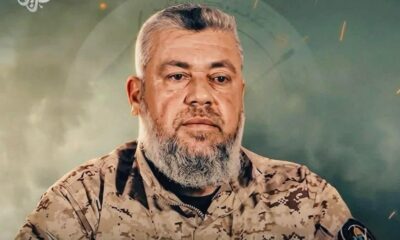
Gaza mosques announce death of Hamas military leader after Israeli targeting claim