
Latest News
Pakistan urges OIC to help pull Afghanistan out of isolation


Pakistan on Wednesday proposed the creation of a working group of experts within the Organisation of Islamic Cooperation (OIC) Contact Group on Afghanistan to develop a practical roadmap addressing Afghanistan’s pressing challenges. The proposal was presented by Pakistan’s Deputy Prime Minister and Foreign Minister at the inaugural meeting of the OIC Contact Group on the sidelines of the UN General Assembly.
Fifty OIC member states are part of the Contact Group, formed in 2009 under Germany’s auspices. Pakistan emphasized that Afghanistan’s political stalemate and international isolation cannot continue indefinitely and outlined six key steps for regional engagement:
- Advocate for international funding to meet Afghanistan’s humanitarian needs without political conditions.
- Support stabilization of Afghanistan’s economy and banking sector to enable trade, reduce unemployment, and promote regional connectivity.
- Encourage dialogue with the IEA to ensure compliance with international obligations.
- Support UN-led efforts to help ex-poppy farmers secure alternative livelihoods.
- Urge the IEA to lift restrictions on women and girls, aligning policies with Islamic principles and societal norms.
- Facilitate the safe return and reintegration of Afghan refugees to ensure long-term peace and stability.
Pakistan also claimed that over two dozen terrorist groups are operating in Afghanistan, a claim previously rejected by the Islamic Emirate. Pakistan stressed that the IEA must take verifiable steps to prevent their territory from being used for terrorism.
“Pakistan is committed to supporting all efforts for realizing the goal of a peaceful and prosperous Afghanistan,” Dar said. “But this requires mutual respect, sincerity and demonstration of necessary political will by the Taliban authorities to help us to help themselves.”


India says a fugitive drug-trafficking kingpin accused of smuggling heroin and methamphetamine from Afghanistan into India has been deported from Turkey and brought back to the country.
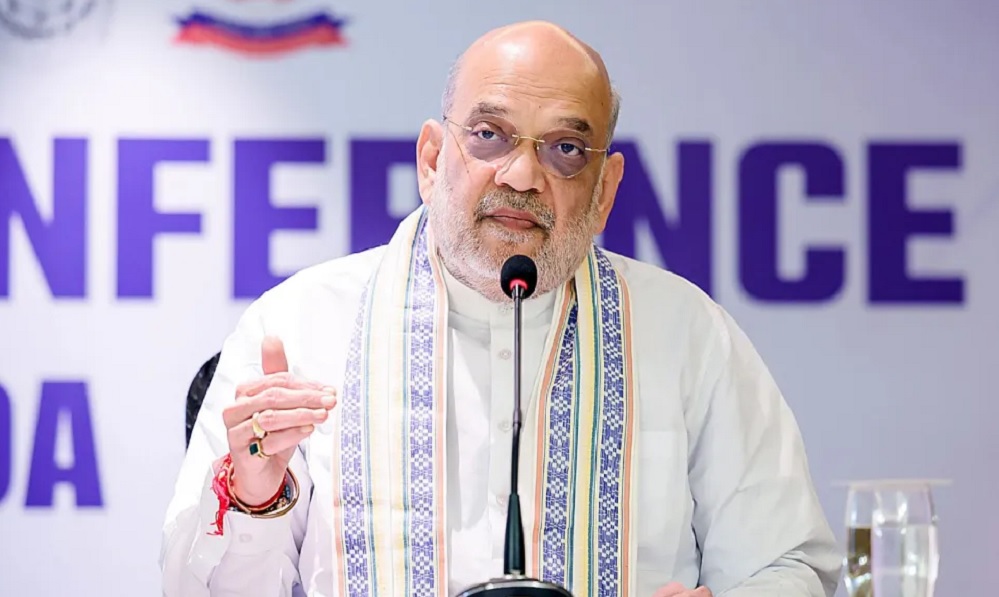
Indian Home Minister Amit Shah said on Saturday that Navpreet Singh, also known as “Nav,” was deported from Turkey after Indian authorities tracked him down.
Shah said Singh had obtained Turkish citizenship using the fake identity “Navab Virk” and continued to smuggle heroin and methamphetamine from Afghanistan to India.
The 34-year-old, a native of Punjab, had been wanted in several narcotics cases and was on the run for more than two years. Indian authorities allege that he headed an international narcotics syndicate whose operations in India were managed by his cousin, Prabhdeep Singh.
Prabhdeep Singh, also known as “Harry,” was extradited from Azerbaijan to India in May in connection with a case involving the seizure of 358 kilograms of heroin in 2021.
India submitted its request for Navpreet Singh’s extradition to Turkish authorities in 2023-24, according to officials familiar with the case.
Shah described Singh’s deportation as a “historic milestone” and said the Indian government was committed to dismantling drug-trafficking networks.
The Indian Home Ministry says 288 fugitives from 36 countries have been brought back to India between 2019 and August 2026 as part of efforts to pursue wanted criminals abroad.
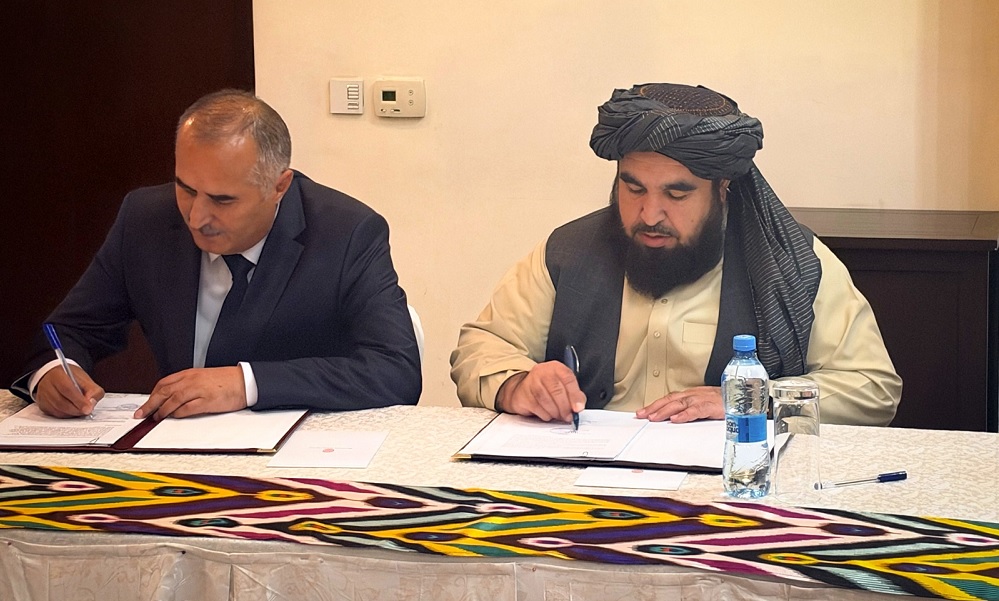
Da Afghanistan Breshna Sherkat (DABS) and Tajikistan-based Pamir Energy Company have signed a cooperation agreement to provide electricity to border districts of Badakhshan province.
The agreement was signed in Dushanbe, Tajikistan, by Abdul Haq Hamkar, Chief Executive Officer of DABS, and Amir Khan Rahim, President of Pamir Energy.
The agreement is aimed at expanding cooperation, improving electricity supply and creating the necessary conditions for providing power services to residents of Badakhshan’s border districts.
On the sidelines of the signing ceremony, the two sides also discussed extending a 110-kilovolt power transmission line to Faizabad, the provincial capital of Badakhshan.
Hamkar emphasized the importance of the project in strengthening the province’s electricity infrastructure.
Pamir Energy said it would share relevant proposals with DABS following technical assessments.
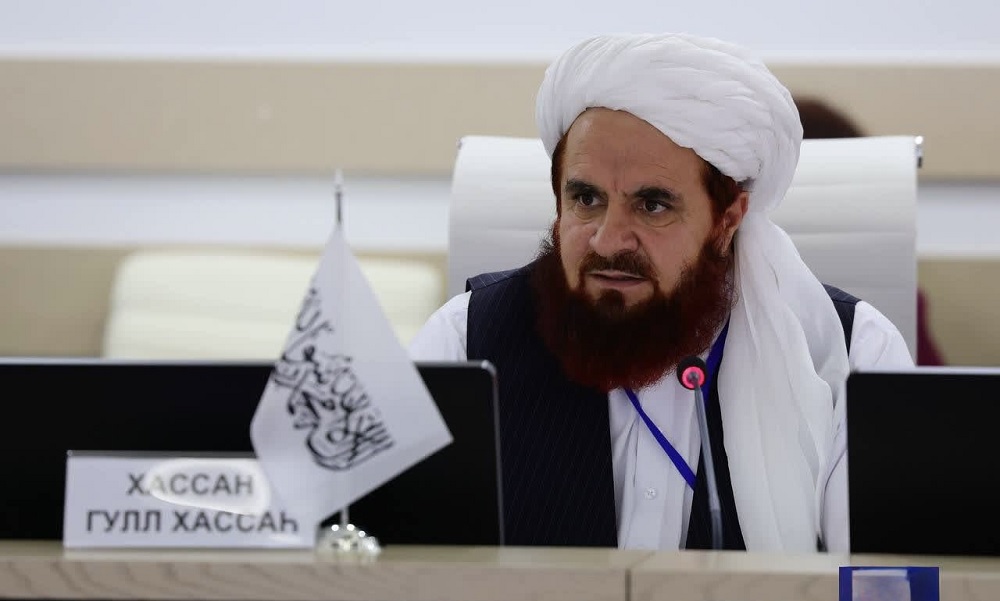
In his speech, Hassan emphasized the importance of mutual respect, dialogue, economic cooperation and joint development between Afghanistan and countries in the region.
On the sidelines of the forum, the Afghan ambassador met with Anton Borisovich Doronin, Minister of Economic Development of Russia’s Stavropol region. The two discussed ways to expand trade, investment and economic cooperation.
Hassan also met with a number of Afghan businessmen and representatives of the Afghan community in Russia, listening to their concerns and suggestions.
He assured them that the Afghan embassy would provide necessary support and cooperation in addressing their concerns.


India clinch Asian Games cricket gold after beating Pakistan

India says drug kingpin linked to Afghan heroin, meth deported from Turkey

DABS, Tajikistan’s Pamir Energy sign agreement on electricity supply to Badakhshan

Afghan envoy in Moscow stresses economic cooperation with region

Russian embassy expresses concern over civilian casualties in Pakistani airstrikes on Afghanistan

Saudi energy group signs major Afghanistan deals covering gas exploration and pipeline plans

Khalilzad: Afghanistan ready to attract major investment

Messi returns to Inter Miami after Argentina retirement

Imam Abu Hanifa exhibition to draw exhibitors from more than 20 countries

Maryam Nawaz says Punjab faces greater security threats from neighbouring provinces

Tahawol: Escalation of internal political crisis in Pakistan discussed

Saar: Continuation of crisis in the Middle East discussed

Tawsia: Review of three key economic developments in Afghanistan

Tahawol: Pakistan’s airstrikes on civilians in Afghanistan discussed

Tahawol: Improvement in Afghanistan-China relations discussed
-
 Regional4 days ago
US imposes sanctions on 13 tied to Iran weapons procurement
-
 Latest News3 days ago
Four members of one family killed in Helmand in Pakistan airstrike
-

 Sport5 days ago
Istiqlal Kabul beat Khurasan Faryab 2-0 with late goals
-

 Sport5 days ago
Afghanistan Champions League: Toofan Herat and Aino Mina Kandahar draw 1-1
-
 Business5 days ago
Russia accuses West of double standards over deportation of Afghans
-

 Business5 days ago
Kazakhstan grain shipments to Afghanistan rise over 4-fold
-
 Business4 days ago
Afghanistan, Tajikistan seek stronger trade and investment ties
-
 Sport2 days ago
ACB announces Afghanistan squads for Bangladesh, Zimbabwe series