
Regional
Pakistan’s top court meets after two judges quit in protest at ‘grave assault’ on constitution

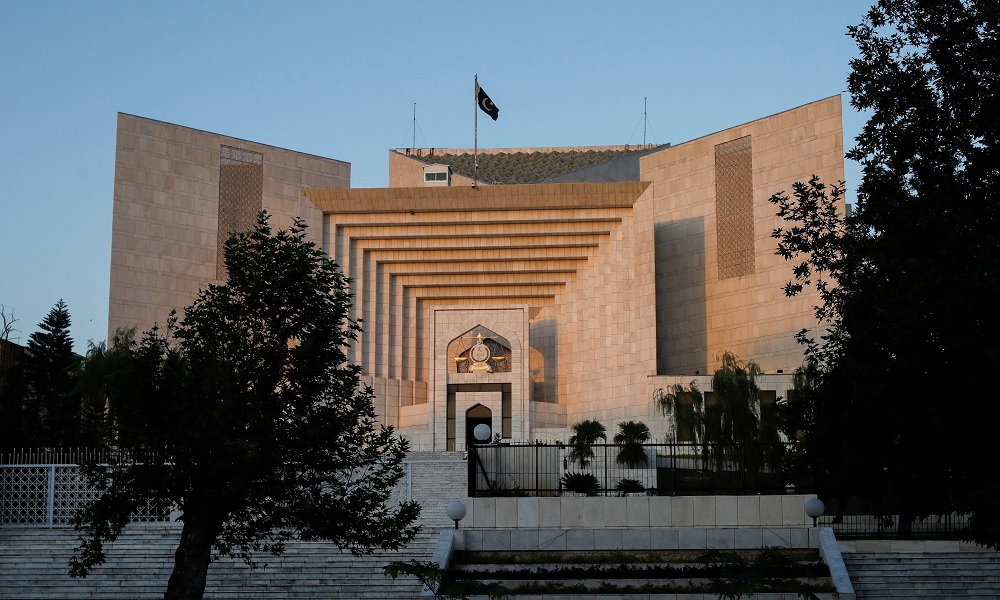
Pakistan’s top court called a meeting of all judges on Friday, after parliament passed a constitutional amendment this week that curbed its remit, prompting two judges to quit, saying the reform “stands as a grave assault on the constitution”.
Under the amendment, which the political opposition says has undermined democracy, the Supreme Court will no longer hear constitutional cases. The changes also expand the powers of the country’s army chief and extend his term, Reuters reported.
In theory, the remaining Supreme Court judges can suspend the new law, but lawyers said that was unlikely. Before this week, the court had 24 judges.
Pakistan’s government has waged a sweeping crackdown on dissent and its main opposition, which has included jailing former prime minister Imran Khan for over two years. Rights groups say the crackdown has been led by the powerful military and have routinely looked to the courts to safeguard democracy.
The military has repeatedly denied interfering in politics.
The administration of Prime Minister Shehbaz Sharif said the changes would improve governance and reward the army chief for the military’s performance in the conflict with India in May.
“Pakistan has today taken a constitutional path,” Defence Minister Khawaja Muhammad Asif told parliament on Friday. “The judges used to do politics. They used to undermine parliament.”
‘CRIPPLED JUDICIAL INDEPENDENCE’
In his resignation letter on Thursday, the Supreme Court’s second-most senior judge, Syed Mansoor Ali Shah, said of the amendment: “By fracturing the unity of the nation’s apex court, it has crippled judicial independence and integrity, pushing the country back by decades.”
“The constitution that I swore an oath to uphold and defend is no more,” wrote Athar Minallah, the other judge to resign. “What is left is a mere shadow, one that breathes neither its spirit, nor speaks the words of the people to whom it belongs.”
On Friday, the chief justice of the controversial new Federal Constitutional Court, which will now hear all constitutional cases, was sworn into office. Under the reform, judges are appointed by the government.
ARMY CHIEF’S TERM EXTENDED
The amendment also elevates army chief Asim Munir to a new title, chief of defence forces, formally putting him in charge of the navy and air force as well. He will also hold his rank of field marshal and have immunity from prosecution for life.
The government said that, as Munir was appointed to a new job, his five-year term starts again, meaning he will serve until 2030. His tenure can be extended for another five years after that. Munir was appointed as army chief in 2022.
The military did not respond to a request for comment.





Regional
Pakistan says Mecca pact members to hold emergency talks on engaging Houthis
More than six countries are keen to join the pact, Dar said, without naming them or saying whether all were Muslim-majority nations. New membership requests cannot be entertained until the pact is fully operational, which could take up to a year, he added.
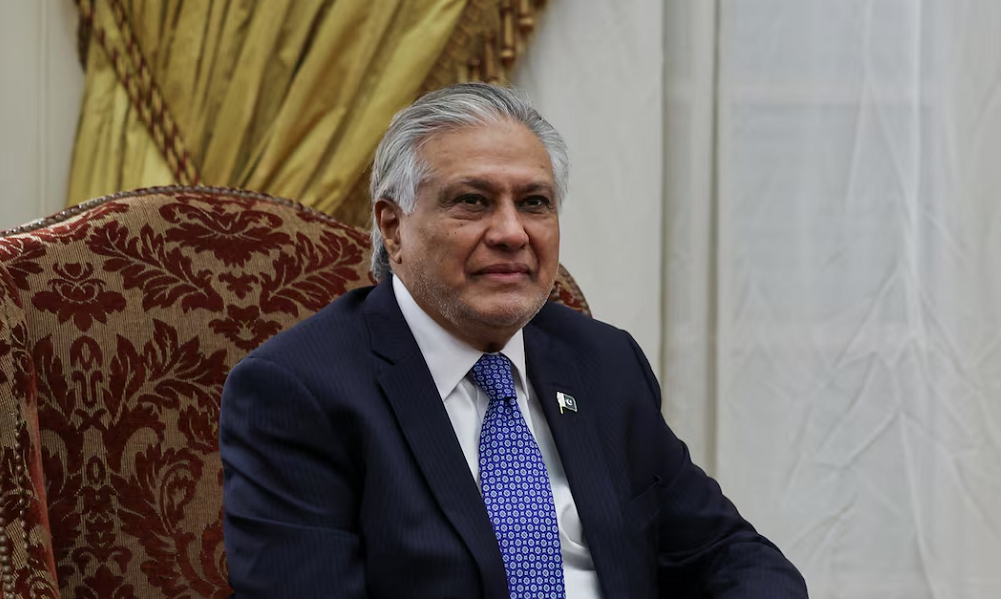
Pakistan’s foreign minister said Iran has suggested engaging Yemen’s Houthis politically after attacks by the group, an idea a committee of the Mecca defence pact will discuss at an emergency meeting in Riyadh next week.
The proposal comes as Saudi Arabia, which has accused the Houthis of targeting Islam’s two holiest cities, faces escalating attacks, Reuters reported.
Saudi Arabia, Turkey and Pakistan, the pact’s three members, will decide next steps at the meeting, Foreign Minister Ishaq Dar told a news conference. He said the date would be confirmed later.
Dar said Iran had distanced itself from the Houthis and Iraqi militias, and that President Masoud Pezeshkian and Foreign Minister Abbas Araqchi both want the matter concluded. He said he had also briefed Tehran on the defence pact and how Pakistan would honour it.
“There is no written, solid offer. It is brainstorming between two foreign ministers,” Dar said, describing the political approach as a suggestion made in good faith. It would be discussed as an alternative to “kinetic action”.
More than six countries are keen to join the pact, Dar said, without naming them or saying whether all were Muslim-majority nations. New membership requests cannot be entertained until the pact is fully operational, which could take up to a year, he added.
Saudi Arabia, Turkey and Pakistan signed the Mecca Joint Defence Agreement on August 7, pledging to treat an armed attack on any one of them as an attack on all three. Their military chiefs met in Riyadh on September 25 and condemned Houthi attacks.
Pakistan’s military said in a statement on Friday that its top commanders strongly condemned Houthi attacks on Saudi Arabia, expressing solidarity with the kingdom and commitment to the security of Islam’s holy sites.
Dar also said there should be no fee or charges to cross the Strait of Hormuz. The blockaded strait has become the central bargaining chip in efforts to end the nearly seven-month US-Iran conflict.
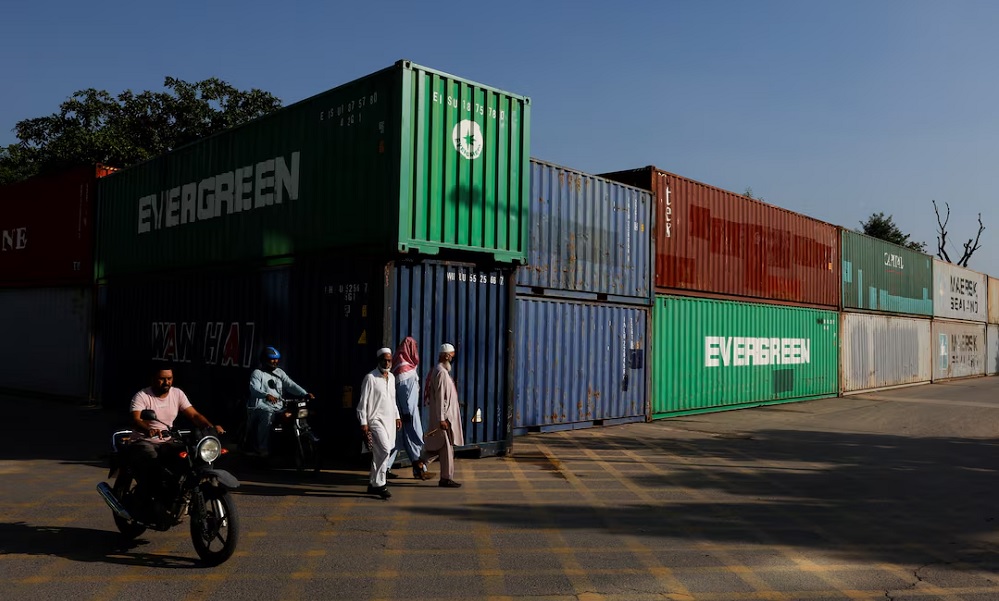
Pakistan’s effort to keep supporters of jailed former prime minister Imran Khan out of the capital has led to a pileup of shipping containers in the nation’s main port of Karachi, 1,400 kilometres (870 miles) away.
Truckers are refusing to drive north, for fear their vehicles will be seized and the containers used to barricade Islamabad ahead of an Oct 4 march on the city planned by Khan’s Pakistan Tehreek-e-Insaf (PTI) opposition party, Reuters reported.
“Right now, going toward Punjab is like committing suicide,” said driver Javid ur Rehman, 35, who has halted such journeys, referring to Pakistan’s most populous province.
“The police seize the vehicles and snatch the containers, and then we are left distressed.”
CONTAINERS HAVE LINED ROADS FOR WEEKS
Steel shipping containers, packed with sand and welded together, have lined the roads into Islamabad for weeks, in preparations against a march, postponed from Sept 27, to demand Khan’s release from prison.
The former cricket star was jailed in 2023 after being ousted by parliament. All convictions but one have been suspended or overturned, with appeals pending.
His party remains under state scrutiny that has suppressed participation in recent protests, however.
“This is not the way to stop protests,” said Rana Mohammad Aslam, president of the Karachi Goods Carrier association. Authorities began stopping vehicles around Sept. 5, weeks before the original date for the march, he said.
Pakistan’s home, information, commerce and finance ministries did not respond to requests for comment. Punjab police and the provincial home department also did not respond.
The containers are positioned ready for placement at key entry points into Islamabad, a capital region larger than the southeast Asian city state of Singapore.
Transporters battling rising prices say they cannot afford to have trucks seized.
Police requisitioned more than 2,000 vehicles in September ahead of the march, they added, many still loaded with cargo and held for days with little or no compensation.
Their reluctance is leaving containers to pile up at Pakistan’s main trade gateway of Karachi.
The disruption was affecting routes to Islamabad, the military city of Rawalpindi, and the cities of Jhelum, Peshawar and Attock, Aslam said.
Some operators had halted journeys beyond Gujranwala in Punjab, while others took alternative routes.
BILLS ARE MOUNTING FOR TRANSPORTERS
The bills are mounting for those whose containers have been seized, as daily demurrage charges on one such container alone can run into 30,000 to 40,000 rupees ($110 to $150), Aslam said, adding to losses from missed deliveries and idle trucks.
Consumer prices rose 10.26% in September from a year earlier, while the transport price index climbed 27.43%, the Pakistan Bureau of Statistics said on Thursday.
Operators are struggling to pay drivers and maintain their fleets, as international shippers still expect payment regardless of the reason for the delay, Aslam said.
He was holding talks to find a solution, he added, but transporters could stage their own protest if complaints go unanswered.
For Pervaiz Khan, 50, the risk was enough to keep a load of chemicals parked in Karachi.
“Right now, my vehicle is loaded but I am not going,” said the father of five, adding that he had loaded his cargo of chemicals by night.
“We depart from Sindh, and the moment we enter Punjab, that’s when our troubles begin.”
Drivers stranded near Islamabad regretted lost days of work or earnings.
“If the roads open, our children’s livelihood will open up,” said Sagheer Ahmed, 51, who added that his children awaiting him at home relied on his earnings. “If not, we will just keep standing.”
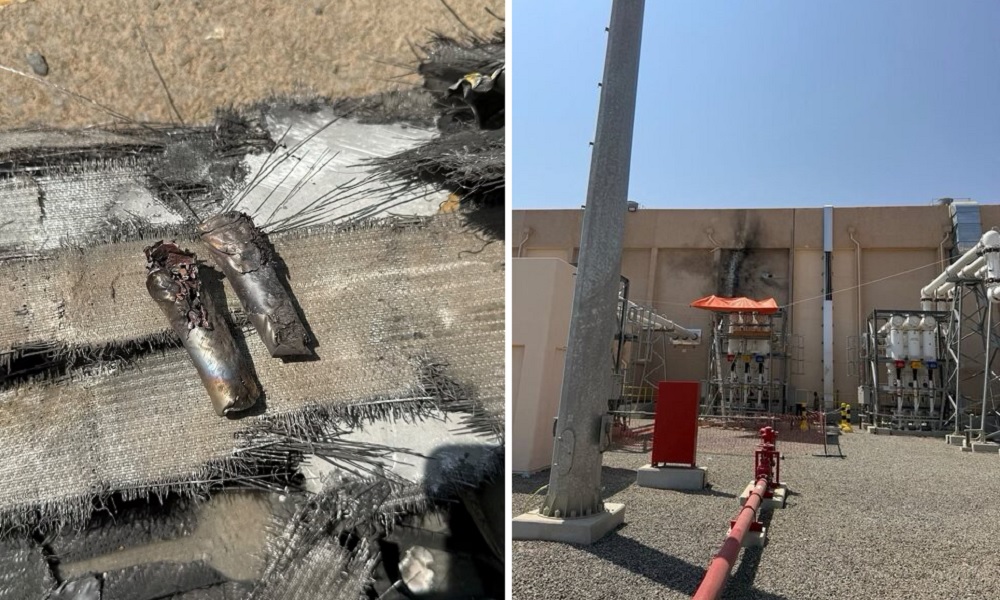
The Saudi-led coalition fighting Yemen’s Houthis said on Thursday that the Iran-aligned group had attacked a power distribution station in Medina which supplies electricity to the Prophet’s Mosque, one of Islam’s holiest sites.
The coalition said the attack put one transformer out of service but did not affect the power network. A Houthi military source, quoted by the Houthi-run Saba news agency, denied the coalition report, according to Reuters.
The Houthis later reported Saudi strikes on the Yemeni capital Sanaa and other parts of Yemen, with no immediate Saudi confirmation of the strikes.
A spokesperson for Yemen’s armed forces, which are aligned with the internationally recognised government, said coalition forces had attacked what it described as “high-value targets” in the capital Sanaa, without providing further details.
The recent escalation is the most serious fighting between Saudi Arabia and the Iran-aligned Houthis since a UN-brokered truce largely halted cross-border attacks in 2022.
Hostilities resumed this year after the Houthis declared a naval blockade on Saudi Arabia in July and began attacking Saudi territory and shipping, while Houthi forces also made major territorial gains along Yemen’s Red Sea coast.
Saudi Arabia has responded with air strikes in Yemen and backed government forces fighting to repel the Houthis.
The Saudi-led coalition said an investigation and examination of drone wreckage confirmed Houthi involvement in planning and carrying out Tuesday’s attack on the Medina power station.
A Houthi military source said the coalition claim was a “lie” intended to cover up what he described as Saudi Arabia’s failure to substantiate its earlier accusation that the Houthis targeted the Muslim holy city of Mecca, said the Saba news agency.
Saudi Arabia said two weeks ago it had intercepted and destroyed a Houthi drone south of Mecca before it entered restricted airspace over the city. The coalition described the incident as the second Houthi attempt to target Mecca since 2017, while the Houthis denied targeting Mecca or any other Islamic holy site.
The coalition said the Medina attack was part of what it described as repeated Houthi attempts to target the Two Holy Mosques and “provoke” Muslims worldwide. It said it would continue taking measures to protect the holy sites and pilgrims.
The coalition also said it had intercepted and destroyed a ballistic missile launched by the Houthis toward the southern Saudi city of Khamis Mushait. It gave no immediate details on any damage or casualties.
Local officials said early on Friday that the Houthis had also targeted the headquarters of the Saudi-led coalition forces command in Aden with several ballistic missiles and drones. There was no immediate comment from the coalition or the Houthis.


Tahawol: Escalation of internal political crisis in Pakistan discussed

Saar: Continuation of crisis in the Middle East discussed

Muttaqi and DiCarlo discuss Afghanistan-UN cooperation

Afghanistan chamber delegation attends Turkmenistan Investment Forum

Afghan, Russian health ministers discuss cooperation

Saudi energy group signs major Afghanistan deals covering gas exploration and pipeline plans

Khalilzad: Afghanistan ready to attract major investment

Khyber Chamber demands reopening of Torkham crossing

Messi returns to Inter Miami after Argentina retirement

Imam Abu Hanifa exhibition to draw exhibitors from more than 20 countries
Tahawol: Escalation of internal political crisis in Pakistan discussed
Saar: Continuation of crisis in the Middle East discussed

Tawsia: Review of three key economic developments in Afghanistan

Tahawol: Pakistan’s airstrikes on civilians in Afghanistan discussed

Tahawol: Improvement in Afghanistan-China relations discussed
-
 Regional5 days ago
US, Iran separately talk with mediators in latest bid to end war
-
 Regional4 days ago
US imposes sanctions on 13 tied to Iran weapons procurement
-
 Latest News3 days ago
Four members of one family killed in Helmand in Pakistan airstrike
-

 Sport4 days ago
Istiqlal Kabul beat Khurasan Faryab 2-0 with late goals
-

 Climate Change5 days ago
Afghanistan on climate front line as Kabul faces groundwater warning
-

 Sport4 days ago
Afghanistan Champions League: Toofan Herat and Aino Mina Kandahar draw 1-1
-
 Latest News5 days ago
US Afghanistan War Commission meets Asim Munir over Pakistan’s role in conflict
-
 Business5 days ago
Russia accuses West of double standards over deportation of Afghans