
Climate Change
Parts of US blanketed by heaviest snowfall in a decade
Virginia Governor Glenn Youngkin declared a state of emergency ahead of the storm. Similar declarations were issued in Kansas, Maryland, West Virginia and in central Illinois cities

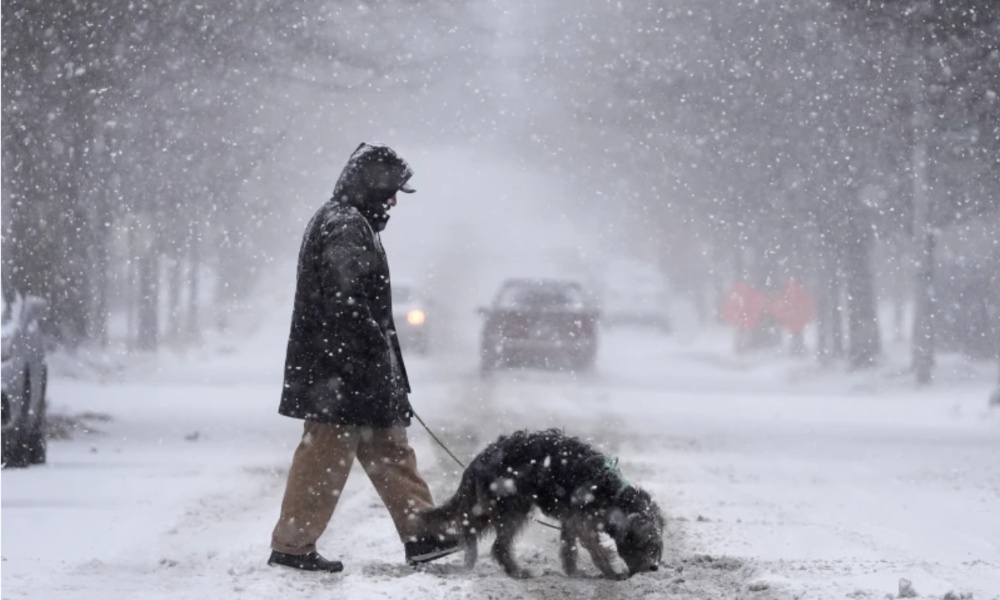
A massive storm packing heavy snowfalls, treacherous ice and severe weather unleashed its fury across more than a dozen states over the weekend, and may cause “highway chaos” in the central parts of the US on Monday, meteorologists warned.
The National Weather Service predicted about 20 to 30 centimeters of snow for the Annapolis, Maryland, area.
In a statement on X, Virginia Governor Glenn Youngkin declared a state of emergency ahead of the storm and encouraged residents to vote before the state’s special elections on Tuesday.
Similar declarations were issued in Kansas, Maryland, West Virginia and in central Illinois cities.
Parts of upstate New York saw one meter or more of snow from a lake effect event until late Sunday afternoon.
In Kentucky, Louisville recorded 19.5 centimeters of snow on Sunday, a new record for the date that shattered the previous mark of 7.6 centimeters set in 1910.
Lexington, Kentucky, also set a snowfall record, with 12.7 centimeters.
The storm was forecast to move into the Ohio Valley and reach the Mid-Atlantic states later Sunday and Monday, with a hard freeze expected as far south as Florida.
Virginia State Police reported at least 135 car crashes as the storm entered the state Sunday. A handful of injuries were reported.
In Charleston, West Virginia, where several inches of snow had fallen by Sunday night, authorities urged motorists to stay home.
The Kanawha County Sheriff’s Office said deputies were responding to crashes and 911 calls countywide. “Please be patient if you have called 911 for assistance. A deputy will call you or respond to you as soon as possible,” the sheriff’s office said in a statement.
In Indiana, snow fully covered portions numerous roads and highways prompting Indiana State Police to plead with motorists to stay off the roads.
“It’s snowing so hard, the snow plows go through and then within a half hour the roadways are completely covered again,” Sgt. Todd Ringle said.
Roughly 25 centimeters of snow had fallen in parts of Kansas, with snow and sleet totals predicted to top 36 centimeter for parts of that state and northern Missouri.
Meanwhile damaging winds brought down trees across the Deep South. The weather service issued tornado warnings Sunday in Arkansas, Louisiana and Mississippi.
The storms caused havoc for the nation’s passenger railways. More than 20 cancellations were planned on Sunday, 40 for Monday and at least two for Tuesday.
“If local authorities are telling people not to travel, it’s counterintuitive to try to run a full slate of services when people are being told to stay home,” Amtrak spokesperson Marc Magliari said.
The Midwest was hit especially hard. A train between Chicago and New York and several regional trains between Chicago and St. Louis were among those canceled Sunday.
Nearly 200 flights in and out of St. Louis Lambert International Airport were canceled, according to tracking platform FlightAware.
Starting Monday, the eastern two-thirds of the country will experience dangerous, bone-chilling cold and wind chills, forecasters said.









Climate Change
Winter storm disrupts US travel, triggers thousands of flight cancellations
The disruptions followed a chaotic Sunday, when about 11,000 flights were scrapped—the highest daily total since the COVID-19 pandemic
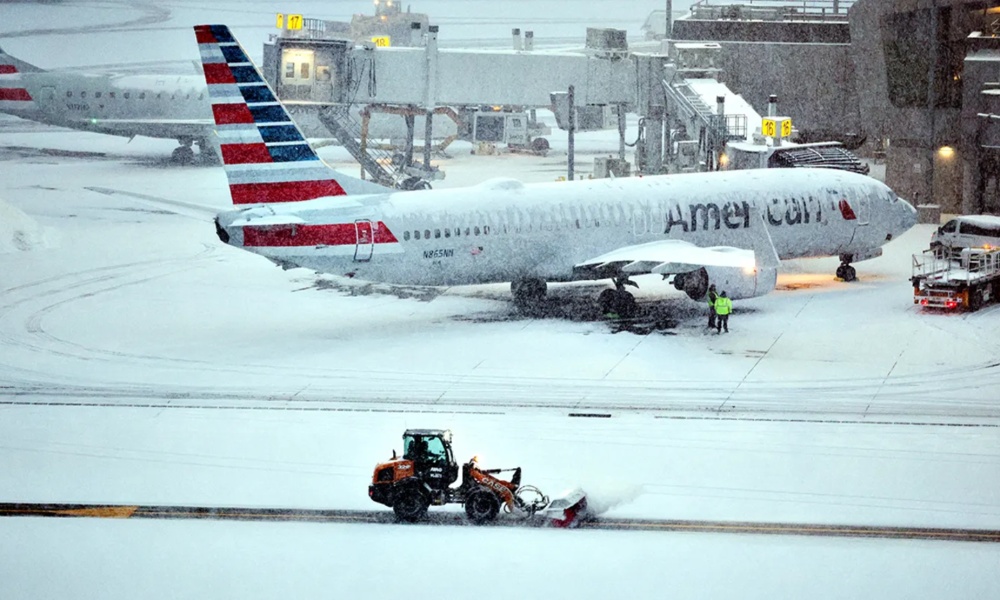
A powerful winter storm sweeping across the United States brought air travel to a near standstill on Monday, forcing airlines to cancel and delay thousands of flights as freezing rain and heavy snowfall battered large parts of the country.
By late afternoon, nearly 19% of scheduled flights had been canceled, according to aviation analytics firm Cirium. Separate data from FlightAware showed around 5,220 U.S. flights were canceled and more than 6,500 delayed by early evening.
The disruptions followed a chaotic Sunday, when about 11,000 flights were scrapped—the highest daily total since the COVID-19 pandemic, Cirium said.
The massive storm dumped up to a foot of snow from New Mexico to New England, paralyzing much of the eastern United States and contributing to at least 18 deaths. Extreme cold is expected to linger in some areas through the week.
American Airlines accounted for the largest share of disruptions on Monday, canceling nearly 1,180 flights and delaying about 1,130, followed by Republic Airways, JetBlue Airways, and Delta Air Lines.
In an advisory, the Federal Aviation Administration (FAA) warned that snow, freezing rain, and low visibility were affecting major hubs, including Boston and the New York metropolitan area. Boston Logan International Airport recorded the highest cancellation rate at 71%, according to Cirium.
American Airlines said the storm disrupted operations at five of its nine hub airports, including its largest base at Dallas–Fort Worth, where freezing temperatures and ice grounded flights.
The carrier requested FAA-approved ground stops for all its flights at Dallas–Fort Worth and Ronald Reagan Washington National Airport to manage gate capacity constraints.
The airline said teams were working around the clock to restore operations, as frustrated passengers flooded social media with requests for updates and assistance.
United Airlines said it had begun restoring flights, with cancellations dropping sharply from 1,019 on Sunday to 320 by Monday evening, FlightAware data showed.
The storm is on track to become the costliest severe weather event since the Los Angeles-area wildfires in early 2025, with preliminary damage and economic losses estimated between $105 billion and $115 billion, according to AccuWeather.
Airline operations remain vulnerable due to the interconnected nature of flight schedules, where cancellations can leave aircraft and crews out of position, slowing recovery efforts. Already, about 285 flights scheduled for Tuesday have been canceled, FlightAware data showed.
Climate Change
FAO warns of dry winter, low snowfall and rising food insecurity risks in Afghanistan
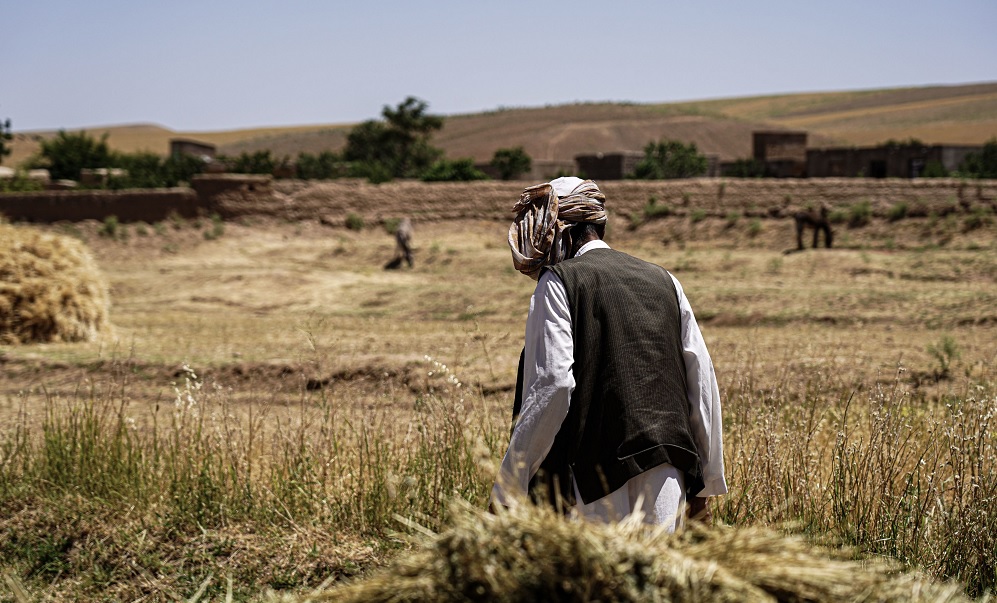
The Food and Agriculture Organization of the United Nations (FAO) has warned that Afghanistan is likely to face a drier and warmer-than-average winter, raising serious concerns about water availability, agricultural production and food security.
In its Seasonal Climate Outlook for December 2025 to February 2026, FAO said a weak La Niña pattern is driving below-average precipitation and above-average temperatures across most parts of the country. The report notes that the 2025/26 wet season has already begun drier and warmer than normal, with widespread soil moisture deficits persisting for another consecutive year
According to FAO, snow accumulation remains exceptionally low, with snow-water-equivalent levels at their lowest point in the past 25 years. This poses a critical hydrological risk, particularly for irrigated wheat-growing areas that depend on snowmelt-fed river systems. Even if precipitation improves later in winter, early deficits are unlikely to be fully offset, the report said
The outlook projects that December, January and February will all carry an elevated risk of below-normal rainfall, especially in northern, northeastern, western and central highland regions. Warmer daytime temperatures combined with cold nights are also expected to increase stress on crops, livestock and vulnerable communities
FAO warned that continued dryness could delay planting and weaken crop establishment for rain-fed winter wheat and barley, potentially reducing yields for the 2026 harvest. In irrigated areas, low snowpack threatens spring water supplies, increasing competition for water and reliance on already stressed groundwater resources.
Rangeland and pasture conditions are also expected to deteriorate, with delayed green-up likely to force herders to depend longer on stored fodder. This could lead to declining livestock health, reduced milk production and increased risk of animal losses toward late winter and early spring, the report said.
FAO and partner assessments caution that consecutive seasons of insufficient rainfall and high temperatures have already weakened agricultural systems and could leave millions of people facing acute food insecurity between late 2025 and early 2026
The UN agency emphasized the need for close monitoring of precipitation, snowpack and crop conditions, calling for timely agricultural support, improved water management and early anticipatory action to mitigate the impacts of the unfolding climate risks.

Talks at the COP30 climate summit in Brazil were disrupted on Thursday after a fire broke out in the venue, triggering an evacuation just as negotiators were hunkering down to try to land a deal to strengthen international climate efforts.
United Nations Secretary-General Antonio Guterres had appealed earlier in the day for a deal from the summitin the Amazon city of Belem, welcoming calls from some for clarity on the hotly disputed subject of weaning the world off fossil fuels, Reuters reported.
There are less than 24 hours until the scheduled end of the summit to find a consensus among nearly 200 participating countries. Host nation Brazil has framed a deal as a crucial step towards ramping up international climate action and demonstrating that there is broad support to accelerate turning decades of promises and pledges from COP summits into action.
Shortly after lunchtime, however, security footage showed flames breaking out at an exhibition pavilion and spreading rapidly up an internal fabric shell that lined the walls and ceiling of the building, before being extinguished.
Thirteen people were treated for smoke inhalation at the venue, organizers said. The local fire service said it was probably caused by electrical equipment, likely a microwave, and was controlled within six minutes.
Thousands of delegates were evacuated as security staff formed a human barrier across the hallway.
DRAFTING DOCUMENTS, DEADLINES MISSED
Negotiations were not expected to resume until Friday morning, a source told Reuters. Consultations between the presidency and negotiating blocs could continue on Thursday night, subject to safety assessments at the venue.
The summit already missed a self-imposed Wednesday deadline to secure agreement among the countries present on issues including how to increase climate finance and shift away from fossil fuels.
Brazil circulated a draft proposal for part of the COP30 deal among some governments on Thursday, which did not include a roadmap on transitioning away from fossil fuels.
Emissions from burning fossil fuels trap heat in the earth’s atmosphere and are by far the biggest contributor to warming.
The draft proposal, seen by Reuters, included other elements for a deal. It said countries would call to triple the financing available to help nations adapt to climate change by 2030, from 2025 levels. However, it did not specify whether this money would be provided directly by wealthy governments, or other sources including development banks or the private sector.
Brazil’s COP30 presidency did not immediately respond to a request for comment on the draft text.
Some negotiators said they had been working on the draft text shortly before the COP venue was evacuated due to the fire. Others said it had not been shared with them.
It is common at COP summits for the presidency to thrash out a text with small groups of countries, before bringing all governments together to greenlight the final deal.
FOSSIL FUEL RIFT
The two-week negotiation has become hung up on two issues – the future of fossil fuels and the delivery of climate finance – that expose criss-crossing fault lines between negotiating blocs from rich Western countries, oil producers and smaller states most vulnerable to climate change.
Taking their cue from Brazil, dozens of countries including both developed and developing nations have mounted a push for a roadmap setting out how countries should transition away from fossil fuels.
Others, including some fossil fuel-producing nations, are resisting.
The COP28 climate summit in 2023 agreed, after protracted discussion, to a transition, but nations have not mapped out how – or when – it will happen.
“I am perfectly convinced that a compromise is possible,” Guterres said.
ADAPTING TO CHANGE
Another major sticking point in the negotiations is a reluctance among some richer nations to guarantee financing to help poorer countries adapt to a changing climate, according to three sources involved in the talks.
Developing countries are already deeply mistrustful of a $300 billion climate finance pledge made last year at the COP29 conference in Baku, particularly as the United States withdraws from climate cooperation under President Donald Trump.
Some existing climate finance has been directed to strange projects, including some that are funneling billions of dollars back to rich nations, according to previous Reuters reporting.
“Right now, our people are losing their lives and livelihoods from storms of unprecedented strength which are being caused by warming seas,” said Steven Victor, Minister of Agriculture, Fisheries and the Environment for the Pacific island nation of Palau.
“If we leave Belem without a transformative outcome on adaptation for the world’s most vulnerable, it will be a failure,” he said.
European officials have said they agree adaptation financing is important, but that they were not authorized to agree to new targets.


Saar: Afghanistan’s relations and opportunities with regional countries

Winter Olympics gain momentum as medal table takes shape

Tajik foreign minister urges international community to help Afghanistan address its challenges

Baradar: Afghanistan is not an easy target, but a ‘bitter tree’

New Zealand cruise past Afghanistan by five wickets in T20 World Cup

ICG report says Pakistan most impacted by IEA’s return in Afghanistan

Afghanistan–China joint market opens in Kabul

Pakistan approves re-export of stranded Afghan transit trade cargo

ATN secures broadcast rights to Carabao Cup semis across Afghanistan

Pakistan army orders evacuation of Tirah Valley, fears of mass displacement grow
Saar: Afghanistan’s relations and opportunities with regional countries

Tahawol: Kabul’s response to Pakistan’s new accusation discussed

Saar: Discussion on Iran-US talks in Oman

Tawsia: Afghanistan’s interest in buying Russian oil and gas

Tahawol: IEA calls UNSC’s Daesh concerns baseless
-

 Sport5 days ago
Hosts and heavyweights advance as AFC Futsal Asian Cup reaches semifinals
-

 Latest News4 days ago
Terrorist threat in Afghanistan must be taken seriously, China tells UNSC
-
 Latest News5 days ago
Uzbekistan, Pakistan advance Trans-Afghan railway project
-

 Latest News2 days ago
Afghanistan to grant one- to ten-year residency to foreign investors
-

 Sport5 days ago
Winter Olympics finally underway, ATN to broadcast exclusively across Afghanistan
-

 Sport5 days ago
Afghanistan beat West Indies in final T20 WC warm-up match
-

 Sport3 days ago
Indonesia shock Japan to reach historic AFC Futsal Asian Cup final
-
 Regional5 days ago
Pakistan sends helicopters, drones to end desert standoff; 58 dead