
Latest News
Pentagon Chief Warns Afghanistan Still Remains a ‘Dangerous Country’

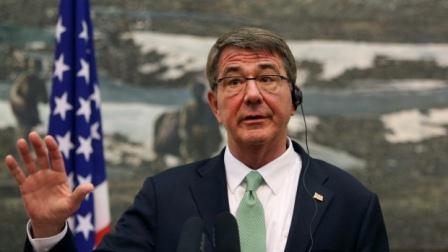
 US Defense Secretary, Ash Carter said in a statement he was “deeply saddened” by the death of a U.S. service member while on an advisory mission in southern Afghanistan, as well as six others injured.
“I was deeply saddened to learn one of our service members was killed today and another wounded while engaged in our mission to train, advise and assist Afghan forces,” Carter said in a statement.
“Six Afghan soldiers were also injured in the ‘improvised explosive device’ blast. My thoughts and prayers are with the loved ones of the service member killed and all those injured,” he said.
Carter said the event shows that Afghanistan remains a “dangerous place.”
“This tragic event in Helmand province reminds us that Afghanistan remains a dangerous place, and there is difficult work ahead even as Afghan forces continue to make progress in securing their own country,” he said.
The attack comes a day after the Pentagon announced the deployment of 100 U.S. forces to Lashkar Gah, the provincial capital and traditional heartland of the Taliban, which has stepped up attacks against U.S.-backed government forces in recent months as it regains territory in the north and south.
In the meantime, US Press secretary Peter Cook said the forces were sent to provide “training, advise and assist” work to Lashkar Gah, and to provide protection for those advisers. The advisers will assist the police zone headquarters and their leadership team, he said.
“There still are challenges in Afghanistan, there are dangerous places in Afghanistan. But we continue to support Afghan forces that have shown progress and resiliency in recent months, including in Helmand Province, and this reflects again our support for their efforts,” US Press secretary Peter Cook said.
Peter Cook has stated that fighting against terrorism is in interest of Pakistan.
Recently, Pakistan lost $ 300 million of America’s aids that was provided for fight against Haqqani Network.
“Well, we continue to have a close relationship with Pakistan with regard to terrorism and fighting terrorism. It’s obviously in Pakistan’s own interest and the United States interest to combat terrorism in as many ways as possible. We’ll continue working closely with Pakistan and we’ve seen, of course, significant efforts on the part of the Pakistanis.” Cook said.
President Barack Obama technically ended the U.S. combat mission in Afghanistan in 2014, but the dangers posed by the Taliban – combined with the Afghan military’s inability to support itself – forced him to continually delay his plans for withdrawal.
The U.S.-led coalition’s presence had been focused exclusively on supporting the Afghan forces but not engaging the Taliban directly, while also hunting other extremist groups such as al-Qaida, the Haqqani Network and the Islamic State group.
That strategy changed again in June, when Obama granted his military advisers’ request to allow U.S. war fighters to directly target the Taliban in support of Afghan missions.

Latest News
China establishes new Xinjiang county near sensitive border region
The county will fall under the administration of Kashgar Prefecture, a historic hub that has long served as a gateway between China and Central and South Asia.
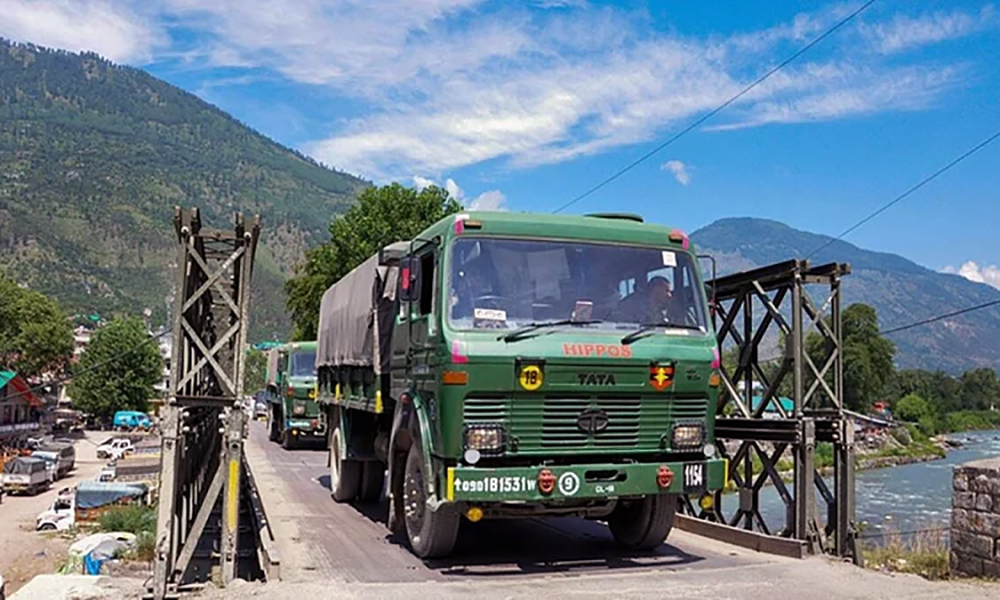
China has created a new county in its far-western Xinjiang Uyghur Autonomous Region, close to the borders with Afghanistan and Pakistan-administered Kashmir, in a move seen as reinforcing control over a strategically sensitive frontier.
The county, named Cenling, lies near the Karakoram Mountains and in proximity to the narrow Wakhan Corridor — a remote strip of Afghan territory that separates Tajikistan from Pakistan-administered Kashmir and links directly to China’s western border.
Authorities in Xinjiang announced the formation of the new administrative unit on March 26, though specific details about its boundaries and subdivisions have not been made public.
The county will fall under the administration of Kashgar Prefecture, a historic hub that has long served as a gateway between China and Central and South Asia.
The move marks the third new county established in Xinjiang in just over a year, following the creation of Hean and Hekang. Those earlier developments drew objections from India, which said parts of the jurisdictions overlap with its claimed territory in Ladakh, including areas of the disputed Aksai Chin.
Analysts say the creation of Cenling reflects Beijing’s growing emphasis on strengthening governance and security in its border regions. The area’s proximity to the Wakhan Corridor has long been viewed as strategically significant, particularly amid Chinese concerns about cross-border movement of militants.
The corridor has historically been seen as a potential route for members of the East Turkestan Islamic Movement, which China accuses of seeking to carry out attacks in Xinjiang.
Experts note that expanding administrative structures in frontier areas can help Beijing tighten oversight, improve local governance, and reinforce stability in regions that have experienced ethnic tensions and security challenges.
Kashgar also plays a key role in China’s regional connectivity ambitions, serving as a starting point for the China-Pakistan Economic Corridor, a multi-billion-dollar infrastructure network linking western China to the Arabian Sea through Pakistan-administered territory.
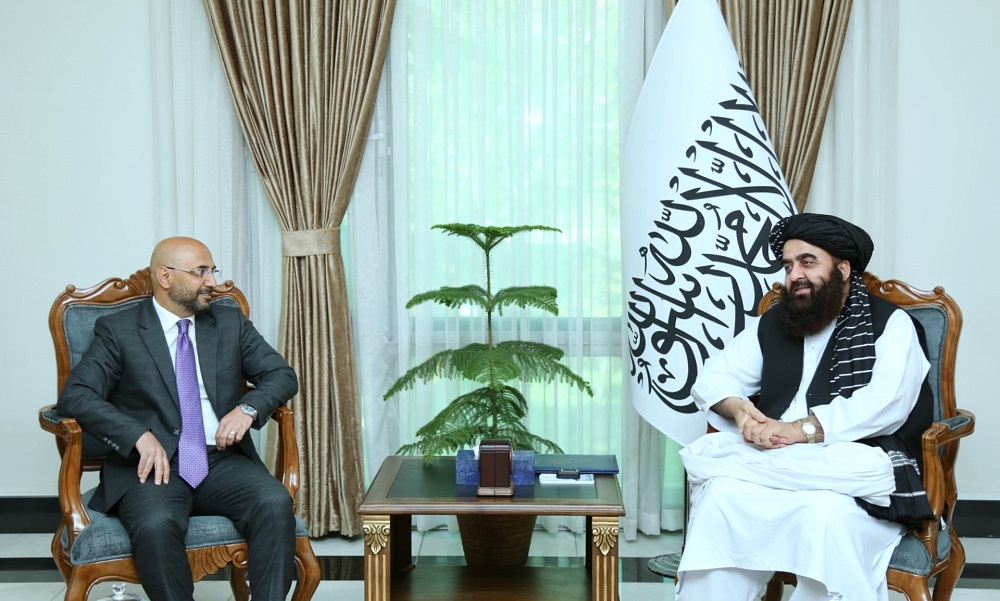
Amir Khan Muttaqi, the Foreign Minister of the Islamic Emirate, met with Turkish Chargé d’Affaires to Kabul, Sadin Ay Yildiz, to discuss regional developments and the recent Kabul–Islamabad talks held in the city of Urumqi in China.
According to a statement issued by the Afghan foreign ministry, Muttaqi described the negotiations with Pakistan as positive and expressed hope that “minor technical issues will not hinder the progress of the talks.”
Muttaqi also assessed relations between Afghanistan and Turkey as positive and described Ankara’s previous role in mediation as valuable.
Yildiz likewise stated that positive relations between Afghanistan and Pakistan are of special importance to Ankara and that his country will continue its efforts in this regard.
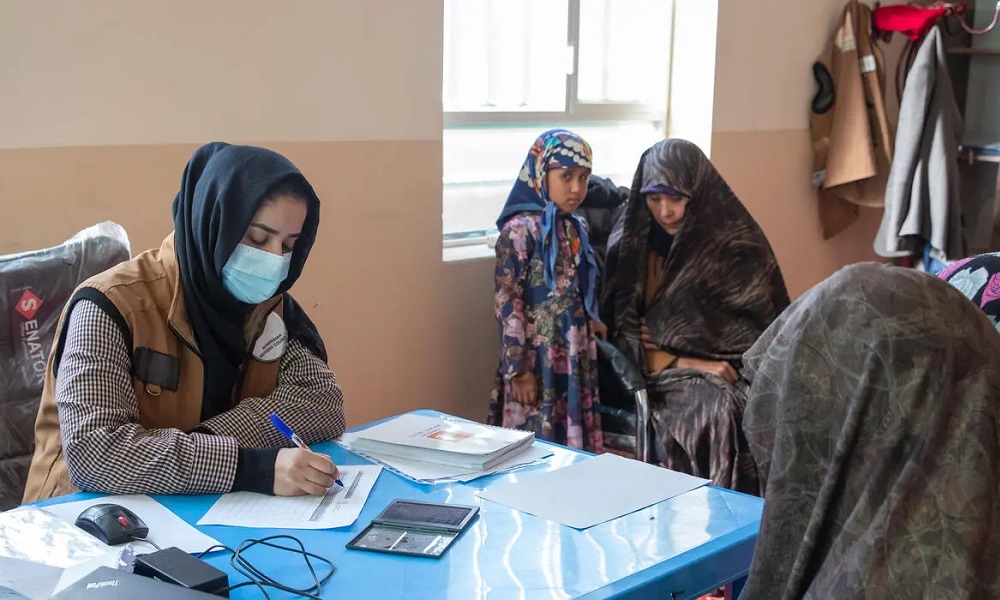
The United Nations has raised alarm over a significant funding gap threatening the continuation of humanitarian assistance in Afghanistan, as millions remain in urgent need of support.
According to the United Nations Office for the Coordination of Humanitarian Affairs (OCHA), only $211 million—equivalent to 12.3 percent—of the required $1.7 billion for Afghanistan’s 2026 humanitarian response plan has been secured so far, leaving 87.7 percent of the funding unmet.
OCHA stressed that the scale of humanitarian needs across the country remains critically high and called on donor nations to take immediate and concrete steps to bridge the funding gap.
The agency noted that the European Commission is currently the largest donor, contributing $62.6 million, followed by the United Kingdom, the Asian Development Bank, Switzerland, and Japan. Other key contributors include Germany, Canada, Denmark, Australia, and Italy.
The report highlights that the food security and agriculture sector faces the largest funding requirement, with only $49.2 million—about 7.6 percent—of the needed $651.1 million secured. In the health sector, $29.6 million has been funded out of a required $190.8 million, while education has received 30.2 percent of its needed budget.
OCHA further warned that several critical sectors remain severely underfunded, including nutrition (2.7 percent), emergency shelter and non-food items (3.4 percent), water and sanitation (4.5 percent), and coordination and support services (7.3 percent). Meanwhile, multipurpose cash assistance has received the highest level of funding at 65.6 percent.
The UN emphasized that despite ongoing international assistance, a substantial gap persists between humanitarian needs and available resources, underscoring the urgency for increased global support to prevent a worsening crisis in Afghanistan.


Afghanistan–Uzbekistan forum secures $520 million in trade and investment deals

China establishes new Xinjiang county near sensitive border region

US military says it will start blockade of all ships going to and from Iran on Monday

Economic shock of Middle East war to cast shadow over IMF, World Bank meetings

Tahawol: Failure of US–Iran talks in Islamabad discussed

IEA Supreme Leader issues Eid-ul-Fitr message urging unity and support for Islamic system

IEA supreme leader orders replacement of foreign terminology in official documents

14 Pakistani soldiers killed after military post falls along Durand line: MoD

Turkmenistan, Afghanistan discuss steps to speed up land acquisition for TAPI pipeline

IPL 2026 kicks off in under two weeks; Afghan players set to shine
Tahawol: Failure of US–Iran talks in Islamabad discussed

Saar: Iran–US talks in Islamabad end inconclusive

Tahawol: Historic US-Iran talks in Pakistan discussed

Saar: Talks between Iran and US in Pakistan discussed

Tawsia: New transit route with Tatarstan, MoU with Uzbekistan discussed
-

 Business3 days ago
Etihad Airways to expand Kabul–Abu Dhabi flights to daily service amid surging demand
-

 International Sports4 days ago
IPL 2026: Gujarat Titans edge Delhi Capitals in last-ball thriller
-

 Regional5 days ago
Pakistan PM holds 45-minute call with Iranian President
-

 International Sports4 days ago
FIFA appoints record number of match officials for 2026 World Cup
-
 Latest News4 days ago
US explores third-country resettlement for stranded Afghan allies in Qatar
-

 Regional4 days ago
Israel prepares for long conflict despite US–Iran ceasefire efforts
-

 Business4 days ago
Afghanistan faces economic strains following a ‘series of shocks’ last year
-

 Latest News3 days ago
UK backs Afghanistan–Pakistan talks, calls dialogue key to lasting peace