
Latest News
Prince Harry says he didn’t brag about killing 25 people in Afghanistan

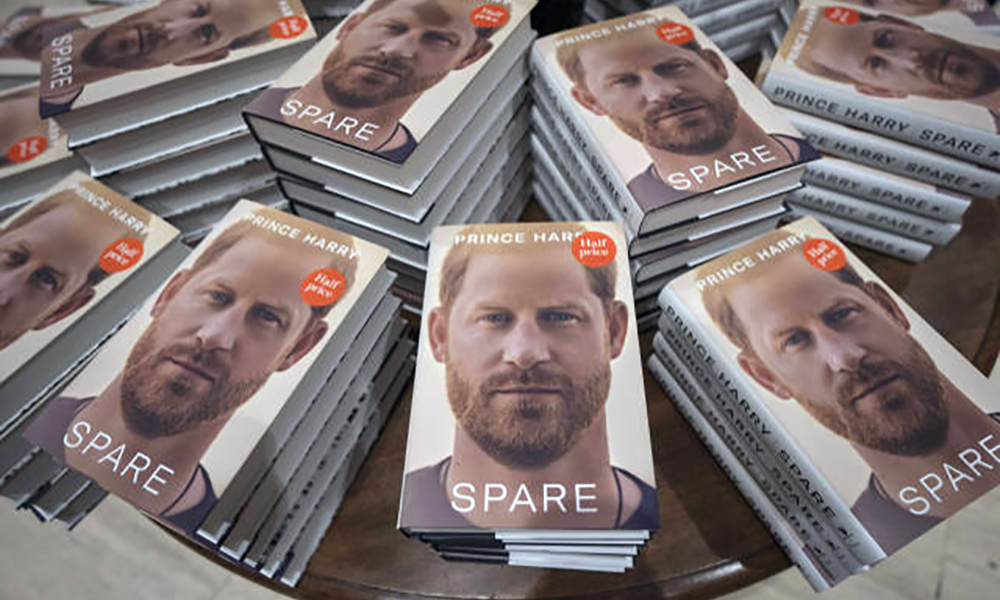
Prince Harry says he did not boast in his newly-released memoir, “Spare,” about the number of Taliban fighters he killed in Afghanistan, saying his comments were given a dangerous spin.
Speaking to CBS’s late-night show host Stephen Colbert on Tuesday, Harry called it a “dangerous lie” that he had “somehow boasted about the number of people that I killed in Afghanistan.”
“If I heard anyone boasting about that kind of thing, I would be angry,” Harry said. “But it’s a lie, and hopefully now the book is out, people will be able to see the context.”
Harry added that having his writing taken out of context and having a “spin” put on his words was “very dangerous” and made the people around him targets.
Colbert said he read the passage in the book that Harry was referring to. Colbert called the excerpt a “thoughtful description” of being a soldier, and said that in his opinion, “there’s nothing boastful about it.”
In an excerpt from “Spare” viewed by Insider, the prince writes that he knows “precisely how many enemy combatants” he’s killed — pegging the number at 25.
“And I felt it vital never to shy away from that number. Among the many things I learned in the Army, accountability was near the top of the list,” Harry wrote in his book. “So, my number: Twenty-five. It wasn’t a number that gave me any satisfaction. But neither was it a number that made me feel ashamed.”
“Naturally, I’d have preferred not to have that number on my military CV, on my mind, but by the same token I’d have preferred to live in a world in which there was no Taliban, a world without war,” he added in his book.
The prince also described not being able to “think of those twenty-five as people.” Harry wrote that this was a mindset and “learned detachment” — a way of thinking that he says he later realized was “problematic.”
“You can’t kill people if you think of them as people. You can’t really harm people if you think of them as people,” Harry wrote. “They were chess pieces removed from the board, Bads taken away before they could kill Goods. I’d been trained to ‘other-ize’ them, trained well.”
Harry served two tours in Afghanistan — once as an air controller from 2007 to 2008 and again as an attack helicopter pilot between 2012 and 2013.
His comments drew criticism from military men like Richard Kemp, a retired colonel, who told the BBC on Friday that Harry sharing information about his time in Afghanistan was “an error of judgment.” Meanwhile, retired Royal Navy officer Rear Adm. Chris Parry told the Associated Press he thought Harry’s claim to have killed 25 people was “distasteful.”
Last week, Anas Haqqani, a senior member of the Islamic Emirate of Afghanistan (IEA), condemned Harry’s statement on killing people during his mission in Afghanistan, and said those who were killed were not “chess pieces” but were humans.
In a series of tweets on Friday, Haqqani said that those killed had families who were waiting for their return.
He called Prince Harry a killer of Afghans.
“Among the killers of Afghans, not many have your decency to reveal their conscience and confess to their war crimes,” Haqqani said.
Haqqani said: “The truth is what you’ve said; Our innocent people were chess pieces to your soldiers, military and political leaders. Still, you were defeated in that ‘game’ of white & black ‘square’”.
Haqqani, also raised the issue of the International Criminal Court (ICC) and human rights activists, and called them “deaf and blind.”
“I don’t expect that the ICC will summon you or the human rights activists will condemn you, because they are deaf and blind for you. But hopefully these atrocities will be remembered in the history of humanity,” Haqqani said.












Kazakhstan’s Foreign Minister Mukhtar Tileuberdi has called for pragmatic and coordinated international engagement with Afghanistan, saying the country’s long-term stability is closely linked to the security and sustainable development of Central Asia.
Speaking during the general debate of the 81st session of the United Nations General Assembly in New York on Friday, Tileuberdi said humanitarian assistance to Afghanistan remains essential but alone cannot break the cycle of poverty, displacement and dependency.
He said Kazakhstan supports a “pragmatic, coordinated and step-by-step” approach to international engagement with Afghanistan, with the United Nations playing a central role.
Tileuberdi also said Kazakhstan is working with the UN to operationalize the United Nations Regional Centre for the Sustainable Development Goals for Central Asia and Afghanistan in Almaty.
He said the success of the centre should be measured by the results and assistance it delivers to the region.


Abu Muslim Farah defeat Khurasan Faryab 2-0 in ACL season six

Saar: Concerns over Pakistan’s political crisis discussed

Afghanistan Champions League: Omar Zawak Herat beat Toofan Herat 1-0

Blast in Pakistan’s Dera Ismail Khan kills 11, injures 30

Ariana Afghan Airlines increases Kabul-Delhi cargo flights

Saudi energy group signs major Afghanistan deals covering gas exploration and pipeline plans

Trump floats idea of renaming Atlantic or Pacific Ocean

US hits Egyptian bank branches with Iran sanctions as war marks six months

Nepal flood rescue mission enters critical phase as thousands remain missing

Iranian clubs to face Gulf opponents at neutral venues in Asian Champions League Elite
Saar: Concerns over Pakistan’s political crisis discussed

Exclusive interview with Abdul Latif Mansoor, Minister of MRRD

Tawsia: Overview of Afghanistan’s iron mines

Tahawol: Discussion on fresh Pakistani airstrikes on Afghanistan

Saar: Calls for international support for Afghanistan discussed
-

 World5 days ago
CNN, MS NOW and Politico sue Trump, challenging White House ban
-

 Latest News3 days ago
Ariana Afghan Airlines ranks seventh among 45 Central Asian airlines
-

 Latest News5 days ago
UN reiterates call for respect for international law after Kunar airstrikes
-

 Regional4 days ago
US and Iran hold first talks since June after Trump’s ‘annihilation’ threat
-

 Latest News4 days ago
Silk Road highway in Wakhan corridor now reaches the China border
-

 Regional3 days ago
Iran airlines cancel flights as US sanctions hit
-

 Latest News5 days ago
Afghan Official: Pakistan’s airstrikes will not go unanswered
-

 Sport5 days ago
Afghan boxing referee heads to China for international festival