
Latest News
Putin warns West of harsh response if it crosses Russia’s ‘red lines’

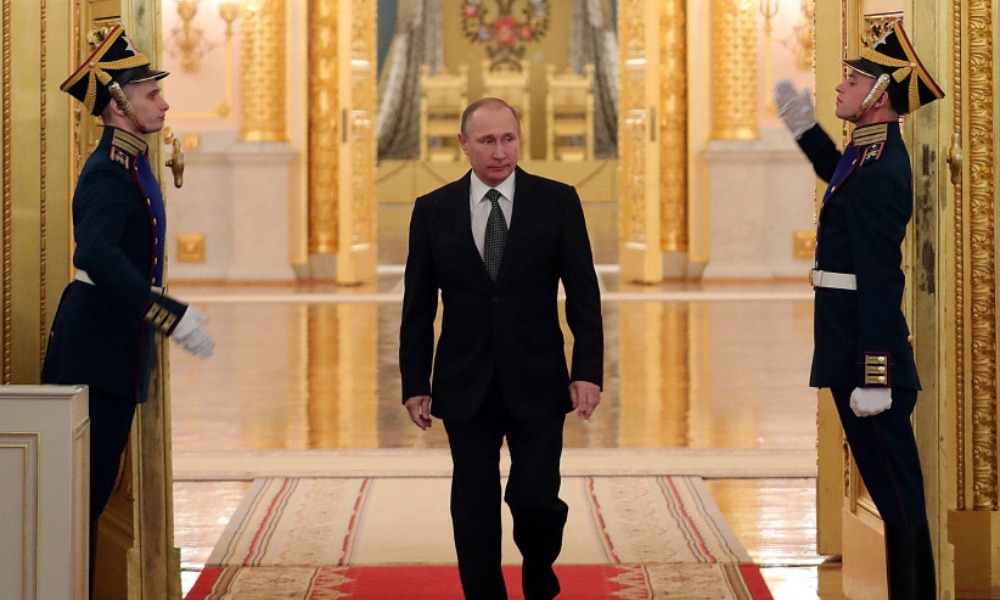
Russian President Vladimir Putin warned the West on Wednesday not to cross Russia’s “red lines”, saying Moscow would respond swiftly and harshly to any provocations and those responsible would regret it.
At a time of acute crisis in ties with the United States and Europe, with Russian troops massed near Ukraine and opposition leader Alexei Navalny on hunger strike in jail, the Kremlin leader used his state of the nation speech to project a message of Russian strength and defiance in the face of outside threats.
“We want good relations…and really don’t want to burn bridges,” Putin told both houses of parliament.
“But if someone mistakes our good intentions for indifference or weakness and intends to burn down or even blow up these bridges, they should know that Russia’s response will be asymmetrical, swift and harsh.”
Russia would determine where its red line lay in each specific case, he said, comparing those who attack it to hyenas led by a tiger.
His comments came at the climax of a speech dominated by Russia’s response to the COVID-19 pandemic and resulting economic hardship. Putin announced new social support measures for families with children ahead of a September parliamentary election.
He adopted a sterner tone when setting out foreign policy.
“In some countries, they have developed a highly unseemly habit of picking on Russia for any reason, and most often for no reason at all – a kind of sport,” said Putin, standing alone on a vast stage flanked by white, blue and red national flags and a backdrop of a giant double-headed eagle.
“Organisers of any provocations that threaten our core security interests will regret what they have done like they’ve never regretted anything for a long time.”
Putin, who is 68 and has dominated Russia for two decades, made no mention of Navalny. The opposition politician is ill in prison after starving himself for three weeks to demand access to his own doctors.
The rouble firmed after Putin’s speech, with markets interpreting it as not escalating tensions with the West.
Recent weeks have seen an intensification of confrontation between Russia and Western countries, which are alarmed by Navalny’s worsening condition and by what they say is the massing of tens of thousands of Russian troops near Ukraine and in Russian-annexed Crimea.
Washington last week tightened sanctions on Russia over accusations of computer hacking and election interference, and the Czech Republic accused Moscow of a role in explosions at an arms depot in 2014. Both expelled Russian diplomats. Russia denied wrongdoing and responded with tit-for-tat expulsions.
Moscow summoned a senior U.S. diplomat on Wednesday and said 10 embassy staff it expelled last week had a month to leave and that it would be disclosing the details of other punitive measures it had promised soon.
Tensions are also strained over the fate of Navalny, whose supporters rallied across Russia on Wednesday in his support.
Two of Navalny’s closest allies were arrested on Wednesday, their lawyers said. Lyubov Sobol, one of the faces of Navalny’s popular YouTube channel, and Kira Yarmysh, his spokeswoman, were both detained in Moscow.
One Navalny aide, Ruslan Shaveddinov, tweeted: “Right now across the whole of Russia they are detaining potential protesters. This is repression. This cannot be accepted. We need to fight this darkness.”
European Council President Charles Michel called the arrests “deplorable” and urged Russian authorities to respect people’s right to assemble.
OVD-Info, a group that monitors protests and detentions, said that nearly 300 people had been detained over the rallies in dozens of different places. The figure was expected to climb.
The Russian government has said the gatherings are illegal. Previous pro-Navalny rallies have been dispersed by force, with thousands of arrests.
Four doctors from outside Russia’s federal prison service visited Navalny on Tuesday and found his health to be satisfactory, Russian human rights commissioner Tatyana Moskalkova said.
In his speech, Putin urged all citizens to get vaccinated and predicted that Russia would achieve collective immunity by the autumn.
On the eve of an online climate summit to be hosted by U.S. President Joe Biden, Putin also called for tougher “polluter pays” rules and set a goal for Russia to cut its greenhouse gas emissions below those of the European Union in the next 30 years.

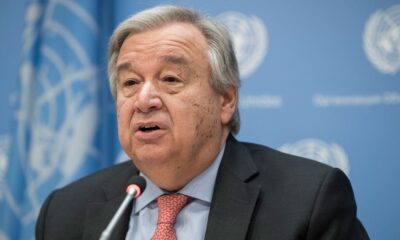




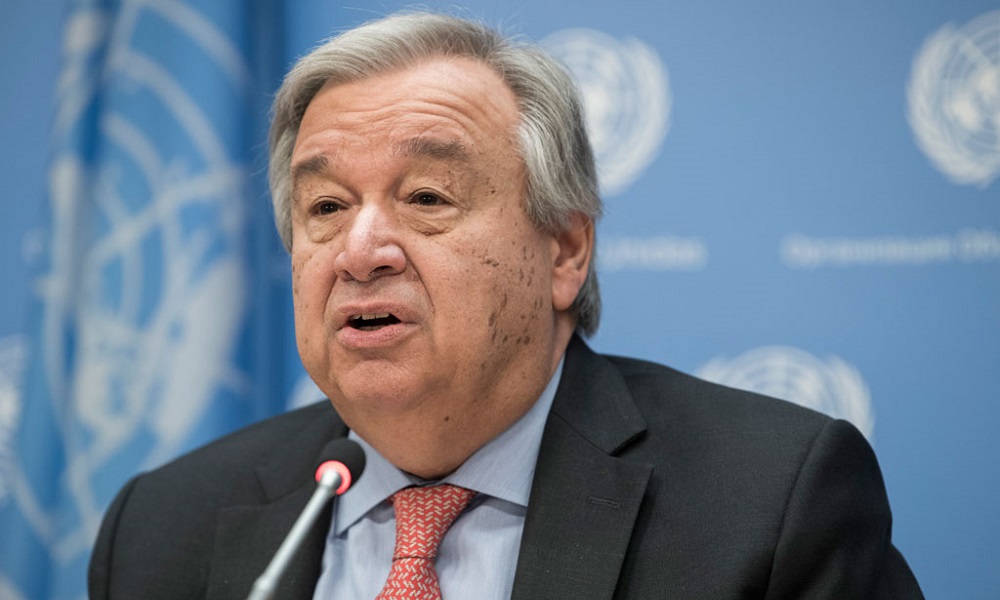
Marking World Water Day, UN Secretary-General António Guterres on Sunday stressed that access to safe water and sanitation is essential for protecting the rights and health of women and girls, urging governments to take stronger action.
In his message, the Secretary-General warned that women and girls bear the greatest burden where water and sanitation services are inadequate. Many are forced to use unsafe facilities, care for relatives affected by waterborne diseases and spend hours each day collecting water—often missing out on education and opportunities.
Highlighting this year’s theme, “Where water flows, equality grows,” Guterres said improving water access can play a key role in advancing gender equality.
He called on governments to boost investment in water and sanitation systems by improving service delivery, strengthening workforce capacity and ensuring sustainable financing. He also urged developed nations to support these efforts by sharing technology, expertise and funding to build resilient infrastructure.
The UN chief emphasized the importance of including women in decision-making processes to ensure water systems effectively meet community needs.
While noting that water scarcity can contribute to conflict, Guterres said it can also foster cooperation and peace. He pointed to the upcoming UN Water Conference as an opportunity for countries to accelerate progress toward universal access to water and sanitation.
“Together, let’s make water a force for gender equality,” he said, calling for global efforts to ensure no community is left behind.
Latest News
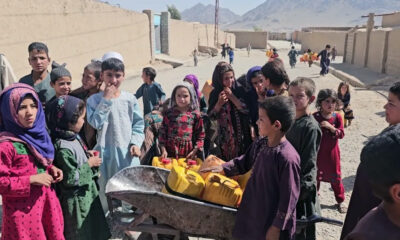
Water crisis deepens in Afghanistan as families struggle for access
Traditional sources such as wells and karezes—underground channels that have sustained communities for generations—are now under severe strain.
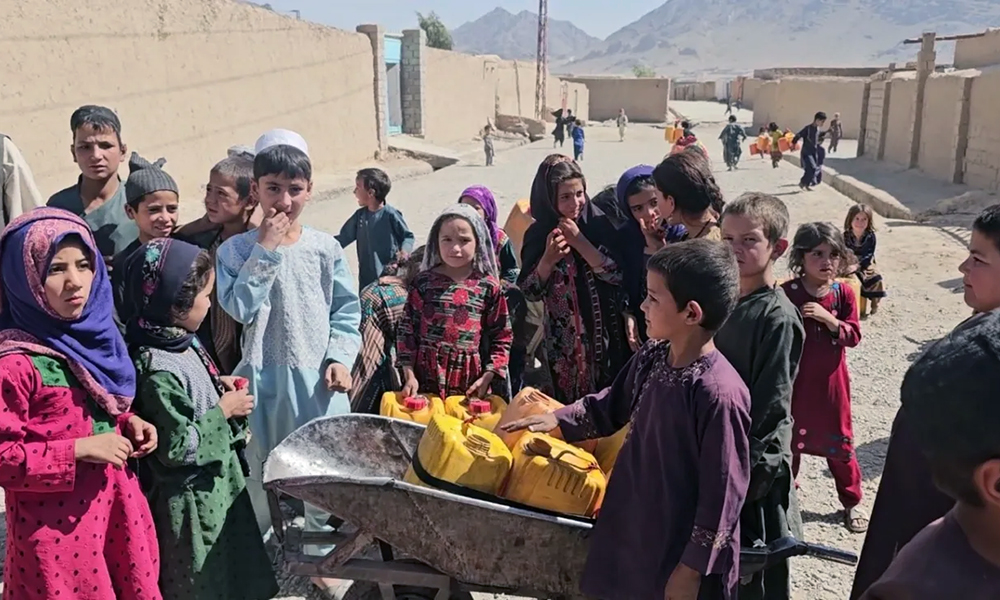
As the world marks World Water Day, Afghanistan is facing a worsening water crisis, with millions of people struggling to access safe and reliable supplies.
Years of drought, declining rainfall, rapid population growth and the return of families from neighbouring countries have placed increasing pressure on already fragile water systems.
Traditional sources such as wells and karezes—underground channels that have sustained communities for generations—are now under severe strain.
In many rural areas, families are forced to rely on unsafe surface water or travel long distances to meet daily needs. Women and children are most affected, often spending hours each day collecting water.
Urban centres, including Kabul, Mazar-e-Sharif and Kandahar, are also grappling with shortages. Rapid population growth and unregulated groundwater extraction have led to significant depletion, leaving many households dependent on private wells or water deliveries.
The situation in Kandahar is particularly severe. Reports indicate that numerous wells have dried up, while others have dropped to depths of more than 100 metres.
Local community leader Fazil Rahman described water shortages as the most pressing challenge in his area, noting that even deep boreholes are failing to produce sufficient supply. He added that the crisis is disrupting education and livelihoods, as children are often forced to spend hours fetching water instead of attending school.
In response, the International Committee of the Red Cross (ICRC), in partnership with the Urban Water Supply and Sewage State-Owned Corporation, launched a water infrastructure project in Kandahar in 2025. The initiative aims to improve access for more than 100,000 residents through expanded pipelines, new household connections and solar-powered pumping systems.
The ICRC has also upgraded a major water pumping station in Herat, now supplying water to more than 400,000 people through tens of thousands of household connections.
Beyond urban areas, water scarcity is also affecting agriculture, the backbone of many rural livelihoods. Reduced irrigation has led to lower crop yields and increased risks of food insecurity and malnutrition.
To support affected communities, the ICRC has rehabilitated irrigation canals, karezes and flood protection systems in several provinces, including projects in Parwan Province.
Despite these efforts, humanitarian organisations warn that aid alone will not be enough. Long-term investment in infrastructure, improved water management and stronger policies will be essential to address the crisis.
Without sustained and coordinated action, experts caution that water shortages could continue to threaten public health, food security and stability across Afghanistan.
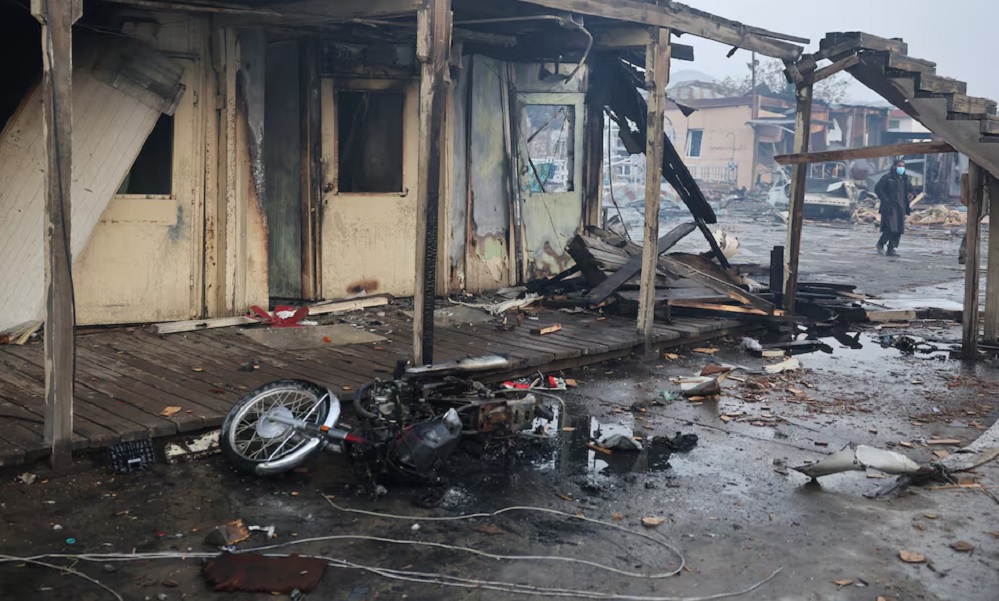


UN chief urges investment in water systems to advance gender equality

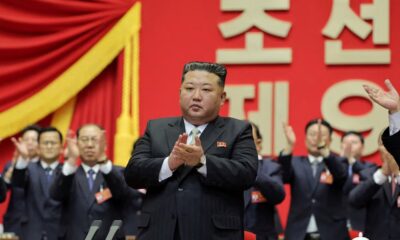
North Korea’s Kim Jong Un reappointed as president of state affairs, KCNA says

Tahawol: Possibility of US ground forces entering Iran war discussed

Water crisis deepens in Afghanistan as families struggle for access

Saar: Using US prisoners as political pressure

Pakistani military jet downed in Afghanistan’s Jalalabad, pilot captured alive

Afghan Air Force conducts airstrikes in Islamabad, other cities

Prominent Muslim scholar issues fatwa calling for Afghanistan-Pakistan ceasefire

Afghan air force strikes key Pakistani military installations in retaliatory operation

IEA: Special circle in Pakistan has launched mission to destabilize region
Tahawol: Possibility of US ground forces entering Iran war discussed
Saar: Using US prisoners as political pressure

Tahawol: Pakistan’s efforts to destabilise Afghanistan

Saar: Decline in international assistance to Afghanistan

Tawsia: Assessment of Afghanistan’s economic activities in 1404
-
 Latest News5 days ago
IEA announces temporary pause in defensive operations against Pakistan for Eid
-
 Latest News5 days ago
Pakistan opposes normal Afghanistan–India relations: Shaheen
-
 Latest News5 days ago
Karzai accuses Pakistan of seeking to destabilise Afghanistan after Kabul strike
-
 Latest News4 days ago
Pakistani shelling hits Kunar districts despite ‘pause in hostility’ over Eid
-

 Sport3 days ago
Afghanistan national buzkashi falls short in Kokpar World Championship semifinals
-
 Regional4 days ago
Pakistan among top nuclear threats to America, US intelligence chief tells senate
-
 Latest News5 days ago
Muslim scholars condemn Kabul hospital attack, urge ceasefire
-
 Latest News4 days ago
Peshawar High Court grants bail to 68 detained Afghan nationals, including minors