
Regional
Qatar’s emir arrives in Iran on state visit

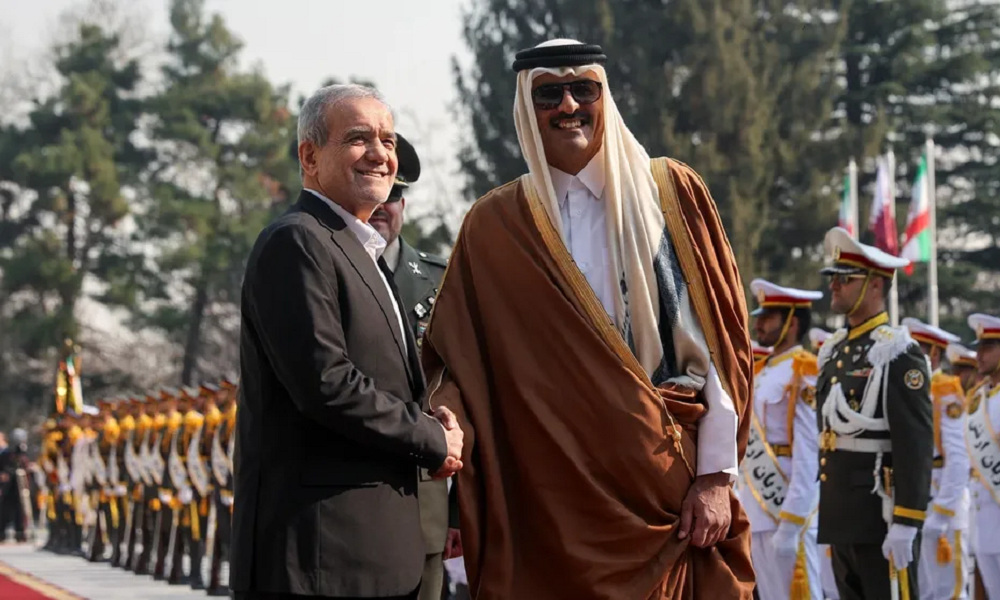
Iranian President Masoud Pezeshkian has officially welcomed Qatar’s Emir Sheikh Tamim bin Hamad Al Thani who arrived in Tehran on a state visit on Wednesday.
The welcoming ceremony was held at the Saadabad Palace in Tehran where Pezeshkian received Al Thani.
Earlier, Al Thani was received by Iran’s Energy Minister Abbas Aliabadi upon his arrival at Tehran’s Mehrabad Airport.
The Emir of Qatar and his accompanying delegation will meet with top Iranian officials and are expected to sign documents to boost collaboration in economy, culture, education, and sports.
The trip follows Pezeshkian’s visit to Doha in October, where he attended the Asia Cooperation Dialogue Forum and held talks with Al Thani over boosting bilateral ties.
Qatar has played a key mediating role in ceasefire negotiations in Gaza and maintains strong and pragmatic relations with Iran amid intense regional tensions.
Iran’s Ambassador to Doha, Ali Salehabadi, meanwhile told IRNA news agency that the Emir’s visit to Tehran aligns with the deep-rooted ties of the two countries and aims to serve their common interests.
Salehabadi said that meetings between high-ranking officials from Iran and Qatar will facilitate deeper cooperation in political, security, and economic sectors, as well as enhance coordination in addressing regional issues through constructive diplomacy.
The envoy also described Pezeshkian’s recent visit to Qatar as a big step in the bilateral relationship, highlighting that the two countries signed significant agreements in cultural, economic, and political fields, IRNA reported.
According to the ambassador, Pezeshkian’s administration prioritizes good neighborliness in its regional policies, with both Iran and Qatar striving to play a constructive role in maintaining peace, security and stability in the region.


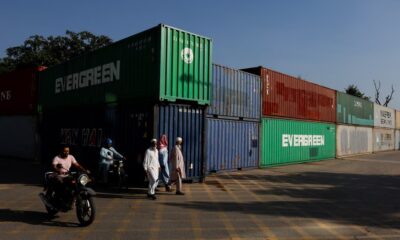

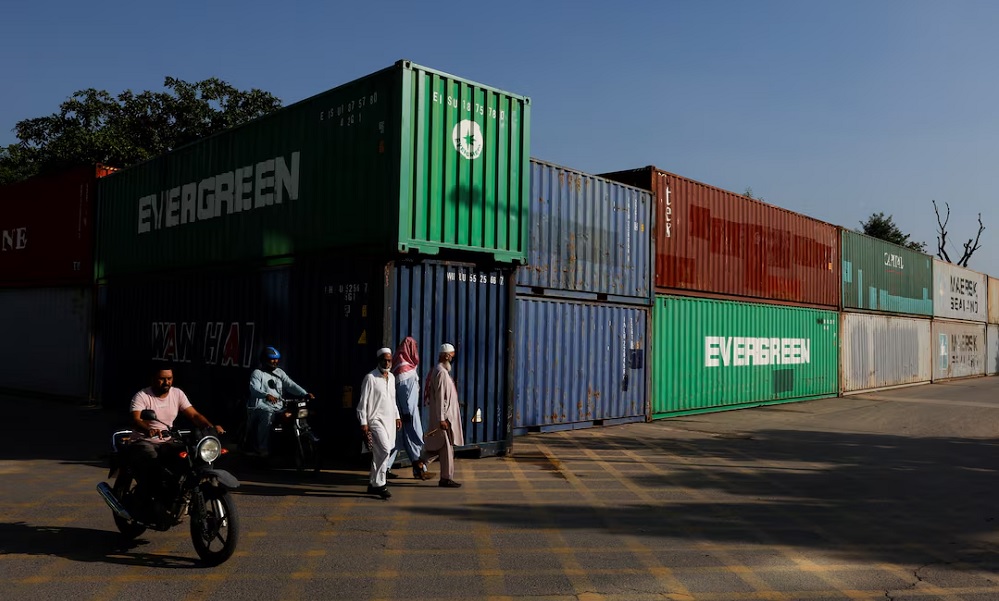
Pakistan’s effort to keep supporters of jailed former prime minister Imran Khan out of the capital has led to a pileup of shipping containers in the nation’s main port of Karachi, 1,400 kilometres (870 miles) away.
Truckers are refusing to drive north, for fear their vehicles will be seized and the containers used to barricade Islamabad ahead of an Oct 4 march on the city planned by Khan’s Pakistan Tehreek-e-Insaf (PTI) opposition party, Reuters reported.
“Right now, going toward Punjab is like committing suicide,” said driver Javid ur Rehman, 35, who has halted such journeys, referring to Pakistan’s most populous province.
“The police seize the vehicles and snatch the containers, and then we are left distressed.”
CONTAINERS HAVE LINED ROADS FOR WEEKS
Steel shipping containers, packed with sand and welded together, have lined the roads into Islamabad for weeks, in preparations against a march, postponed from Sept 27, to demand Khan’s release from prison.
The former cricket star was jailed in 2023 after being ousted by parliament. All convictions but one have been suspended or overturned, with appeals pending.
His party remains under state scrutiny that has suppressed participation in recent protests, however.
“This is not the way to stop protests,” said Rana Mohammad Aslam, president of the Karachi Goods Carrier association. Authorities began stopping vehicles around Sept. 5, weeks before the original date for the march, he said.
Pakistan’s home, information, commerce and finance ministries did not respond to requests for comment. Punjab police and the provincial home department also did not respond.
The containers are positioned ready for placement at key entry points into Islamabad, a capital region larger than the southeast Asian city state of Singapore.
Transporters battling rising prices say they cannot afford to have trucks seized.
Police requisitioned more than 2,000 vehicles in September ahead of the march, they added, many still loaded with cargo and held for days with little or no compensation.
Their reluctance is leaving containers to pile up at Pakistan’s main trade gateway of Karachi.
The disruption was affecting routes to Islamabad, the military city of Rawalpindi, and the cities of Jhelum, Peshawar and Attock, Aslam said.
Some operators had halted journeys beyond Gujranwala in Punjab, while others took alternative routes.
BILLS ARE MOUNTING FOR TRANSPORTERS
The bills are mounting for those whose containers have been seized, as daily demurrage charges on one such container alone can run into 30,000 to 40,000 rupees ($110 to $150), Aslam said, adding to losses from missed deliveries and idle trucks.
Consumer prices rose 10.26% in September from a year earlier, while the transport price index climbed 27.43%, the Pakistan Bureau of Statistics said on Thursday.
Operators are struggling to pay drivers and maintain their fleets, as international shippers still expect payment regardless of the reason for the delay, Aslam said.
He was holding talks to find a solution, he added, but transporters could stage their own protest if complaints go unanswered.
For Pervaiz Khan, 50, the risk was enough to keep a load of chemicals parked in Karachi.
“Right now, my vehicle is loaded but I am not going,” said the father of five, adding that he had loaded his cargo of chemicals by night.
“We depart from Sindh, and the moment we enter Punjab, that’s when our troubles begin.”
Drivers stranded near Islamabad regretted lost days of work or earnings.
“If the roads open, our children’s livelihood will open up,” said Sagheer Ahmed, 51, who added that his children awaiting him at home relied on his earnings. “If not, we will just keep standing.”
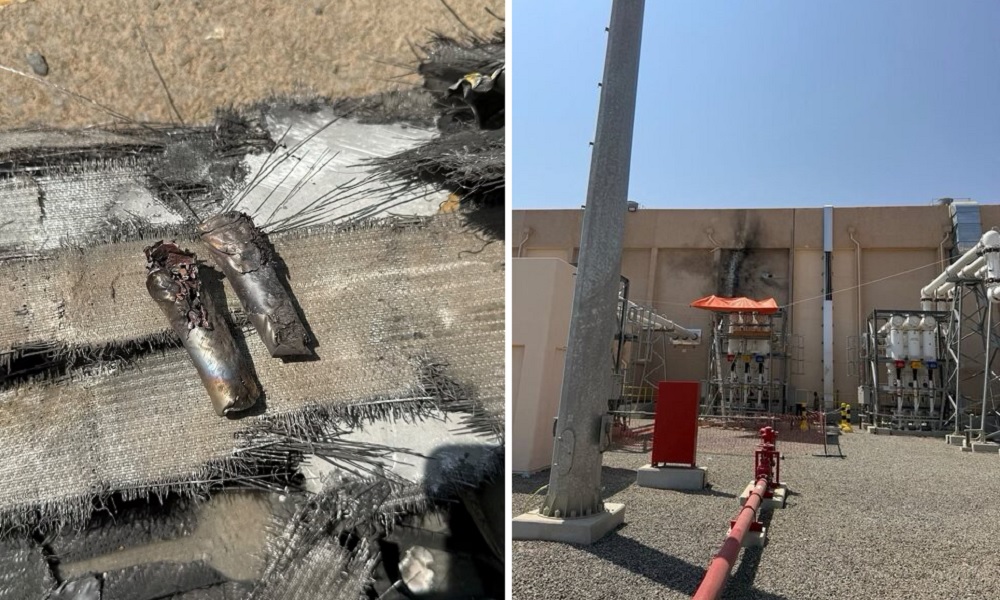
The Saudi-led coalition fighting Yemen’s Houthis said on Thursday that the Iran-aligned group had attacked a power distribution station in Medina which supplies electricity to the Prophet’s Mosque, one of Islam’s holiest sites.
The coalition said the attack put one transformer out of service but did not affect the power network. A Houthi military source, quoted by the Houthi-run Saba news agency, denied the coalition report, according to Reuters.
The Houthis later reported Saudi strikes on the Yemeni capital Sanaa and other parts of Yemen, with no immediate Saudi confirmation of the strikes.
A spokesperson for Yemen’s armed forces, which are aligned with the internationally recognised government, said coalition forces had attacked what it described as “high-value targets” in the capital Sanaa, without providing further details.
The recent escalation is the most serious fighting between Saudi Arabia and the Iran-aligned Houthis since a UN-brokered truce largely halted cross-border attacks in 2022.
Hostilities resumed this year after the Houthis declared a naval blockade on Saudi Arabia in July and began attacking Saudi territory and shipping, while Houthi forces also made major territorial gains along Yemen’s Red Sea coast.
Saudi Arabia has responded with air strikes in Yemen and backed government forces fighting to repel the Houthis.
The Saudi-led coalition said an investigation and examination of drone wreckage confirmed Houthi involvement in planning and carrying out Tuesday’s attack on the Medina power station.
A Houthi military source said the coalition claim was a “lie” intended to cover up what he described as Saudi Arabia’s failure to substantiate its earlier accusation that the Houthis targeted the Muslim holy city of Mecca, said the Saba news agency.
Saudi Arabia said two weeks ago it had intercepted and destroyed a Houthi drone south of Mecca before it entered restricted airspace over the city. The coalition described the incident as the second Houthi attempt to target Mecca since 2017, while the Houthis denied targeting Mecca or any other Islamic holy site.
The coalition said the Medina attack was part of what it described as repeated Houthi attempts to target the Two Holy Mosques and “provoke” Muslims worldwide. It said it would continue taking measures to protect the holy sites and pilgrims.
The coalition also said it had intercepted and destroyed a ballistic missile launched by the Houthis toward the southern Saudi city of Khamis Mushait. It gave no immediate details on any damage or casualties.
Local officials said early on Friday that the Houthis had also targeted the headquarters of the Saudi-led coalition forces command in Aden with several ballistic missiles and drones. There was no immediate comment from the coalition or the Houthis.
Regional
US imposes sanctions on 13 tied to Iran weapons procurement
Treasury Secretary Scott Bessent said, “Treasury will not tolerate any support to the regime and will continue to identify, expose, and isolate Iran’s enablers.”
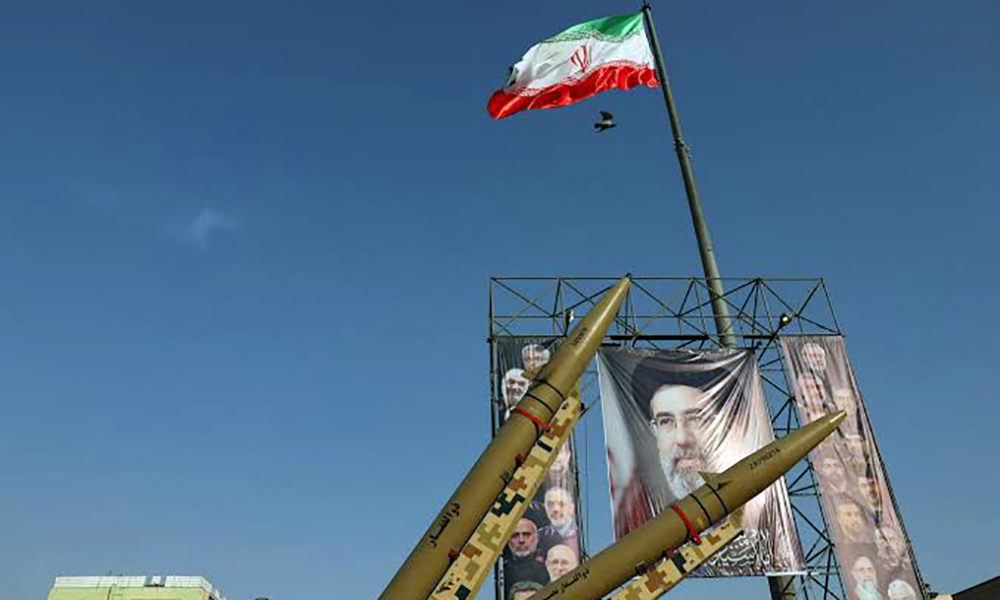
The US government announced fresh sanctions on Tuesday against 13 individuals and entities, including some based in Russia, China, Hong Kong and Pakistan, saying they helped Iran procure weapons and components.
The sanctions announced by the Treasury and State departments are part of the Trump administration’s effort to isolate Iran economically and force it to negotiate an end to the war that began with a US-Israeli strike on Iran on February 28.
Treasury Secretary Scott Bessent said, “Treasury will not tolerate any support to the regime and will continue to identify, expose, and isolate Iran’s enablers.”
Treasury said the sanctions were aimed at degrading Tehran’s ability to reconstitute its weapons programs, while increasing the costs for those who supported its procurement efforts.
Those targeted in Tuesday’s sanctions announcements include:
Seyyed Asghar Alizadeh Tabatabai, a Beijing-based representative of Iran’s Ministry of Defense and Armed Forces Logistics agency, who Treasury said had coordinated the procurement of finished weapons systems and dual-use components in China on Iran’s behalf.
Iran-based Kavoshcom Asia R and D Group, which Treasury said had procured electronics including connectors for Iran Aircraft Manufacturing Industrial Company.
Hong Kong-based EC Mojo Technology Co Limited, which Treasury said had provided electronic components in support of Kavoshcom’s procurement efforts, and EC Mojo’s China-based representative Li Fen.
Pakistan-based Waseem Pasha Tajammal, who serves as chairman of Cavalier Group, a privately owned defense company with locations in Pakistan and internationally.
Joint Stock Company Experimental Design Bureau Named After A.S. Yakovlev, a Russia-based aircraft manufacturer.
MG-Flot LLC, a Russia-based shipping company whose vessels transport weapons for the Russian government.
Saha Airlines, an Iran-based airline affiliated with the country’s air force.
Brett Erickson, managing principal with Obsidian Risk Advisors, said the latest sanctions action would do little to impede Iran’s ability to launch missiles and drones in the Strait of Hormuz. “This is optics management for the Trump administration to claim ‘We’re hammering them,’ when the reality is we’re poking them with a toothpick,” he said.


ACB announces Afghanistan squads for Bangladesh, Zimbabwe series

US rejects American University of Afghanistan’s funding request

Cargo stacks up as Pakistan seizes containers to block capital routes

EU deplores civilian deaths following Helmand, Kunar airstrikes

Russia expects to ease Afghanistan-Pakistan tensions at Moscow Format meeting

Saudi energy group signs major Afghanistan deals covering gas exploration and pipeline plans

Khalilzad: Afghanistan ready to attract major investment

El Niño likely to intensify, may become strongest ever recorded, WMO says

Khyber Chamber demands reopening of Torkham crossing

Messi returns to Inter Miami after Argentina retirement

Tahawol: Pakistan’s airstrikes on civilians in Afghanistan discussed

Tahawol: Improvement in Afghanistan-China relations discussed

Saar: Expanding ties with regional and global countries discussed

Tahawol: Absence of Afghanistan’s envoy at UNGA discussed

Saar: Assessment of war between Afghanistan and US discussed
-

 Sport4 days ago
Afghanistan vs India Asian Games quarter-final abandoned without a toss
-
 Regional4 days ago
Floods, landslides kill 56 in India and 14 in Nepal
-
 World4 days ago
Trump says men arrested at UK air base used by US planned ‘big damage’
-
 Regional3 days ago
US, Iran separately talk with mediators in latest bid to end war
-

 World4 days ago
Serbia’s President Vucic resigns ahead of October parliamentary elections
-
 Business4 days ago
Afghanistan raises import tariffs on several goods to support domestic industry
-
 Latest News4 days ago
Khalilzad calls for end to Pakistan’s ‘double game’, urges new chapter with Afghanistan
-
 Latest News5 days ago
Afghanistan central bank and ACGF sign cooperation agreement