
Latest News
Rents rise in Nangarhar amid sharp increase in returning refugees

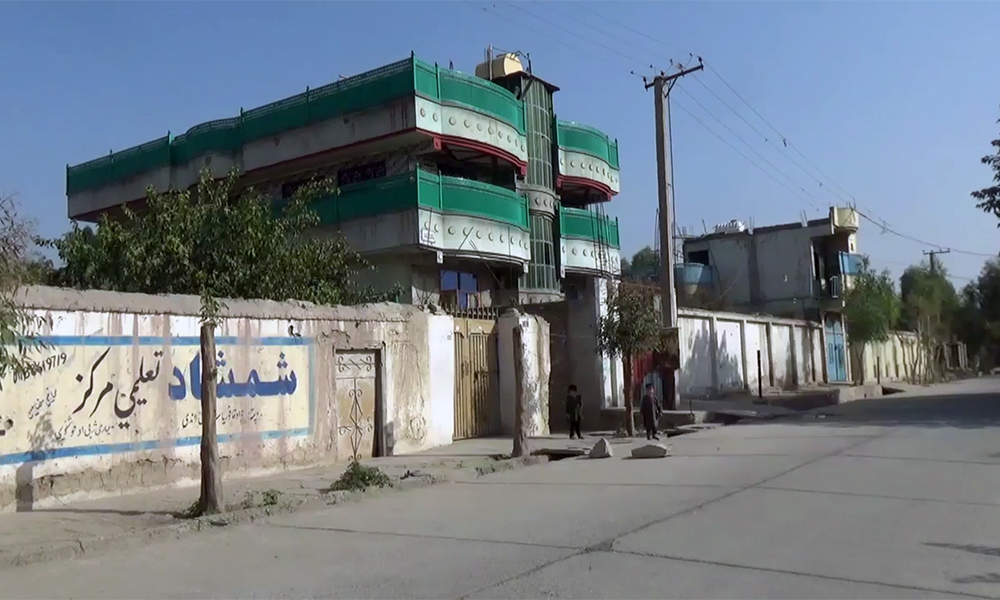
With the surge of Afghans returning from Pakistan, the cost of housing has sharply increased in eastern Nangarhar province over the past few weeks.
Returnees say they cannot afford to pay the steep rents charged by landlords and have asked the government to step in.
“The rent of houses that was 4,000 or 5,000 afghanis has increased to 8,000 and 9,000 afghanis. It has even increased to 10,000 afghanis,” says Ketab Khan, a resident of Nangarhar.
Local officials say that they have taken measures to resolve the issue and are trying to control prices.
“We have a chief in every district. We have a general president of the union. We have told them to identify anyone who violates our order,” says Gul Zaman Naseh, head of coordination of the Nangarhar Justice Department.
Vice and Virtue officials also go street to street, asking residents to help returnees by renting houses at reasonable prices.
“We have to help them (returnees). Share with them an apple we eat. We have told all the people through the mosques to embrace the returning Afghans and not to raise the rents,” says Sahibullah Nomani, a muhtasib in Nangarhar province.





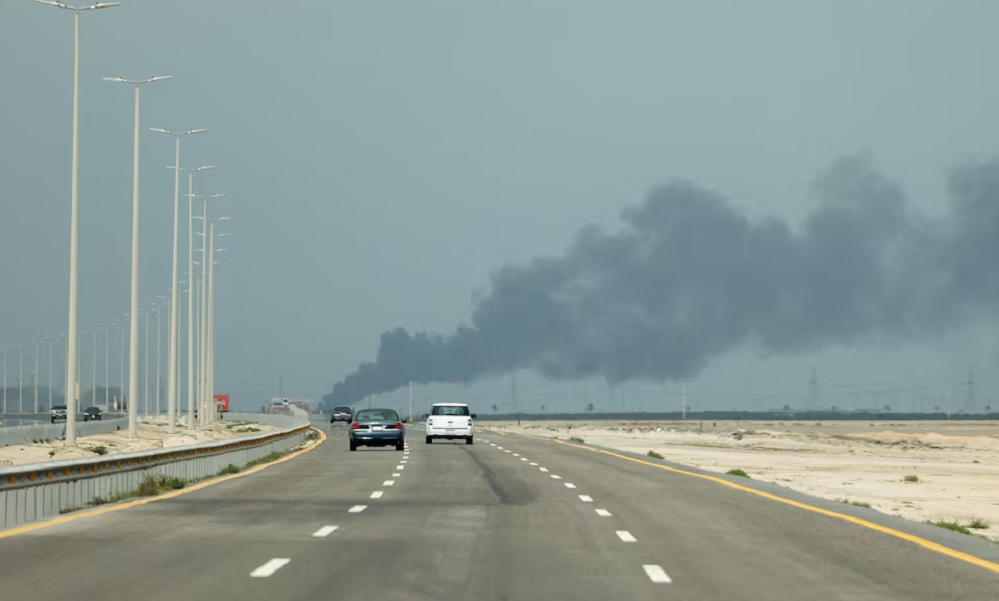
Key U.S. allies in the Middle East are moving closer to direct involvement in the conflict with Iran, as sustained attacks on Gulf infrastructure intensify pressure on regional governments, according to a report by The Wall Street Journal.
Both Saudi Arabia and the United Arab Emirates are reportedly weighing deeper coordination with the United States and Israel, following repeated Iranian missile and drone strikes that have disrupted their economies and threatened regional energy security.
While neither country has formally committed troops, recent developments suggest a shift toward more active participation. The report indicates that Gulf support is already enhancing U.S. operational capabilities, including facilitating airstrike logistics and potentially opening new avenues to target Iran’s financial networks.
Saudi Arabia signals shift in stance
Saudi Arabia appears to be reassessing its position as attacks on critical infrastructure continue. Riyadh has reportedly allowed U.S. forces access to the King Fahd Air Base, a move that could support expanded military operations.
Foreign Minister Faisal bin Farhan warned that the kingdom’s tolerance for Iranian attacks is limited. “Any belief that Gulf countries are incapable of responding is a miscalculation,” he said following recent strikes on energy facilities.
Crown Prince Mohammed bin Salman is said to be considering stronger action to restore deterrence, with officials suggesting it may be only a matter of time before Saudi Arabia takes a more direct role in the conflict.
According to the WSJ report, one source said that “it is only a matter of time before the kingdom enters the war.”
UAE ramps up pressure on Tehran
The United Arab Emirates has also taken steps to increase pressure on Tehran, particularly through economic measures. Authorities in Dubai have shut down Iranian-linked institutions, including the Iranian Hospital and Iranian Club, citing violations of national laws and alleged links to state-backed activities.
Officials warned that further action could include freezing billions of dollars in Iranian assets held within the UAE, a move that could significantly impact Iran’s already strained economy.
Long regarded as a key financial hub for Iranian businesses, the UAE’s shift signals a notable escalation in its stance, even as it continues to deliberate over potential military involvement.
Regional tensions and strategic stakes
The growing alignment among Gulf states follows a series of attacks on energy facilities across Saudi Arabia, Kuwait, the UAE, and Qatar. Doha has condemned the strikes as a dangerous escalation and a direct threat to regional stability.
At the center of the war remains control over the Strait of Hormuz, a critical artery for global oil shipments. Iran’s ability to disrupt traffic through the strait continues to give it significant strategic leverage.
Risk of wider regional war
As the conflict approaches the one-month mark, Gulf states are maintaining close coordination with Washington over next steps. However, analysts warn that continued Iranian strikes could force regional powers into open confrontation.
With economic, security, and geopolitical stakes rising, the prospect of a broader regional war is becoming increasingly likely unless tensions are quickly contained through diplomatic efforts.
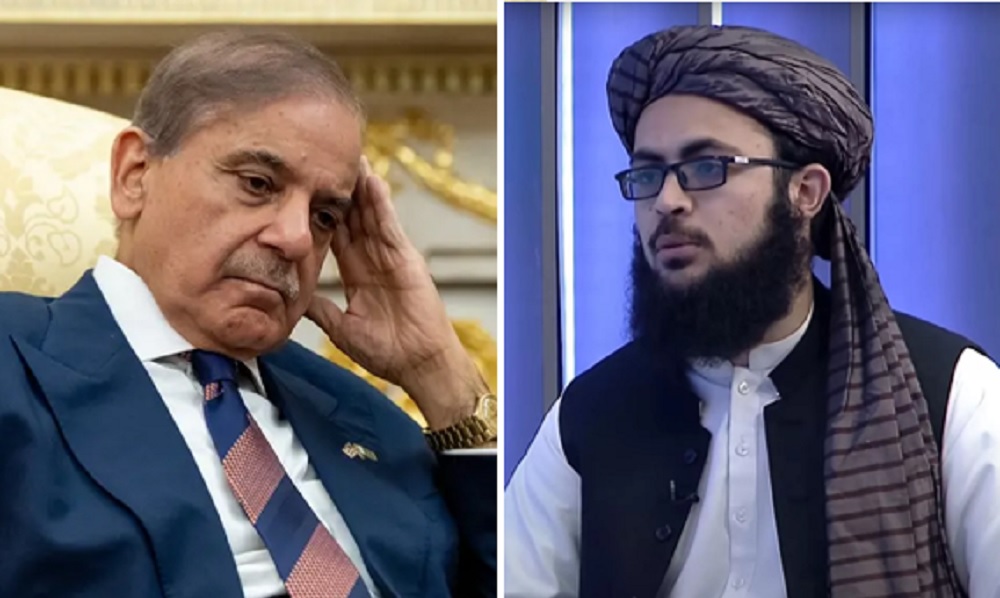
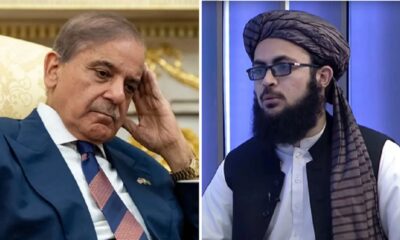
Khubaib Ghufran, spokesperson for Afghanistan’s Ministry of Information and Culture, sharply criticized Pakistani Prime Minister Shehbaz Sharif over his recent claims about Islamic unity in relation to the war in Iran, calling them “shameful.”
On his X account, Ghaffran wrote: “You praised Trump as a hero of the Gaza peace plan, yet today you claim Islamic unity regarding Iran in a war that the same criminal (Trump) and his allies initiated?”
He added that while Afghanistan is governed under an Islamic system, Shehbaz Sharif has shown no compassion even toward the most vulnerable groups—from children to women and drug addicts—and that this cruelty persisted even during the holy month of Ramadan.
Ghaffran described Sharif’s stance as a “grave shame” and a stark example of “historical hypocrisy.”
Latest News
Airstrike on Kabul drug rehabilitation centre sparks legal concerns
Amnesty International’s Deputy Regional Director for Research, Isabelle Lassee, said the scale of casualties suggests the presence of a significant civilian population at the site.
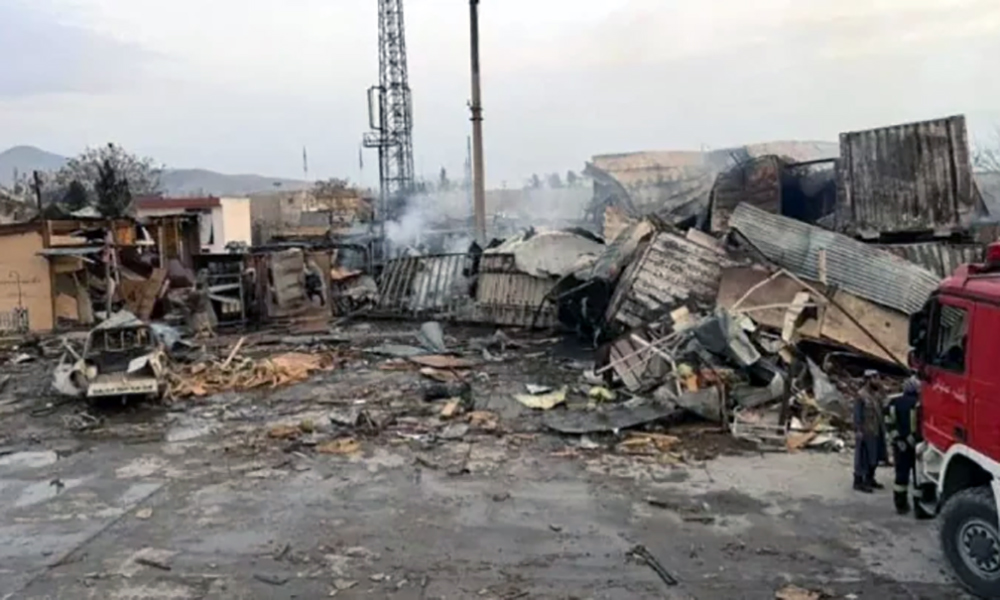
An airstrike on a drug rehabilitation facility in Kabul has drawn sharp criticism from Amnesty International, raising serious questions about compliance with international humanitarian law.
The strike, carried out on 16 March, targeted a site at Camp Phoenix, a former military base that has functioned largely as a rehabilitation centre since 2016. Pakistani officials have claimed the attack was aimed at an ammunition depot allegedly located within the compound.
Responding to those claims, Amnesty International’s Deputy Regional Director for Research, Isabelle Lassee, said the scale of casualties suggests the presence of a significant civilian population at the site.
“While the total number of casualties has yet to be independently verified, it is clear that the attack caused extensive civilian harm, with reports indicating hundreds killed or injured,” she said.
Lassee emphasized that the facility was widely known to house civilians undergoing treatment, and warned that any military action should have taken this into account. “Pakistan’s military should have taken all feasible precautions to avoid harming civilians and civilian infrastructure,” she added.
She further noted that even if a military target had been present within the compound, international law requires that any strike be proportionate, ensuring that civilian harm is not excessive in relation to the anticipated military advantage.
“The scale of destruction raises serious concerns about whether an adequate proportionality assessment was conducted and whether sufficient steps were taken to verify the target and minimize civilian casualties,” Lassee said.
Amnesty International has called on Pakistani authorities to disclose the intelligence behind the strike and to launch an independent, impartial, and transparent investigation into the incident. The organization stressed that findings should be made public to ensure accountability.
The group also urged all parties involved in the conflict to adhere strictly to international humanitarian law and to protect civilian infrastructure, including medical and rehabilitation facilities.
The airstrike formed part of Pakistan’s “Operation Ghazab Lil Haq,” which included strikes in both Kabul and Nangarhar Province. The targeted rehabilitation centre, known as Omid, reportedly had the capacity to accommodate around 2,000 individuals.
Casualty figures remain contested. Islamic Emirate officials claim more than 400 civilians were killed and over 200 injured, though these numbers have not been independently verified. The United Nations has so far confirmed 143 deaths.
The strike comes amid escalating tensions between Afghanistan and Pakistan. According to the United Nations Assistance Mission in Afghanistan, at least 76 civilian casualties had already been recorded since the conflict intensified in February.
Pakistani officials, meanwhile, reported civilian casualties on their side of the border, including four deaths in Bajaur district on 15 March and the killing of a child in North Waziristan earlier in the month, allegedly due to cross-border fire from Afghanistan.
The latest developments underscore growing concerns about civilian safety as hostilities between the two countries continue to intensify.


US allies in Middle East ‘edging closer’ to joining conflict

Tehran rejects Trump’s claims of talks, accuses US of spreading ‘fake news’

Afghanistan squad hit by withdrawals ahead of AFC Asian Cup Qualifiers

Afghan official slams Shehbaz Sharif’s ‘shameful’ claims on Islamic unity

Colombia military plane crash kills 66, four still missing

Pakistani military jet downed in Afghanistan’s Jalalabad, pilot captured alive

Afghan Air Force conducts airstrikes in Islamabad, other cities

Prominent Muslim scholar issues fatwa calling for Afghanistan-Pakistan ceasefire

Afghan air force strikes key Pakistani military installations in retaliatory operation

IEA: Special circle in Pakistan has launched mission to destabilize region

Tahawol: Possibility of US ground forces entering Iran war discussed

Saar: Using US prisoners as political pressure

Tahawol: Pakistan’s efforts to destabilise Afghanistan

Saar: Decline in international assistance to Afghanistan

Tawsia: Assessment of Afghanistan’s economic activities in 1404
-
 Latest News5 days ago
Pakistani shelling hits Kunar districts despite ‘pause in hostility’ over Eid
-
 Sport4 days ago
Afghanistan national buzkashi falls short in Kokpar World Championship semifinals
-

 Regional5 days ago
Pakistan among top nuclear threats to America, US intelligence chief tells senate
-

 Sport3 days ago
Ireland to host Afghanistan for ODI series in August
-
 Latest News5 days ago
Security Sources: Pakistani military shelling in Kunar and Nuristan leaves female doctor dead
-
 Latest News3 days ago
Mojtaba Khamenei calls for improved Afghanistan–Pakistan relations, offers help
-

 Sport4 days ago
FIFA sanctions Israeli Football Association over discrimination violations
-

 Latest News2 days ago
Deadly violence likely without dialogue between Afghanistan and Pakistan: ICG