
Science & Technology
Russia plans a nuclear power plant on the moon within a decade


Russia plans to put a nuclear power plant on the moon in the next decade to supply its lunar space programme and a joint Russian-Chinese research station, as major powers rush to explore the earth’s only natural satellite.
Ever since Soviet cosmonaut Yuri Gagarin became the first human to go into space in 1961, Russia has prided itself as a leading power in space exploration, but in recent decades it has fallen behind the United States and, increasingly, China, Reuters reported.
Russia’s ambitions suffered a massive blow in August 2023 when its unmanned Luna-25 mission smashed into the surface of the moon while attempting to land, and Elon Musk has revolutionised the launch of space vehicles – once a Russian speciality.
IS THAT A NUCLEAR REACTOR ON THE MOON?
Russia’s state space corporation, Roscosmos, said in a statement that it planned to build a lunar power plant by 2036 and signed a contract with the Lavochkin Association aerospace company to do it.
Roscosmos did not say explicitly that the plant would be nuclear but it said the participants included Russian state nuclear corporation Rosatom and the Kurchatov Institute, Russia’s leading nuclear research institute.
Roscosmos said the purpose of the plant was to power Russia’s lunar programme, including rovers, an observatory and the infrastructure of the joint Russian-Chinese International Lunar Research Station.
“The project is an important step towards the creation of a permanently functioning scientific lunar station and the transition from one-time missions to a long-term lunar exploration programme,” Roscosmos said.
The head of Roscosmos, Dmitry Bakanov, said in June that one of the corporation’s aims was to put a nuclear power plant on the moon and to explore Venus, known as earth’s “sister” planet.
The moon, which is 384,400 km (238,855 miles) from our planet, moderates the earth’s wobble on its axis, which ensures a more stable climate. It also causes tides in the world’s oceans.
U.S. ALSO PLANS A REACTOR ON THE MOON
Russia is not the only one with such plans. NASA in August declared its intent to put a nuclear reactor on the moon by the first quarter of fiscal year 2030.
“We’re in a race to the moon, in a race with China to the moon. And to have a base on the moon, we need energy,” U.S. Transport Secretary Sean Duffy said in August, when asked about the plans.
He added that the United States was currently behind in the race to the moon. He said energy was essential to allow life to be sustained on the moon and thence for humans to get to Mars.
International rules ban putting nuclear weapons in space but there are no bans on putting nuclear energy sources into space – as long as they comply with certain rules.
Some space analysts have predicted a lunar gold rush: NASA says there are estimates of a million tonnes of Helium-3, an isotope of helium that is rare on earth, on the moon.
Rare earth metals – used in smartphones, computers and advanced technologies – are also present on the moon, including scandium, yttrium and the 15 lanthanides, according to research by Boeing.







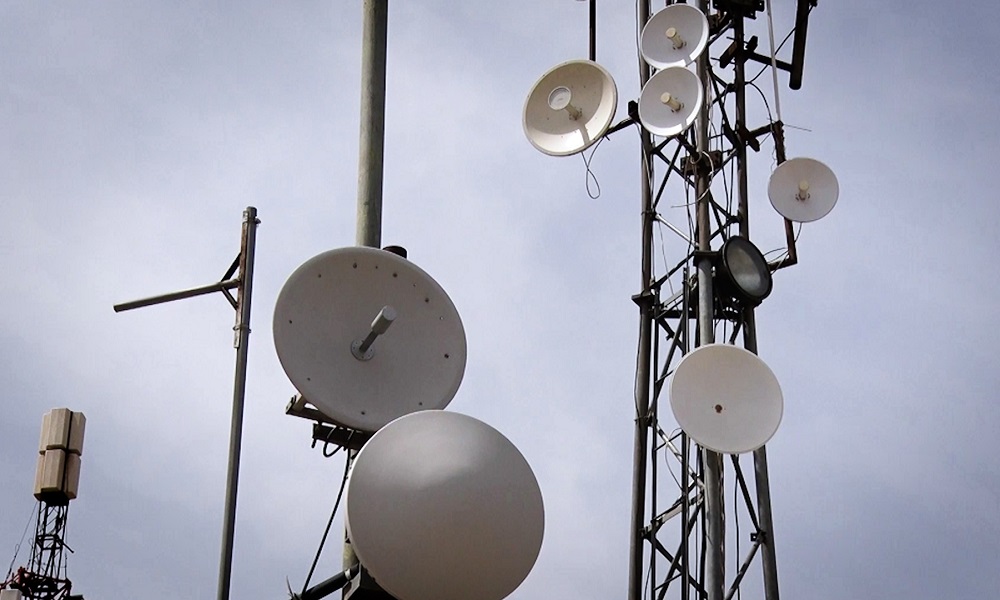
Afghanistan is currently serving as a transit route for internet traffic between South Asia and Central Asia, the Ministry of Communications and Information Technology (MCIT) said, highlighting the country’s growing role in regional digital connectivity.
The ministry said fiber-optic traffic from several South Asian countries is routed through Afghanistan to Central Asian nations via the country’s fiber-optic network.
According to the ministry, nearly $3 billion has been invested in Afghanistan’s fiber-optic and telecommunications sector so far, with expansion efforts continuing.
Officials said Afghanistan offers significant investment opportunities in telecommunications and fiber-optic infrastructure. They added that, alongside expanding domestic communications services, the ministry is working to enhance the country’s capacity to provide transit services for regional countries.
The ministry said Afghanistan is already facilitating the transit of internet traffic from parts of South Asia to Central Asia and stressed that the country’s strategic geographic location positions it as an important digital corridor between the two regions.
“We are currently transiting internet traffic through Afghanistan to South Asian and Central Asian countries,” said Enayatullah Alokozai, spokesperson for the Ministry of Communications and Information Technology. “Afghanistan is a suitable geographical corridor for data transmission.”
Economic analysts say Afghanistan has the potential to become a key hub for regional connectivity. They noted that, in addition to serving as a corridor for energy transmission from Central Asia, the country could also facilitate the large-scale transit of fiber-optic connectivity, internet traffic, and commercial goods.
Representatives of the private sector also said Afghanistan has strong potential to attract further investment in telecommunications and fiber-optic infrastructure. They noted that numerous domestic and international companies are active in the sector, creating direct employment opportunities for thousands of Afghans.
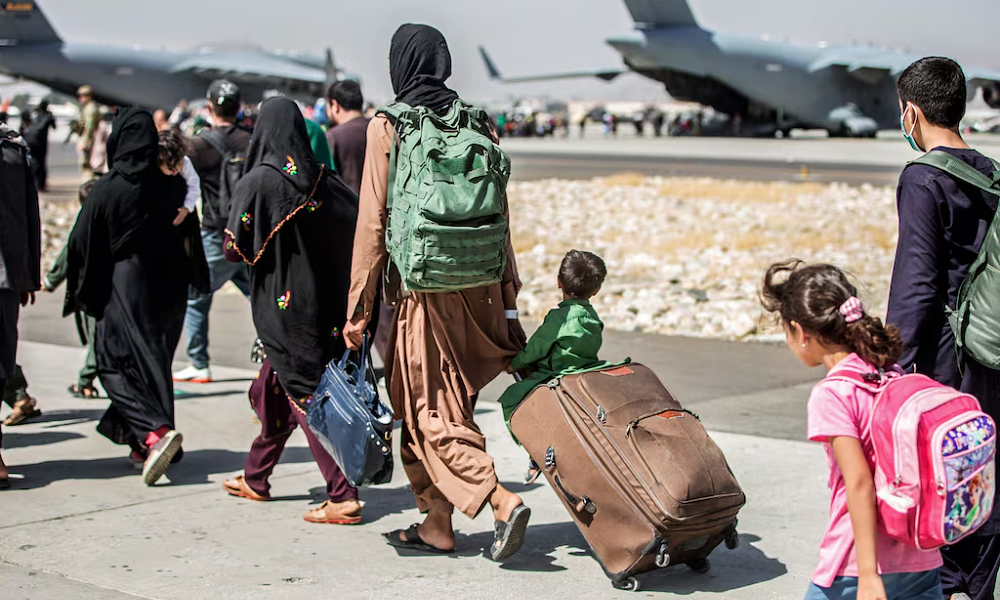
A veteran-led organisation has launched a new artificial intelligence-powered platform designed to help Afghans navigate complex visa and relocation options as thousands remain stranded or at risk nearly five years after the withdrawal of U.S. forces from Afghanistan.
The Visa Pathways and Relocation Information Center (V-PRIC), developed by AfghanEvac, uses artificial intelligence to guide users through possible immigration and protection pathways based on their individual circumstances.
According to AfghanEvac founder and U.S. Navy veteran Shawn VanDiver, the platform attracted more than 30,000 visits during its first week online.
Users begin by answering questions about their current location, whether they worked with the United States, whether they face security risks, and by providing a brief description of their situation. The system then compares that information with a database covering 124 U.S. visa and immigration categories, including 16 relevant to Afghan applicants, as well as relocation options offered by other countries.
VanDiver said the platform is intended to simplify what is often a confusing and constantly changing immigration process. Before using the service, applicants must acknowledge that it does not provide legal advice.
The launch comes as many Afghans who supported the U.S. during its two-decade military presence continue to face uncertainty. AfghanEvac says policy changes have significantly reduced available relocation opportunities, leaving many applicants unable to progress with immigration cases.
According to the organisation, around 1,100 Afghan allies and their family members remain at the Camp As Sayliyah processing facility in Doha, Qatar, despite many having previously received approval to enter the United States. AfghanEvac says travel restrictions have prevented them from completing the process.
VanDiver said the new tool helps users identify obstacles affecting their applications, including whether delays are caused by legal requirements or government policy, while also highlighting possible next steps.
The platform has been trained using legal decisions, executive orders, policy documents and information gathered through AfghanEvac surveys and guidance materials. The organisation says it will continue updating the system as immigration policies evolve.
VanDiver said the tool could also help applicants avoid actions that may complicate future immigration cases, such as pursuing visa interviews when programmes are temporarily suspended.
AfghanEvac recently surveyed more than 1,100 Afghans between January and July this year. Of the 427 respondents still inside Afghanistan, nearly half reported facing direct security threats. Another 427 respondents were in Pakistan awaiting relocation, with many expressing concerns about possible deportation and limited access to healthcare.
The organisation emphasised that the AI platform is intended to complement, rather than replace, professional legal assistance. It encourages applicants to seek legal advice while using the service to better understand the immigration options available to them.
Science & Technology
Facebook hit by global outage as users report widespread access problems
Thousands of users turned to other social media platforms, including X, to confirm they were not alone, with “Facebook down” quickly becoming a trending topic in several regions.

Facebook users around the world experienced widespread disruption on Sunday after the social media platform suffered a major outage that left many unable to access their accounts or use key features.
According to outage-tracking service Downdetector, reports of problems surged sharply overnight, jumping from just a handful of reports initially to millions by noon on Sunday (Kabul time).
Many users reported being unable to log into Facebook, while others who were already signed in encountered an error message stating: “Account Temporarily Unavailable. Your account is currently unavailable due to a site issue. We expect this to be resolved shortly. Please try again in a few minutes.”
The outage appeared to affect Facebook’s desktop platform most severely, although users also reported problems with the mobile app, including uploading photos and videos, viewing content and sending messages through Messenger.
Thousands of users turned to other social media platforms, including X, to confirm they were not alone, with “Facebook down” quickly becoming a trending topic in several regions.
Meta, Facebook’s parent company, had not issued an official explanation for the disruption at the time of publication. It also remained unclear whether the outage affected users in all regions equally or whether other Meta-owned services, including Instagram and WhatsApp, experienced related issues.
Downdetector, which tracks online service disruptions through user-submitted reports, said the spike suggested a significant global outage. The number of reports on the platform does not necessarily represent the total number of affected users.
While outages of this scale are relatively uncommon, Facebook has experienced several high-profile service interruptions in recent years, affecting millions of users worldwide.
Meta is expected to provide further details once engineers identify the cause of the disruption. Users are advised to avoid repeatedly attempting to log in or changing account settings while the issue is being resolved, as the problem appears to stem from Facebook’s systems rather than individual accounts.


Final touches being made to Ayubi Cricket Stadium ahead of Kabul Premier League

Status of US-Iran talks uncertain as ship struck in Hormuz

US court rules in favor of Afghan families seeking travel documents

UNSC presidency to highlight consequences of IEA’s return to power

Pakistan, China envoys discuss Afghanistan, pledge closer counterterrorism cooperation

Pakistan’s governance system has ‘collapsed’: Mohsin Naqvi

India offers 1,000 online scholarships for Afghan students for 2026-27 academic year

Cricket world pays tribute to Afghanistan fast bowler Shapoor Zadran

Turkey spent over $120 million to prepare airport for Qatar-donated U.S. presidential aircraft

Thousands pay final respects as Afghan cricketer Shapoor Zadran buried in Kabul

Tahawol: Worsening security crisis in Khyber Pakhtunkhwa

Saar: Trump’s claim over Iran talks

Tahawol: US cancelling strikes on Iran

Saar: Strained relations between Kabul and Islamabad

Saar: Trade shifts from Pakistan to Central Asia and Iran discussed
-
 Latest News4 days ago
Pakistan’s governance system has ‘collapsed’: Mohsin Naqvi
-

 Sport5 days ago
Qosh Tepa crowned champions of inaugural Afghanistan Wrestling Premier League
-

 Latest News4 days ago
World Bank: Afghanistan’s economic growth too weak to improve living standards
-

 Latest News3 days ago
Uzbek president calls for Central Asia-Afghanistan development space
-

 World3 days ago
US to make visa bond program permanent for people from dozens of countries
-

 Business5 days ago
Afghanistan invites Iranian investors to expand economic cooperation
-
 World4 days ago
Spain says migrant surge into Ceuta has eased as thousands return to Morocco
-

 Latest News4 days ago
Israel and US consider Iran land blockade