
World
‘Serious’ talk between Biden and Putin sets stage for diplomacy

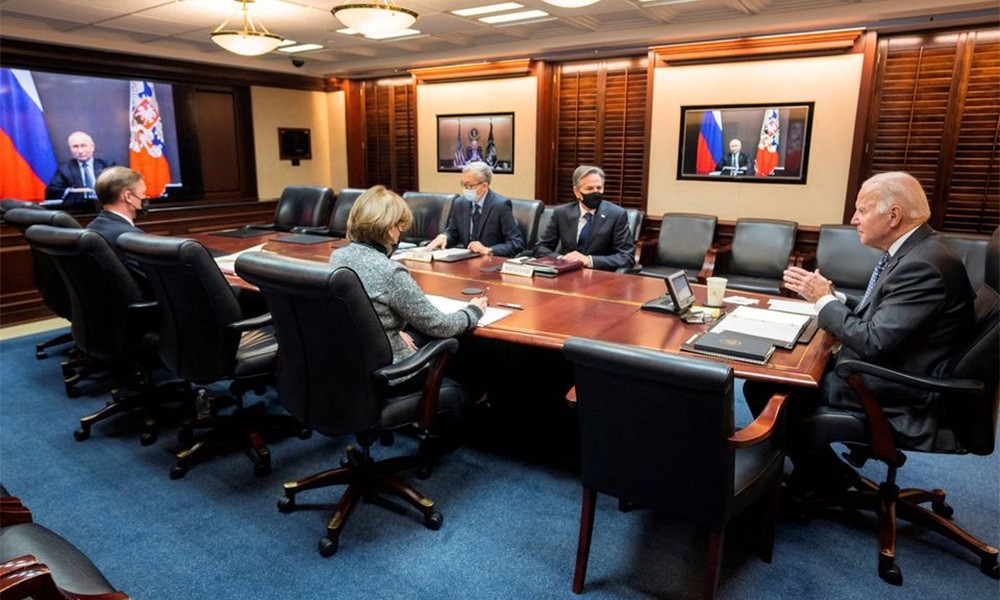
U.S. President Joe Biden and Russian President Vladimir Putin on Thursday exchanged warnings over Ukraine but conveyed some optimism that diplomatic talks in January could ease spiraling tensions, Reuters reported.
According to the report in a 50-minute call, their second conversation this month, Biden said he needed to see Russia decrease its military build-up near Ukraine, while Putin said sanctions threatened by Washington and allies could lead to a rupture in ties. The call was requested by Putin.
“President Biden reiterated that substantive progress in these dialogues can occur only in an environment of de-escalation rather than escalation,” said White House press secretary Jen Psaki.
Kremlin aide Yuri Ushakov said the call created a “good backdrop” for future talks.
The leaders’ exchange set the stage for lower-level engagement between the countries, including a Jan. 9-10 U.S.-Russia security meeting, followed by a Russia-NATO session on Jan. 12, and a broader conference including Moscow, Washington and other European countries slated for Jan. 13.
Despite the talk of diplomacy, the tone of the call was described by officials on both sides as “serious.” And neither country detailed significant progress towards a resolution or the outlines of any deal, Reuters reported.
In Kyiv, leaders worry about the 60,000 to 90,000 Russian troops that have gathered to its north, east and south. The North Atlantic Treaty Organization security alliance has been making its own preparations from the west.
Washington has not been convinced by a report over the weekend that Russia would be pulling back about 10,000 troops, with officials saying they’ve seen little evidence of a drawdown. The United States deployed its JSTARS military plane in Ukrainian airspace for the first time earlier this week, though different types of surveillance aircraft are common in the region.
For his part, Biden reiterated his threat of unprecedented sanctions if Russia chose to invade Ukraine.
“Biden laid out two paths,” including diplomacy and deterrence, including “serious costs and consequences,” said a senior administration official.
“Both leaders acknowledged that there were likely to be areas where we could make the meaningful progress as well as areas where agreements may be impossible, and that the upcoming talks would determine more precisely the contours of each of those categories.”
According to Reuters aides have said the possibilities include measures that would effectively disconnect Russia from the global financial system, while further arming NATO.
Ushakov said Putin “immediately responded” that any sanctions now or later “could lead to a complete breakdown in ties between our countries.” He added: “Our president also mentioned that it would be a mistake that our descendants would see as a huge error.”
Moscow’s troop deployments over the past two months alarmed the West, following its seizure of Ukraine’s Crimea peninsula in 2014 and its backing of separatists fighting in eastern Ukraine.
Russia denies planning to attack Ukraine and says it has the right to move its troops on its own soil as it likes, read the report.
Moscow, worried by what it says is the West’s re-arming of Ukraine, has said it wants legally-binding guarantees the 30-member NATO alliance will not expand further eastwards, and that certain offensive weapons will not be deployed to Ukraine or other neighboring countries.
The Kremlin said Biden appeared to agree with Putin’s contention that Moscow needed some security guarantees from the West and also that he said the United States did not intend to deploy offensive weapons in Ukraine.
A White House spokesperson did not immediately respond to a request for comment on the Kremlin’s characterization of Biden’s remarks.
Putin has compared the current tensions to the Cold War-era Cuban Missile Crisis in 1962. Washington regards many of his demands, including restrictions on NATO expansion, as non-starters.






World
G7 foreign ministers demand an end to attacks on civilians in Iran war
The ministers also reiterated the need to restore safe and toll-free freedom of navigation in the Strait of Hormuz.
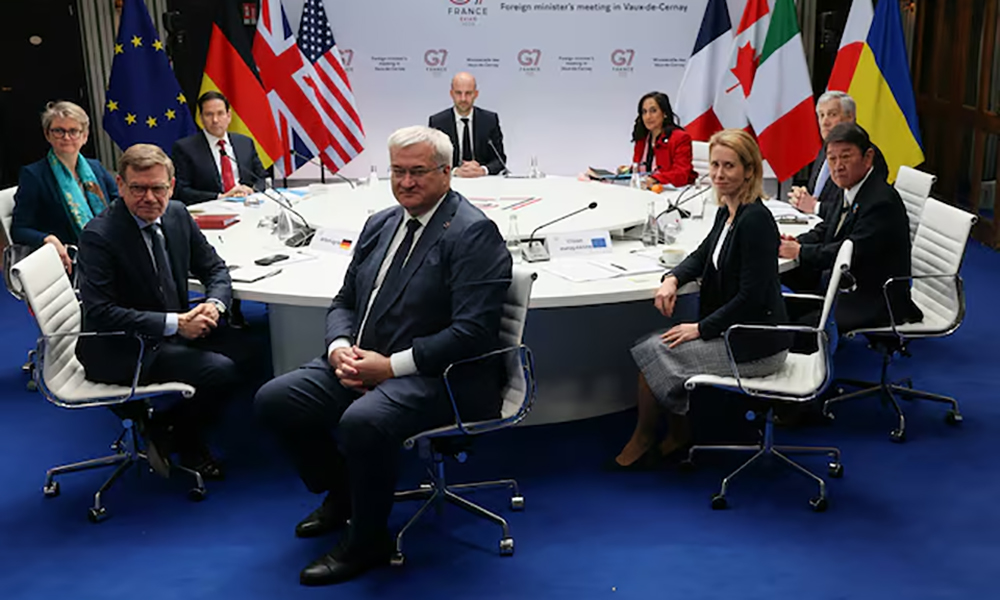
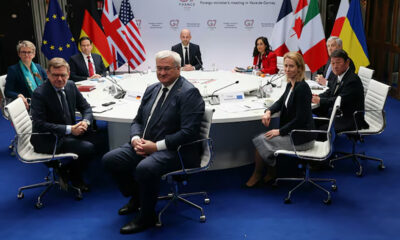
The foreign ministers of the G7 group of nations called on Friday for an immediate stop to attacks against civilians and civilian infrastructure in the Iran war.
In a joint statement agreed on the second day of a G7 meeting in France – this year’s host country – the ministers said they had underscored the importance of minimising the impact of the conflict on regional partners, civilian populations and critical infrastructure.
“We focused on the value of diverse partnerships, coordination, and supporting initiatives, including to mitigate global economic shocks such as disruptions to economic, energy, fertilizer and commercial supply chains, which have direct impacts on our citizens,” they said in the statement seen by Reuters.
The ministers also reiterated the need to restore safe and toll-free freedom of navigation in the Strait of Hormuz.
The G7 members are the United States, Britain, Canada, France, Germany, Italy and Japan, along with the European Union.
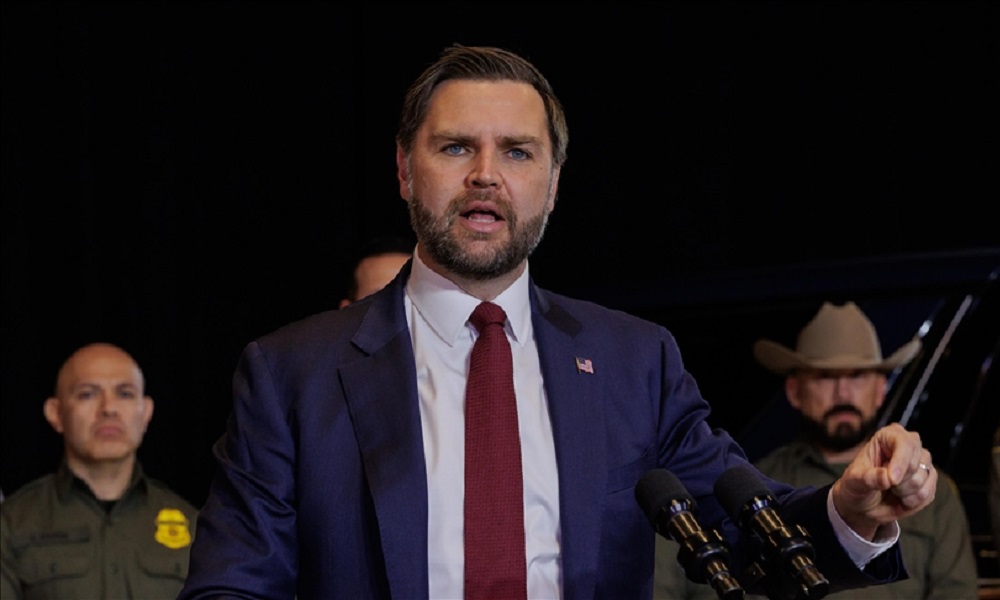
US Vice President JD Vance has taken a leading role in Washington’s efforts to broker peace with Iran, nearly a month into the ongoing conflict, according to US media reports on Friday.
An Axios report says Vance has been actively engaged in behind-the-scenes diplomacy, holding multiple discussions with Israeli Prime Minister Benjamin Netanyahu and coordinating with Gulf allies, while maintaining indirect communication channels with Iranian officials.
The White House reportedly views Vance as a central negotiator due to his senior position and his skepticism toward prolonged military engagements, making him a suitable envoy for sensitive negotiations.
Vance’s efforts include coordination with countries such as the United Arab Emirates and Qatar, focusing on de-escalation, potential peace talks, and regional security.
US President Donald Trump formally confirmed Vance’s role on Thursday, noting that he is working alongside Middle East Envoy Steve Witkoff and Jared Kushner on ongoing negotiations and will brief officials on developments regarding Iran.
White House officials told Axios that Vance’s seniority and opposition to extended foreign conflicts make him a more appealing interlocutor for Iran than other envoys, with Witkoff recommending him as the lead negotiator. “If the Iranians can’t strike a deal with Vance, they don’t get a deal. He’s the best they’re gonna get,” a senior administration official said.
While Vance assumes a larger diplomatic role, Witkoff and Kushner continue handling negotiations. Reports of a confrontation between Vance and Netanyahu were dismissed by US and Israeli sources as inaccurate.
According to the report, Vance initially expressed skepticism about the war’s duration, objectives, and resource impact but supported a strategy of overwhelming force once Trump decided to proceed. Vance remains aligned with Israel while carefully navigating differences between US and Israeli objectives, advisers said.
“He has his own views, but he is going to work according to Trump’s instructions and try to achieve an outcome that the president likes,” a source close to Vance added.
World
Trump signature to appear on US currency, ending 165-year tradition
The Treasury is still producing notes bearing the signatures of former President Joe Biden’s Treasury secretary, Janet Yellen, and former Treasurer Lynn Malerba.
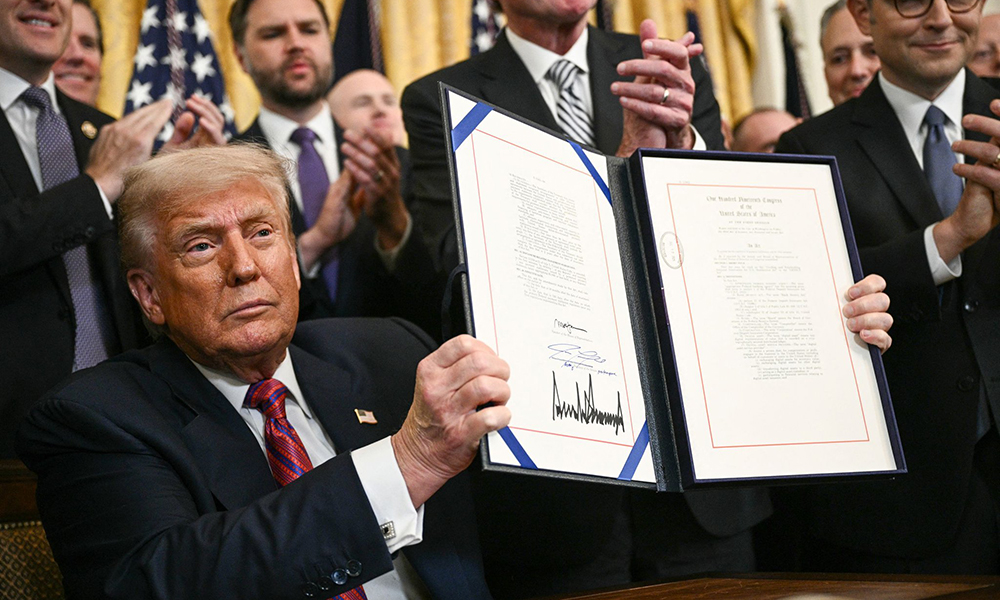
U.S. paper currency will bear President Donald Trump’s signature starting this summer, the first time a sitting president has signed American money, the Treasury Department said on Thursday.
The redesigned notes, planned to mark the 250th anniversary of American independence, will also for the first time in 165 years drop the signature of the U.S. treasurer, who reports to the Treasury Secretary and oversees the Bureau of Engraving and Printing, the U.S. Mint and other Treasury functions, Reuters reported.
The first $100 bills with Trump’s signature and that of U.S. Treasury Secretary Scott Bessent will be printed in June, followed by other bills in subsequent months. The new bills may take several weeks to circulate through banks.
The Treasury is still producing notes bearing the signatures of former President Joe Biden’s Treasury secretary, Janet Yellen, and former Treasurer Lynn Malerba.
Malerba will be the last of an unbroken line of treasurers whose signatures have appeared on U.S. federal currency since 1861, when the U.S. government first issued it.
The signature change is the latest effort by the Trump administration and its allies to put the president’s name on buildings, institutions, government programs, warships and coins. A federal arts panel, whose members Trump appointed, approved last week the design for a commemorative gold coin with Trump’s image.
Bessent said in a statement that the move was appropriate for the U.S. 250th anniversary, given strong U.S. economic growth and financial stability during Trump’s second term, read the report.
“There is no more powerful way to recognize the historic achievements of our great country and President Donald J. Trump than U.S. dollar bills bearing his name, and it is only appropriate that this historic currency be issued at the Semiquincentennial,” Bessent said.
An effort for a circulating $1 Trump coin was set back by laws prohibiting the depiction of living individuals on U.S. coins.
A statute governing the printing of Federal Reserve notes gives the Treasury broad discretion to change designs to guard against counterfeiting. The law requires keeping certain elements, including the words “In God We Trust,” and only allows portraits of deceased individuals.
The overall designs of bills will not change, except for Trump’s signature replacing the Treasurer’s, Treasury officials said. A mock-up of the $100 bill with Trump’s signature was not immediately available.
Malerba, the former treasurer, declined comment on the Trump administration’s move.
Her predecessor, Jovita Carranza, who served as treasurer in Trump’s first term, called the change “a powerful symbol of American resilience, the enduring strength of free enterprise and the promise of continued greatness.”
The current treasurer, Brandon Beach, whose name has not appeared on the currency, also issued a supportive statement, saying Trump was the architect of a “golden age economic revival.”


G7 foreign ministers demand an end to attacks on civilians in Iran war

Amnesty International urges IEA to end education ban for girls

Twelve US troops wounded in Iran strike on base in Saudi Arabia, US official says

Exclusive interview with Indrika Ratwatte, Deputy UN Special Representative for Afghanistan

US Vice President Vance emerges as key figure in Iran peace efforts: Report

Pakistani military jet downed in Afghanistan’s Jalalabad, pilot captured alive

Afghan Air Force conducts airstrikes in Islamabad, other cities

Prominent Muslim scholar issues fatwa calling for Afghanistan-Pakistan ceasefire

Afghan air force strikes key Pakistani military installations in retaliatory operation

IEA: Special circle in Pakistan has launched mission to destabilize region
Exclusive interview with Indrika Ratwatte, Deputy UN Special Representative for Afghanistan

Tawsia: Efforts to boost Afghanistan’s domestic production and economic diplomacy

Tahawol: Discussion on day 27 of Iran–US war

Saar: Islamic Emirate confident of Durand Line control

Tahawol: Efforts to release Mohammad Rahim from Guantanamo Bay Detention Camp
-
 Latest News2 days ago
Tajikistan shifts stance on Afghanistan amid rising border tensions
-

 Latest News4 days ago
Around 2.3 million tourists visited Afghanistan’s recreational areas during Eid: Ghufran
-

 Sport4 days ago
Afghanistan squad hit by withdrawals ahead of AFC Asian Cup Qualifiers
-

 Latest News4 days ago
Islamic Emirate releases American prisoner Dennis Coyle
-

 Latest News3 days ago
Two civilians killed, eight injured in fresh shelling by Pakistan in Kunar
-

 Regional4 days ago
US allies in Middle East ‘edging closer’ to joining conflict
-
 Latest News5 days ago
Airstrike on Kabul drug rehabilitation centre sparks legal concerns
-
 Regional4 days ago
Tehran rejects Trump’s claims of talks, accuses US of spreading ‘fake news’