
Regional
Sri Lankans elect Marxist-leaning Dissanayake as president to fix economy
About 75% of the 17 million eligible voters cast their ballots, according to the election commission.

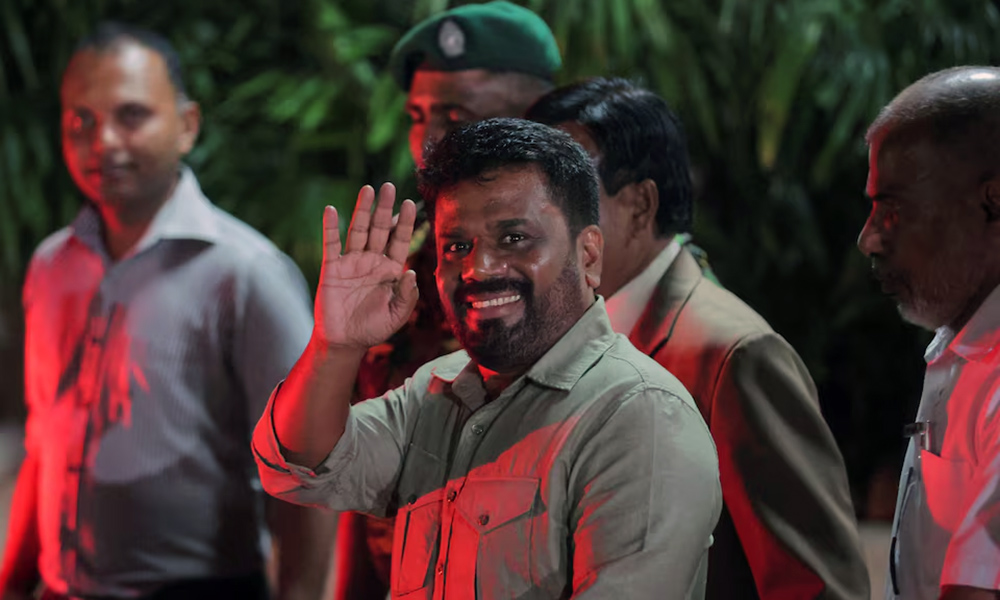
Sri Lankans elected Marxist-leaning Anura Kumara Dissanayake as new president on Sunday, putting faith in his pledge to fight corruption and bolster a fragile economic recovery following the South Asian nation’s worst financial crisis in decades, Reuters reported.
Dissanayake, 55, who does not possess political lineage like some of his rivals in the presidential election, led from start to finish during the counting of votes, knocking out incumbent President Ranil Wickremesinghe and opposition leader Sajith Premadasa.
“We believe that we can turn this country around, we can build a stable government… and move forward. For me this is not a position, it is a responsibility,” Dissanayake told reporters after his victory which was confirmed after a second tally of votes.
The election was a referendum on Wickremesinghe, who led the heavily indebted nation’s fragile economic recovery from an economic meltdown but the austerity measures that were key to this recovery angered voters. He finished third with 17% of the votes, read the report.
“Mr. President, here I handover to you with much love, the dear child called Sri Lanka, whom we both love very dearly,” Wickremesinghe, 75, said in a statement conceding defeat.
Dissanayake polled 5.6 million or 42.3% of the votes, a massive boost to the 3% he managed in the last presidential election in 2019. Premadasa was second at 32.8%.
It was the first time in the Indian Ocean island’s history that the presidential race was decided by a second tally of votes after the top two candidates failed to win the mandatory 50% of votes to be declared winner.
Under the electoral system, voters cast three preferential votes for their chosen candidates. If no candidate wins 50% in the first count, a second tally determines the winner between the top two candidates, using the preferential votes cast, Reuters reported.
About 75% of the 17 million eligible voters cast their ballots, according to the election commission.
This was the country’s first election since its economy buckled in 2022 under a severe foreign exchange shortage, leaving it unable to pay for imports of essentials including fuel, medicine and cooking gas. Protests forced then-President Gotabaya Rajapaksa to flee and later resign.
Dissanayake presented himself as the candidate of change for those reeling under austerity measures linked to a $2.9 billion International Monetary Fund bailout, promising to dissolve parliament within 45 days of taking office for a fresh mandate for his policies in general elections.
“The election result clearly shows the uprising that we witnessed in 2022 is not over,” said Pradeep Peiris, a political scientist at the University of Colombo.
“People have voted in line with those aspirations to have different political practices and political institutions. AKD (as Dissanayake is popularly known) reflects these aspirations and people have rallied around him.”
Dissanayake has worried investors with a manifesto pledging to slash taxes, which could impact IMF fiscal targets, and a $25 billion debt rework. But during campaigning, he took a more conciliatory approach, saying all changes would be undertaken in consultation with the IMF and that he was committed to ensuring repayment of debt, read the report.
Buttressed by the IMF deal, Sri Lanka’s economy has managed a tentative recovery. It is expected to grow this year for the first time in three years and inflation has moderated to 0.5% from a crisis peak of 70%.
But the continued high cost of living was a critical issue for many voters as millions remain mired in poverty and many pinned hopes of a better future on the next leader.
Dissanayake ran as a candidate for the National People’s Power alliance, which includes his Marxist-leaning Janatha Vimukthi Peremuna party.
Although JVP has just three seats in parliament, Dissanayake’s promises of tough anti-corruption measures and more policies to support the poor boosted his popularity.
He will have to ensure Sri Lanka sticks with the IMF programme until 2027 to get its economy on a stable growth path, reassure markets, repay debt, attract investors and help a quarter of its people out of poverty.
“Root cause for the downfall of this country is bad management. We have a strong feeling if we have a good manager to rule this country… we can be successful in future,” said Janak Dias, 55, a real estate businessmen.






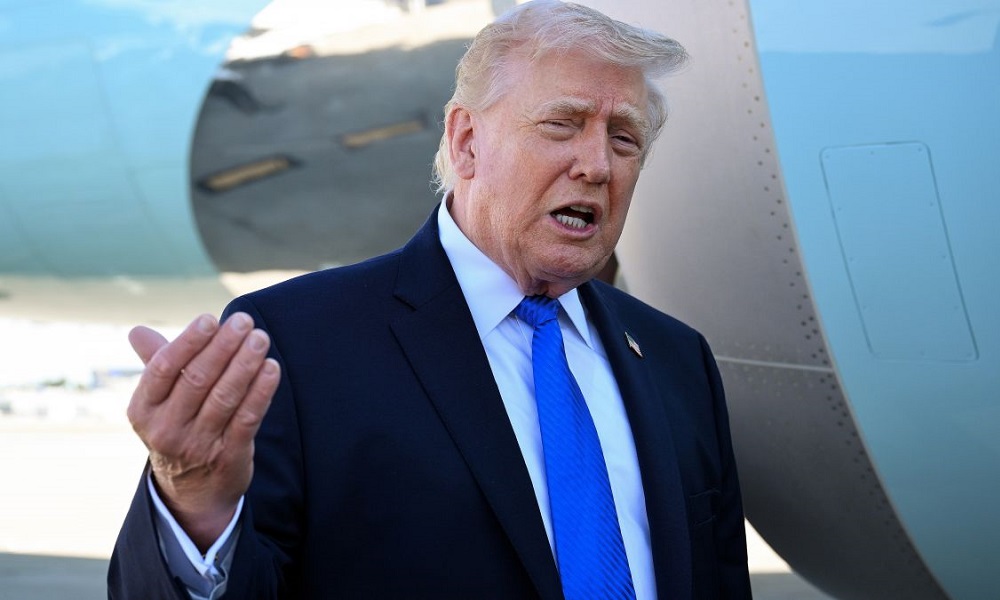
U.S. President Donald Trump announced a new extension of his deadline for Iran to reopen the Strait of Hormuz or face the destruction of its energy plants, after Iran rejected his 15-point proposal to end the war he launched with Israel.
Iran gave no direct indication that it was ready for negotiation or compromise. The Islamic Revolutionary Guard Corps issued a statement reaffirming that all shipping “to and from ports of allies and supporters of the Israeli-American enemies” to any destination was prohibited.
The war has spread across the Middle East, killing thousands of people and causing the biggest disruption in history to energy supplies, hitting the global economy with soaring oil, gas and fertiliser prices that have fuelled inflation fears.
The U.S. and Israel launched strikes on Iran on February 28 during talks with Tehran about its nuclear programme that had not yet yielded a deal. Attacks on Israel by Iran’s Lebanese ally Hezbollah then triggered an Israeli onslaught there that has displaced a fifth of Lebanon’s population.
On Thursday, Trump threatened during a cabinet meeting to increase pressure on Iran if it did not make a deal. He later posted on social media that he would pause threatened attacks on Iranian energy plants for 10 days until April 6 at 8 p.m. Eastern daylight time (0000 GMT on April 7).
“Talks are ongoing and, despite erroneous statements to the contrary by the Fake News Media, and others, they are going very well,” he added in his Truth Social post.
Regional
Russia sought to blackmail US using intelligence to Iran, Zelenskiy says
Zelenskiy, who said on Monday that Ukraine’s military intelligence has “irrefutable” evidence that Russia is continuing to provide intelligence to Iran.
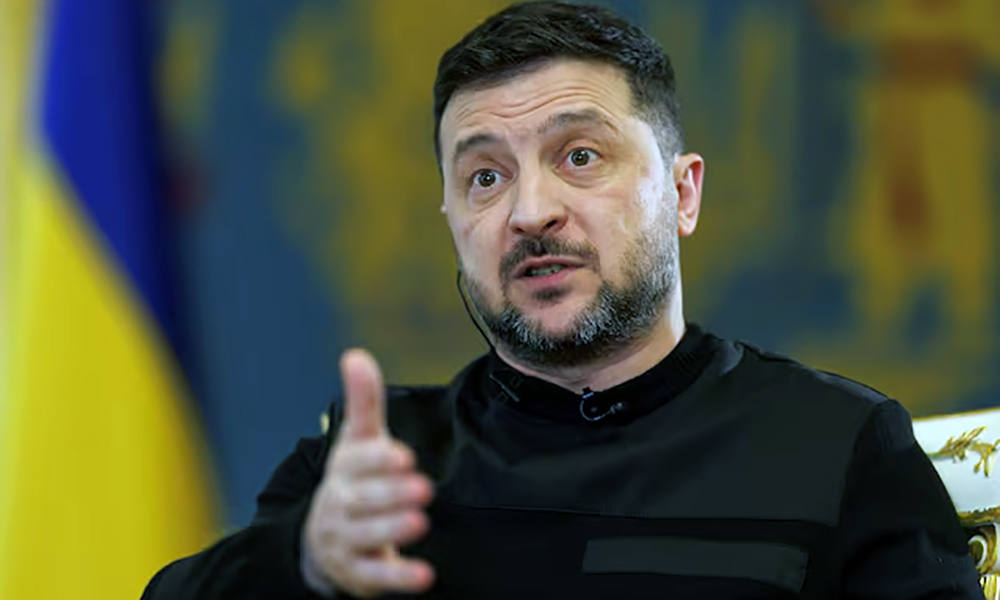
Russia sought to blackmail the United States by offering to stop sharing military intelligence with Iran if, in return, Washington would cut off Ukraine from its intelligence data, President Volodymyr Zelenskiy said on Wednesday.
Zelenskiy, who said on Monday that Ukraine’s military intelligence has “irrefutable” evidence that Russia is continuing to provide intelligence to Iran, told Reuters he had seen the data but provided no further details, Reuters reported.
Speaking in his presidential compound in Kyiv, Zelenskiy said that some Iranian drones, used to attack U.S. military assets and its allies during the war in the Middle East, contained Russian components.
“I have reports from our intelligence services showing that Russia is doing this and saying: ‘I will not pass on intelligence to Iran if America stops passing intelligence to Ukraine.’ Isn’t that blackmail? Absolutely,” Zelenskiy said.
He did not say who, according to the reports, Russia was addressing the comments to. Russia has denied assisting Iran in its month-old conflict with the United States and Israel – a denial that Washington said earlier this month that it had also received directly from Moscow when the issue was discussed.
Ukraine, which has faced sustained attacks by Iranian-designed Shahed drones since Russia launched its invasion in 2022, is helping several Gulf states – including Saudi Arabia, the United Arab Emirates, and Qatar – to counter drone attacks on their territory, the president said.
Zelenskiy said he hoped that Ukraine would be able to reach long-term deals with some Gulf countries that would raise funds for the production of Ukrainian drone interceptors or receiving much-needed air-defence missiles, read the report.
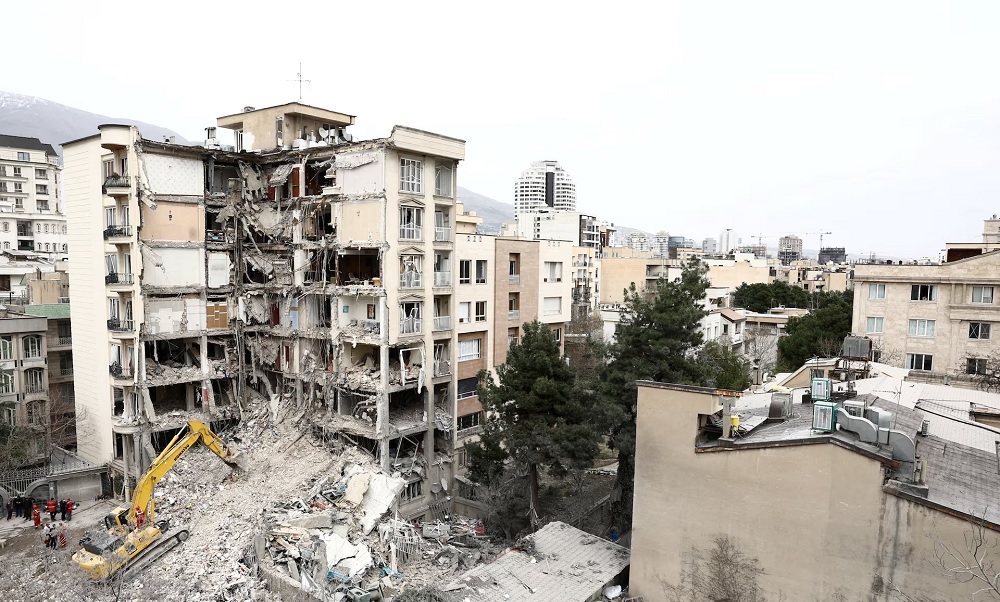
Israel struck the Iranian capital Tehran on Wednesday, Israeli military and Iranian media said, as President Donald Trump said the U.S. was making progress in its efforts to negotiate an end to the war, with reports of a 15-point plan sent to Tehran.
The Israeli Defense Forces said in a Telegram post it had launched a wave of strikes targeting infrastructure across Tehran. The semi-official Iranian SNN News Agency said the strikes hit a residential area in the city, with rescuers searching the rubble, Reuters reported.
Kuwait and Saudi Arabia said on Wednesday they had repelled fresh drone attacks, without stating where they originated. Drones targeted a fuel tank at Kuwait International Airport, causing a fire but no casualties, Kuwait’s Civil Aviation Authority said.
Iran’s Revolutionary Guards said it had launched a new wave of attacks against locations in Israel including Tel Aviv and Kiryat Shmona, as well as U.S. bases in Kuwait, Jordan and Bahrain, Iranian state media reported.
Trump said on Tuesday the U.S. was in “negotiations” to end the war, which has already killed thousands and created the worst energy shock in history, leading to global fuel shortages and roiling markets.
Stocks rose and oil prices fell on Wednesday on reports the U.S. is seeking a month-long ceasefire and had sent a 15-point plan to Iran for discussion, raising hopes for a resumption of oil exports out of the Persian Gulf.
Trump told reporters at the White House the U.S. was talking to “the right people” in Iran to end hostilities, adding the Iranians wanted to reach a deal very badly.
Iran’s powerful parliament speaker Mohammad Baqer Qalibaf on Monday dismissed such reports as “fake news.”
15 POINT PLAN SENT TO IRAN
The New York Times reported on Tuesday that Washington sent Iran a 15-point plan to end the war in the Middle East. Israel’s Channel 12, quoting three sources, said the U.S. was seeking a month-long ceasefire to discuss the 15-point plan.
A source familiar with the matter confirmed that the U.S. had sent a plan to Iran but provided no further details.
The Israeli media outlet said the plan would include the dismantling of Iran’s nuclear programme, ceasing support for proxy groups, such as Lebanon’s Hezbollah, and the reopening of the Strait of Hormuz.
The U.S. and Israel launched strikes on Iran on February 28 after saying they had failed to make enough headway in talks aimed at ending Iran’s nuclear programme, although mediator Oman said significant progress had been made.
Since then, Iran has attacked countries that host U.S. bases, struck Gulf energy infrastructure and effectively closed the Strait of Hormuz, conduit for a fifth of the world’s oil and liquefied natural gas.
Iran has told the United Nations Security Council and the International Maritime Organization that “non-hostile vessels” may transit the Strait of Hormuz if they coordinate with Iranian authorities, according to a note seen by Reuters on Tuesday.
The effective closure of the waterway, where 20% of the world’s oil and gas normally transits, has created the worst energy supply shock in history, sent fuel prices soaring, and disrupted global aviation.
PAKKISTAN OFFERS TO HOLD US-IRAN TALKS
Pakistan’s Prime Minister Shehbaz Sharif said on Tuesday he was willing to host talks between the U.S. and Iran on ending the war, a day after Trump postponed threats to bomb Iranian power plants after what he called “productive” talks.
Pakistan has long-standing ties to neighbouring Iran’s Islamic Republic and has been building a relationship with Trump.
Despite reports of negotiations, the Pentagon is expected to send thousands of soldiers from the U.S. Army’s elite 82nd Airborne Division to the Middle East, two people familiar with the matter told Reuters on Tuesday, adding to a massive U.S. military buildup.
The forces will add to the 50,000 U.S. troops already in the region and accelerate Washington’s massive U.S. military buildup there, fuelling fears of a longer conflict.


Exclusive interview with Indrika Ratwatte, Deputy UN Special Representative for Afghanistan

US Vice President Vance emerges as key figure in Iran peace efforts: Report

Tawsia: Efforts to boost Afghanistan’s domestic production and economic diplomacy

Trump extends deadline for striking Iranian energy plants to April 7

IEA says Iranian drivers no longer need visas to enter Afghanistan

Pakistani military jet downed in Afghanistan’s Jalalabad, pilot captured alive

Afghan Air Force conducts airstrikes in Islamabad, other cities

Prominent Muslim scholar issues fatwa calling for Afghanistan-Pakistan ceasefire

Afghan air force strikes key Pakistani military installations in retaliatory operation

IEA: Special circle in Pakistan has launched mission to destabilize region
Exclusive interview with Indrika Ratwatte, Deputy UN Special Representative for Afghanistan
Tawsia: Efforts to boost Afghanistan’s domestic production and economic diplomacy

Tahawol: Discussion on day 27 of Iran–US war

Saar: Islamic Emirate confident of Durand Line control

Tahawol: Efforts to release Mohammad Rahim from Guantanamo Bay Detention Camp
-

 Latest News5 days ago
Pakistan seeks Russian mediation to resolve Afghanistan tensions
-
 Latest News5 days ago
World must re-engage to prevent all-out Afghanistan-Pakistan war: Financial Times
-
 Latest News4 days ago
Around 2.3 million tourists visited Afghanistan’s recreational areas during Eid: Ghufran
-
 Latest News2 days ago
Tajikistan shifts stance on Afghanistan amid rising border tensions
-

 Sport4 days ago
Afghanistan squad hit by withdrawals ahead of AFC Asian Cup Qualifiers
-
 Latest News4 days ago
Islamic Emirate releases American prisoner Dennis Coyle
-
 Latest News3 days ago
Two civilians killed, eight injured in fresh shelling by Pakistan in Kunar
-
 Latest News5 days ago
Airstrike on Kabul drug rehabilitation centre sparks legal concerns