
Latest News
Taliban ‘Agrees’ to Talk with Afghan Political Parties

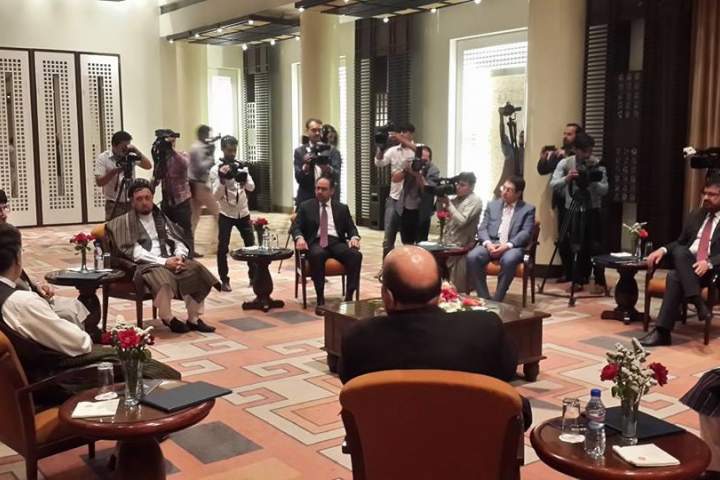
The Taliban have asked the Afghan political parties to come up with a team of negotiators amid escalated peace efforts to reach into a political settlement in Afghanistan, sources told Ariana News Tuesday.
Though, the Taliban repeatedly refuse to engage in direct talks with the Afghan government – including in their recent six days of talks with U.S. officials in Qatar – sources told Ariana News that the armed group has asked the Afghan political parties to introduce a negotiating team to begin face-to-face talks with their representatives.
“We respect the Taliban’s call. There should be a comprehensive intra-Afghan dialogue. No sides should be sidelined including the government,” said Hamayoun Jareer, a senior member of Hezb-e-Islami party led by Gulbuddin Hekmatyar.
The Taliban did not comment in this regard yet.
Many Afghan politicians believe that without initiating intra-Afghan dialogue, lasting peace cannot be ensured in the country.
“If the Taliban and the Afghan government don’t reach on a peace agreement, any kind of deal in this regard will lead into deepening the ongoing crisis in the country,” said Abdul Hadi Arghandiwal, the head of Hezb-e-Islami.
It comes as the U.S. envoy Zalmay Khalilzad who has recently engaged in six days of talks with the Taliban in Qatar said that his meeting with the Taliban in Doha was much better than previous meetings.
He said there is a moment of opportunity and he hopes Afghans seize this opportunity to put political differences aside and deal with “this moment positively and urgently.”
“We have the opportunity to avoid future tragedies, to bring the 40 years of war to an end, to a good end, and I urge everyone to rise to the occasion. I am hopeful that they will,” Khalilzad said.

Latest News
Belgium says it cannot prevent Afghan delegation from attending EU talks in Brussels
The foreign minister reiterated that he does not support inviting representatives of Afghanistan’s current administration and stressed that formal recognition of the authorities remains out of the question.
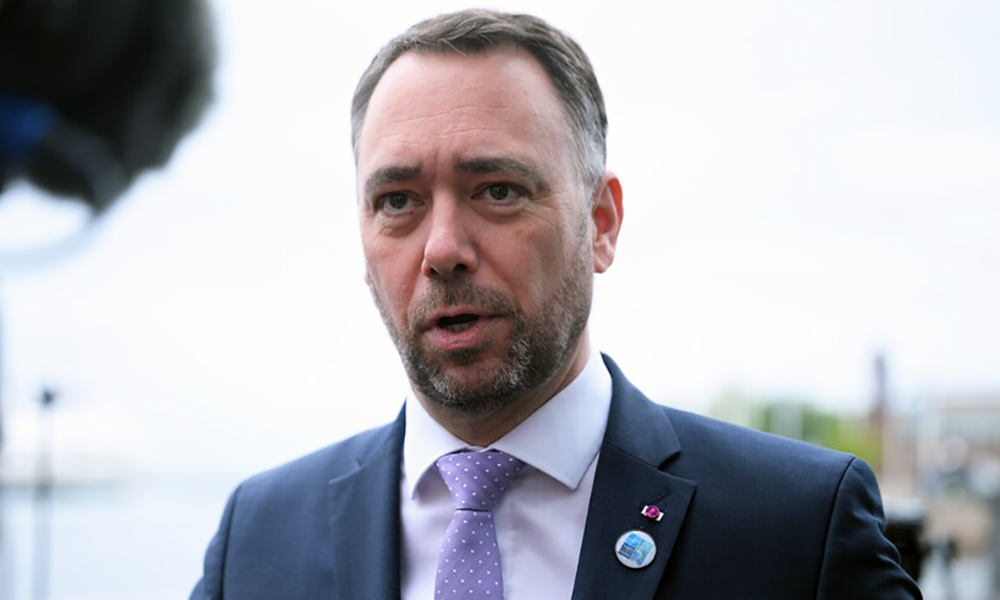
Belgium’s Foreign Minister, Maxime Prevot, has said his government cannot block an Afghan delegation from traveling to Brussels for European Union-hosted talks, despite his personal opposition to inviting representatives of Afghanistan’s current authorities.
Speaking before parliament’s foreign relations committee on Wednesday, Prevot responded to questions from lawmakers regarding visas issued to members of the Afghan delegation, according to Belgian news agency Belga.
The foreign minister reiterated that he does not support inviting representatives of Afghanistan’s current administration and stressed that formal recognition of the authorities remains out of the question.
However, Prevot noted that Belgium’s role as host to the European Union’s institutions limits its ability to prevent foreign delegations invited by EU bodies from attending meetings in Brussels.
He confirmed that Belgian authorities had processed visa applications submitted by the Afghan delegation and that all necessary security checks had been completed.
The delegation is expected to travel to Brussels for discussions requested by the European Commission, with talks expected to focus on the return of Afghan refugees and migration-related issues.
The meeting comes as European governments continue to engage with Afghanistan’s authorities on practical matters, while maintaining that such contacts do not amount to formal diplomatic recognition.
Latest News
OCHA warns Afghanistan still among countries with highest maternal mortality rates
Officials at Afghanistan’s Ministry of Public Health have previously stated that maternal mortality has declined in recent years.
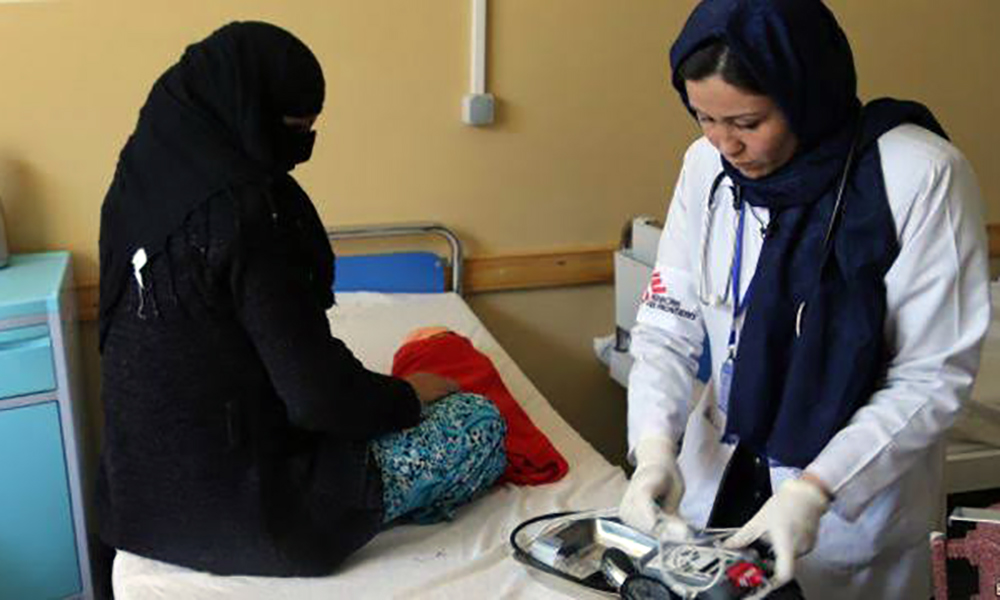
Afghanistan continues to face one of the world’s highest maternal mortality rates, according to the United Nations Office for the Coordination of Humanitarian Affairs (OCHA), which has warned that restrictions affecting women and girls could further hinder access to essential healthcare services.
Olga Cherevko, OCHA’s Head of Communications in Afghanistan, said in a post on X that frontline health workers are saving the lives of mothers and newborns every day despite significant challenges. She stressed that continued support for Afghanistan’s healthcare system is vital to maintaining life-saving maternal and newborn health services.
Cherevko also called on the international community to sustain humanitarian assistance, saying ongoing support is crucial to protecting the health and well-being of mothers and infants across the country.
The warning comes amid continued concerns over healthcare access and funding shortages, which aid organizations say could undermine progress in reducing preventable maternal and newborn deaths.
Meanwhile, officials at Afghanistan’s Ministry of Public Health have previously stated that maternal mortality has declined in recent years. The ministry has questioned figures published by some international organizations, arguing that such estimates do not reflect the reality on the ground and are not based on comprehensive national statistics.
Latest News
Kazakh president signs law establishing UN Regional Center for Central Asia and Afghanistan
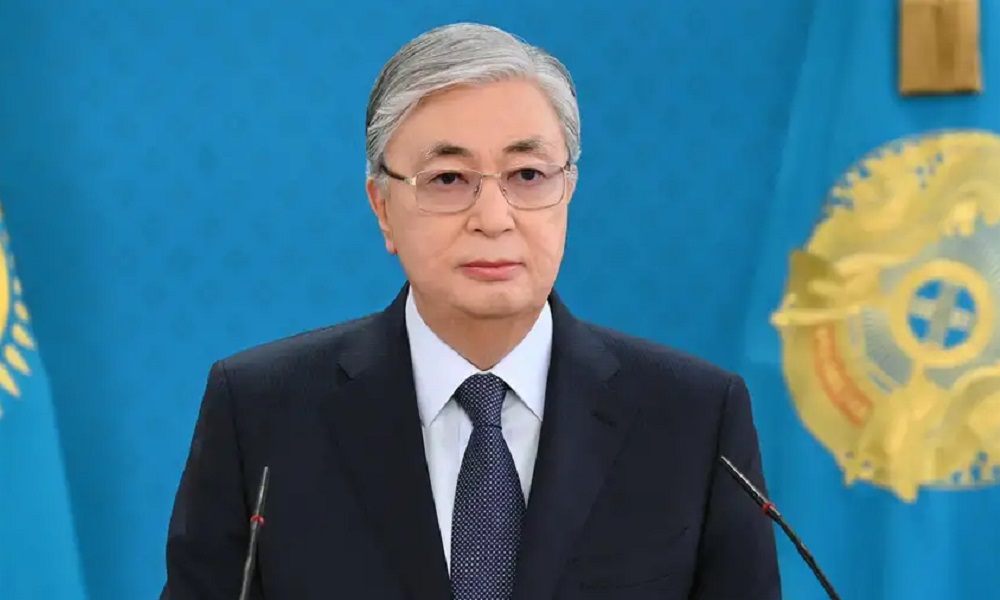
Kazakhstan has formally approved the establishment of a United Nations Regional Center for the Sustainable Development Goals (SDGs) for Central Asia and Afghanistan in Almaty, after President Kassym-Jomart Tokayev signed a ratification law on June 17.
The legislation ratifies a memorandum of understanding between the Kazakh government and the United Nations on the creation of the center, paving the way for the launch of the first UN regional SDG center of its kind.
According to Kazakhstan’s presidential press service, the center will serve as a platform for promoting sustainable development, regional cooperation, and the implementation of the UN’s development agenda across Central Asia and Afghanistan.
The initiative builds on a host country agreement signed by Tokayev and UN Secretary-General António Guterres in August 2025, underscoring Kazakhstan’s growing role in regional and international diplomacy.
Presenting the bill to the Senate on June 11, Senator Bibigul Zheksenbai described the center as strategically important for Kazakhstan, saying its location in Almaty would strengthen the city’s status as an international diplomatic and business hub.
She noted that the project would also expand opportunities for promoting Kazakhstan’s priorities within UN institutions, increase the participation of Kazakh professionals in international organizations, and contribute to the development of their expertise.
Under the memorandum, Kazakhstan has committed to providing a voluntary contribution of $3 million annually from 2025 through 2029. The funding will be used to equip the center with modern technology, communications systems, and IT infrastructure, as well as to cover operational expenses.
The establishment of the center is expected to enhance regional cooperation on sustainable development issues while supporting international efforts aimed at fostering economic growth, stability, and development in Central Asia and Afghanistan.


Belgium says it cannot prevent Afghan delegation from attending EU talks in Brussels

OCHA warns Afghanistan still among countries with highest maternal mortality rates

US-Iran peace talks called off, clouding prospects for lasting truce

Tahawol: Afghanistan–UN ongoing engagement discussed

Saar: Trump’s remarks on US military equipment in Afghanistan discussed

Norway’s Viking-inspired World Cup team photo goes viral

Afghanistan announce squad for India series

Afghanistan, Russia sign military cooperation agreement

Major pharma firms eye investment in Afghanistan

Afghanistan expands oil production as investment in Amu Darya fields grows
Tahawol: Afghanistan–UN ongoing engagement discussed
Saar: Trump’s remarks on US military equipment in Afghanistan discussed

Tahawol: Passage of 3 Iranian tankers through US naval blockade discussed

Saar: Discussion on outcome of G7 summit in France

Tahawol: New chapter in regional cooperation discussed
-
 Latest News4 days ago
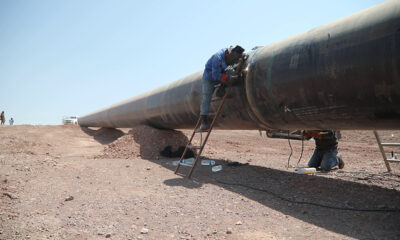
TAPI project advances in Afghanistan as 84kms of pipeline laid
-
 Latest News5 days ago
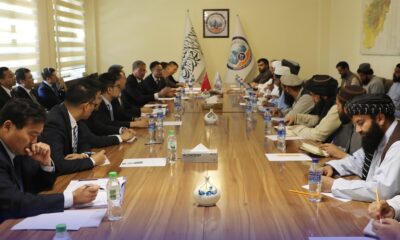
Afghan officials press Chinese delegation on Mes Aynak mining project
-

 International Sports4 days ago
World Cup 2026: Havertz, Ayari and Balogun lead Golden Boot standings
-
 Latest News5 days ago
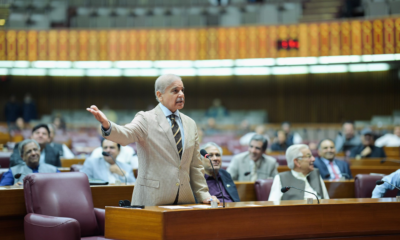
Shehbaz Sharif defends Durand Line fencing as essential for Pakistan’s security
-
 Regional4 days ago
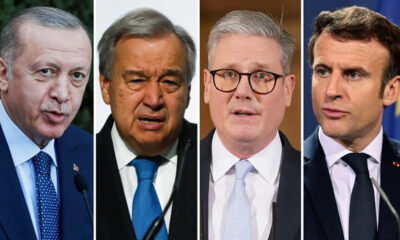
Global leaders react to announcement of US-Iran peace agreement
-
 Latest News3 days ago
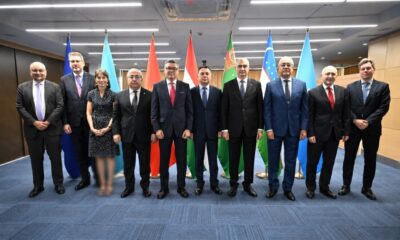
EU, Central Asian representatives meet in Kazakhstan to discuss Afghanistan cooperation
-
 Latest News4 days ago
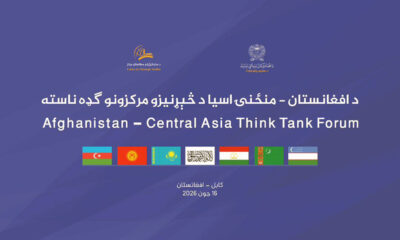
Afghanistan to host regional meeting of strategic research centers in Kabul
-
 Health5 days ago
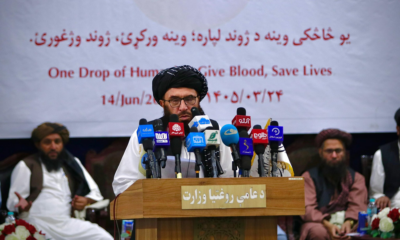
Health ministry urges greater public participation in blood donation