
Latest News
Trump launches large-scale strikes on Yemen’s Houthis, at least 31 killed
A Pentagon spokesperson said the Houthis have attacked U.S. warships 174 times and commercial vessels 145 times since 2023.


Yemen, March 15 (Reuters) – U.S. President Donald Trump launched large-scale military strikes against Yemen’s Iran-aligned Houthis on Saturday over the group’s attacks against Red Sea shipping, killing at least 31 people at the start of a campaign expected to last many days.
Trump also warned Iran, the Houthis’ main backer, that it needed to immediately halt support for the group. He said if Iran threatened the United States, “America will hold you fully accountable and, we won’t be nice about it!”
The unfolding strikes – which one U.S. official told Reuters might continue for weeks – represent the biggest U.S. military operation in the Middle East since Trump took office in January. It came as the United States ramped up sanctions pressure on Tehran while trying to bring it to the negotiating table over its nuclear program.
“To all Houthi terrorists, YOUR TIME IS UP, AND YOUR ATTACKS MUST STOP, STARTING TODAY. IF THEY DON’T, HELL WILL RAIN DOWN UPON YOU LIKE NOTHING YOU HAVE EVER SEEN BEFORE!” Trump posted on his Truth Social platform.
At least 31 were killed and 101 others injured in the U.S. strikes, mostly from women and children, Anees al-Asbahi, spokesperson for the Houthi-run health ministry said in an updated toll on Sunday.
The Houthis’ political bureau described the attacks as a “war crime.”
“Our Yemeni armed forces are fully prepared to respond to escalation with escalation,” it said in a statement.
Residents in Sanaa said the strikes hit a building in a Houthi stronghold.
“The explosions were violent and shook the neighborhood like an earthquake. They terrified our women and children,” one of the residents, who gave his name as Abdullah Yahia, told Reuters.
Strikes also targeted Houthi military sites in Yemen’s southwestern city of Taiz, two witnesses in the area said on Sunday.
Another strike on a power station in the town of Dahyan in Saada led to a power cut, Al-Masirah TV reported early on Sunday. Dahyan is where Abdul Malik al-Houthi, the enigmatic leader of the Houthis, often meets his visitors.
The Houthis, an armed movement that took control of most of Yemen over the past decade, have launched scores of attacks on ships off its coast since November 2023, disrupting global commerce and setting the U.S. military on a costly campaign to intercept missiles and drones that have burned through stocks of U.S. air defenses.
A Pentagon spokesperson said the Houthis have attacked U.S. warships 174 times and commercial vessels 145 times since 2023. The Houthis say the attacks are in solidarity with Palestinians over Israel’s war in Gaza with Hamas militants.
Iran’s other allies, Hamas and Hezbollah in Lebanon, have been severely weakened by Israel since the start of the Gaza conflict. Syria’s Bashar al-Assad, who was closely aligned with Tehran, was overthrown by rebels in December.
But throughout, Yemen’s Houthis have remained resilient and often on the offensive, sinking two vessels, seizing another and killing at least four seafarers in an offensive that disrupted global shipping, forcing firms to reroute to longer and more expensive journeys around southern Africa.
The U.S. administration of then-President Joe Biden had sought to degrade the Houthis’ ability to attack vessels off its coast but limited the U.S. actions.
U.S. officials, speaking on condition of anonymity, say Trump has authorized a more aggressive approach.
The strikes on Saturday were carried out in part by fighter aircraft from the Harry S. Truman aircraft carrier, which is in the Red Sea, officials said.
The U.S. military’s Central Command, which oversees troops in the Middle East, described Saturday’s strikes as the start of a large-scale operation across Yemen.
“Houthi attacks on American ships & aircraft (and our troops!) will not be tolerated; and Iran, their benefactor, is on notice,” Defense Secretary Pete Hegseth wrote on X. “Freedom of Navigation will be restored.”
Trump held out the prospect of far more devastating military action against Yemen.
“The Houthi attack on American vessels will not be tolerated. We will use overwhelming lethal force until we have achieved our objective,” Trump wrote.
Iran’s Foreign Minister Abbas Araqchi said the U.S. government had “no authority, or business, dictating Iranian foreign policy.”
“End support for Israeli genocide and terrorism. Stop killing of Yemeni people,” he said in an X post on early Sunday.
Iran’s mission to the United Nations did not immediately respond to a request for comment.
On Tuesday, the Houthis said they would resume attacks on Israeli ships passing through the Red Sea and Arabian Sea, the Bab al-Mandab Strait and the Gulf of Aden, ending a period of relative calm starting in January with the Gaza ceasefire.
The U.S. attacks came just days after a letter to Iran’s Supreme Leader Ayatollah Ali Khamenei from Trump was delivered, seeking talks over Iran’s nuclear program.
Khamenei on Wednesday rejected holding negotiations with the United States.
Still, Tehran is increasingly concerned that mounting public anger over economic hardships could erupt into mass protests, four Iranian officials told Reuters.
Last year, Israeli strikes on Iranian facilities, including missile factories and air defenses, in retaliation for Iranian missile and drone attacks, reduced Tehran’s conventional military capabilities, according to U.S. officials.
Iran has denied wanting to develop a nuclear weapon. However, it is dramatically accelerating the enrichment of uranium to up to 60% purity, close to the roughly 90% weapons-grade level, the U.N. nuclear watchdog – the International Atomic Energy Agency – has warned.
Western states say there is no need to enrich uranium to such a high level under any civilian program and that no other country has done so without producing nuclear bombs. Iran says its nuclear program is peaceful.
In an apparent sign of U.S. efforts to improve ties with Russia, Secretary of State Marco Rubio spoke on Saturday with Russian Foreign Minister Sergei Lavrov to inform him about the U.S. strikes in Yemen, the State Department said. Russia has relied on Iranian-provided weaponry in its war in Ukraine, including missiles and drones, U.S. and Ukrainian officials say.




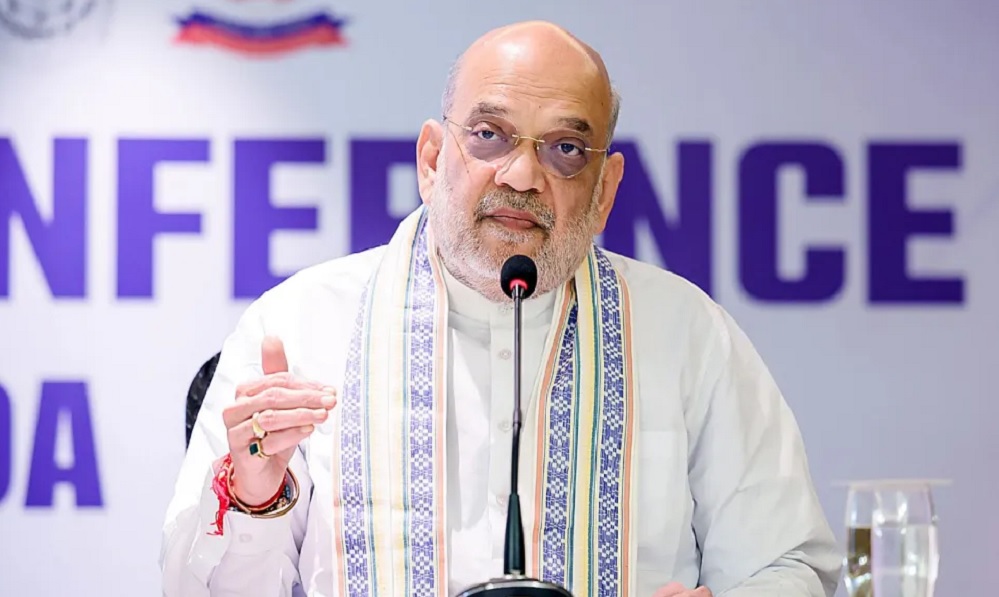
India says a fugitive drug-trafficking kingpin accused of smuggling heroin and methamphetamine from Afghanistan into India has been deported from Turkey and brought back to the country.
Indian Home Minister Amit Shah said on Saturday that Navpreet Singh, also known as “Nav,” was deported from Turkey after Indian authorities tracked him down.
Shah said Singh had obtained Turkish citizenship using the fake identity “Navab Virk” and continued to smuggle heroin and methamphetamine from Afghanistan to India.
The 34-year-old, a native of Punjab, had been wanted in several narcotics cases and was on the run for more than two years. Indian authorities allege that he headed an international narcotics syndicate whose operations in India were managed by his cousin, Prabhdeep Singh.
Prabhdeep Singh, also known as “Harry,” was extradited from Azerbaijan to India in May in connection with a case involving the seizure of 358 kilograms of heroin in 2021.
India submitted its request for Navpreet Singh’s extradition to Turkish authorities in 2023-24, according to officials familiar with the case.
Shah described Singh’s deportation as a “historic milestone” and said the Indian government was committed to dismantling drug-trafficking networks.
The Indian Home Ministry says 288 fugitives from 36 countries have been brought back to India between 2019 and August 2026 as part of efforts to pursue wanted criminals abroad.
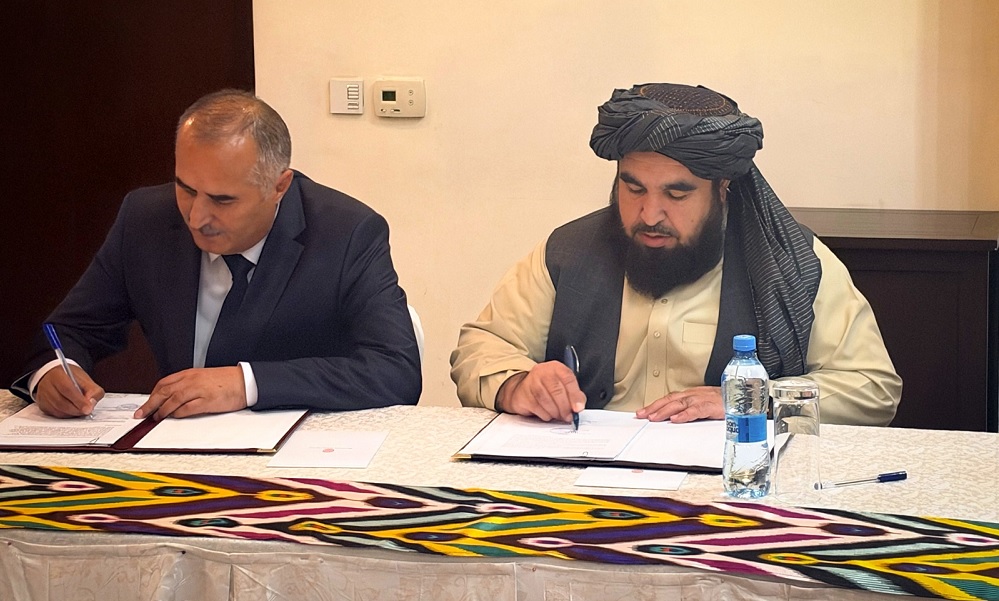
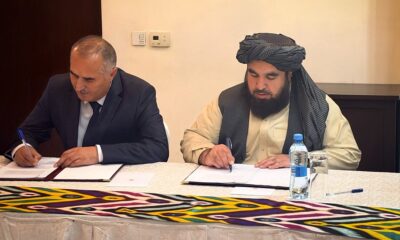
Da Afghanistan Breshna Sherkat (DABS) and Tajikistan-based Pamir Energy Company have signed a cooperation agreement to provide electricity to border districts of Badakhshan province.
The agreement was signed in Dushanbe, Tajikistan, by Abdul Haq Hamkar, Chief Executive Officer of DABS, and Amir Khan Rahim, President of Pamir Energy.
The agreement is aimed at expanding cooperation, improving electricity supply and creating the necessary conditions for providing power services to residents of Badakhshan’s border districts.
On the sidelines of the signing ceremony, the two sides also discussed extending a 110-kilovolt power transmission line to Faizabad, the provincial capital of Badakhshan.
Hamkar emphasized the importance of the project in strengthening the province’s electricity infrastructure.
Pamir Energy said it would share relevant proposals with DABS following technical assessments.
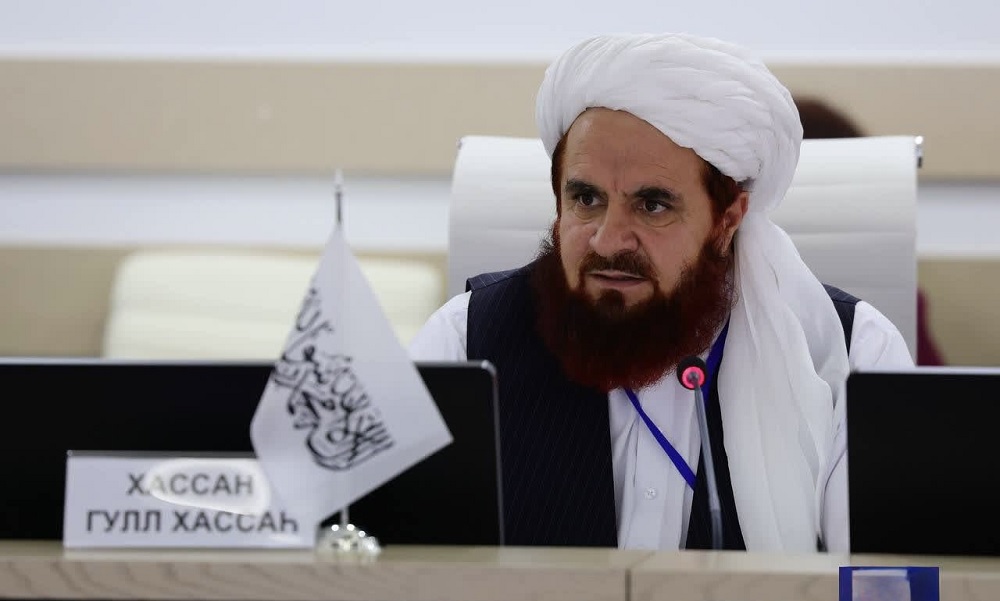
In his speech, Hassan emphasized the importance of mutual respect, dialogue, economic cooperation and joint development between Afghanistan and countries in the region.
On the sidelines of the forum, the Afghan ambassador met with Anton Borisovich Doronin, Minister of Economic Development of Russia’s Stavropol region. The two discussed ways to expand trade, investment and economic cooperation.
Hassan also met with a number of Afghan businessmen and representatives of the Afghan community in Russia, listening to their concerns and suggestions.
He assured them that the Afghan embassy would provide necessary support and cooperation in addressing their concerns.


India says drug kingpin linked to Afghan heroin, meth deported from Turkey

DABS, Tajikistan’s Pamir Energy sign agreement on electricity supply to Badakhshan

Afghan envoy in Moscow stresses economic cooperation with region

Russian embassy expresses concern over civilian casualties in Pakistani airstrikes on Afghanistan

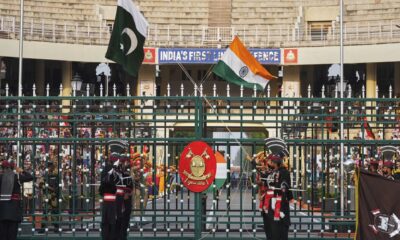
India, Pakistan summon top diplomats over border incident

Saudi energy group signs major Afghanistan deals covering gas exploration and pipeline plans

Khalilzad: Afghanistan ready to attract major investment

Messi returns to Inter Miami after Argentina retirement

Imam Abu Hanifa exhibition to draw exhibitors from more than 20 countries

Maryam Nawaz says Punjab faces greater security threats from neighbouring provinces

Tahawol: Escalation of internal political crisis in Pakistan discussed

Saar: Continuation of crisis in the Middle East discussed

Tawsia: Review of three key economic developments in Afghanistan

Tahawol: Pakistan’s airstrikes on civilians in Afghanistan discussed

Tahawol: Improvement in Afghanistan-China relations discussed
-
 Regional4 days ago
US imposes sanctions on 13 tied to Iran weapons procurement
-
 Latest News3 days ago
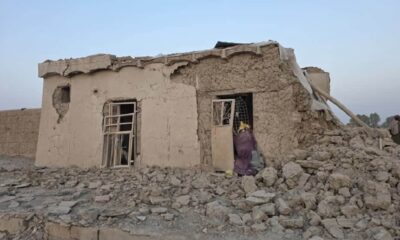
Four members of one family killed in Helmand in Pakistan airstrike
-

 Sport5 days ago
Istiqlal Kabul beat Khurasan Faryab 2-0 with late goals
-

 Sport5 days ago
Afghanistan Champions League: Toofan Herat and Aino Mina Kandahar draw 1-1
-
 Business5 days ago
Russia accuses West of double standards over deportation of Afghans
-

 Business5 days ago
Kazakhstan grain shipments to Afghanistan rise over 4-fold
-
 Business4 days ago
Afghanistan, Tajikistan seek stronger trade and investment ties
-
 Latest News3 days ago
Moscow to host 8th meeting of Afghanistan consultations on October 5