
Regional
Trump says ‘a whole civilisation will die tonight’; Qatar fears regional escalation
A senior Iranian source said on Tuesday afternoon that Tehran would not show flexibility as long as Washington continues to demand its “surrender under pressure.”

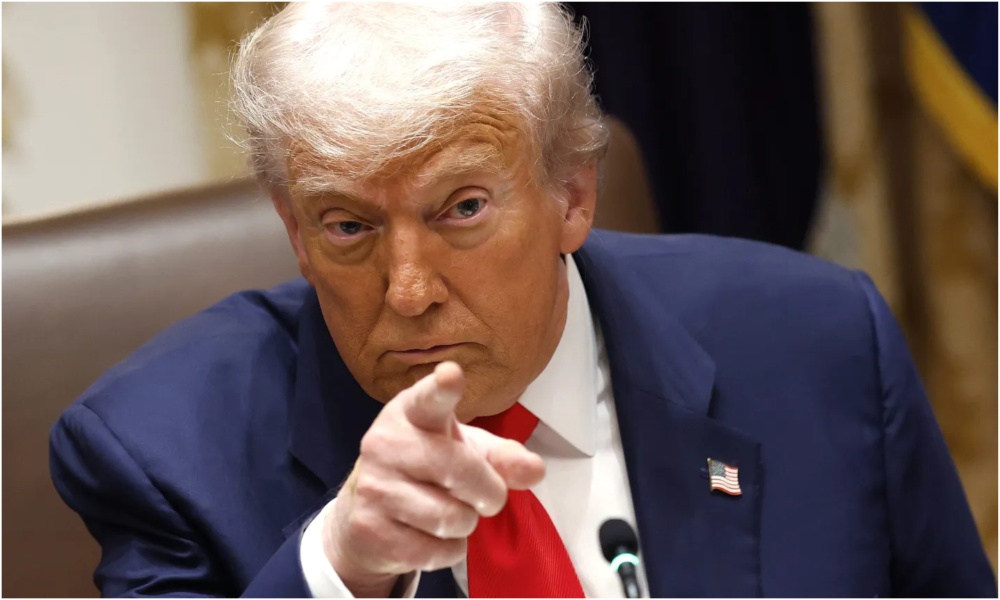
Tensions in the Middle East have escalated sharply after U.S. President Donald Trump on Tuesday warned that “a whole civilisation will die tonight” amid growing confrontation with Iran and deepening instability across the region.
In a series of statements posted on social media, Trump issued a direct ultimatum to Tehran, demanding that Iran reopen the strategically vital Strait of Hormuz or face severe consequences. “I don’t want that to happen, but it probably will… we will find out tonight,” he said, describing the moment as one of the most significant in modern history.
The warning follows earlier remarks in which Trump threatened that Iran would be “living in hell” if it failed to comply with U.S. demands.
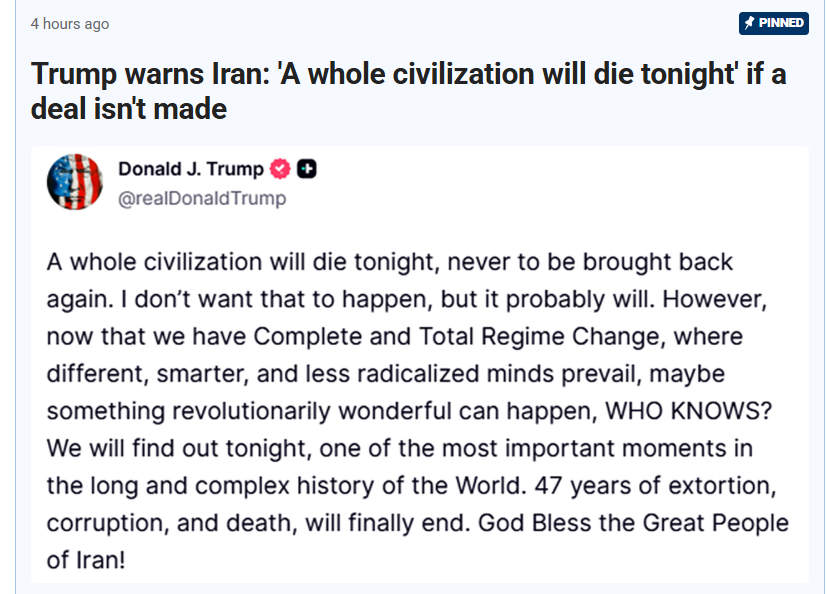
The Strait of Hormuz, a narrow but critical waterway, carries roughly 20 percent of the world’s oil and liquefied natural gas shipments, making it a focal point of global economic and security concerns.
A senior Iranian source meanwhile told Reuters on Tuesday afternoon that Tehran would not show flexibility as long as Washington continues to demand its “surrender under pressure.”
The source, who asked not to be named, said Qatar on Monday had conveyed Tehran’s message to the United States and regional countries that if Washington attacks Iran’s power plants, “the entire region and Saudi Arabia will fall into complete darkness with Iran’s retaliatory strikes”.
He said what the U.S. wants is the reopening of the Strait of Hormuz, and Iran will not open it in exchange for empty promises.
He also warned that “if the situation gets out of control, Iran’s allies will also close the Bab El-Mandeb Strait” – a crucial 30-km wide maritime chokepoint connecting the Red Sea to the Gulf of Aden and the Indian Ocean. It is located between the southwestern tip of the Arabian Peninsula (Yemen) and the Horn of Africa (Djibouti and Eritrea).
The escalating rhetoric comes against the backdrop of an intensifying conflict involving the United States, Israel, and Iran, which has been ongoing since late February. Iran has continued to launch attacks across the region, claiming to target U.S. interests, a justification widely rejected by the international community.
Meanwhile, Qatar has warned that the situation is approaching a dangerous tipping point. Speaking in Doha, Foreign Ministry spokesperson Majed Al-Ansari said the region is “very close” to an uncontrollable escalation.
“We have been warning since 2023 that escalation left unchecked will get us into a situation where it cannot be controlled,” Al-Ansari said, urging all parties to pursue an immediate resolution to the conflict. “There are no winners if this war continues,” he added.
Qatar has previously acted as a mediator between Washington and Tehran, though officials say it is not currently engaged in active negotiations. Nevertheless, Doha has expressed support for ongoing diplomatic efforts, including initiatives led by Pakistan, to de-escalate tensions.
U.S. Vice President JD Vance also issued a warning, stating that Washington still has additional measures at its disposal if Iran fails to respond to diplomatic overtures. He indicated that the United States expects a response from Tehran within hours.
Al-Ansari emphasized that any future agreement must involve regional stakeholders and include international guarantees, particularly regarding the Strait of Hormuz. “Hormuz is a natural strait, not a canal, and all countries in the region have the right to use it freely,” he said.
Analysts warn that continued escalation could have far-reaching consequences, not only for regional stability but also for global energy markets and international security, as fears grow that the conflict could spiral into a broader confrontation.





Regional
IRGC intelligence chief killed as wave of strikes continues against Iran’s leadership
The killings come against the backdrop of a rapidly intensifying conflict that began with large-scale strikes in late February and has since expanded across multiple fronts.
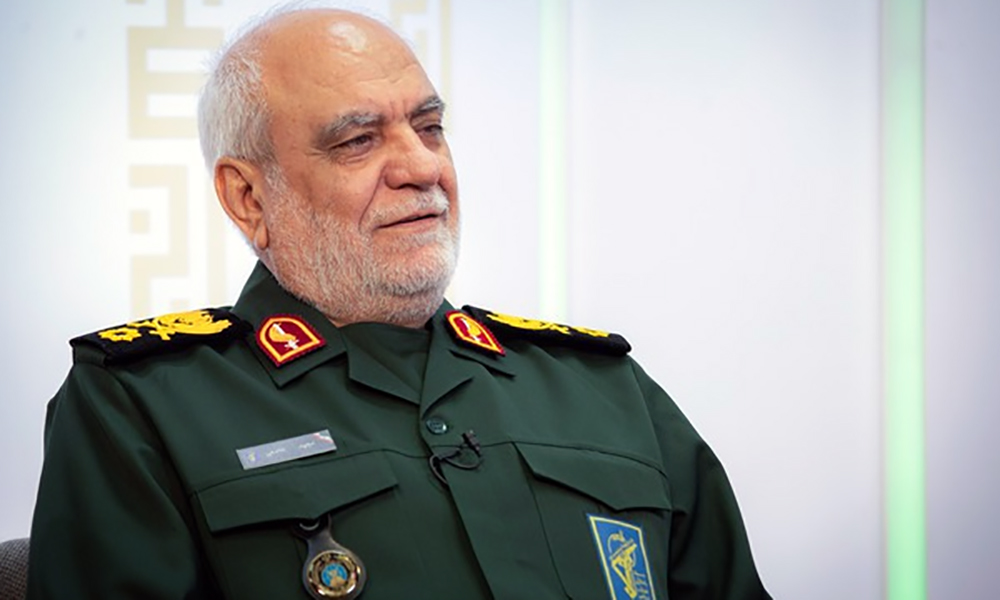
Iran has confirmed the death of Major General Majid Khademi, head of intelligence for the Islamic Revolutionary Guard Corps, in what analysts describe as the latest in a series of high-level killings targeting the country’s security leadership.
State media reported Khademi’s death on April 6 but did not immediately provide details on the circumstances. However, regional and Western sources say he was killed in a targeted strike, underscoring an intensifying campaign against senior Iranian officials amid escalating tensions in the Middle East.
Khademi had only recently taken up the role, replacing his predecessor Mohammad Kazemi, who was himself killed in a similar strike in 2025. The back-to-back deaths of intelligence chiefs highlight what observers see as a sustained effort to weaken Iran’s internal security and command structures.
Series of senior figures killed
Khademi’s killing comes amid a broader wave of assassinations and airstrikes that have removed several high-ranking Iranian figures in recent months.
Among those reported killed:
Ali Larijani, a senior political figure and former head of the Supreme National Security Council, reportedly died in an airstrike earlier this year; Gholamreza Soleimani, a key figure in Iran’s paramilitary Basij forces, was also reported killed in targeted operations; several other commanders linked to the IRGC and its external arm, the Quds Force, have been killed in strikes both inside Iran and across the region.
The killings come against the backdrop of a rapidly intensifying conflict that began with large-scale strikes in late February and has since expanded across multiple fronts. Military exchanges, including missile and drone attacks, have raised fears of a broader regional war.
Analysts say the apparent strategy of targeting senior leadership is aimed at disrupting Iran’s ability to coordinate military and intelligence operations. However, they warn it could also provoke further retaliation and deepen instability across an already volatile region.
Leadership strain and uncertainty
The loss of multiple senior figures in a short period has raised concerns about continuity within Iran’s leadership, particularly within the IRGC, which plays a central role in the country’s security and political system.
While Iranian authorities have moved quickly to appoint replacements, experts say repeated losses at the top level could affect decision-making and operational effectiveness, even as hardline factions appear to be consolidating influence.
For now, the killing of Khademi underscores the intensity of the ongoing conflict and highlights the growing risks facing Iran’s leadership, as the confrontation shows little sign of easing.
Regional
Iran claims it shot down US C-130 support aircraft in Isfahan
State-run Press TV shared images on Telegram purportedly showing wreckage from the downed plane.
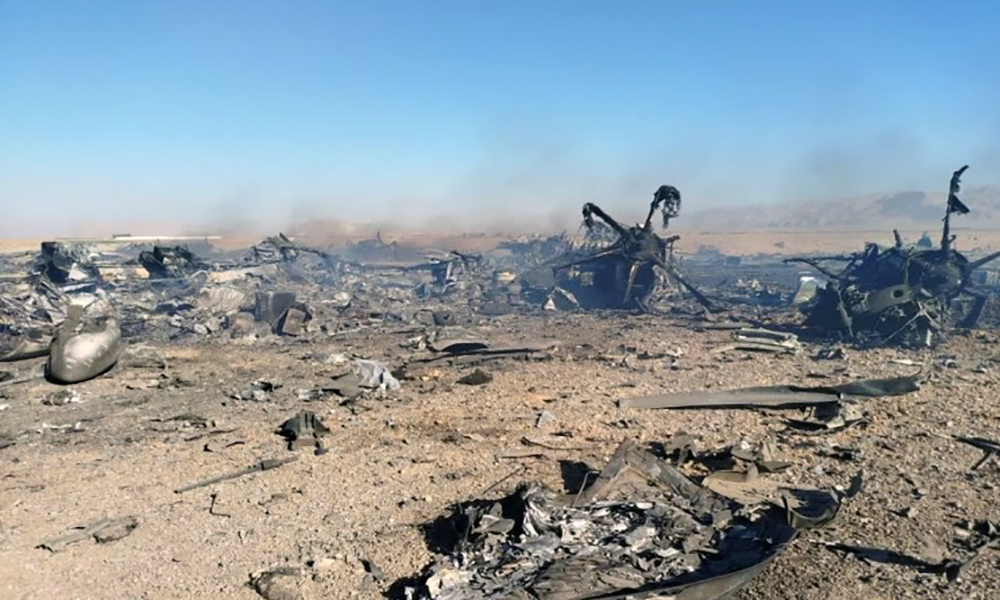
Iran on Sunday claimed that it successfully shot down a US C-130 support aircraft in the southern region of Isfahan. According to the semi-official Tasnim News Agency, the plane was destroyed “by heavy fire from a police special forces unit.”
The Islamic Revolutionary Guard Corps (IRGC) stated in a report carried by the state news agency IRNA that “joint operations involving the Aerospace Force, ground units, popular and Basij forces, law enforcement, and the Army successfully destroyed the enemy aircraft.”
State-run Press TV shared images on Telegram purportedly showing wreckage from the downed plane.
Some initial reports circulating on US social media claimed that, while rescuing the second crew member of an F-15 fighter jet previously downed over Iran, US forces may have destroyed their own plane to prevent it from falling into Iranian hands.
No official response has yet been provided by the United States regarding the Iranian claims.
The incident comes amid escalating regional tensions following the US and Israel’s joint offensive on Iran on February 28, which has resulted in more than 1,340 fatalities, including then-Supreme Leader Ali Khamenei.
In retaliation, Iran has launched drone and missile strikes targeting Israel, as well as US-affiliated locations in Jordan, Iraq, and Gulf countries. Tehran has also restricted the movement of ships through the strategic Strait of Hormuz.
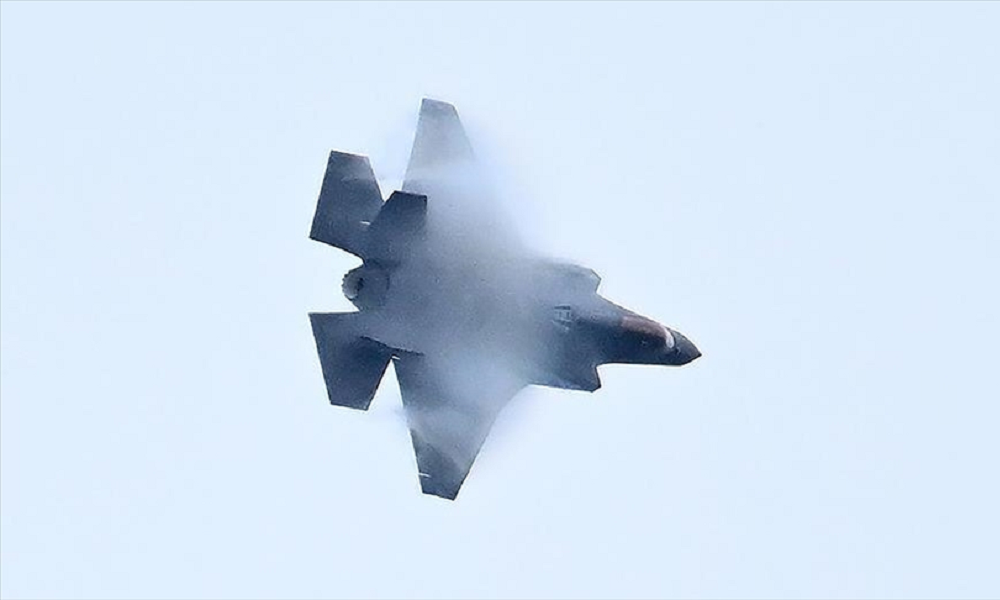
Iran’s Islamic Revolutionary Guards Corps (IRGC) claimed on Friday that it shot down a US F-35 fighter jet in central parts of the country, Iranian media reported.
Due to the destruction of the aircraft, the fate of the pilot remains unknown, the semi-official Tasnim News Agency reported, citing a statement by the IRGC.
This marks the second time Iran claimed it shot down a US F-35 amid the ongoing escalation since Feb. 28.
The US has not responded to the report as yet.
Iran had previously announced on March 19 that it had shot down a US F-35, a claim rejected by Washington.
Tehran also claimed on Thursday to have downed an Israeli F-16 jet.
Tensions in the region have remained high following a wave of US and Israeli airstrikes launched on February 28. Iranian sources say the strikes have resulted in more than 1,300 deaths, including senior leadership figures.
In response, Iran has carried out drone and missile attacks targeting Israel as well as locations in Jordan, Iraq, and several Gulf states hosting US military facilities. The ongoing exchanges have led to casualties, infrastructure damage, and disruptions to regional air traffic and global markets.


China seeking to build trust between Afghanistan and Pakistan

Trump says ‘a whole civilisation will die tonight’; Qatar fears regional escalation

Afghanistan U-17s draw 0-0 against Turkmenistan in CAFA campaign

Japan and UNDP launch $2.35 million livelihoods initiative in Afghanistan

Afghan Public Works Minister and Iran envoy discuss economic, trade ties in Kabul

IEA Supreme Leader issues Eid-ul-Fitr message urging unity and support for Islamic system

14 Pakistani soldiers killed after military post falls along Durand line: MoD

Afghan airstrikes target Pakistani military sites in retaliation for air attacks

IEA supreme leader orders replacement of foreign terminology in official documents

Turkmenistan, Afghanistan discuss steps to speed up land acquisition for TAPI pipeline

Tahawol: Continuation of Middle East crisis discussed

Saar: Ongoing Kabul-Islamabad talks in China discussed

Tawsia: This week’s key economic developments in Afghanistan discussed

Tahawol: Start of talks between Kabul-Islamabad in China discussed

Saar: Ongoing US and Israeli attacks on Iran discussed
-
 Latest News2 days ago
IEA supreme leader orders replacement of foreign terminology in official documents
-
 Latest News2 days ago
Afghanistan hosts inaugural Afghanistan–Central Asia Consultative Dialogue to strengthen regional cooperation
-
 Business4 days ago
Tripartite agreement to launch new Russia–Turkmenistan–Afghanistan transit corridor
-
 Latest News4 days ago
China says Afghanistan–Pakistan peace talks show progress
-

 Business3 days ago
Kazakhstan eyes rare metals mining projects in Afghanistan and Rwanda
-
 Regional4 days ago
Iran claims it shot down US F-35 jet
-
 Regional4 days ago
Kuwait’s Mina al-Ahmadi oil refinery hit by drones, fires break out
-
 World4 days ago
US Army chief of staff fired by Hegseth, sources say