
Latest News
Turkmenistan highlights TAPI pipeline as key driver of regional integration
“TAPI is not just an energy route, but a corridor of peace and cooperation, creating a sustainable foundation for economic growth and good neighborliness,” he said.

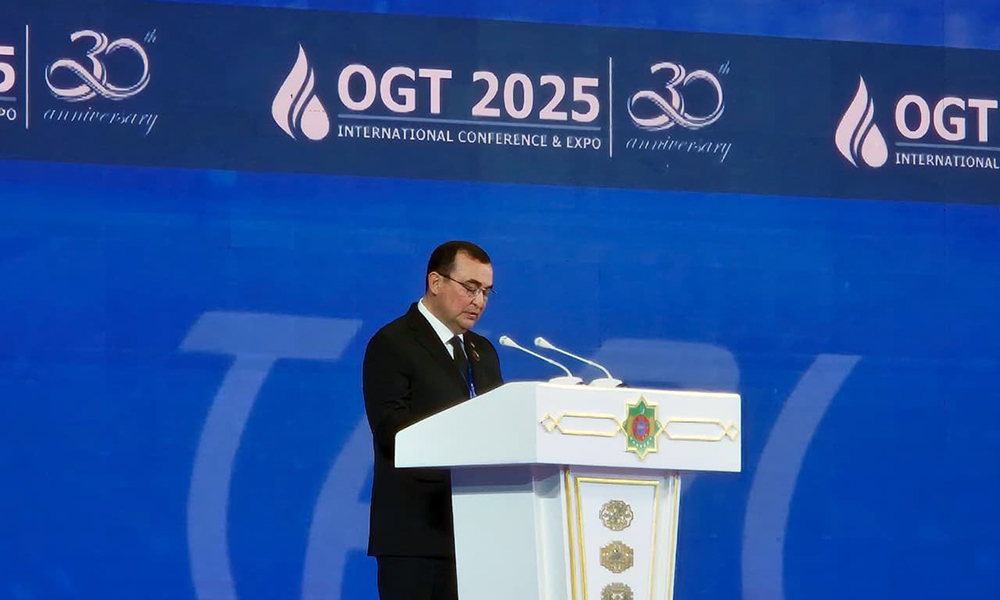
Turkmenistan has reaffirmed its commitment to the Turkmenistan–Afghanistan–Pakistan–India (TAPI) gas pipeline, calling it a cornerstone of regional economic cooperation and a model for energy-driven connectivity across Asia.
Speaking at the Oil and Gas of Turkmenistan – 2025 international conference in Ashgabat, State Minister and Chairman of the State Concern Turkmengas, Maksat Babayev, said the country continues to pursue a long-term strategy of diversifying export routes, with TAPI serving as its flagship initiative.
Babayev described the pipeline as a “symbol of integration and shared prosperity,” designed to transport up to 33 billion cubic meters (bcm) of natural gas annually from Turkmenistan’s massive Galkynysh field to energy-hungry markets in Afghanistan, Pakistan, and India.
“TAPI is not just an energy route, but a corridor of peace and cooperation, creating a sustainable foundation for economic growth and good neighborliness,” he said.
According to Babayev, Turkmenistan has already completed its section of the pipeline, and construction has begun on the Serhetabat–Herat segment inside Afghanistan. Work is progressing in coordination with the Islamic Emirate of Afghanistan (IEA), which has pledged security guarantees for the project.
He added that the fourth phase of the Galkynysh field—one of the world’s largest natural gas reserves—will commence early next year, providing new export volumes for TAPI and other international routes.
A regional project with global significance
First proposed in the 1990s, the TAPI project has gained renewed momentum in recent years as regional governments seek to enhance economic ties and energy security. The 1,800-kilometre pipeline will begin in Mary, Turkmenistan, cross Afghanistan’s Herat, Farah, Helmand, and Kandahar provinces, continue through Quetta and Multan in Pakistan, and terminate in Fazilka, India, near the border with Pakistan.
Once operational, the project will enable Turkmenistan to diversify its gas exports beyond China — currently its primary buyer — while providing Afghanistan with transit fees, energy supplies, and new economic opportunities. For Pakistan and India, TAPI offers a much-needed boost to energy access amid growing domestic demand.
The project is being developed by TAPI Pipeline Company Limited (TPCL), a consortium led by Turkmengas with participation from the state-owned companies of Afghanistan, Pakistan, and India.
Despite facing delays due to security and financing challenges, the TAPI pipeline remains one of the most ambitious infrastructure projects in the region — one that Turkmenistan views as central to its broader vision of transforming the country into a hub for energy cooperation between Central and South Asia.
“Through TAPI, we are not only exporting gas, but also building trust, partnership, and lasting peace in our shared region,” Babayev concluded.





Latest News
Qatar welcomes temporary Eid truce between Afghanistan and Pakistan
The Ministry of Foreign Affairs of Qatar said the temporary truce is a constructive gesture that could help de-escalate the situation and promote calm along the border.
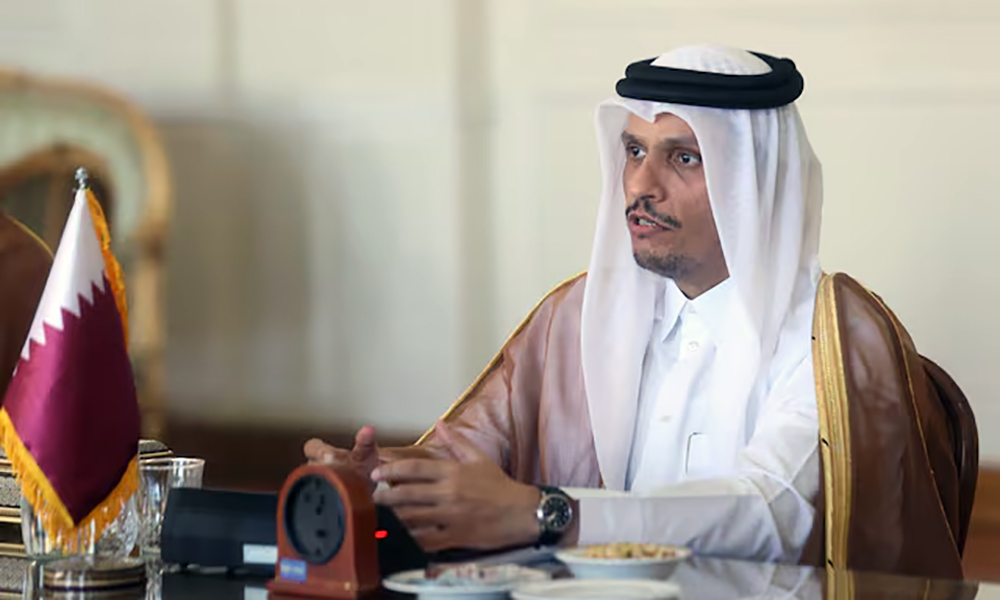
Qatar has welcomed the announcement of a temporary ceasefire between Afghanistan and Pakistan on the occasion of Eid al-Fitr, describing the move as a positive step toward easing tensions between the two neighbors.
In a statement issued on March 18 in Doha, the Ministry of Foreign Affairs of Qatar said the temporary truce is a constructive gesture that could help de-escalate the situation and promote calm along the border.
The ministry expressed hope that the short-term ceasefire would pave the way for a sustainable and lasting agreement that protects civilian lives and contributes to long-term security and stability in the region.
Qatar also commended both sides for responding to calls by Qatar, Saudi Arabia, and Turkey to implement the Eid truce, emphasizing that dialogue and peaceful solutions remain the best approach for resolving disputes.
The Qatari Foreign Ministry further reiterated Doha’s commitment to continuing diplomatic efforts, in coordination with regional and international partners, to support de-escalation and strengthen peace and stability in the region.
The spokesman for the Islamic Emirate of Afghanistan announced Wednesday that the security and defense forces of the Islamic Emirate are announcing a temporary halt to the “Rad-ul Zulm” defense operations on the occasion of Eid al-Fitr and at the request of Saudi Arabia, Turkey, and Qatar.
Zabihullah Mujahid wrote in X: “While appreciating the goodwill of friendly and mediating countries, the Islamic Emirate notes that maintaining the national security of Afghanistan, the privacy and safety of Afghans’ lives is its national and religious duty, and will respond courageously to any aggression if threatened.”
This is while Attaullah Tarar, Pakistan’s Minister of Information and Broadcasting, has also announced that the country has temporarily halted its attacks on Afghanistan on the occasion of Eid al-Fitr at the request of Saudi Arabia, Qatar, and Turkey.
Latest News
Peshawar High Court grants bail to 68 detained Afghan nationals, including minors
The presence of children in custody was also a key factor, with the court’s decision reflecting humanitarian considerations alongside legal arguments.
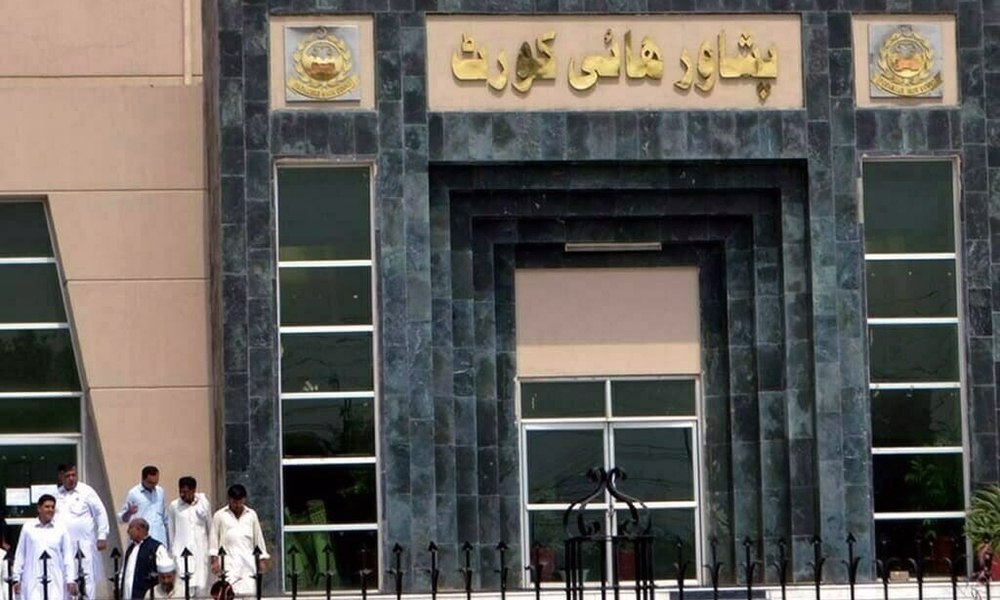
The Peshawar High Court has granted bail to 68 Afghan nationals, including children under 18 and holders of Pakistan Origin Cards (POCs), ordering their release from detention.
The group had petitioned the court for relief after being held by authorities. In its ruling, the court approved bail for all applicants, with the inclusion of minors and documented individuals drawing particular attention to the case.
Among those released were Afghan nationals holding Pakistan Origin Cards—documents issued to people of Pakistani origin living abroad or those with established ties to the country. Their detention raised questions about the treatment and legal status of individuals with recognised documentation.
The presence of children in custody was also a key factor, with the court’s decision reflecting humanitarian considerations alongside legal arguments.
Pakistan hosts a large population of Afghan nationals, many of whom have lived in the country for decades. Their legal status has remained a complex and often contested issue, particularly amid recent crackdowns and repatriation efforts.
The ruling is expected to influence similar cases, especially those involving documented Afghan nationals and minors, as courts continue to weigh legal and humanitarian concerns.

The spokesperson of the Islamic Emirate of Afghanistan Zabiullah Mujahid announced on Wednesday that the security and defense forces of the Islamic Emirate will temporarily halt the “Rad al-Zulm” defensive operation on the occasion of Eid al-Fitr and also at the request of Saudi Arabia, Turkey, and Qatar.
Zabiullah Mujahid said in a post on X: “The Islamic Emirate, while appreciating the goodwill of friendly and mediating countries, emphasizes that maintaining Afghanistan’s national security, territorial integrity, and the safety of Afghan lives is its national and religious duty, and it will bravely respond to any aggression in case of a threat.”
Meanwhile, Ataullah Tarar, Pakistan’s Minister of Information and Broadcasting, also announced that Pakistan has temporarily suspended its attacks on Afghanistan for Eid al-Fitr at the request of Saudi Arabia, Qatar, and Turkey.


US weighs troop deployment as Iran war enters new phase

Qatar welcomes temporary Eid truce between Afghanistan and Pakistan

Peshawar High Court grants bail to 68 detained Afghan nationals, including minors

Tahawol: Global reactions to Pakistan’s recent attacks discussed

IEA announces temporary pause in defensive operations against Pakistan for Eid

Pakistani military jet downed in Afghanistan’s Jalalabad, pilot captured alive

Afghan Air Force conducts airstrikes in Islamabad, other cities

IEA releases three Pakistani soldiers to mark Ramadan

Afghanistan’s Chief of Armed Forces underscores readiness and equipment for national defense

Afghanistan welcomes investment and technology partnerships with India
Tahawol: Global reactions to Pakistan’s recent attacks discussed

Saar: Consequences of Pakistani airstrikes on Afghans discussed

Tahawol: Pakistan’s new attacks on Kabul hospital discussed

Saar: Pakistani military’s airstrike on Kabul hospital discussed

Tahawol: China’s efforts for Afghanistan-Pakistan talks
-
 Latest News3 days ago
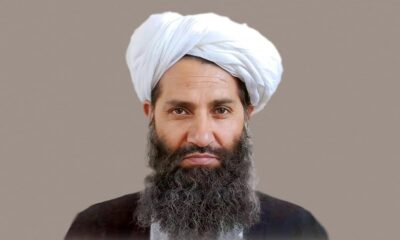
IEA Supreme Leader issues Eid-ul-Fitr message urging unity and support for Islamic system
-
 Latest News5 days ago
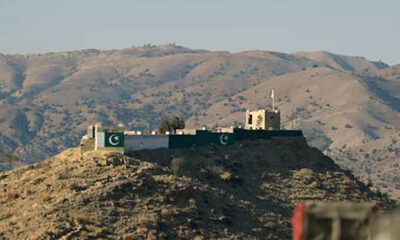
14 Pakistani soldiers killed after military post falls along Durand line: MoD
-

 Latest News4 days ago
Regional criticism grows amid Pakistan strikes inside Afghanistan
-
 Latest News4 days ago
Afghan airstrike targets a military camp in South Waziristan
-

 Business3 days ago
Turkmenistan, Afghanistan discuss steps to speed up land acquisition for TAPI pipeline
-

 Sport4 days ago
IPL 2026 kicks off in under two weeks; Afghan players set to shine
-

 Business4 days ago
Afghanistan expands exports through Lapis Lazuli Corridor
-

 Latest News5 days ago
India condemns Pakistani airstrikes on Afghanistan