
Latest News
UN chief urges action to prevent economic collapse in Afghanistan

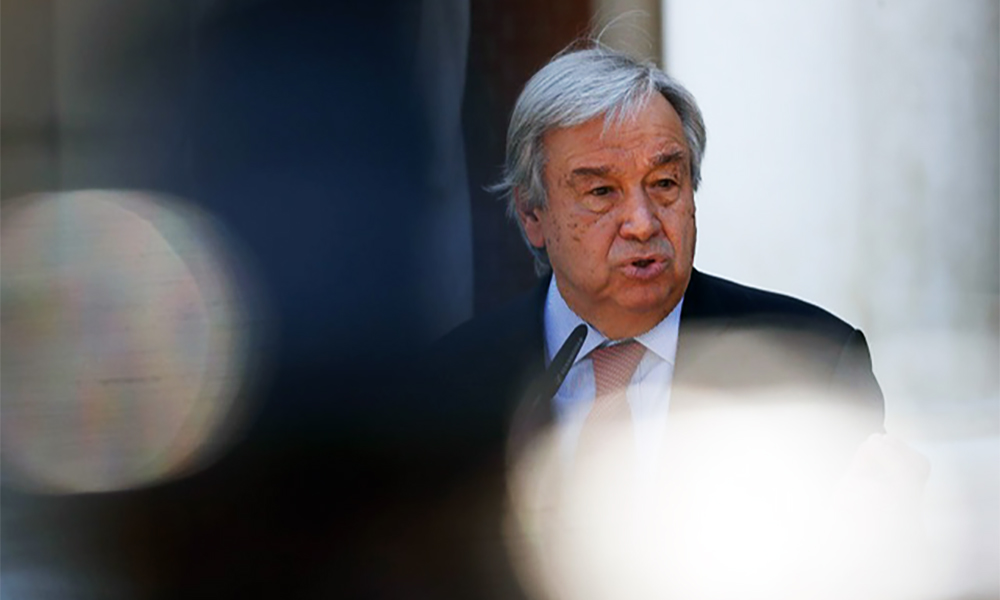
UN Secretary General Antonio Guterres on Saturday called on the international community to urgently inject some cash into Afghanistan, saying it would be disastrous if the country’s economy collapsed.
In an interview with Al Jazeera, Guterres said currently “millions and millions of people (are) on the verge of dying because of hunger”.
Should the economy collapse, “it would be a total disaster; it would be lots of people dying and I believe a massive outflow into the neighboring countries with horrible consequences for the stability of those countries, so I think it’s very important to avoid that collapse.
“I’ve been saying that humanitarian aid is essential but at the same time it’s necessary, and of course there are ways to do so even in respect for international law, it’s essential to inject some cash to allow the Afghan economy to breathe and to avoid the kind of collapse that would have devastating consequences,” he said.
Guterres’ statement comes amid a cash flow crisis in Afghanistan. Essentially a dollarized nation under the former government, weekly shipments of US dollars stopped the day the Islamic Emirate took over Kabul – on August 15.
Since then, severe weekly limits have been imposed by banks on cash withdrawals for individuals, foreign reserves have been frozen, and the International Monetary Fund and World Bank also stopped loans.
Guterres said: “It’s our duty to do everything possible to support the Afghan people and to help create the conditions for those concerns that everybody has about terrorism, about human rights, about inclusivity, to materialize.”
He also stated that the “situation is unpredictable” but added the UN is working with the Islamic Emirate to allow for humanitarian aid to be distributed to the people.
He said that is would be a “disaster if terrorist organizations could operate again from Afghanistan.”
Guterres also noted that it was important for the Islamic Emirate to “understand the importance of an inclusive government that takes into account the diversity of the different groups [in the country]” and to respect basic human rights.
Asked about what he thought went wrong in Afghanistan, Guterres said the first problem was the “idea that the Afghan people can be ruled from outside.”
He said the British and the former Soviet Union had both tried to do this in the past, but both had failed.
The Afghan people are “very proud and they have lots of problems among themselves but they have even more problems with the idea that they can be dominated from the outside”, he said.
He also said he felt there had been too much “military action and not enough support to building institutions.”
According to him, the former Afghan leaders were divided – singling out the two past elections that had both been contested.
He said the election system adopted for Afghanistan “that was a unitary system was not the most adequate for a country that is so decentralized”.
“The truth is that there was a huge dysfunctionality in the government and we have seen it in relations of the president; and the international community looked at it without any capacity to really allow things to improve and so all these fragilities accumulated and in the end what we had, and we had it in a very chaotic way that nobody was forecasting.
“I don’t know what’s going to happen; as I said the situation is unpredictable but i think that there is at least a part of the leadership of the Taliban (Islamic Emirate) that would like to have Afghanistan as a country recognized by the international community and would be ready to pay a price for that,” he said.

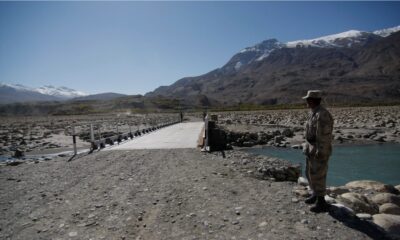

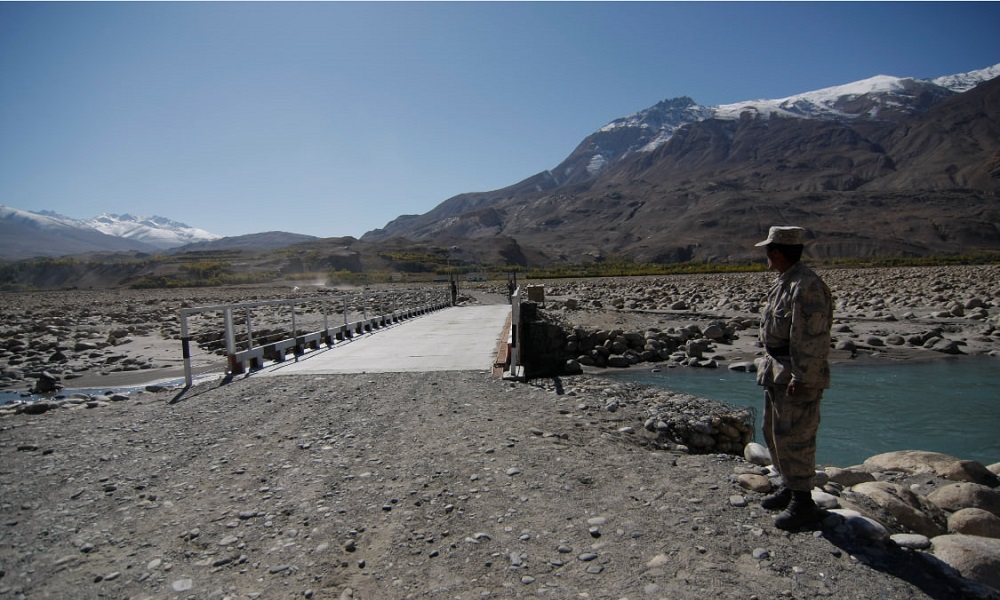
Tajikistan has sent a protest note to the Afghan authorities following an alleged violation of its airspace, damage to residential buildings and the death of a civilian in Darvoz district of the Gorno-Badakhshan Autonomous Region (GBAO), the Tajik Foreign Ministry said on Friday.
Tajik media outlet Asia-Plus, citing the Information and Press Department of Tajikistan’s Foreign Ministry, reported that armed clashes in recent days in Afghanistan’s Badakhshan province, particularly in districts bordering Tajikistan’s Darvoz district, have posed a threat to the security of Tajik border areas and resulted in violations of international law.
The ministry said Tajikistan’s airspace was violated during the fighting, several homes were damaged and one civilian was killed in Darvoz district.
In response, Tajikistan delivered a formal protest note to the Afghan side, expressing strong concern over the incident and calling on the Afghan authorities to respect the inviolability of Tajikistan’s state border.
Dushanbe also demanded that effective measures be taken to prevent similar incidents from occurring again.
An official source in the Darvoz district administration told Asia-Plus that the victim was identified as 21-year-old Yosuman Yatimzoda, a resident of Dashtak village.
She leaves behind a young child. According to sources, Yatimzoda was also pregnant.
The incident occurred at around 6:40 p.m. on August 13. Yatimzoda was at home doing household chores when a bullet entered through a window and struck her in the liver area.
“The woman was taken to the district central hospital, but she died on the way,” an Asia-Plus source said.
However, the Islamic Emirate of Afghanistan (IEA) has not yet commented on the report.
Latest News
IEA rejects Pakistan’s concerns, says Afghan soil will not be used against any country
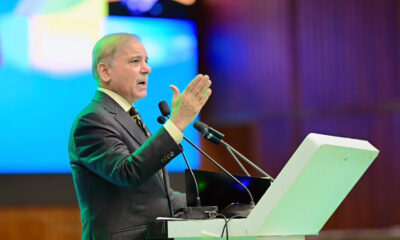
His remarks came after Sharif said Pakistan wants peace and stability in Afghanistan but considers the use of Afghan soil for terrorist activities “unacceptable.”

The Islamic Emirate has rejected concerns raised by Pakistani Prime Minister Shehbaz Sharif over the alleged use of Afghan territory for militant activities, reiterating that Afghanistan’s soil will not be used against any country.
Islamic Emirate spokesman Zabihullah Mujahid said Islamabad should raise its concerns directly with Kabul rather than making accusations, so that necessary measures can be taken.
Mujahid also said Afghanistan cannot prevent insecurity and internal challenges inside Pakistan, urging Islamabad to address its own domestic problems.
Calling Pakistan a “brotherly country,” Mujahid said instability in Pakistan is not in Afghanistan’s interest. He also called for greater trust among regional countries, particularly neighboring states.
His remarks came after Sharif said Pakistan wants peace and stability in Afghanistan but considers the use of Afghan soil for terrorist activities “unacceptable.”
Sharif urged the Afghan leadership to take immediate steps to prevent Afghanistan from becoming a safe haven for militants.
Latest News
FM Muttaqi says Islamic Emirate sees no need for talks with opponents
He claimed that Afghans are satisfied with the current government and that the Islamic Emirate enjoys broad support across the country.

Afghanistan’s Foreign Minister Amir Khan Muttaqi says the Islamic Emirate no longer sees a need for dialogue or negotiations with its opponents, arguing that the country’s conflict and political crisis have ended.
In an interview with the BBC, Muttaqi discussed Afghanistan’s domestic situation, foreign relations and girls’ education.
He claimed that Afghans are satisfied with the current government and that the Islamic Emirate enjoys broad support across the country. Muttaqi also said Afghanistan maintains positive relations with many countries, with more than 40 embassies and consulates currently operating in the country.
On the structure of government, Muttaqi described the Islamic Emirate as inclusive, saying women continue to work in some government institutions.
Addressing girls’ education, he said education for girls above the sixth grade remains suspended “until further notice,” while girls continue to receive education in religious schools.
Muttaqi also criticized Iran for inviting Afghan opposition figures to attend the funeral ceremony of Iran’s Supreme Leader Ayatollah Ali Khamenei. He said Tehran “did not do the right thing” and that the Islamic Emirate had formally conveyed its objection to the Iranian authorities.


Tajikistan sends protest note to Afghanistan after airspace violation, civilian death

IEA rejects Pakistan’s concerns, says Afghan soil will not be used against any country

FM Muttaqi says Islamic Emirate sees no need for talks with opponents

Pakistan wants peace and stability in Afghanistan: Shehbaz Sharif

US aid cuts in Afghanistan linked to preventable deaths, report says

Pakistan’s governance system has ‘collapsed’: Mohsin Naqvi

Spain sweep FIFA World Cup player awards after historic triumph

Iran, Afghanistan and Tajikistan discuss expanding regional transit cooperation

Afghanistan temporarily eases fuel import standards to help curb rising prices

First Chinese transit shipment arrives in Herat via Iran’s railway corridor

Tahawol: Trade cooperation between Afghanistan and Iran discussed

Saar: Discussion on Islamic Emirate’s five-year journey

Tahawol: Afghanistan’s future in the global press discussed

Saar: The Islamic Emirate’s five-year rule discussed

Tahawol: Hamid Karzai’s call for Afghan reconciliation discussed
-
 Sport4 days ago
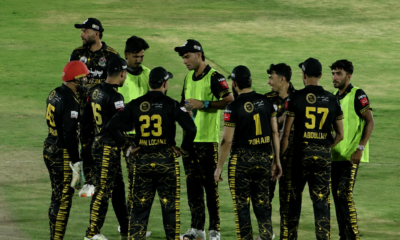
Abasin Defenders stun Kabul Zalmi in Kabul Premier League
-

 Sport4 days ago
Kabul Premier League gets underway with high-scoring opener
-
 Latest News5 days ago
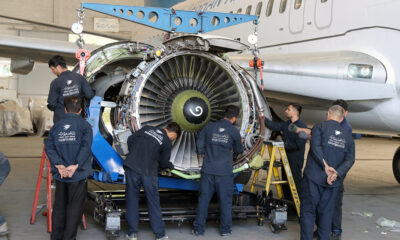
Ariana Airlines brings $2.3 million Boeing 737 engine from US to Kabul
-

 Regional4 days ago
Iran ties Hormuz reopening to US concessions on several demands
-

 Sport4 days ago
Afghanistan beat Ireland by 3 wickets in third ODI
-
 Latest News4 days ago
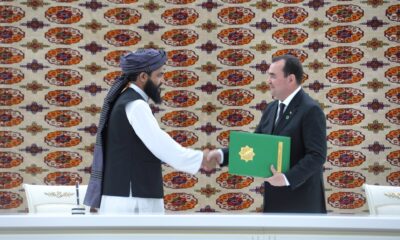
MoU on TAPI gas purchase signed between Afghan Gas and Türkmengaz
-
 Sport3 days ago
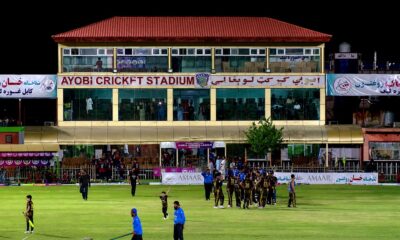
Abasin Defenders beat Shamshad Eagles by four wickets in Kabul Premier League
-
 Latest News23 hours ago
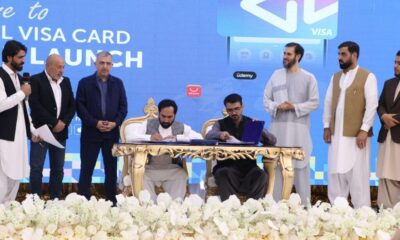
HesabPay unveils new visa card and digital payment app in Kabul