
Regional
UN sanctions reimposed on Iran a decade after nuclear deal
The UK, France, and Germany triggered the so-called “snapback” mechanism after what they described as Iran’s “continued nuclear escalation” and failure to meet its obligations under the Joint Comprehensive Plan of Action (JCPOA).

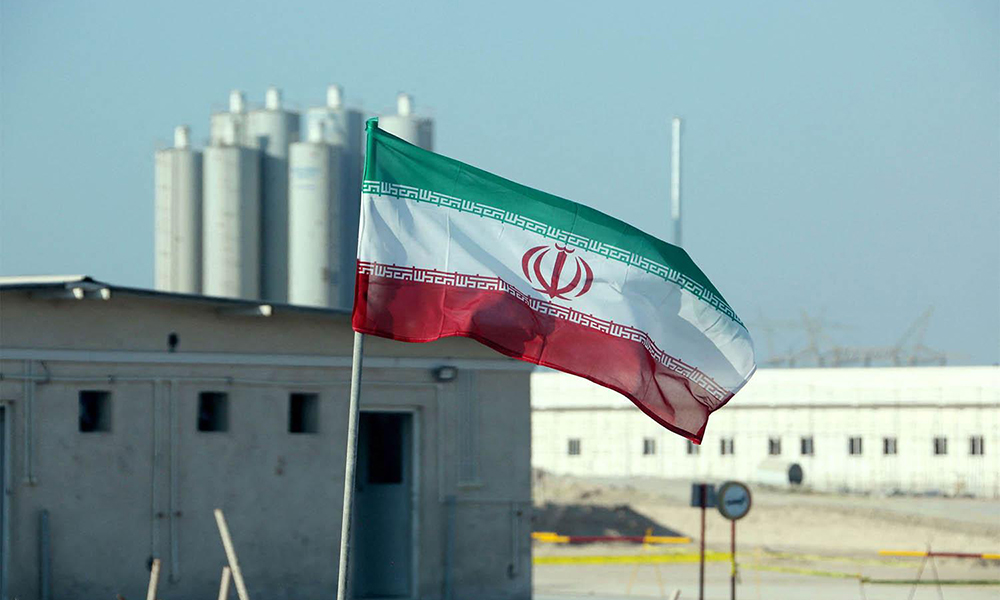
Sweeping UN economic and military sanctions have been reimposed on Iran, ten years after they were lifted under the landmark 2015 nuclear accord, as European powers accused Tehran of persistent violations and refusal to cooperate with international monitors.
The UK, France, and Germany triggered the so-called “snapback” mechanism after what they described as Iran’s “continued nuclear escalation” and failure to meet its obligations under the Joint Comprehensive Plan of Action (JCPOA).
The measures formally came into force on Saturday.
Foreign ministers from the three countries said in a joint statement that they had “no choice” but to act, citing Iran’s refusal to allow inspectors from the International Atomic Energy Agency (IAEA) back into its nuclear facilities, as well as its growing stockpile of highly enriched uranium. “We urge Iran to refrain from any escalatory action,” they said, stressing that “the reimposition of UN sanctions is not the end of diplomacy.”
Iranian President Masoud Pezeshkian denounced the sanctions as “unfair, unjust, and illegal,” insisting that Tehran had no intention of pursuing nuclear weapons. He warned that the renewed measures would put ongoing negotiations in jeopardy.
The foreign ministry added that any attempt to undermine the rights of the Iranian people would face a “firm and appropriate response.”
Pezeshkian has softened earlier threats to withdraw from the global Non-Proliferation Treaty but demanded assurances that Israel would not strike Iran’s nuclear sites before talks could move forward. He also rejected a U.S. offer of temporary sanctions relief in exchange for surrendering enriched uranium stockpiles, calling it “a trap.”
The JCPOA, signed in 2015 between Iran and six world powers, was designed to limit Tehran’s nuclear program in exchange for sanctions relief. However, the agreement began unraveling after then-President Donald Trump withdrew the U.S. in 2018, reimposing American sanctions and accusing Iran of using the deal to buy time for its nuclear ambitions.
In June this year, U.S. and Israeli strikes targeted several Iranian nuclear facilities and military bases, intensifying tensions and prompting Tehran to suspend IAEA inspections. Although the agency confirmed inspections have since resumed, Western officials argue Iran’s nuclear advances have already exceeded JCPOA limits.
The renewed sanctions deepen uncertainty over the future of the nuclear deal and raise the prospect of further escalation in the already volatile Middle East.



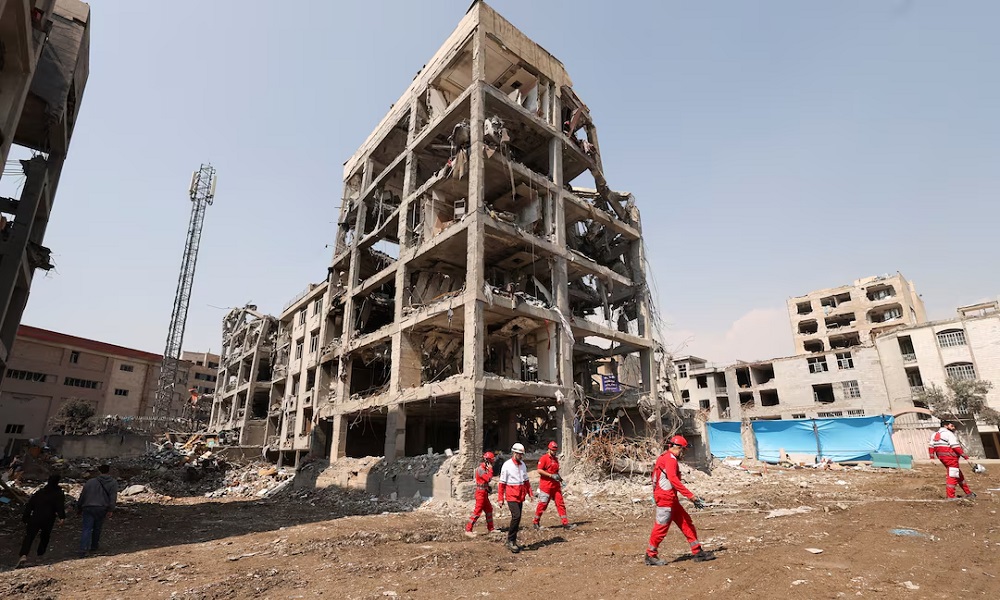
Israel launched a fresh wave of strikes on Iran on Friday, intensifying a rapidly escalating regional conflict that has already spread beyond its initial front lines and shaken global energy markets.
The latest attacks came a day after U.S. President Donald Trump urged Israel not to repeat strikes on Iranian natural gas infrastructure—an escalation that had significantly raised tensions in what is increasingly seen as a joint U.S.-Israeli confrontation with Tehran.
According to a spokesperson for the Israel Defense Forces, the military had “begun a wave of strikes against the infrastructure of the Iranian terror regime in the heart of Tehran,” though no further details were provided.
The conflict, which began on February 28 after diplomatic efforts over Iran’s nuclear program collapsed, has killed thousands, drawn in neighboring countries, and disrupted the global economy.
In the early hours of Friday, Bahrain, Kuwait, and the United Arab Emirates reported missile attacks following days of Iranian strikes targeting regional energy infrastructure.
Energy markets have been particularly volatile. Prices surged Thursday after Iran retaliated against an Israeli strike on a major gas field by hitting Ras Laffan Industrial City in Qatar, a key processing center for roughly one-fifth of the world’s liquefied natural gas. The damage is expected to take years to repair.
Meanwhile, Saudi Arabia’s primary Red Sea export hub also came under attack, even as the kingdom sought to reroute shipments to bypass disruptions caused by Iran’s threat to the Strait of Hormuz—a critical passageway for about 20% of global oil supplies.
Despite the attacks, oil prices edged lower on Friday after European nations and Japan offered to help secure maritime routes through the strait, and the United States signaled plans to increase oil production.
The strikes on energy infrastructure highlight Iran’s capacity to impose significant economic costs in response to military pressure, as well as the limitations of existing air defense systems in protecting key assets across the Gulf.
Facing political pressure at home over rising fuel prices ahead of midterm elections, Trump criticized allies for what he described as a cautious response to U.S. calls for coordinated action to secure the Strait of Hormuz.
“I told him, ‘Don’t do that,’ and he won’t do that,” Trump said Thursday, referring to Israeli Prime Minister Benjamin Netanyahu and further strikes on energy infrastructure.
Netanyahu later confirmed that Israel had acted alone in the attack on Iran’s South Pars gas field and acknowledged Trump’s request to avoid further escalation in that sector.
He added that Iran had been “decimated” and no longer possessed the capability to enrich uranium or produce ballistic missiles, though he suggested that any fundamental political change in Tehran would require a “ground component,” without elaborating further.
Regional
Pakistan among top nuclear threats to America, US intelligence chief tells senate
Speaking before a Senate panel, Gabbard said the U.S. intelligence community is increasingly concerned about the growing missile capabilities of several countries, including Pakistan and Iran.
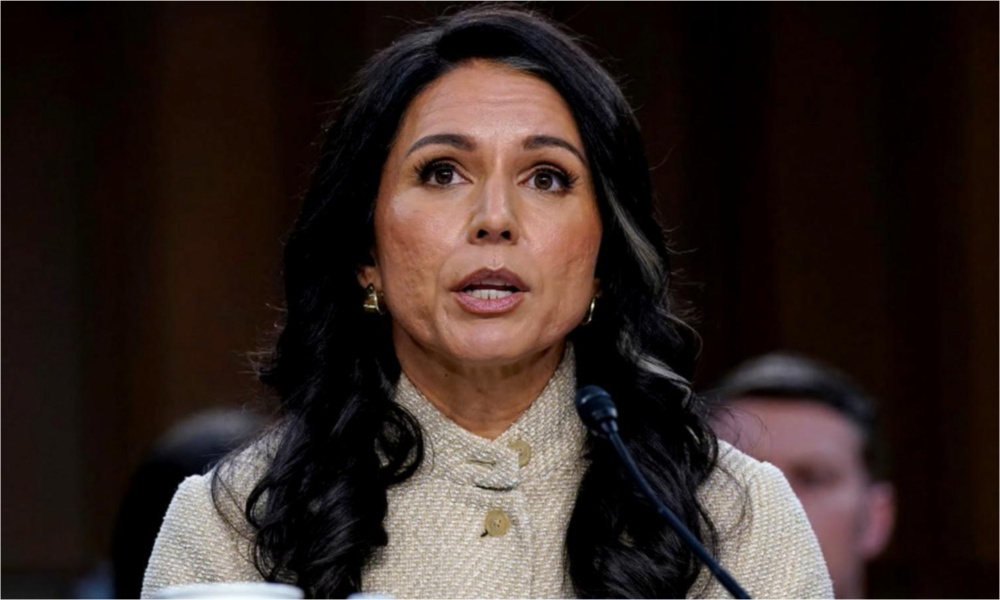
U.S. Director of National Intelligence Tulsi Gabbard told lawmakers that Pakistan ranks among the most significant nuclear threats to the United States, placing it alongside Russia, China and North Korea.
Speaking before a Senate panel, Gabbard said the U.S. intelligence community is increasingly concerned about the growing missile capabilities of several countries, including Pakistan and Iran.
“The intelligence community assesses that Russia, China, North Korea, Iran and Pakistan have been developing a range of advanced and traditional missile systems capable of carrying nuclear or conventional payloads that could reach the U.S. homeland,” she said.
Gabbard warned that the number of missiles capable of striking the United States is expected to rise sharply in the coming years, projecting an increase from roughly 3,000 today to more than 16,000 by 2035.
In her testimony, she also highlighted deepening ties between North Korea, Russia and China, suggesting growing strategic coordination among U.S. adversaries that could further complicate global security dynamics.
Addressing the ongoing conflict with Iran, Gabbard said U.S. military operations have significantly weakened Tehran’s capabilities. While the Iranian government remains in place, she described its military infrastructure as “largely degraded,” noting that it could take years for Iran to rebuild its missile and drone programs if the current leadership endures.
She added that Iran’s nuclear enrichment program had been “obliterated” by U.S. strikes in 2025, though she cautioned that Tehran may gradually attempt to restore its military strength over time.
Beyond state actors, Gabbard identified extremist groups such as Al-Qaeda and ISIS as the most significant threats to U.S. interests overseas, particularly in parts of Africa, the Middle East and South Asia.
The assessment comes amid heightened geopolitical tensions and follows the recent resignation of a senior U.S. security official linked to the ongoing Iran conflict. The White House reaffirmed its support for Gabbard, with press secretary Karoline Leavitt stating that President Donald Trump retains “full confidence” in the intelligence chief.
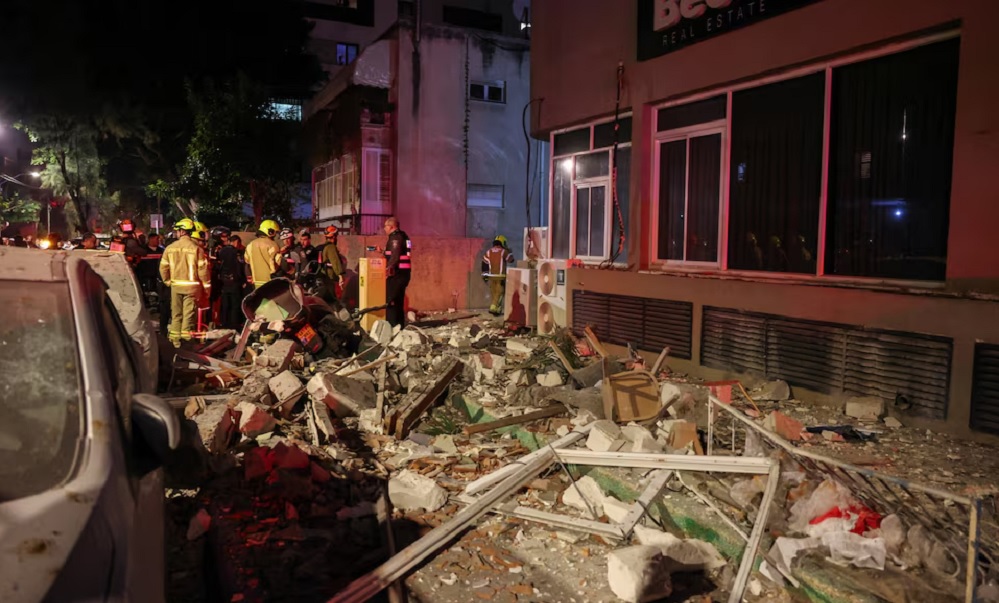
Iran targeted Tel Aviv with missiles carrying cluster warheads in what it said was retaliation for Israel’s assassination of Iran’s security chief Ali Larijani, Iranian state television reported on Wednesday.
Israel has said that Iran has repeatedly used cluster warheads, which disperse into multiple smaller explosives mid-air and spread over a wide area, making them difficult to intercept. The attack on densely populated Tel Aviv overnight on Tuesday killed two people, bringing the death toll in Israel from the war to at least 14, Reuters reported.
In Iran, a projectile hit an area near the Bushehr nuclear power plant on Tuesday evening, however it caused no damage or injuries, Iran told the International Atomic Energy Agency. IAEA chief Rafael Grossi reiterated his call for maximum restraint during the conflict to avoid the risk of a nuclear accident.
Israel and the U.S. have said preventing Iran from developing a nuclear weapons programme was one of the goals of the attacks they launched more than two weeks ago, which killed the country’s supreme leader and many other top officials.
The Iranian government on Tuesday confirmed the killing of Larijani, the most senior figure targeted since the U.S.-Israeli war’s first day, when an Israeli strike killed Iran’s Supreme Leader Ayatollah Ali Khamenei.
Iran’s Supreme National Security Council, which Larijani led as secretary, said Larijani’s son and his deputy, Alireza Bayat, were also killed in an Israeli attack on Monday night.
The targeted killings took place as the U.S.-Israeli war on Iran shows no signs of de-escalation.
Iran’s new supreme leader, Mojtaba Khamenei, has rejected proposals conveyed to Iran’s Foreign Ministry for “reducing tensions or ceasefire with the United States,” according to a senior Iranian official who asked not to be identified.
Khamenei, attending his first foreign-policy meeting since his appointment, said it was not “the right time for peace until the United States and Israel are brought to their knees, accept defeat, and pay compensation,” according to the official.
The official did not clarify whether the younger Khamenei, who has not yet appeared in photos or on TV since being named last week to replace his slain father, had attended the meeting in person or remotely.
TRUMP SAYS HELP FROM ALLIES TO SECURE STRAIT NOT NEEDED
U.S.-based Iran human rights group HRANA said on Monday that an estimated 3,000-plus people have been killed in Iran since the U.S.-Israeli attacks began at the end of February. Iranian attacks have killed people in Iraq and across the Gulf states, as well as Israel. More than 900 people have died since Israel began attacks on Lebanon on March 2, the Lebanese Health Ministry said on Tuesday.
The Strait of Hormuz, a transit point for a fifth of the global oil trade, remains largely closed as Iran threatens to attack tankers linked to the U.S. and Israel. Oil prices have soared.
U.S. President Donald Trump has repeatedly castigated allied countries in recent days for their cool response to his requests for military help to restore the passage of oil tankers through the strait.
Most U.S. allies in the North Atlantic Treaty Organization have told Trump they don’t want to get involved in the conflict, he said on Tuesday, describing their position as “a very foolish mistake.”
“Because of the fact that we have had such Military Success, we no longer ‘need,’ or desire, the NATO Countries’ assistance — WE NEVER DID!” Trump wrote on social media, also singling out Japan, Australia and South Korea.
European Union foreign policy chief Kaja Kallas said in an interview that nobody was ready to risk the lives of their people in protecting the strait.
“We have to find diplomatic ways to keep this open so that we don’t have a food crisis, fertilizers crisis, energy crisis as well,” Kallas said.
The U.S. has given shifting rationales for joining Israel to attack Iran and struggled to explain the legal basis for starting a new war, underscored by the Tuesday resignation of the head of the U.S. National Counterterrorism Center, Joseph Kent. Kent wrote in his resignation letter to Trump that Iran “posed no imminent threat to our nation.”
US TARGETS IRAN COASTLINE
Iran has responded to the Israeli-U.S. attacks with wide-ranging strikes on its Gulf neighbours, some of which host U.S. bases.
Gulf Arab states have faced more than 2,000 missile and drone attacks on U.S. diplomatic missions and military bases as well as oil infrastructure, ports, airports, ships and residential and commercial buildings, and most of them aimed at the United Arab Emirates.
Saudi Arabia will host a consultative meeting of foreign ministers from a number of Arab and Islamic countries in Riyadh on Wednesday evening to discuss ways to support regional security and stability, the kingdom’s foreign ministry said.
The United States military said on Tuesday it had targeted sites along Iran’s coastline near the Strait of Hormuz because Iranian anti-ship missiles posed a risk to international shipping there.
Oil prices rose about 3% on Tuesday as Iran renewed its strikes on oil facilities in the United Arab Emirates, and are up around 45% since the start of the war on February 28, raising concerns of a renewed spike in global inflation. The World Food Programme said tens of millions of people will face acute hunger if the war continues through June.
Global airlines sounded the alarm on Tuesday over soaring jet fuel prices, warning of hundreds of millions of extra costs, higher fares and cuts to some routes. Global aviation has been thrown into turmoil, with flights cancelled, rescheduled or rerouted as most Middle East airspace remains closed amid fears of missile and drone attacks.


FIFA Council highlights football’s role in peace, announces record investments

FIFA sanctions Israeli Football Association over discrimination violations

IEA defense ministry accuses Pakistan of ceasefire violations

Israel launches new wave of attacks on Iran as regional crisis deepens

Tahawol: Temporary ceasefire draws broad support

Pakistani military jet downed in Afghanistan’s Jalalabad, pilot captured alive

Afghan Air Force conducts airstrikes in Islamabad, other cities

Afghanistan’s Chief of Armed Forces underscores readiness and equipment for national defense

Afghanistan welcomes investment and technology partnerships with India

Prominent Muslim scholar issues fatwa calling for Afghanistan-Pakistan ceasefire
Tahawol: Temporary ceasefire draws broad support

Saar: Emphasis on resolving conflicts through diplomacy

Tahawol: Global reactions to Pakistan’s recent attacks discussed

Saar: Consequences of Pakistani airstrikes on Afghans discussed

Tahawol: Pakistan’s new attacks on Kabul hospital discussed
-
 Latest News4 days ago
IEA Supreme Leader issues Eid-ul-Fitr message urging unity and support for Islamic system
-
 Latest News5 days ago
Regional criticism grows amid Pakistan strikes inside Afghanistan
-
 Latest News5 days ago
Afghan airstrike targets a military camp in South Waziristan
-

 Business4 days ago
Turkmenistan, Afghanistan discuss steps to speed up land acquisition for TAPI pipeline
-

 Sport5 days ago
IPL 2026 kicks off in under two weeks; Afghan players set to shine
-
 Latest News2 days ago
IEA announces temporary pause in defensive operations against Pakistan for Eid
-
 Sport3 days ago
Afghanistan national buzkashi team defeats Hungary 14–0
-
 Latest News5 days ago
China offers to mediate between Kabul and Islamabad