
Latest News
UNHCR Warns: 11.6 million people face loss of aid amid deepening funding crisis
UNHCR says it will reach only 45,000 women in 2025, less than half the number it served last year.

The UN Refugee Agency (UNHCR) has issued a stark warning that up to 11.6 million displaced and vulnerable people could be left without life-saving assistance this year due to a dramatic shortfall in humanitarian funding.
In a new report, UNHCR revealed that despite receiving $2.5 billion in contributions by mid-2025—just 23% of its global budget—it now faces an $8.1 billion shortfall against projected needs of $10.6 billion.
The agency expects to raise no more than $3.5 billion by the end of the year, roughly the same level of funding it received a decade ago, despite the number of forcibly displaced people reaching a record 122 million.
“This situation is unsustainable,” the report states. “Less funding equals less assistance, and that translates into real human suffering.”
The financial strain is already triggering severe cutbacks across all areas of UNHCR’s operations:
- 50% reduction in non-food assistance and shelter
- 35% cut in healthcare programs
- 34% reduction in education initiatives
- 25% decrease in legal support services
- 23% cut to gender-based violence response programs
- 7% reduction in voluntary repatriation efforts
“No area of intervention is fully funded,” the report says, noting that the further from Europe a region is, the deeper the gap becomes. While Europe receives 34% of the required funding, the Middle East and North Africa region receives just 20%.
UNHCR warns that these cuts are “not just statistics”—they represent millions of people who will be left without access to food, shelter, healthcare, education, or legal protection.
The agency highlighted Lebanon and Afghanistan as two of the most severely affected countries.
Lebanon, already buckling under the weight of economic collapse and conflict fallout, hosts over 1.4 million Syrian refugees and approximately 400,000 Palestinians. Due to funding shortages, UNHCR has already reduced its assistance programs in the country by 47%.
In recent months, more than 100,000 new Syrian arrivals have entered Lebanon, but resources are now so limited that the agency cannot provide basic shelter or support. Community programs designed to foster social cohesion have also been halted, threatening fragile stability in host communities.
In Afghanistan, where more than 1.5 million Afghans have been forcibly repatriated from Iran and Pakistan, the situation is becoming increasingly desperate. Tehran has signaled plans to expel up to 4 million undocumented Afghans, many of whom are women and children.
Due to funding cuts, protection activities have been reduced by over 50%, severely weakening programs for women’s empowerment, mental health, and prevention of gender-based violence. UNHCR says it will reach only 45,000 women in 2025, less than half the number it served last year.
Financial support for returnees has also been slashed. Refugee households now receive just $156, with an additional $40 per person for transportation—barely enough for basic food, let alone housing.
“These cuts increase exposure to harmful practices such as early marriage, child labor, and exploitation,” the agency warned.
The UNHCR cautioned that its shrinking operational capacity could accelerate new waves of displacement in already unstable regions such as South Sudan, Uganda, and Chad. The agency says the current map of budget cuts could quickly become a map of new humanitarian emergencies.
Despite the worsening outlook, UNHCR insists it has the expertise and infrastructure in place to deliver support where it is most needed. What is missing, it says, is global political will.
“UNHCR’s commitment remains steadfast,” the report concludes. “But without an urgent wave of international solidarity and new funding, decades of progress in protecting the world’s most vulnerable could be lost.”







Latest News
Security Sources: Pakistani military shelling in Kunar and Nuristan leaves female doctor dead
The sources said the vehicle was struck by gunfire and subsequently fell into the Kunar River.
Security sources report that several security incidents in the eastern provinces of Kunar and Nuristan have resulted in the death of a female doctor, injuries to others, and several people reported missing.
According to the sources, early Thursday morning at around 9:30 a.m., Pakistani military forces opened fire on a Toyota vehicle in the Dokalam Baghcha area of Nari district in Kunar province.
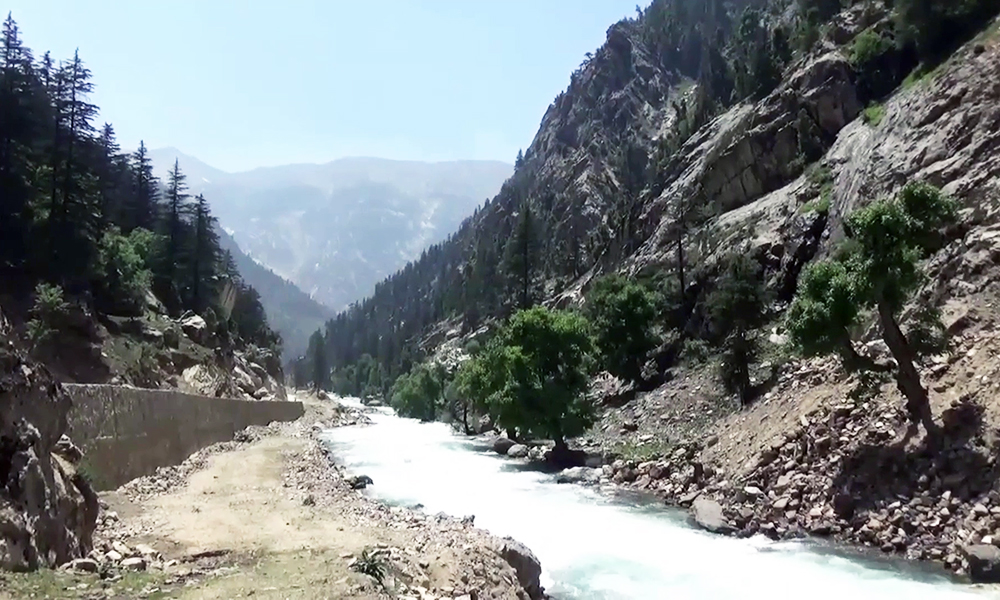
The sources said the vehicle was struck by gunfire and subsequently fell into the Kunar River. As a result of the incident, a female doctor was killed and another person was injured. Five other individuals who were reportedly in the vehicle remain missing, the sources added.
In a separate incident, security sources stated that around 11:00 a.m. in the Seno area of Shultan district, Kunar province, Pakistani forces carried out artillery shelling that left one person injured. The injured individual was transferred to the provincial hospital for medical treatment.
Meanwhile, security sources in Nuristan say that despite Pakistan’s announced ceasefire, the main road between Kamdesh and Barg-e-Matal districts has been completely closed to traffic since Thursday morning.
According to the sources, the closure of the route has caused serious difficulties for local residents, preventing any movement in the area. The sources also claim that Pakistani military posts are located within close proximity of the road and have opened fire on people attempting to pass through the area.
Latest News
UN Secretary-General condemns Pakistani airstrike on Kabul rehab center
Meanwhile, a spokesperson for the Iranian Ministry of Foreign Affairs expressed concern over rising tensions between Afghanistan and Pakistan, stressing the importance of diplomacy to resolve conflicts.
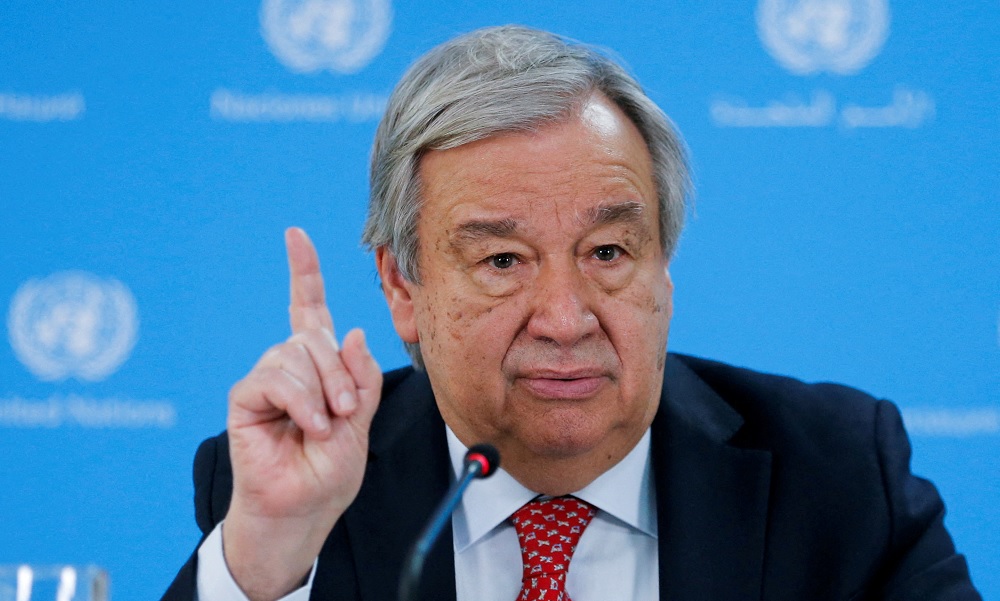
The United Nations Secretary-General has strongly condemned a Pakistani airstrike on a rehabilitation center for addicts in Kabul and expressed condolences to the families of the victims.
The attack, which occurred on March 16, reportedly left over 600 people killed or injured, according to local sources.
In an official statement, Antonio Guterres, UN Secretary-General, emphasized that under international humanitarian law, patients, medical staff, and healthcare facilities, including hospitals, must be respected and protected at all times.
Farhan Haq, Deputy Spokesperson for the UN Secretary-General, stated: “The Secretary-General strongly condemns the airstrike in Kabul, the capital of Afghanistan, on March 16, which reportedly resulted in the deaths and injuries of civilians at a medical facility.”
Haq added that Guterres has called for an independent and impartial investigation into the incident, while offering his deepest condolences to the families of the victims and wishing a speedy recovery for the injured.
The Secretary-General reiterated the urgent need to reduce tensions and immediately halt hostilities between Afghanistan and Pakistan, emphasizing that disputes should be resolved through dialogue and peaceful solutions in accordance with the UN Charter.
Meanwhile, a spokesperson for the Iranian Ministry of Foreign Affairs expressed concern over rising tensions between Afghanistan and Pakistan, stressing the importance of diplomacy to resolve conflicts.
This development comes after Afghanistan and Pakistan announced a temporary cessation of hostilities ahead of Eid al-Fitr, a move that regional officials hope will pave the way for a lasting ceasefire and ensure the protection of civilians in both countries.
Latest News
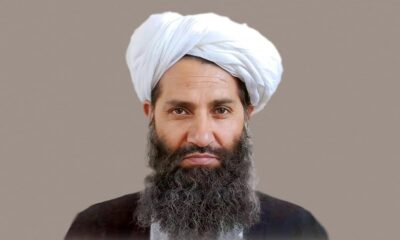
IEA Supreme Leader: Afghanistan’s victory lies in faith and National unity
Akhundzada also called on citizens to support the Islamic Emirate, stating that those serving in the current system are the sons of the same nation and people.

Eid al-Fitr prayers were held on Thursday at the Eidgah Mosque in Kandahar, led by Hibatullah Akhundzada, the supreme leader of the Islamic Emirate of Afghanistan, with a large number of residents attending the ceremony.
During his sermon, Akhundzada said that if the people of Afghanistan were meant to be destroyed by bombardments and military attacks, it would have happened during the wars with the Soviet Union and the United States.
According to the Islamic Emirate leader, the key to Afghanistan’s victory and resilience lies in reliance on Islam, preservation of religious beliefs, and unity among the people. He stressed that by adhering to Islamic values, no country would be able to harm Afghanistan.
Akhundzada also called on citizens to support the Islamic Emirate, stating that those serving in the current system are the sons of the same nation and people.
At the same time, he urged government officials to ensure justice in their duties, warning that no system can survive through oppression. He added that the implementation of decrees and laws is necessary to reform society and maintain order in the country.
The Islamic Emirate leader further said that without Islam, Afghanistan could have remained under the control of the United States and NATO, but now, according to him, the country stands as an independent and free nation.
In the economic section of his remarks, Akhundzada called on traders to avoid hoarding goods and instead assist fellow Muslims in difficult times. He warned that individuals found hoarding commodities for up to 40 days would face legal consequences.


Tahawol: Temporary ceasefire draws broad support

Security Sources: Pakistani military shelling in Kunar and Nuristan leaves female doctor dead

Saar: Emphasis on resolving conflicts through diplomacy

UN Secretary-General condemns Pakistani airstrike on Kabul rehab center

IEA Supreme Leader: Afghanistan’s victory lies in faith and National unity

Pakistani military jet downed in Afghanistan’s Jalalabad, pilot captured alive

Afghan Air Force conducts airstrikes in Islamabad, other cities

Afghanistan’s Chief of Armed Forces underscores readiness and equipment for national defense

Afghanistan welcomes investment and technology partnerships with India

Prominent Muslim scholar issues fatwa calling for Afghanistan-Pakistan ceasefire
Tahawol: Temporary ceasefire draws broad support
Saar: Emphasis on resolving conflicts through diplomacy

Tahawol: Global reactions to Pakistan’s recent attacks discussed

Saar: Consequences of Pakistani airstrikes on Afghans discussed

Tahawol: Pakistan’s new attacks on Kabul hospital discussed
-
 Latest News3 days ago
IEA Supreme Leader issues Eid-ul-Fitr message urging unity and support for Islamic system
-
 Latest News4 days ago
Regional criticism grows amid Pakistan strikes inside Afghanistan
-
 Latest News4 days ago
Afghan airstrike targets a military camp in South Waziristan
-

 Business3 days ago
Turkmenistan, Afghanistan discuss steps to speed up land acquisition for TAPI pipeline
-

 Sport4 days ago
IPL 2026 kicks off in under two weeks; Afghan players set to shine
-

 Business5 days ago
Afghanistan expands exports through Lapis Lazuli Corridor
-
 Latest News1 day ago
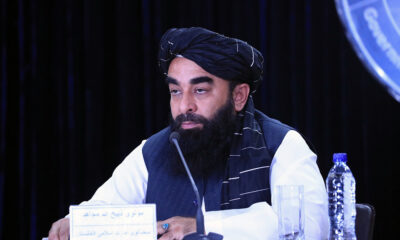
IEA announces temporary pause in defensive operations against Pakistan for Eid
-

 World5 days ago
Trump rejects efforts to launch Iran ceasefire talks, sources say