
Latest News
Watchdog reports a dramatic increase in civilian casualties


The Afghanistan Independent Human Rights Commission (AIHRC) on Sunday said in a new report that in the first six months of this year, 5,321 civilians have been killed or injured, a substantial increase against the same period last year.
According to the report, the AIHRC said in 1,594 different security incidents, a total of 5,321 civilians have been killed or injured in the first six months of 2021. Among these civilian casualties, 1,677 were killed, and 3,644 were injured.
This was in comparison to 2,957, including 1,213 killed and 1,744 injured, in the first six months of last year.
The AIHRC stated that a total of 154 women were killed and 350 wounded between January and June this year.
The number of women civilian casualties in the first six months of 2020 was 297 in total which included 126 killed, and 171 injured.
The watchdog reported that this meant there was a 69 percent rise in women civilian casualties in the first six months of 2021 in comparison with the first six months of 2020.
In the first half of 2021, the number of child casualties was 1,456 – 373 children were killed, and 1,083 others were injured.
The number of child casualties in the first six months of 2020 was 630 (225 killed, and 405 injured).
The comparison of the above figures clearly shows that war principles and International Humanitarian Law have been violated. The number of child casualties increased by 131% in the first six months of 2021 compared to the first six months of 2020.
AIHRC stated that according to its findings, out of the total number of civilian casualties in Afghanistan in the first six months of 2021, the Taliban is responsible for 56 percent, pro-government forces are responsible for 15 percent, Daesh is responsible for seven percent, and unknown perpetrators are responsible for 22 percent.
The Taliban is responsible for 2,978 civilian casualties (917 killed, and 2,061 injured) in the first six months of 2021, read the statement.
Unknown perpetrators were responsible for another 1,190 civilian deaths and injuries in the first half of this year, including 425 civilians killed and 765 civilians injured. These attacks have not been claimed by any groups or individuals.
In addition, 16 civilians have been harmed due to rocket attacks from Pakistan to Afghanistan territory in the first six months of 2021. This includes two civilians killed, and 14 others injured.
Daesh meanwhile was responsible for 343 civilian casualties (104 killed, 239 killed) in the first six months of 2021. In the first six months of last year, Daesh was responsible for 429 civilian casualties (145 killed, 284 injured).
A comparison of both periods shows 20 percent reduction in 2021.
The watchdog found that the use of IEDs, roadside mines and car bombs in the first half of the year accounted for 37 percent of the total civilian casualties.
The number of civilian casualties caused by explosions tripled in the first six months of 2021 compared with the same period in the previous year.
Targeted killings also increased sharply in the first six months compared to last year.
This year it accounted for 30 percent of the total number of civilian casualties. This includes 1,634 civilian casualties (696 killed, 938 injured).
The number of civilian casualties caused by targeted killings during the same period in 2020 was 945 in total which included 533 killed and 412 injured.
This shows a 110 percent increase in the number of civilian casualties caused by targeted killing in the first six months of this year compared with the same period in the previous year.
Rocket fire, sucide attacks, airstrikes, night raids and ground engagements were other key types of war tactics used, which led to civilian casualties.
This was followed by the Central Zone, Kabul, Wardak, Kapisa, Parwan, Panjsher, Ghazni, Bamiyan, Daikundi.
In addition to this, the AIHRC found that 39 power pylons were destroyed by unknown people in the first six months of 2021 in different provinces including Kabul, Parwan, Baghlan, and Kunduz.
In addition, the ongoing armed conflict in the current year has resulted in destruction of 130 bridges and culverts, 13 schools, and three clinics only in the first six months of 2021.
“The above statistics are alarming and obvious examples of violating war principles,” the watchdog said in the statement.
The AIHRC once again called on all parties to the conflict to respect the demands of the AIHRC and to implement its recommendations; otherwise, the responsibilities and consequences of violations will lie with the violators, causing civilians casualties and destruction of public facilities and the personal properties.
Their list of recommendations were as follows:
1. AIHRC believes that dialogue and negotiations are the most humane, logical, and effective ways to resolve conflicts and we are reiterating it more seriously and stressing our previous stances in this regard. The country’s problems can be solved behind the negotiating table, not on the battlefield;
2. The Commission once again calls on the United Nations, domestic and international organizations and institutions influencing the war and peace in Afghanistan, as well as the international community, to use all their resources, opportunities, and capacities to end the current violence and devastating war before it leads to more human catastrophes;
3. We call on the Taliban, more specifically and emphatically, to care the suffering of the Afghan people, respect the interests of the country, the collective rights and aspirations of its citizens; in order to resolve disputed issues and achieve a just peace, they should return to the negotiation table and meaningful dialogue and pave the way for a long-term ceasefire and peace;
4. All parties to the Afghan war are required to respect international humanitarian law and standards, as well as not diverge from the laws and regulations of war during armed conflict. Any infringement of these regulations will result in severe penalties for the violators, who will be tried fairly and judicially in all circumstances;
5. According to international humanitarian law, the deliberate and systematic killing and harming of civilians is a clear example of war crimes and crimes against humanity, and if such approaches are motivated by hatred of certain ethnic, religious, or social groups, they are considered genocide and cannot be forgiven. The Government of Afghanistan and the relevant international organizations must seriously prosecute the perpetrators of such crimes;
6. The use of people as human shield as well as war in residential areas, clearly causes enormous harm to civilians, particularly children and women, and is an evident violation of international humanitarian law. Neither side in the fight should employ such cruel and brutal tactics. Furthermore, hostage-taking, assassination, targeted killings, and extrajudicial trials cannot be justified, and no military unit should engage in such tactics;
7. We specifically call on the Taliban to treat detainees and prisoners in accordance with international humanitarian law, and to guarantee that no captives or detainees are punished or brutally killed as a result of the extrajudicial measures, and prevent retaliatory actions by their men;
8. Emotional remarks and the issuance of instructions contrary to international human rights and humanitarian principles by some Afghan government officials have raised serious concerns among civil society organizations, the AIHRC, and the country’s intellectual community; we urge the leadership of the Government of Afghanistan to refrain from such destructive and extra-legal approaches;
9. The Taliban leadership is strongly urged to investigate all cases of violations of international humanitarian law in areas under their control and to prevent further harm to the country’s civilian people by stopping anti-human rights actions by their militants and commanders. The leadership of the Taliban must explain to the Afghan people the results of its work in this regard;
10. We urge the government’s armed opposition to align its definition of civilians with international humanitarian law principles and to refrain from attacking Afghan government civil servants, civil society activists, human rights defenders, aid organizations, journalists, religious scholars, and dissidents. The armed opposition’s leadership must understand that continuing to violate international human rights and humanitarian standards would have major consequences for them;
11. We urge the armed opposition’s leadership, particularly the Taliban, to prevent the destruction of specially protected facilities in regions under their control, such as hydroelectric dams, historical and cultural sites, power generation sources, and hazardous energy sources. In addition to preventing the destruction and looting of public and private assets, the dominant groups in the region must also prohibit third-party looting and destruction of these resources;
12. According to AIHRC and international organizations, the Taliban’s use of roadside bombs and improvised explosive devices is a major cause of civilian casualties. Therefore, we urge the Taliban to stop this military tactics;
13. We urge the Afghan government to review its war policies and procedures, resolve the issues that result in civilian casualties, and hold the government’s military perpetrators accountable;
14. We call on responsible organs in the Afghan government to take planned, continuous, and systematic measures to improve the security of all citizens of the country, particularly ethnic-religious minorities, religious scholars, human rights defenders, media activists, and civil activists;
15. We urge the government and aid agencies to provide additional support to the injured, displaced people, and victims’ relatives. We further urge the Taliban to permit the presence and activity of aid organizations in areas under their control, so that the impoverished people and displaced persons affected by the fighting can be helped;
16. Afghanistan is a member of the International Criminal Court (ICC). The Commission urges the International Criminal Court not to be swayed by political pressures from any authority in undertaking a serious and comprehensive investigation into the international crimes committed in Afghanistan. It also calls on the United Nations to send a UN fact-finding mission to investigate the recent horrific incidents against civilians in Afghanistan in a fair and non-political manner, as requested by the AIHRC. We also call on the Government of Afghanistan to welcome the presence of this delegation and to pave the way for a more thorough investigation.

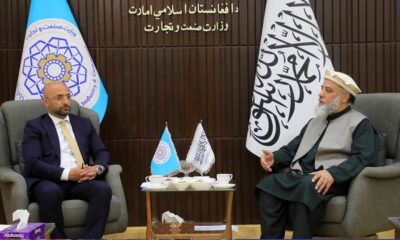





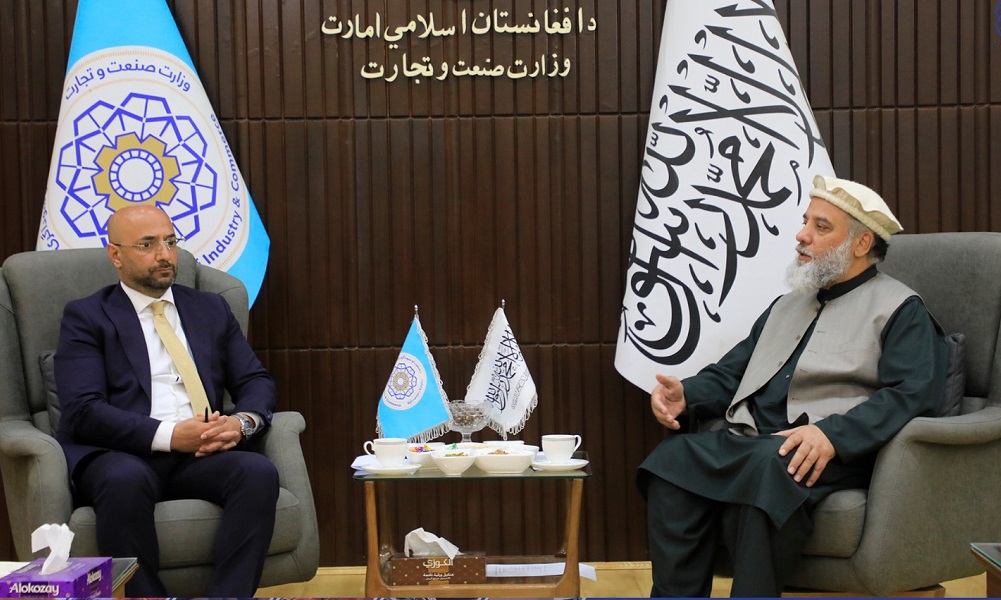
Nooruddin Azizi, Minister of Industry and Commerce of the Islamic Emirate of Afghanistan, met on Thursday with Sadin Ayyıldız, Chargé d’Affaires of the Turkish Embassy in Kabul. During the meeting, Ayyıldız invited the Minister of Industry and Commerce to participate in Turkey’s Antalya Diplomacy Forum.
According to a statement from the Ministry of Industry, the meeting also emphasized the economic, trade, and historical relations between Kabul and Ankara, as well as the export of Afghan goods to Turkey.
The two sides discussed increasing trade volume between the two countries, strengthening economic relations, facilitating and enhancing commercial activities, cooperation in road transport along various routes, activating the Lapis Lazuli Corridor, and regional cooperation.
Azizi, while thanking Turkey for inviting the Islamic Emirate to the Antalya Diplomacy Forum, introduced the Ministry’s technical team to ensure better coordination and planning.
The Antalya Diplomacy Forum is an international conference held annually in Turkey, aimed at examining global challenges and finding joint solutions through dialogue and diplomacy. It hosts representatives from more than 100 countries, including presidents, leaders, high-ranking officials, international organizations, analysts, and media from various countries.
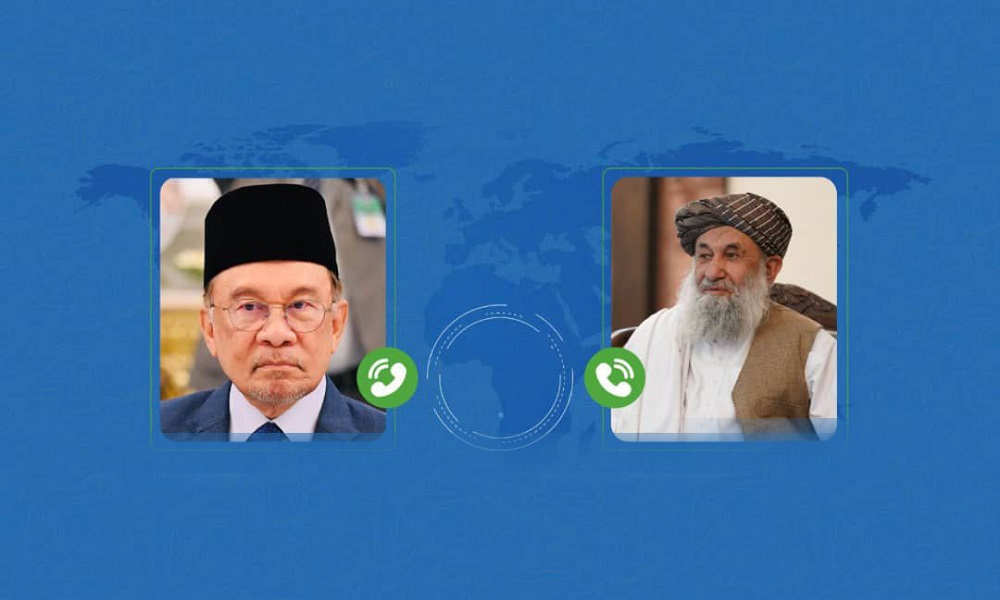
Mullah Mohammad Hassan Akhund, Prime Minister of the Islamic Emirate, in a telephone conversation initiated by Mohammad Anwar Ibrahim, Prime Minister of Malaysia, discussed regional developments, particularly the recent situation between Pakistan and Afghanistan.
Zabihullah Mujahid, spokesperson for the Islamic Emirate, said in a statement that Hassan Akhund stated during the call that the Islamic Emirate of Afghanistan’s principled position is clear and that it believes in resolving issues through mutual understanding and cooperation.
Hassan Akhund added that during Eid al-Fitr, at the request of Saudi Arabia, Turkey, and Qatar, the Islamic Emirate demonstrated its goodwill by respecting a pause in defensive operations.
He stated that violence benefits no party and that actions that increase tensions should be avoided, emphasizing that wisdom and rationality must guide efforts to resolve problems.
He also expressed concern over rising regional tensions following the US and Israeli attacks on Iran.
The Malaysian Prime Minister also expressed concern about the regional situation and hoped that the temporary halt in hostilities between Afghanistan and Pakistan would continue, and that existing problems could be resolved through sincere negotiations and understanding.
He added that Malaysia aims to play a positive role in facilitating understanding between both parties.
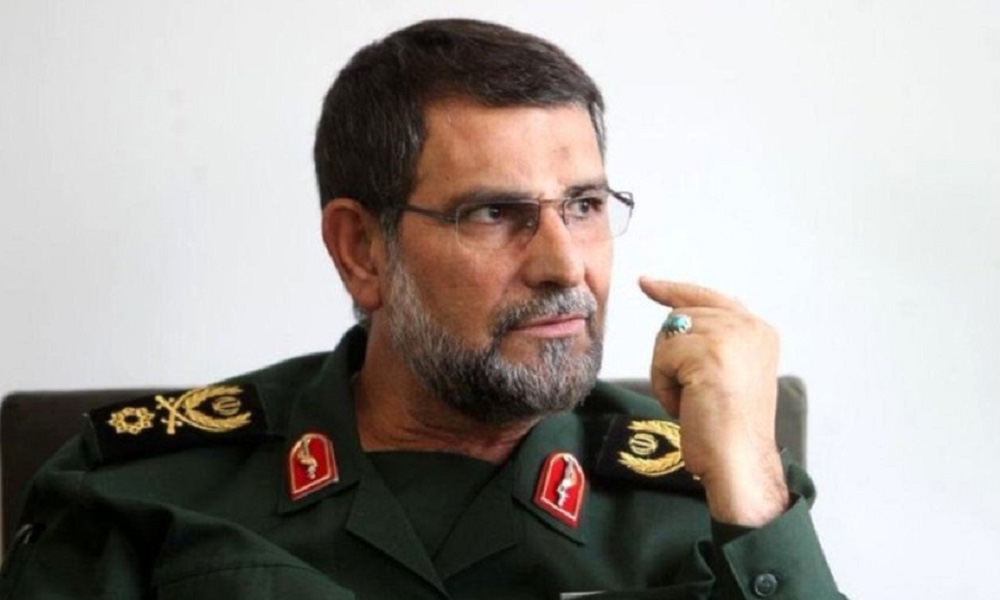
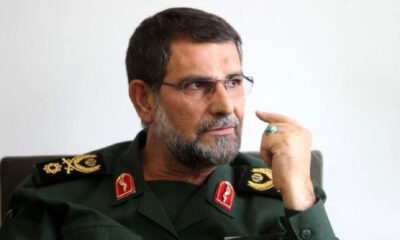
Israel’s defence minister says that an Israeli air strike has killed Alireza Tangsiri, commander of the Iranian Revolutionary Guards’ navy.
The killing was carried out “last night, in a precise and lethal operation” and targeted other “senior officers of the naval command”, said Israel Katz, in a video statement.
“The man who was directly responsible for the terrorist operation of mining and blocking the Strait of Hormuz to shipping was blown up and eliminated,” he claimed.
Since the start of the joint US-Israeli war on Iran on February 28, Israel has announced the assassination of several top Iranian officials, including Supreme Leader Ali Khamenei and the Islamic Republic ‘s powerful security chief, Ali Larijani.
Al Jazeera’s Tohid Asadi, reporting from Tehran, said there was no official Iranian confirmation yet of Tangsiri’s killing.
“But if it’s true it’s going to be another major blow for a country that has already experienced a lot of military commanders being killed” since the war began, he said.
The head of the Basij paramilitary forces, Brigadier General Gholamreza Soleimani, and Intelligence Minister Esmail Khatib were also assassinated in Israeli attacks.
Moreover, in recent days, Israeli forces have carried out several strikes targeting the naval assets of Iran.
Last week, Israeli airstrikes hit several Iranian naval ships in the Caspian Sea, including ones equipped with missile systems, support vessels, and patrol craft.


Tahawol: Discussion on day 27 of Iran–US war

Turkey invites IEA’s commerce minister to Antalya Diplomacy Forum

Saar: Islamic Emirate confident of Durand Line control

Afghan, Malaysian PMs discuss situation between Kabul and Islamabad

Myanmar trump Afghanistan 2-1 in Asian Cup Qualifier

Pakistani military jet downed in Afghanistan’s Jalalabad, pilot captured alive

Afghan Air Force conducts airstrikes in Islamabad, other cities

Prominent Muslim scholar issues fatwa calling for Afghanistan-Pakistan ceasefire

Afghan air force strikes key Pakistani military installations in retaliatory operation

IEA: Special circle in Pakistan has launched mission to destabilize region
Tahawol: Discussion on day 27 of Iran–US war
Saar: Islamic Emirate confident of Durand Line control

Tahawol: Efforts to release Mohammad Rahim from Guantanamo Bay Detention Camp

Saar: End of ceasefire between Afghanistan-Pakistan reviewed

Tahawol: Escalating threats between Iran-US discussed
-
 Latest News5 days ago
Deadly violence likely without dialogue between Afghanistan and Pakistan: ICG
-

 Latest News4 days ago
Pakistan seeks Russian mediation to resolve Afghanistan tensions
-

 International Sports5 days ago
FIFA World Cup 2026: Play-Off Tournament takes centre stage
-
 Sport5 days ago
Afghanistan secures third place at 2026 World Kokpar Championship
-
 Business4 days ago
Afghani strengthens nearly 10% against US dollar amid banking sector reforms
-
 Latest News4 days ago
World must re-engage to prevent all-out Afghanistan-Pakistan war: Financial Times
-

 Sport3 days ago
Afghanistan squad hit by withdrawals ahead of AFC Asian Cup Qualifiers
-
 Latest News2 days ago
Around 2.3 million tourists visited Afghanistan’s recreational areas during Eid: Ghufran