
Latest News
President Ghani Fired Mohaqiq as Deputy Chief Executive of Gov’t

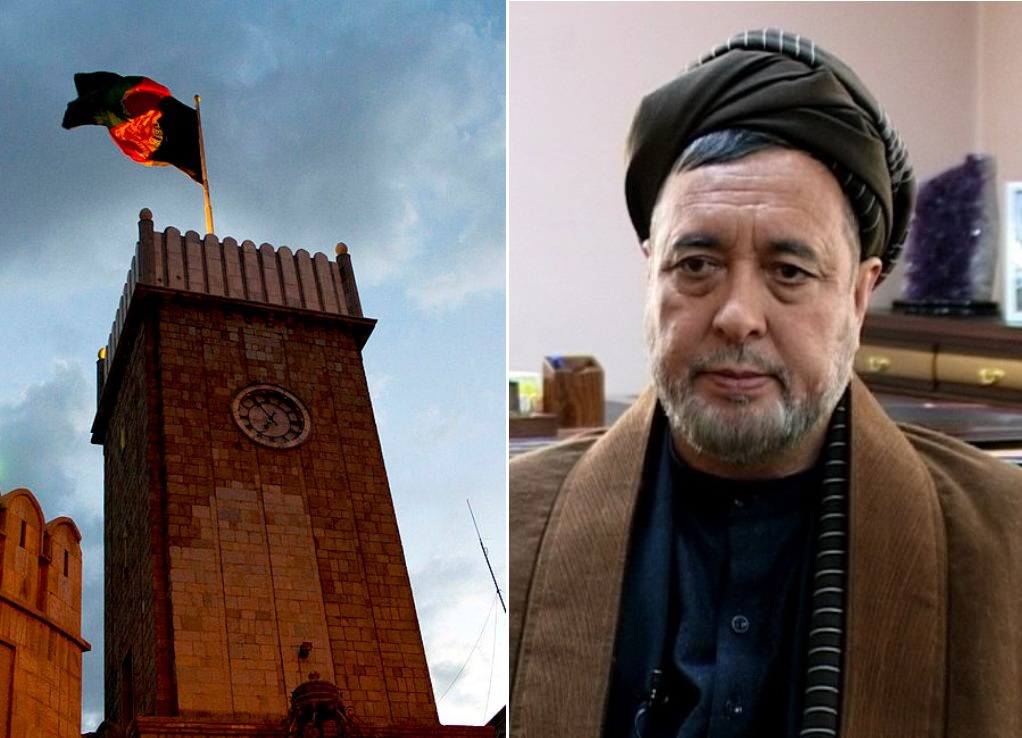
President Ashraf Ghani in a decree has dismissed Mohammad Mohaqiq second deputy to the Chief Executive of Abdullah Abdullah from his position, Presidential Palace confirmed in a statement on Thursday.
The statement said that Mohaqiq has been dismissed based on article 64 and clause 13 of Afghanistan’s constitution.
In reaction, Chief Executive office in a statement said that the move is against the political agreement for the formation of National Unity Government.
The statement added that any unilateral decision in the current situation will lead to weakening the joint cooperation and provoking instability in the country.
The Chief Executive Office in the statement also noted that the National Unity Government was being formed based on an agreement in Kabul after the 2014 election crisis and that will continue until the formation of the new legitimate government and next presidential elections.
It comes as Mohqiq is running for the second deputy in Mohammad Haneef Atmar’s ticket during the July presidential elections.
According to the Constitution, any official who runs for elections should resign from the official post; however, there is no clarification about the Chief Executive and his deputies.

Latest News
IEA says marriage separation regulation aligns with Sharia
The spokesman added that only in the past year, thousands of cases of forced marriages involving girls were addressed in the courts.
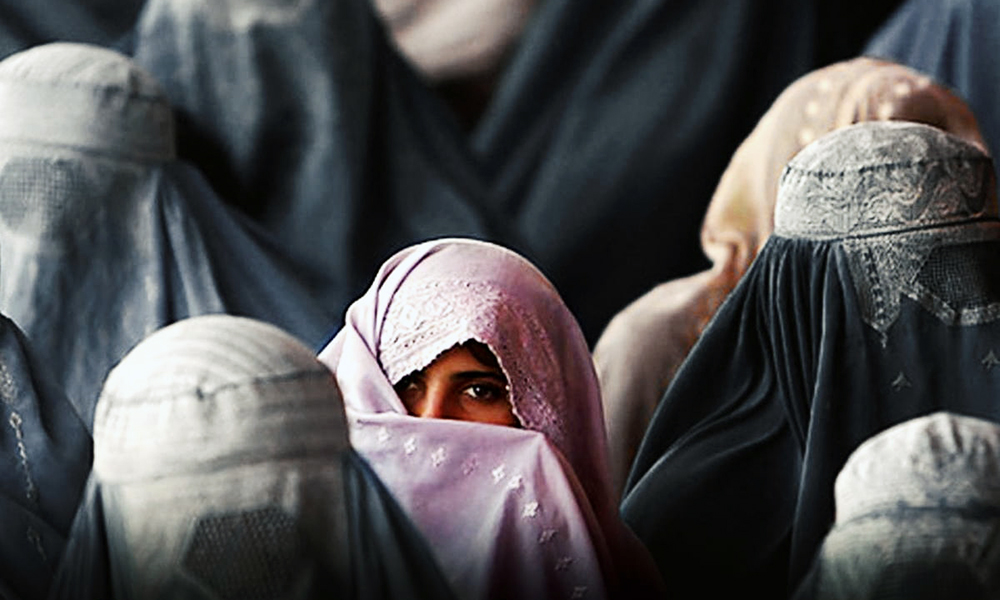
Zabihullah Mujahid, spokesman for the Islamic Emirate, said during an interview that criticism by some circles regarding the marriage separation regulation is not new and should not be given importance by those opposing Islamic principles.
Mujahid said those who accept Islamic laws should have no concerns in this regard, adding that there is no law within the Islamic Emirate that contradicts Islamic Sharia.
The spokesman also stated that under Islamic Sharia and Hanafi jurisprudence, fathers and grandfathers have guardianship and authority over their minor children, provided that they are kind, have no history of cruelty, are free from mental disorders, are not addicted to narcotics, and do not make decisions regarding their children because of poverty.
Mujahid further said that the ruling does not mean granting unrestricted permission to people, but was issued to create ease for the country’s courts so judges can make decisions more easily in such cases.
He stressed that the Supreme Leader has separately ordered that marrying off a girl without her consent is prohibited.
Mujahid added that only in the past year, thousands of cases of forced marriages involving girls were addressed in the courts of the Islamic Emirate and through the complaint-hearing department of the Ministry for the Promotion of Virtue and Prevention of Vice, which he said shows the Islamic Emirate’s attention to women’s rights.
The remarks come after the Ministry of Justice recently published the marriage separation regulation. Some circles criticized the regulation, claiming that the Islamic Emirate of Afghanistan had allowed or facilitated the marriage of underage girls.
Latest News
Xi and Putin pledge closer coordination on Afghanistan issues
China and Russia highlighted mechanisms as important channels for pursuing a political settlement and supporting long-term stability in Afghanistan.
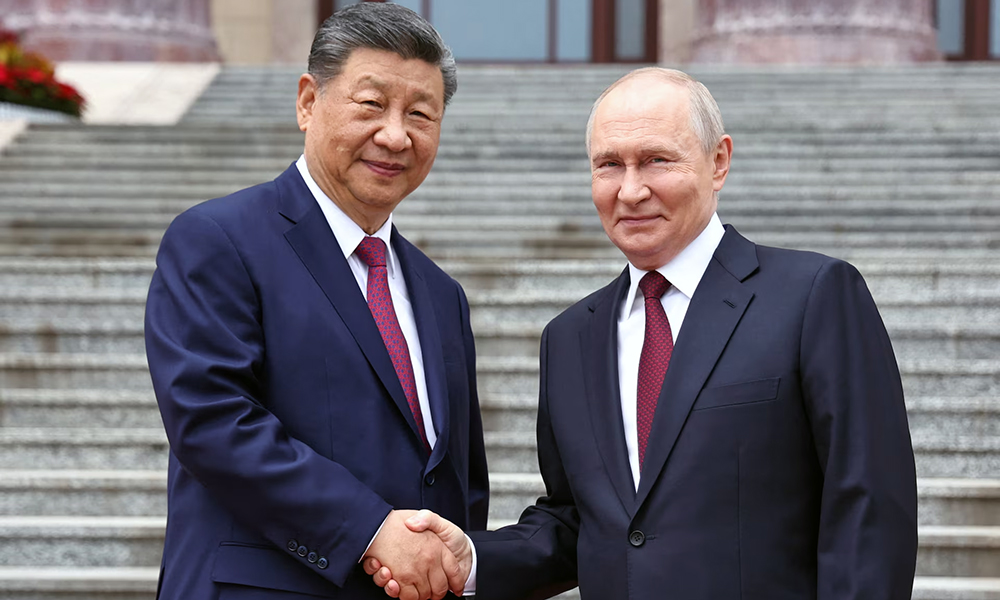
China and Russia have pledged closer coordination on Afghanistan, warning that terrorism remains a serious threat to regional and global security. The two nations also called for stronger international cooperation with Kabul.
In a lengthy joint statement issued during Russian President Vladimir Putin’s visit to China, Beijing and Moscow said they support Afghanistan’s efforts to eliminate terrorism and stressed that Afghan territory should not be used to threaten neighboring countries or the wider region.
The statement, released following talks between Chinese President Xi Jinping and Putin in Beijing, said both countries would deepen bilateral and multilateral cooperation on Afghan affairs and continue backing regional diplomatic platforms focused on Afghanistan.
China and Russia highlighted mechanisms as important channels for pursuing a political settlement and supporting long-term stability in Afghanistan.
“Both sides attach great importance to and support the positive and constructive role played by regional platforms such as the Foreign Ministers’ Meeting of Afghanistan’s Neighboring Countries, the Moscow Format consultations on the Afghan issue, the China-Russia-Pakistan-Iran Quad mechanism, and the Shanghai Cooperation Organisation in the political settlement of the Afghan issue,” the statement read.
The two sides also warned that terrorism continues to threaten Afghanistan and surrounding countries, urging regional states and the international community to expand counter-terrorism cooperation with Kabul.
According to the joint statement, both governments support Afghanistan in achieving “lasting peace and stability” and emphasized the importance of regional coordination in addressing security challenges.
The Afghanistan section formed part of a broader China-Russia declaration covering regional security, international conflicts, economic cooperation and opposition to unilateral sanctions.
The statement also addressed developments in the Middle East, Ukraine and the Korean Peninsula, while reaffirming support for multilateral organizations including BRICS and the Shanghai Cooperation Organisation.
According to the statement, both sides agreed that “the US-Israel military strikes against Iran violated international law and the basic norms of international relations, severely undermining stability in the Middle East.
They emphasized that the parties involved in the conflict should return to dialogue and negotiation as soon as possible to prevent the spread and spillover of the conflict.
They also called on the international community to uphold an objective and impartial stance, promote de-escalation, and jointly safeguard the basic norms of international relations.
In addition, both sides advocated for a lasting ce asefire in Gaza, believing it would contribute to long-term stability and provide unimpeded humanitarian access for all who need it.
“They affirmed that the Palestinian question should be resolved comprehensively, justly, and lastingly based on universally recognized international law and centered on the two-state solution, leading to the establishment of an independent, prosperous, and territorially complete Palestinian state that can coexist peacefully and securely with Israel,” the statement read.
Latest News
Mullah Baradar visits Hairatan Port, reviews plans for 24-hour services
According to the decisions made, the staffing of government institutions at the port will be increased as needed.
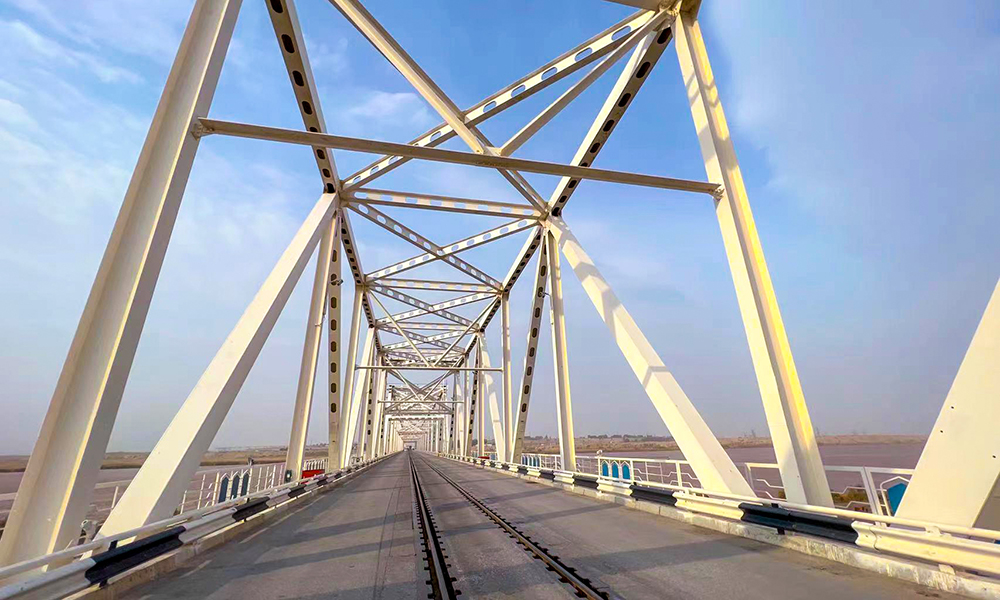
Mullah Abdul Ghani Baradar, Deputy Prime Minister for Economic Affairs, accompanied by a delegation, visited Hairatan Port on Wednesday, according to the Deputy Prime Minister for Economic Affairs Office.
During the visit, discussions focused on ensuring the provision of 24-hour services at Hairatan Port and addressing the existing challenges faced by government institutions operating there, including the ministries of Finance, Industry and Commerce, Foreign Affairs, Transport and Aviation, and Public Works, as well as the Hairatan Commissionerate, the Food and Drug Authority, the Standards and Quality Authority, and some state-owned corporations. Necessary decisions were taken to resolve these issues.
According to the decisions made, the staffing of government institutions at the port will be increased as needed. Large and standard parking facilities, administrative buildings, cargo loading and unloading centers, advanced laboratories, standard roads, and cold storage facilities will be constructed.
The existing railway lines will be expanded, transportation vehicles will be provided to facilitate transport and logistics, digital weighing scales will be installed for measuring heavy loads, and mobile scanners will be deployed to prevent smuggling.
The office stated that these measures are expected to enable the uninterrupted delivery of efficient 24-hour export and import services at Hairatan Port, which, in turn, will increase the volume of bilateral trade between Afghanistan and Uzbekistan and contribute positively to economic growth.


IEA says marriage separation regulation aligns with Sharia

Fifth section of Hairatan–Mazar-i-Sharif railway reopens in northern Afghanistan

Xi and Putin pledge closer coordination on Afghanistan issues

Kabul, Tashkent push industrial cooperation with planned factory transfers

Mullah Baradar visits Hairatan Port, reviews plans for 24-hour services

New Afghanistan-China transport corridor launched via Turkmenistan

Afghanistan signs $46 million deal to develop standard laboratory complexes

Bayat Power extends gas supply deal with Afghan Gas

Germany to launch online visa system for Afghan study and work applicants in Pakistan

Afghanistan launches first 5G trial in Kabul to boost telecom services

Tahawol: Call for handing over Afghanistan’s UN seat to IEA discussed

Saar: Pakistan’s emphasis on peaceful ties with Kabul discussed

Tahawol: Reason for postponing US attack on Iran reviewed

Saar: Talks between Afghanistan and Pakistan discussed

Tahawol: Central Asia’s security link to Afghanistan stability
-
 World4 days ago
Large blast near Beit Shemesh part of pre-planned test: Israeli defense firm
-
 World4 days ago
Trump returns from China with stability but little progress
-
 Business4 days ago
Chinese and Uzbek investors express interest in Afghanistan’s mining sector
-
 Regional2 days ago
Revised Iranian proposal to end war shared with US, Pakistani source says
-
 Latest News3 days ago
Afghanistan, China discuss Wakhan Corridor cooperation and future infrastructure projects
-

 Regional4 days ago
Azerbaijan hosts record-breaking World Urban Forum in Baku
-

 Sport3 days ago
Canada aim for historic first World Cup win on home soil in 2026
-
 Sport4 days ago
Afghanistan, Kyrgyzstan play out stalemate in CAFA U-20 Championship