
Latest News
What we know and don’t know about the coronavirus

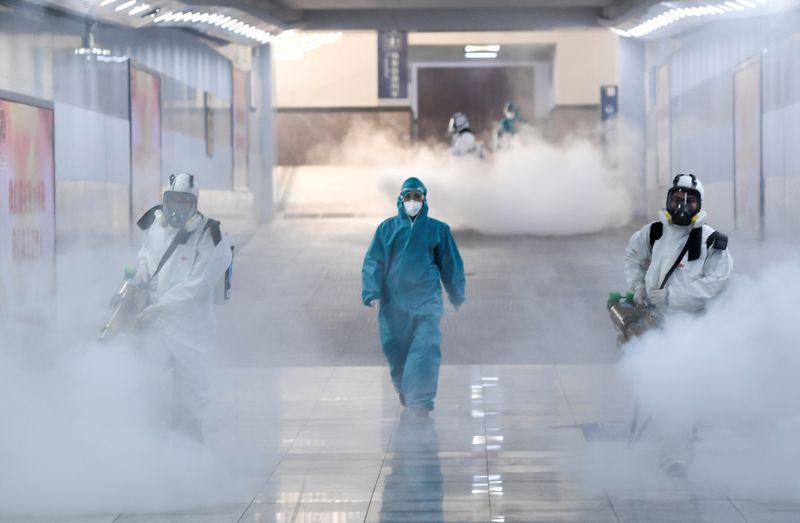
 The spread of a new coronavirus in mainland China and to 27 countries and regions beyond is alarming health experts. Here is what we know – and do not know – about the virus:
HOW DANGEROUS IS THE VIRUS?
The coronavirus family of viruses includes the common cold and more serious diseases such as Severe Acute Respiratory Syndrome (SARS) and Middle East Respiratory Syndrome (MERS).
Many of those with the new virus who have died had pre-existing medical conditions or were elderly, those with weakened immune systems.
Coronavirus infections have a wide range of symptoms, including fever, cough and breathing difficulties.
Statistics from China indicate that about 2% of people infected with the new virus have died, suggesting it may be deadlier than seasonal flu but less deadly than SARS, which killed about 10% of infected individuals. The MERS outbreak in 2012 had a fatality rate of about 35%.
Scientists have labeled the new virus 2019-nCoV.
 HOW IS IT TRANSMITTED AND HOW CAN IT BE PREVENTED?
The virus can be transmitted via droplets when an infected person breathes out, coughs or sneezes, and can also spread via contaminated surfaces such as door handles.
Experts have said it is more easily transmitted than the SARS virus. The incubation period is up to 14 days. People may be able to infect others before symptoms appear.
The World Health Organization (WHO) recommends that people frequently wash hands, cover mouth and nose when sneezing or coughing, and avoid close contact with those who are sick.
DO FACE MASKS HELP?
“We recommend the use of masks for people who have symptoms … because the virus transmits through droplets,” says medical expert Sylvie Briand.
But they do not guarantee protection against infection.
“For people who don’t have symptoms, the mask in fact is not useful,” Briand says.
The American Centers for Disease Control’s advice is that face masks are not required for the general public.
IS THERE ANY TREATMENT?
There is no vaccine.
Chinese scientists were able to identify the genetic sequence of the new coronavirus and shared it publicly. Scientists in Australia have developed a lab-grown version of the virus, a step toward creating a vaccine.
Drugmakers around the globe expect to begin testing experimental vaccines on humans in about three months.
 WHERE HAS IT SPREAD?

About 99% of the more than 20,000 cases have been reported in mainland China. Nearly 230 cases have been reported in about 27 other countries and regions, a Reuters tally based on official statements shows.
At least 490 people have died in China, most in and around the city of Wuhan, where the virus emerged late last year. One person has died in Hong Kong and one in the Philippines, both following visits to Wuhan.
Singapore confirmed four more coronavirus cases on Feb. 5 taking its tally to 28. Thailand has 25 cases.
It took the new coronavirus 48 days to infect the first1,000 people. It took SARS 130 days to infect 1,000 people. It took MERS 2.5 years to infect 1,000 people.
WHAT ARE AUTHORITIES DOING?
The Chinese government has virtually locked down the central province of Hubei, home to 60 million people, and its capital Wuhan.
China is facing mounting isolation as airlines suspend flights to its cities.
The United States and Australia have banned entry to foreign nationals who have recently traveled to China.
Many countries have evacuated their citizens from Hubei and are putting them in quarantine or isolation upon return.
The WHO has not recommended travel or trade curbs with China.
WHERE DID THE VIRUS COME FROM?
It is believed to have originated in a food market in Wuhan that was illegally selling wildlife. Health experts think it may have originated in bats and then passed to humans, possibly via another species.
Source: Reuters





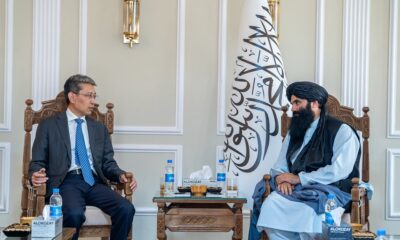



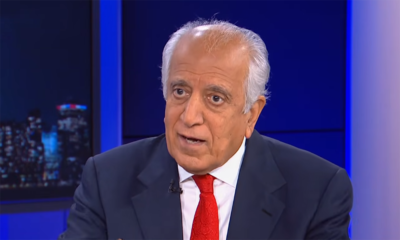




Kazakhstan’s Foreign Minister Mukhtar Tileuberdi has called for pragmatic and coordinated international engagement with Afghanistan, saying the country’s long-term stability is closely linked to the security and sustainable development of Central Asia.
Speaking during the general debate of the 81st session of the United Nations General Assembly in New York on Friday, Tileuberdi said humanitarian assistance to Afghanistan remains essential but alone cannot break the cycle of poverty, displacement and dependency.
He said Kazakhstan supports a “pragmatic, coordinated and step-by-step” approach to international engagement with Afghanistan, with the United Nations playing a central role.
Tileuberdi also said Kazakhstan is working with the UN to operationalize the United Nations Regional Centre for the Sustainable Development Goals for Central Asia and Afghanistan in Almaty.
He said the success of the centre should be measured by the results and assistance it delivers to the region.


Abu Muslim Farah defeat Khurasan Faryab 2-0 in ACL season six

Saar: Concerns over Pakistan’s political crisis discussed

Afghanistan Champions League: Omar Zawak Herat beat Toofan Herat 1-0

Blast in Pakistan’s Dera Ismail Khan kills 11, injures 30

Ariana Afghan Airlines increases Kabul-Delhi cargo flights

Saudi energy group signs major Afghanistan deals covering gas exploration and pipeline plans

Trump floats idea of renaming Atlantic or Pacific Ocean

US hits Egyptian bank branches with Iran sanctions as war marks six months

Nepal flood rescue mission enters critical phase as thousands remain missing

Iranian clubs to face Gulf opponents at neutral venues in Asian Champions League Elite
Saar: Concerns over Pakistan’s political crisis discussed

Exclusive interview with Abdul Latif Mansoor, Minister of MRRD

Tawsia: Overview of Afghanistan’s iron mines

Tahawol: Discussion on fresh Pakistani airstrikes on Afghanistan

Saar: Calls for international support for Afghanistan discussed
-

 World5 days ago
CNN, MS NOW and Politico sue Trump, challenging White House ban
-

 Latest News4 days ago
Ariana Afghan Airlines ranks seventh among 45 Central Asian airlines
-

 Latest News5 days ago
UN reiterates call for respect for international law after Kunar airstrikes
-

 Regional4 days ago
US and Iran hold first talks since June after Trump’s ‘annihilation’ threat
-

 Latest News4 days ago
Silk Road highway in Wakhan corridor now reaches the China border
-

 Regional3 days ago
Iran airlines cancel flights as US sanctions hit
-

 Latest News5 days ago
Afghan Official: Pakistan’s airstrikes will not go unanswered
-

 Regional5 days ago
G7 foreign ministers call on Iran to stop arming Houthis