
Latest News
UN relief chief urges G20 to step up support to avert crises in fragile countries

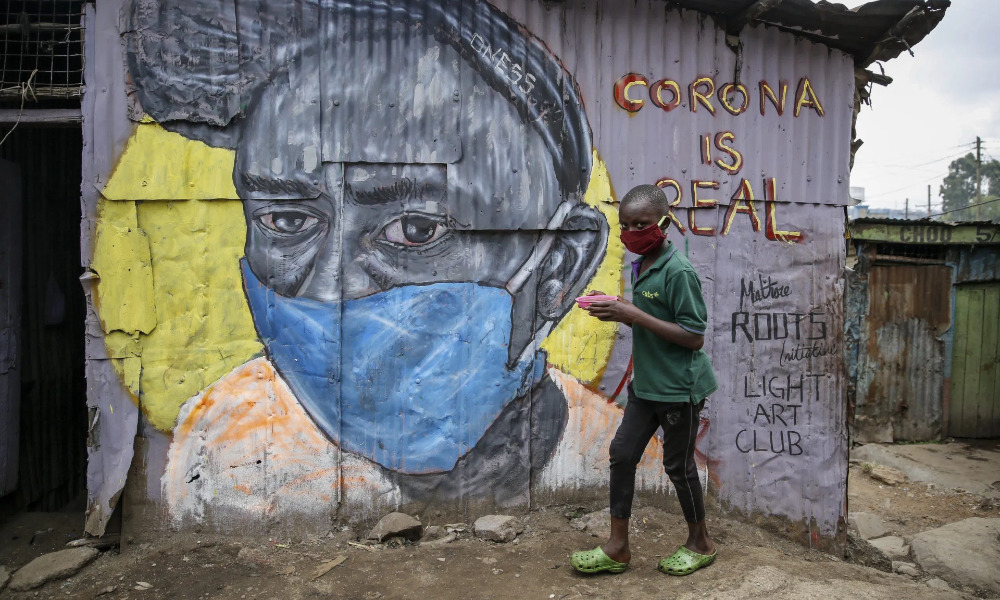
The COVID-19 pandemic and resulting recession are set to trigger the first increase in global poverty in three decades, pushing 265 million people to the point of starvation by the end of the year, the UN’s top humanitarian official warned on Friday.
Mark Lowcock, Under-Secretary-General for Humanitarian Affairs and Emergency Relief Coordinator, called on the world’s leading industrial nations, the G20, to step up support, as he released an updated US$10.3 billion appeal to fight coronavirus spread in 63 low-income countries.
“The pandemic and associated global recession are about to wreak havoc in fragile and low-income countries”, he said.
“The response of wealthy nations so far has been grossly inadequate and dangerously short-sighted. Failure to act now will leave the free to circle round the globe, undo decades of development, and create a generation’s worth of tragic and exportable problems.”
“It doesn’t have to be like this – this is a problem that can be fixed with money from wealthy nations and fresh thinking from the shareholders of international financial institutions and supporters of UN agencies, the Red Cross and Red Crescent Movement, and NGOs,” he said.
As of Thursday, there were more than 13 million cases of COVID-19 worldwide, and nearly 580,000 deaths, according to the World Health Organization.
Lowcock fears that unless G20 countries act now, they will face a series of human tragedies more brutal and destructive than the direct health impacts of the pandemic.
“Rich countries have thrown out the rulebook when it comes to protecting their own economies. They must apply the same exceptional measures to countries that need help”, he declared.
“The prospect of cascading crises more brutal and destructive than anything the virus alone can do must jolt us all out of our comfort zone.”
UN agencies estimate that due to disruptions to health systems caused by the pandemic, some 6,000 children could die every day from preventable causes, while annual deaths from HIV, tuberculosis, and malaria, could double.
Meanwhile, humanitarians said the first confirmed case of the disease was reported in Idlib, Syria, last week, sparking fears of a devastating outbreak in crowded camps housing millions of people displaced by the country’s nearly decade-long conflict.
The COVID-19 Global Humanitarian Response Plan addresses the humanitarian impacts of the pandemic in 63 low- and middle-income countries and supports their efforts to combat it.
The plan prioritizes the world’s most vulnerable citizens, including older persons, people with disabilities, displaced people, and women and girls.
It was initially launched in late March, shortly after WHO declared the global pandemic.
While $1.7 billion has been raised since then, the update includes a supplementary $300 million, to bolster rapid response from NGOs, $500 million for famine prevention, and a sharper focus on preventing gender-based violence.
This comes after two Rome-based UN agencies sounded the alarm in a joint report published on Friday stating that hunger threatens to soar to devastating levels in 25 countries in the coming months due to the impact of the global COVID-19 pandemic.
The World Food Programme (WFP) and Food and Agriculture Organization (FAO) warned the greatest concentration of need is in Africa, but countries in Latin America and the Caribbean, the Middle East and Asia – including middle-income nations – are also being ravaged by crippling levels of food insecurity.
WFP announced that it is scaling up food assistance to an unprecedented 138 million people who face desperate levels of hunger as COVID-19 tightens its grip on some of the world’s most fragile countries.
“Three months ago at the UN Security Council, I told world leaders that we ran the risk of a famine of biblical proportions”, said WFP Executive Director David Beasley.
“Today, our latest data tell us that, since then, millions of the world’s very poorest families have been forced even closer to the abyss”, Beasley said.
“Livelihoods are being destroyed at an unprecedented rate and now their lives are in imminent danger from starvation”, he said.
“Make no mistake – if we do not act now to end this pandemic of human suffering, many people will die.”
Most of the 25 “hotspots” named in the report stretch from West Africa and across the Sahel (north Africa) to East Africa, including the Sahel, as well the Democratic Republic of the Congo, Mozambique, and Zimbabwe.
It also identifies, in the Middle East, Iraq, Lebanon, Syria, and Yemen; in Asia, Bangladesh; and in Latin America and the Caribbean, El Salvador, Guatemala, Haiti, Honduras, Nicaragua, and Venezuela.
Citing some examples, the report says that COVID-19 is compounding a raft of existing problems in South Sudan, making the prospect of famine loom ever larger in areas where inter-communal fighting makes humanitarian access tough or impossible.
In the Middle East, the pandemic is exacerbating Lebanon’s worst-ever economic crisis, where food insecurity is growing fast not only among citizens but also 1.5 million Syrians and other refugees.
Hardest hit in Latin America are more than five million Venezuelan migrants, refugees, and asylum-seekers in neighboring countries, the report says, adding that worsening economic conditions in host countries could well make matters worse.
According to WFP estimates, the number of people living in acute food insecurity in countries affected by conflict, disasters or economic crises could jump from 149 million before the pandemic took hold to 270 million by year’s end if assistance is not provided urgently.










Afghanistan’s Ministry of Labor and Social Affairs says it has summoned representatives of travel agencies over allegations of illegally issuing work visas to Turkey and other countries through black market networks.
According to the ministry, company officials were asked to provide written commitments stating that they would no longer collect money from people under the pretext of obtaining work visas and would fully cooperate with authorities in investigating public complaints.
The ministry also warned the companies against engaging in any illegal activities related to overseas employment visas and said action would be taken against violators.
At the same time, citizens were urged not to fall victim to fraud or false promises and to avoid handing over money or personal documents to unauthorized individuals or companies claiming to arrange foreign work visas.



Qatari ambassador pledges support for restoring Afghanistan’s historical archives

Afghan authorities warn companies over work visa fraud

Trump says US will send additional 5,000 troops to Poland

Chennai Super Kings eliminated as Gujarat Titans register record IPL victory

Afghan hajj minister arrives in Saudi Arabia to oversee services for pilgrims

New Afghanistan-China transport corridor launched via Turkmenistan

Afghanistan signs $46 million deal to develop standard laboratory complexes

Bayat Power extends gas supply deal with Afghan Gas

Germany to launch online visa system for Afghan study and work applicants in Pakistan

Afghanistan launches first 5G trial in Kabul to boost telecom services

Tahawol: Push for agreement between Iran and US discussed

Saar: Afghanistan in China-Russia’s limelight discussed

Tahawol: Call for handing over Afghanistan’s UN seat to IEA discussed

Saar: Pakistan’s emphasis on peaceful ties with Kabul discussed

Tahawol: Reason for postponing US attack on Iran reviewed
-

 Business5 days ago
Chinese and Uzbek investors express interest in Afghanistan’s mining sector
-

 Regional3 days ago
Revised Iranian proposal to end war shared with US, Pakistani source says
-

 Latest News4 days ago
Afghanistan, China discuss Wakhan Corridor cooperation and future infrastructure projects
-

 Regional5 days ago
Azerbaijan hosts record-breaking World Urban Forum in Baku
-

 Sport4 days ago
Canada aim for historic first World Cup win on home soil in 2026
-

 Sport5 days ago
Afghanistan, Kyrgyzstan play out stalemate in CAFA U-20 Championship
-

 Regional4 days ago
Pakistan deploys jet squadron, thousands of troops to Saudi Arabia during Iran war
-
 Health4 days ago
Afghanistan launches second nationwide polio vaccination campaign of 2026