
Latest News
Afghan central bank drained dollar stockpile before Kabul fell

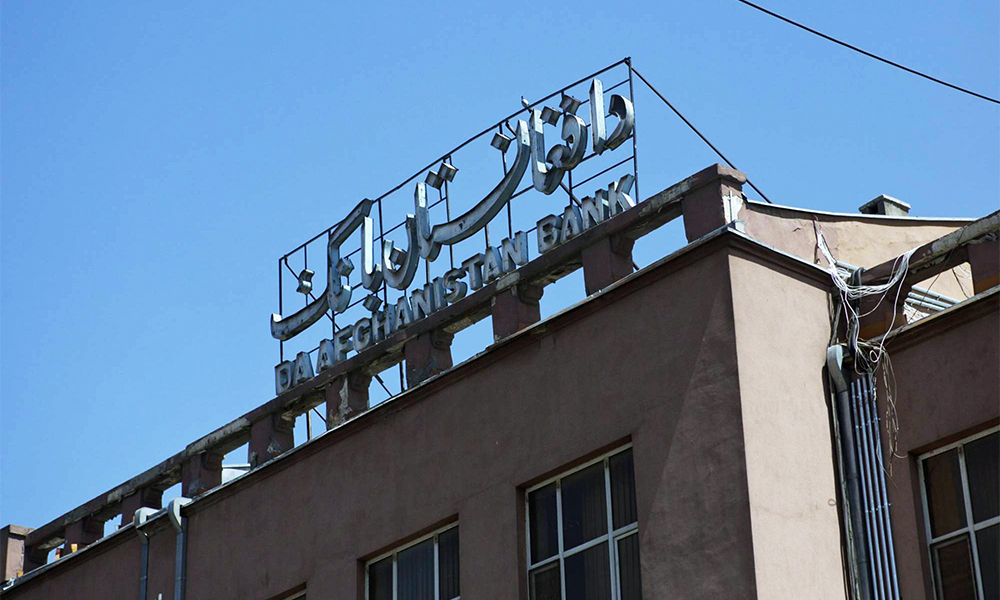
The Afghan central bank ran down most of its U.S. dollar cash reserves in the weeks before the Taliban took control of the country, according to an assessment prepared for Afghanistan’s international donors, exacerbating the current economic crisis.
The confidential, two-page brief, written early this month by senior international economic officials for institutions including the World Bank and International Monetary Fund, said the country’s severe cash shortage began before the Islamic Emirate of Afghanistan (IEA) took control of Kabul, Reuters reported.
It criticised how the central bank’s former leadership handled the crisis in the months before the IEA’s conquest, including decisions to auction unusually large amounts of U.S. dollars and move money from Kabul to provincial branches.
“FX (foreign exchange) reserves in CB’s (central bank) vaults in Kabul have depleted, the CB cannot meet … cash requests,” the report, seen by Reuters, said.
“The biggest source of the problem is the mismanagement at the central bank prior to the Taliban (IEA) takeover,” it added.
Shah Mehrabi, chairman of the central bank’s audit committee who helped oversee the bank before the IEA took over and is still in his post, defended the central bank’s actions, saying it was trying to prevent a run on the local Afghani currency.
The extent of the cash shortage can be seen on the streets of Afghan cities, where people have been queuing for hours to withdraw dollar savings amid strict limits on how much they can take out.
Even before the shock of the Western-backed government’s collapse, the economy was struggling, but the return of the IEA and abrupt end of billions of dollars in foreign aid has left it in deep crisis.
Prices for staples like flour have spiralled while work has dried up, leaving millions facing hunger as winter approaches.
Aid dries up
Under the previous government, the central bank relied on cash shipments of $249 million, delivered roughly every three months in boxes of bound $100 notes and stored in the vaults of the central bank and presidential palace, according to three people with direct knowledge of the matter.
That money has dried up as foreign powers shy away from dealing directly with the IEA.
The central bank, which plays a key role in Afghanistan because it distributes aid from countries like the United States, said on Wednesday it had finalised a plan to meet the country’s foreign currency needs. It gave no details.
The hard currency crunch is making it difficult for the IEA to meet basic needs, including paying for power or dispersing salaries to government employees, many of whom have not been paid in months.
Afghanistan’s roughly $9 billion of offshore reserves were frozen as soon as the IEA captured Kabul, leaving the central bank with just the cash in its vaults.
According to the report, the central bank auctioned off $1.5 billion between June 1 and August 15 to local foreign exchange dealers, which it said was “strikingly high”.
“By August 15, the Central Bank had an outstanding liability of $700 million and 50 billion Afghanis ($569 million) towards the commercial banks,” it said, adding that this had been a major factor in emptying its coffers.
Afghan central bank official Mehrabi said, however, that although almost $1.5 billion of auctions had been announced, the actual amount sold was $714 million.
He said the central bank had “continued its foreign exchange auction to reduce the depreciation and inflation.”
Money missing?
The report also questioned a decision by the central bank to shift some of its reserves to provincial branches, putting it at risk as IEA forces made advances across the country from late 2020 in the runup to their victory.
It said around $202 million was kept in these branches at the end of 2020, compared with $12.9 million in 2019, and that the cash was not moved as provinces started to fall to the IEA.
“Some money is reportedly lost (stolen) from ‘some’ of the provincial branches,” the report said, without specifying how much.
Mehrabi said the central bank was investigating money “stolen” from three of its branches, although not by the IEA. He gave no further details.
Former central bank governor Ajmal Ahmady, who left the country the day after Kabul fell, did not respond to emails and other messages requesting comment on his and the bank’s actions in the months before the IEA returned to power.
Ahmady has said on Twitter in recent weeks that he did his best to manage the situation, and blamed any cash shortfall on the freezing of central bank assets abroad.
In his statements, he also said the central bank had managed the economy well prior to the fall of Kabul and that he felt bad about leaving staff behind but feared for his safety. He has said no money was stolen from any reserve account.












Kazakhstan’s Foreign Minister Mukhtar Tileuberdi has called for pragmatic and coordinated international engagement with Afghanistan, saying the country’s long-term stability is closely linked to the security and sustainable development of Central Asia.
Speaking during the general debate of the 81st session of the United Nations General Assembly in New York on Friday, Tileuberdi said humanitarian assistance to Afghanistan remains essential but alone cannot break the cycle of poverty, displacement and dependency.
He said Kazakhstan supports a “pragmatic, coordinated and step-by-step” approach to international engagement with Afghanistan, with the United Nations playing a central role.
Tileuberdi also said Kazakhstan is working with the UN to operationalize the United Nations Regional Centre for the Sustainable Development Goals for Central Asia and Afghanistan in Almaty.
He said the success of the centre should be measured by the results and assistance it delivers to the region.


Abu Muslim Farah defeat Khurasan Faryab 2-0 in ACL season six

Saar: Concerns over Pakistan’s political crisis discussed

Afghanistan Champions League: Omar Zawak Herat beat Toofan Herat 1-0

Blast in Pakistan’s Dera Ismail Khan kills 11, injures 30

Ariana Afghan Airlines increases Kabul-Delhi cargo flights

Saudi energy group signs major Afghanistan deals covering gas exploration and pipeline plans

Trump floats idea of renaming Atlantic or Pacific Ocean

US hits Egyptian bank branches with Iran sanctions as war marks six months

Nepal flood rescue mission enters critical phase as thousands remain missing

Iranian clubs to face Gulf opponents at neutral venues in Asian Champions League Elite
Saar: Concerns over Pakistan’s political crisis discussed

Exclusive interview with Abdul Latif Mansoor, Minister of MRRD

Tawsia: Overview of Afghanistan’s iron mines

Tahawol: Discussion on fresh Pakistani airstrikes on Afghanistan

Saar: Calls for international support for Afghanistan discussed
-

 World5 days ago
CNN, MS NOW and Politico sue Trump, challenging White House ban
-

 Latest News3 days ago
Ariana Afghan Airlines ranks seventh among 45 Central Asian airlines
-

 Latest News5 days ago
UN reiterates call for respect for international law after Kunar airstrikes
-

 Regional4 days ago
US and Iran hold first talks since June after Trump’s ‘annihilation’ threat
-

 Latest News4 days ago
Silk Road highway in Wakhan corridor now reaches the China border
-

 Regional3 days ago
Iran airlines cancel flights as US sanctions hit
-

 Latest News5 days ago
Afghan Official: Pakistan’s airstrikes will not go unanswered
-

 Sport5 days ago
Afghan boxing referee heads to China for international festival