
Latest News
Hundreds of billions of US dollars “wasted” in Afghanistan

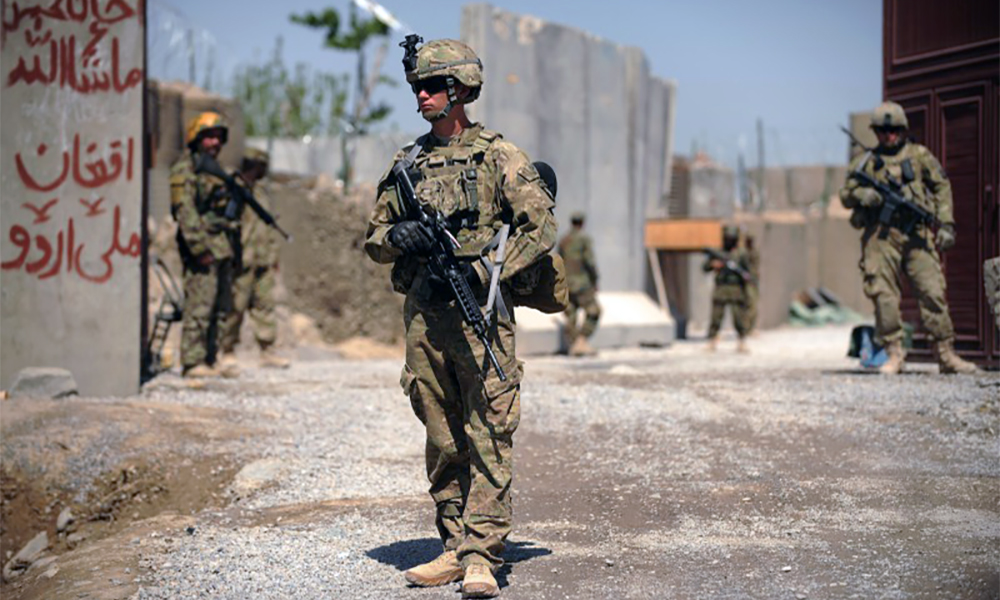
A catalog of “waste, fraud and abuse” reports made against the United States’ reconstruction efforts in Afghanistan have been “temporarily” removed from the Special Inspector General for Afghanistan Reconstruction’s (SIGAR) website.
In an expose by CNN, a US State Department spokesperson told CNN they had asked SIGAR to “temporarily” remove the reports, owing “to safety and security concerns regarding our ongoing evacuation efforts.” The spokesperson added SIGAR had the authority to restore them “when it deems appropriate.”
These reports, published for years on a quarterly basis, gave insight into the abuse and wastage of funds provided by the US government over 20 years.
The in-depth audits detailing these findings have, for the most part, been taken offline, despite having been widely promoted on social media platforms almost weekly for the past few years.
The total cost of the war, according to the Pentagon, was $825 billion, a low-end estimate: even President Joe Biden has cited an estimate that put the amount at over double that — more than $2 trillion, a figure that factors in long-term costs such as veterans’ care. The interest on the debt runs into hundreds of billions already, CNN reported.
However, the $145 billion reconstruction effort lacked oversight, leading Congress to set up SIGAR in 2008.
In their expose, CNN detailed 10 notable cases, stripped of identifying details on SIGAR’s website. The reports had however been collated by CNN over the years.
The cases are as follows:
1) The Tarakhil power plant project that was commissioned in 2007 as a backup generator for the capital, in case electricity supply from Uzbekistan was compromised.
A vast, modern structure, it ran on diesel-fueled turbines, supplied by a brand-name engineering giant. There was one catch: Afghanistan had scant diesel supply of its own and had to ship the fuel in by truck — making the plant too expensive to run, CNN reported.
The facility itself cost $335 million to build, and had an estimated annual fuel cost of $245 million. The most recent SIGAR assessment said at best it was used at just 2.2% capacity, as the Afghan government could not afford the fuel. USAID declined to comment.
2) A half-billion-dollar fleet of cargo planes that flew for a year ended up being sold as scrap.
In 2008, Afghanistan’s fledgling air force needed cargo planes and the Pentagon chose the G222 — an Italian-designed aircraft designed to take off and land on rough runways.
That first year, according to a speech made by SIGAR’s chief John Sopko, citing a USAF officer, the planes were very busy.
But they would not be sustainable. The aircraft were only noticed by SIGAR when Sopko noticed them parked at Kabul airport and asked what they were doing there.
Six years after the procurement was launched, the 16 aircraft delivered to Afghanistan were sold for scrap for $40,257. The cost of the project totaled $549 million.
3) A $36 million Marines HQ in the desert was neither wanted nor used, Sopko said in a speech, but this 64,000-square foot control center in Helmand cost $36 million to build in 2010 and was never used. Sopko recalled the base commander and two other marine generals said it was not needed as it would not be completed fast enough but said the thought of returning the funds to Congress “was so abhorrent to the contracting command, it was built anyway. The facility was never occupied, Camp Leatherneck was turned over to the Afghans, who abandoned it.”
4) In 2007, $28 million was spent on a new camouflage pattern for army uniforms for the Afghans. A total of 1.3 million sets were ordered costing $43 to $80 each, as opposed to $25 to $30 originally estimated for replacement uniforms.
The uniforms were never tested or evaluated in the field, and Sopko said it cost taxpayers an extra $28 million to buy the uniforms with a patented pattern.
SIGAR projected in 2017 a different choice of pattern could have saved a potential $72 million over the next decade.
5) The US spent $1.5 million a day on counter-narcotics programs (from 2002 to 2018). Opium production was, according to the last SIGAR report, up in 2020 by 37% compared to the year before. This was the third-highest yield since records began in 1994.
In 2017, production was four times what it was in 2002. A State department spokesperson noted “the Taliban (IEA) have been the primary factor contributing to poppy’s persistence in recent years” and “that the Taliban (IEA) have committed to banning narcotics.”
6) An extensive ring road around Afghanistan was funded by multiple grants and donors, totaling billions during the course of the war. Towards the end of the project, a 233-kilometer section in the North, between the towns of Qeysar and Laman, led to $249 million being handed out to contractors, but only 15% of the road was being built, a SIGAR audit reported.
Between March 2014 and September 2017, there was no construction on this section, and what had been built deteriorated, the report concluded. USAID declined to comment.
7) An extensive hotel and apartment complex was commissioned next to the US Embassy in Kabul, for which the US government provided $85 million in loans.
In 2016, SIGAR concluded “the $85 million in loans is gone, the buildings were never completed and are uninhabitable, and the U.S. Embassy was forced to provide security for the site at additional cost to U.S. taxpayers.”
The audit concluded the contractor made unrealistic promises to secure the loans, and that the branch of the US government who oversaw the project never visited the site, and neither did the company they later hired to oversee the project. A State department spokesperson said they did not manage the construction and it was “a private endeavor.”
8) The Pentagon created the Task Force for Business and Stability Operations (TFBSO) expanded from Iraq to include Afghanistan in 2009, for whose operations in Afghanistan Congress set aside $823 million.
Over half the money actually spent by TFBSO — $359 million of $675 million — was “spent on indirect and support costs, not directly on projects in Afghanistan,” SIGAR concluded in an audit.
They reviewed 89 of the contracts TFBSO made, and found “seven contracts worth $35.1 million were awarded to firms employing former TFBSO staff as senior executives.”
An audit also concluded that the fund spent about $6 million on supporting the cashmere industry, $43 million on a compressed natural gas station, and $150 million on high-end villas for its staff.
9) A 2015 report into USAID’s funding of healthcare facilities in Afghanistan said that over a third of the 510 projects they had been given coordinates for, did not exist in those locations. Thirteen were “not located in Afghanistan, with one located in the Mediterranean Sea.” Thirty “were located in a province different from the one USAID reported.”
And “189 showed no physical structure within 400 feet of the reported coordinates. Just under half of these locations showed no physical structure within a half mile of the reported coordinates.”
The audit said that USAID and the Afghan ministry of Public Health could only provide “oversight of these facilities [if they] know where they are.” USAID declined to comment.
10) At least $19 billion lost to “waste, fraud, abuse”
An October 2020 report presented a startling total for the war. Congress at the time had appropriated $134 billion since 2002 for reconstruction in Afghanistan.
SIGAR was able to review $63 billion of it — nearly half. They concluded $19 billion of that — almost a third — was “lost to waste, fraud, and abuse.”
DoD spokesman Lodewick told CNN they and “several other U.S. Government departments and agencies are already on record as having challenged some of these reports as inaccurate and misleading” and that their conclusions “appeared to overlook the difference between reconstruction efforts that may have been mismanaged willfully/negligently and those efforts that, at the time of the report, simply had fallen short of strategic goals.”








Afghanistan’s Ministry of Defense says a Pakistani military post near Spin Boldak was targeted and destroyed after Pakistani forces opened fire toward Afghanistan.
Ministry spokesperson Enayatullah Khwarazmi said in a post on X that Afghan forces suffered no casualties or damage in the clash.
Khwarazmi also rejected claims made by the Pakistani side about the incident, describing them as “propaganda.”
Latest News
Mujahid: Pakistan attacking Afghanistan to evade Mecca Pact responsibilities
He warned that the Islamic Emirate would give an “appropriate response” to what he called the Pakistani military regime’s “bullying.”
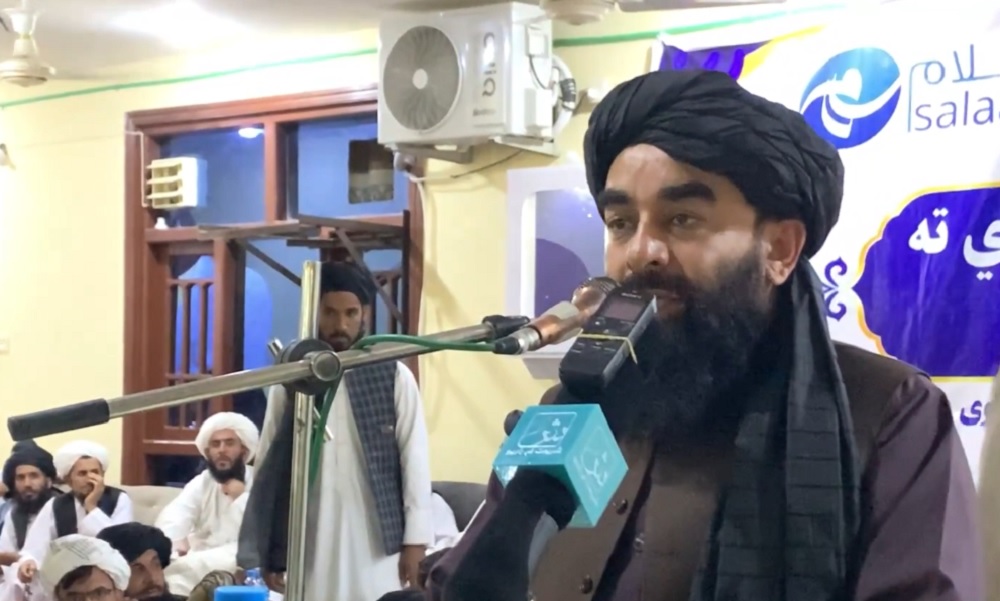
Islamic Emirate spokesperson Zabihullah Mujahid has accused Pakistan of carrying out attacks on Afghanistan to divert attention from its domestic problems and to evade responsibilities under the “Mecca Pact.”
Speaking at a religious seminary in Kandahar, Mujahid said Pakistan was facing political and economic challenges at home and was using attacks on Afghanistan to shift public attention away from protests and its internal problems.
“Pakistan, by violating the territory of its neighboring Islamic country, wants to divert attention from its failures,” he said.
Mujahid also criticized Pakistan’s political situation, claiming that political space had been restricted and that freedoms guaranteed under the country’s laws were not being allowed.
He said Pakistan’s economic problems had also increased significantly and accused the country of seeking to distract the public from those problems by engaging in conflict with Afghanistan.
Mujahid further accused Pakistan’s military leadership of putting the Pakistani people at risk through what he described as its “false position.”
He warned that the Islamic Emirate would give an “appropriate response” to what he called the Pakistani military regime’s “bullying.”
His remarks followed Pakistani airstrikes on Kandahar, Paktia and Khost provinces on Thursday, which Afghan authorities said killed four civilians.
The strikes came three days after attacks on Kunar and Paktika provinces, in which Afghan authorities said three civilians were killed.
Latest News
Kabul rejects U.S. claim that meth seized in Pakistan was of Afghan origin
Balkhi said the Islamic Emirate of Afghanistan (IEA) has imposed an absolute ban on the production, trafficking and use of all types of narcotics in Afghanistan.
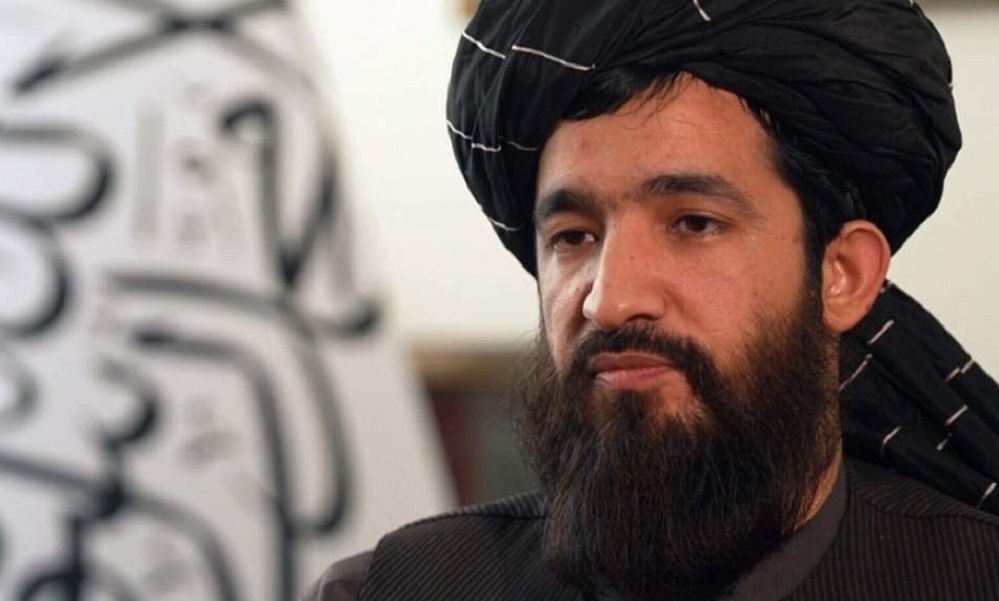
Afghanistan’s Foreign Ministry spokesperson Abdul Qahar Balkhi has rejected a U.S. claim that 463 kilograms of synthetic drugs seized in Pakistan were of Afghan origin, calling the attribution “unfounded and politically motivated.”
Balkhi said the U.S. Embassy in Islamabad should investigate the origin of the seized drugs in Pakistan rather than attributing them to Afghanistan.
“The attribution by the U.S. Embassy in Islamabad of the synthetic drugs bound for Sri Lanka and intercepted in Pakistan through joint U.S.-Pakistani efforts as ‘Afghan-origin’ is an unfounded and politically motivated allegation,” Balkhi said.
He said the Islamic Emirate of Afghanistan (IEA) has imposed an absolute ban on the production, trafficking and use of all types of narcotics in Afghanistan.
Balkhi also claimed that following the ban in Afghanistan, the cultivation, production and trafficking of narcotics have increased “on the other side of the Durand Line.”
He further argued that Afghanistan does not have the capacity to produce synthetic drugs and said crossing points along the Durand Line have been completely closed to all movement for nearly a year.
His remarks came after the U.S. Embassy in Islamabad said U.S. and Pakistani anti-narcotics authorities had seized 463 kilograms of crystal methamphetamine worth an estimated $21 million and bound for Sri Lanka.
The embassy said the operation led to multiple arrests and highlighted ongoing U.S. cooperation and training with Pakistani authorities to disrupt international drug-trafficking networks.


Exclusive interview with Abdul Latif Mansoor, Minister of MRRD

Sorkh Poshan Khafi rout Istiqlal Kabul 6-0 in ACL season six

Tawsia: Overview of Afghanistan’s iron mines

Afghanistan Champions League: Arman FC and Aino Mina play out goalless draw

Afghanistan says Pakistani military post destroyed near Spin Boldak

Saudi energy group signs major Afghanistan deals covering gas exploration and pipeline plans

ATN secures exclusive rights to broadcast T20I series in India across Afghanistan

Trump floats idea of renaming Atlantic or Pacific Ocean

US hits Egyptian bank branches with Iran sanctions as war marks six months

Nepal flood rescue mission enters critical phase as thousands remain missing
Exclusive interview with Abdul Latif Mansoor, Minister of MRRD
Tawsia: Overview of Afghanistan’s iron mines

Tahawol: Discussion on fresh Pakistani airstrikes on Afghanistan

Saar: Calls for international support for Afghanistan discussed

Tahawol: Opening of the 81st UN General Assembly Session
-

 Sport4 days ago
Afghanistan to face Japan and Nepal in Asian Games cricket group stage
-
 Regional4 days ago
Iran and US trade threats after Houthi attacks escalate regional conflict
-

 World4 days ago
CNN, MS NOW and Politico sue Trump, challenging White House ban
-
 Health4 days ago
Four-day polio vaccination campaign begins across Afghanistan
-

 Latest News3 days ago
UN reiterates call for respect for international law after Kunar airstrikes
-
 Latest News4 days ago
Khalilzad condemns Pakistan airstrikes, says current strategy is not working
-

 Latest News2 days ago
Ariana Afghan Airlines ranks seventh among 45 Central Asian airlines
-

 Latest News3 days ago
Afghan Official: Pakistan’s airstrikes will not go unanswered