
Latest News
Ghani tells BBC his biggest mistake was trusting foreign partners

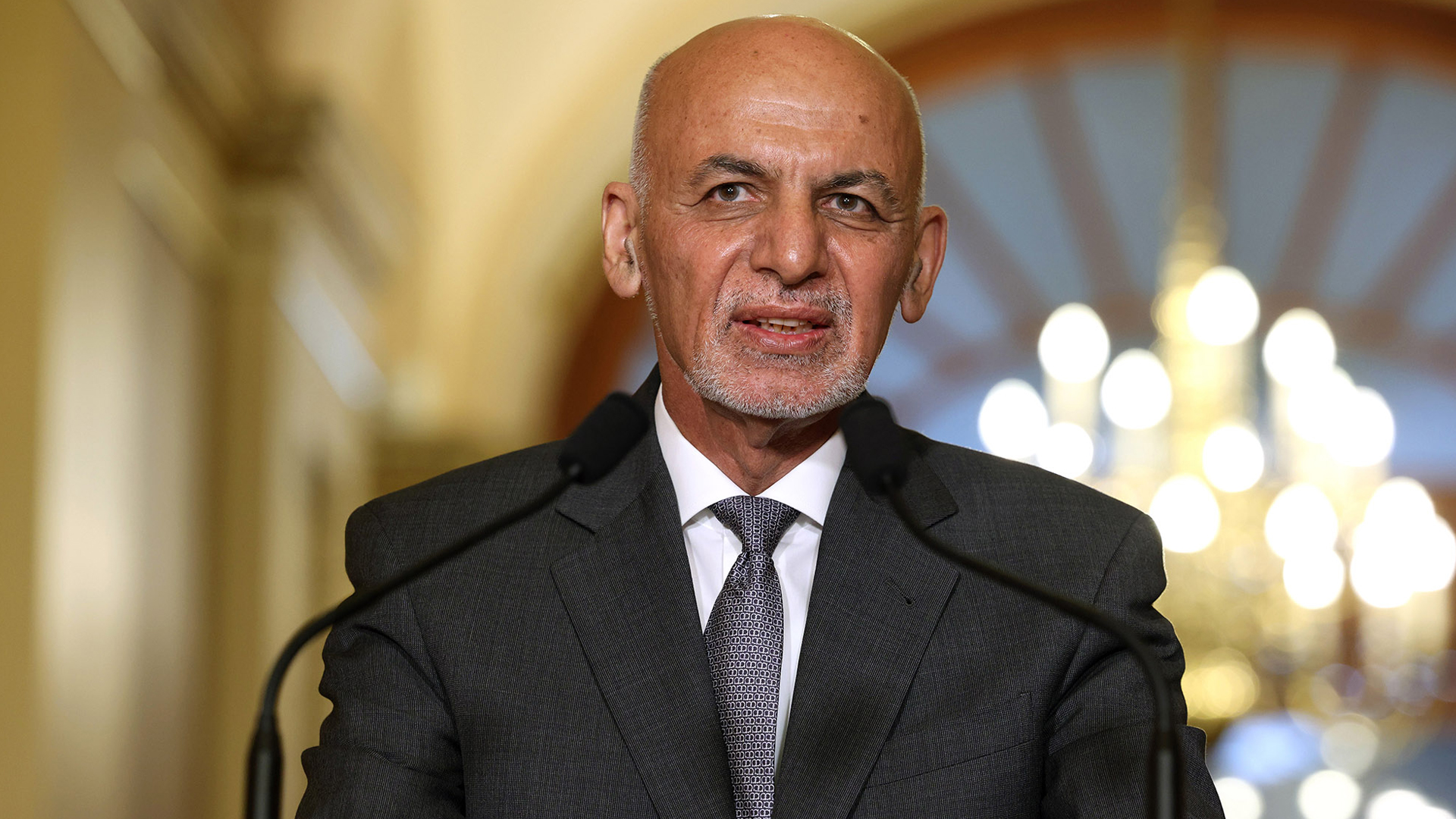
Former President Ashraf Ghani said on Thursday that his biggest mistake had been to trust the United States and Afghanistan’s other foreign partners.
In his first interview since fleeing the country in mid-August, the former president told BBC Radio 4 that leaving Afghanistan had not been planned and that only after takeoff in a helicopter did this course of action become clear.
Ghani has been heavily criticized and accused of abandoning the country but he defended his decision to flee.
The Islamic Emirate of Afghanistan (IEA) seized power in August after taking control of Kabul – just hours after Ghani fled the country.
Ghani told BBC that when he woke up on 15 August he had “no inkling” it would be his last day in Afghanistan.
In a conversation with General Sir Nick Carter, the UK’s former Chief of the Defence Staff, who was guest-editing BBC Radio 4’s Today program on Thursday, Ghani said IEA fighters had agreed not to enter Kabul – “but two hours later, this was not the case”.
“Two different factions of the Taliban (IEA) were closing in from two different directions,” Ghani said. “And the possibility of a massive conflict between them that would destroy the city of five million and bring havoc to the people was enormous.”
He said he agreed to let his national security adviser and wife leave Kabul, but then the “terrified” chief of presidential security came to him to say that if he took a stand, “they will all be killed”.
“He did not give me more than two minutes,” Ghani said. “My instructions had been to prepare for departure for [the city of] Khost. He told me that Khost had fallen and so had Jalalabad.
“I did not know where we will go. Only when we took off, it became clear that we were leaving [Afghanistan]. So this really was sudden.”
Ghani was widely criticized for having fled the country, also by his vice-president Amrullah Saleh, who called it “disgraceful”.
Many people, who were privy to talks at the time, have said in the past few months that Ghani’s sudden secret departure on 15 August scuppered a deal to secure a more orderly transition.
Ghani, who is living in the UAE, said in conversation that he misread US politics and the situation on the ground at the time.
Allegations of him having taken vast amounts of money also emerged following his departure and just this week was he named as one of the most corrupt people in the world.
Ghani however denied this and said he would welcome an international investigation into the allegations so that he can clear his name.
“I want to categorically state, I did not take any money out of the country,” he said, adding: “My style of life is known to everyone. What would I do with money?”
He did however acknowledge that mistakes were made, including “assuming that the patience of the international community would last”.
However, he pointed to the agreement made between the IEA and the US under then-President Donald Trump, which paved the way for the events leading to 15 August.
“Instead of a peace process, we got a withdrawal process,” Ghani said. The way the deal was done “erased us”, said Ghani.
Ghani said that what happened on August 15 was “a violent coup, not a political agreement, or a political process where the people have been involved”.
The same day Ghani left Kabul, the IEA took control. Since then, the country has been thrown into a humanitarian and economic crisis, exacerbated by the removal of donor support and foreign aid as well as the freezing of over $9 billion of Afghanistan’s foreign reserves.
Four months later, Ghani says he is willing to take the blame for some things which led to the fall of Kabul – like trusting “in our international partnership”.
He told BBC that his “life work has been destroyed. My values had been trampled on. And I have been made a scapegoat.”













Kazakhstan’s Foreign Minister Mukhtar Tileuberdi has called for pragmatic and coordinated international engagement with Afghanistan, saying the country’s long-term stability is closely linked to the security and sustainable development of Central Asia.
Speaking during the general debate of the 81st session of the United Nations General Assembly in New York on Friday, Tileuberdi said humanitarian assistance to Afghanistan remains essential but alone cannot break the cycle of poverty, displacement and dependency.
He said Kazakhstan supports a “pragmatic, coordinated and step-by-step” approach to international engagement with Afghanistan, with the United Nations playing a central role.
Tileuberdi also said Kazakhstan is working with the UN to operationalize the United Nations Regional Centre for the Sustainable Development Goals for Central Asia and Afghanistan in Almaty.
He said the success of the centre should be measured by the results and assistance it delivers to the region.


Abu Muslim Farah defeat Khurasan Faryab 2-0 in ACL season six

Saar: Concerns over Pakistan’s political crisis discussed

Afghanistan Champions League: Omar Zawak Herat beat Toofan Herat 1-0

Blast in Pakistan’s Dera Ismail Khan kills 11, injures 30

Ariana Afghan Airlines increases Kabul-Delhi cargo flights

Saudi energy group signs major Afghanistan deals covering gas exploration and pipeline plans

Trump floats idea of renaming Atlantic or Pacific Ocean

US hits Egyptian bank branches with Iran sanctions as war marks six months

Nepal flood rescue mission enters critical phase as thousands remain missing

Iranian clubs to face Gulf opponents at neutral venues in Asian Champions League Elite
Saar: Concerns over Pakistan’s political crisis discussed

Exclusive interview with Abdul Latif Mansoor, Minister of MRRD

Tawsia: Overview of Afghanistan’s iron mines

Tahawol: Discussion on fresh Pakistani airstrikes on Afghanistan

Saar: Calls for international support for Afghanistan discussed
-

 World5 days ago
CNN, MS NOW and Politico sue Trump, challenging White House ban
-

 Latest News3 days ago
Ariana Afghan Airlines ranks seventh among 45 Central Asian airlines
-

 Latest News4 days ago
UN reiterates call for respect for international law after Kunar airstrikes
-

 Regional4 days ago
US and Iran hold first talks since June after Trump’s ‘annihilation’ threat
-

 Latest News3 days ago
Silk Road highway in Wakhan corridor now reaches the China border
-

 Latest News5 days ago
Afghan Official: Pakistan’s airstrikes will not go unanswered
-

 Sport4 days ago
Afghan boxing referee heads to China for international festival
-

 Regional5 days ago
G7 foreign ministers call on Iran to stop arming Houthis