
Latest News
UNHCR chief appeals for global engagement to address Afghanistan’s needs

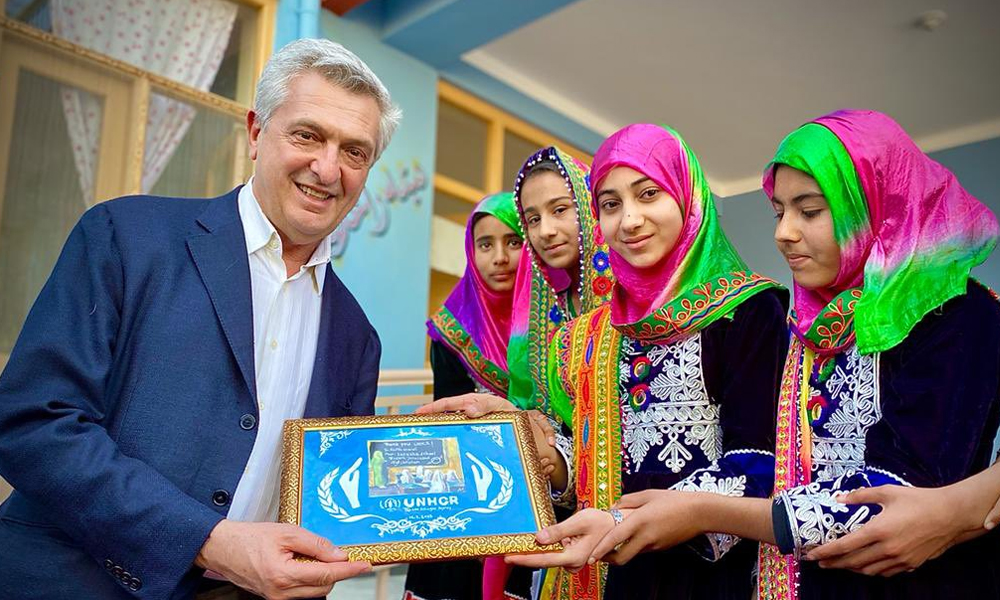
Declaring that the world must deliver sustained support to the people of Afghanistan, UN High Commissioner for Refugees, Filippo Grandi, appealed for robust assistance to address the country’s humanitarian needs and those of Afghan refugees abroad.
“As much as the world is rightfully preoccupied with the war in Ukraine, Afghanistan is experiencing a very grave crisis,” Grandi said at the end of a four-day visit to the country.
“We speak with people who do not know what they will eat for their next meal; women heads of households afraid for the health and well-being of their children; mothers and fathers desperate to provide for their families. The needs here are enormous,” Grandi declared after a visit that included the opening of a UNHCR-built health centre in Kandahar and to a girls school which UNHCR constructed in Jalalabad.
Grandi arrived in Afghanistan on Monday and met with the interim Afghan government as well as UN and NGO workers who continue to provide vital assistance throughout the country. During his meetings, Grandi said UNHCR’s commitment to stay and deliver humanitarian aid to the people of Afghanistan is unwavering.
So far in 2022, the UN Refugee Agency’s assistance and relief programmes have helped more than 500,000 Afghans, including more than 130,000 people who received relief items or direct financial assistance to survive the winter and more than 370,000 people who benefited from health centres, schools, water systems and other infrastructure that UNHCR has built in areas prioritised for the return of refugees and IDPs.
“Some 3.4 million people are internally displaced due to conflict, the healthcare system is experiencing severe shortages amid the COVID crisis and a measles outbreak, key workers in vital services like schools and hospitals are without salaries, while the liquidity crisis, rising global food and energy costs are having a devastating effect,” Grandi declared.
“Overall, 24 million people throughout Afghanistan require humanitarian support this year and we appeal to donors to fund a large humanitarian effort which I have seen is delivering critical results.”
“Protecting the rights and well-being of Afghans requires long-term political and economic stability,” Grandi said.
“Without support to the UN and partners’ work, however, the hardship I witnessed this week in Jalalabad, Kandahar and Kabul will mount,” he said.







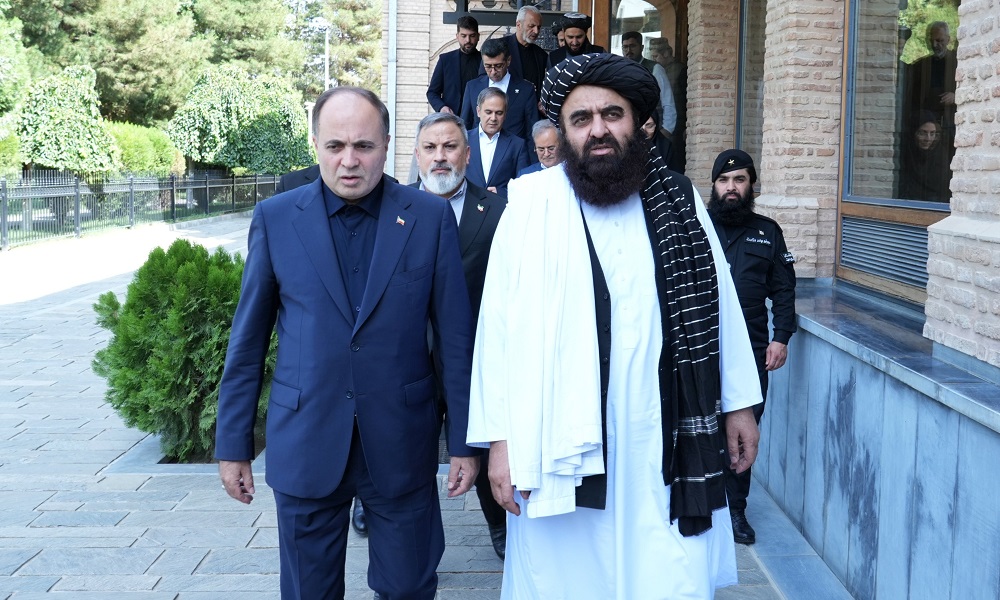
Amir Khan Muttaqi, the Islamic Emirate’s Foreign Minister, met with Gholamreza Nouri Ghezeljeh, Iran’s Minister of Agriculture Jihad, in Kabul on Thursday.
Afghanistan’s Foreign Ministry said the two sides held comprehensive discussions on bilateral relations, expanding economic and transit cooperation, and holding the seventh meeting of the Joint Economic Commission between the two countries.
Muttaqi welcomed the progress in practical economic and transit cooperation between Afghanistan and Iran, saying there are further opportunities to expand bilateral ties.
Iran’s agriculture minister also stressed the importance of making use of existing opportunities for cooperation in various sectors and called for expanding current areas of cooperation.
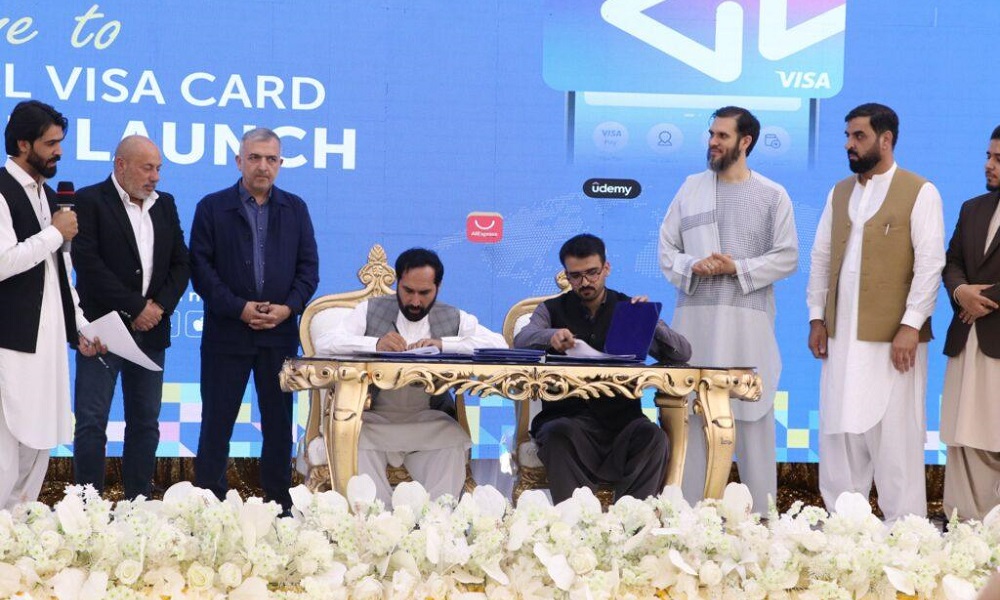
Da Afghanistan Bank (DAB) has unveiled a new visa card and HesabPay mobile application as part of efforts to expand digital financial services in Afghanistan.
The new products were introduced at an event in Kabul on Thursday, where Ahmad Shahpoor Mia Khail, the bank’s deputy governor for supervision, urged Afghans to use digital cards for payments and cash withdrawals.
Mia Khail said improving public trust and providing better financial services remain among the bank’s priorities, describing the digitization of the financial system as a key step toward electronic transactions.
“Our sole objective is to enable every Afghan to make payments using a card, mobile phone or other means,” he said.
Officials from several companies said around one million active customers in Afghanistan currently use HesabPay services, adding that they are committed to expanding access to financial services.
Ahmad Khalid Wadan, the owner of one of the companies, said the initiative aims to help build “a strong, secure and reliable digital financial system” in Afghanistan.
Da Afghanistan Bank has repeatedly called for the digitization of monetary and commercial transactions, saying it can improve transparency and efficiency and help expand economic activity.
Human Rights Watch in a statement on Wednesday called for the release of two UN staffers and six NGO workers in Afghanistan.
HRW said that six male staff working with the Women and Children Legal Research Foundation (WCLRF) had been “forcibly disappeared” from the NGO’s Kabul office last month. The NGO has been involved in aid programmes and advocacy on women’s and children’s rights, HRW said.
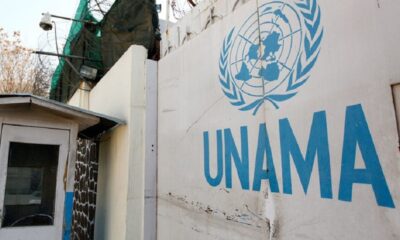
In a separate incident, Human Rights Watch also called for the release of two Afghan staff members of the UN’s Assistance Mission in Afghanistan (UNAMA), who were detained by IEA officials in the western city of Herat on Sunday.
The IEA’s spokesman, Zabihullah Mujahid, told Reuters that he was “trying to gather details” about the recent detentions, but had “not received final clarity.”
The UN confirmed the detention of two of its staffers earlier this week. “UNAMA has not been informed of the charges against them and has not been permitted to visit them,” Farhan Haq, deputy spokesman for the UN Secretary-General, said in a briefing on Wednesday.
Fereshta Abbasi, Afghanistan Researcher at Human Rights Watch, said in a statement that the detentions of UNAMA staff threatened the UN’s “ability to deliver lifesaving aid.”
As the UN’s political mission in Afghanistan, UNAMA is involved in human rights monitoring and data gathering. Its reports have frequently been criticised by the IEA government in the past.


Tahawol: Trade cooperation between Afghanistan and Iran discussed

Saar: Discussion on Islamic Emirate’s five-year journey

IEA FM Muttaqi, Iranian agriculture minister discuss economic cooperation

Da Afghanistan Bank unveils visa card and new HesabPay app

Human Rights Watch urges IEA to release detained UN, NGO staff

Pakistan’s governance system has ‘collapsed’: Mohsin Naqvi

Spain sweep FIFA World Cup player awards after historic triumph

Iran, Afghanistan and Tajikistan discuss expanding regional transit cooperation

Afghanistan temporarily eases fuel import standards to help curb rising prices

OCHA warns Afghanistan’s maternal health system under mounting strain
Tahawol: Trade cooperation between Afghanistan and Iran discussed
Saar: Discussion on Islamic Emirate’s five-year journey

Tahawol: Afghanistan’s future in the global press discussed

Saar: The Islamic Emirate’s five-year rule discussed

Tahawol: Hamid Karzai’s call for Afghan reconciliation discussed
-

 Sport4 days ago
Afghanistan secure direct qualification for 2027 Men’s ODI World Cup
-
 Latest News4 days ago
Pakistan-backed armed groups in Balochistan using former Afghan government forces: report
-
 Sport4 days ago
Abasin Defenders stun Kabul Zalmi in Kabul Premier League
-
 Regional4 days ago
Turkey, Pakistan, Saudi Arabia defence pact technically same as NATO’s Article 5, Turkish minister says
-

 Sport4 days ago
Kabul Premier League gets underway with high-scoring opener
-
 Latest News5 days ago
Russia eyes railway route via Afghanistan as alternative to Strait of Hormuz
-
 Latest News4 days ago
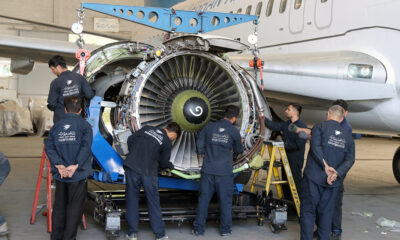
Ariana Airlines brings $2.3 million Boeing 737 engine from US to Kabul
-
 Latest News4 days ago
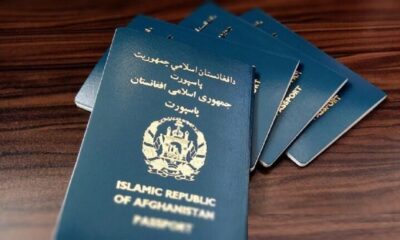
Afghanistan issues more than 650,000 passports in one year