
Latest News
UN chief urges the world to act together to end food insecurity crisis

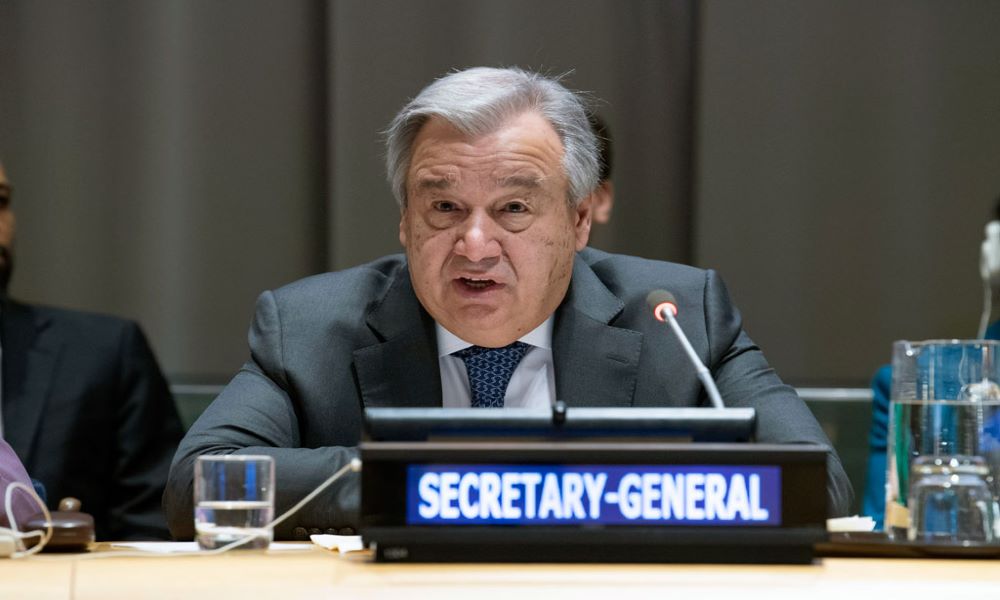
United Nations Secretary-General Antonio Guterres said Wednesday the war in Ukraine is stoking a global food crisis, which could last for years.
Addressing a ministerial meeting on global hunger at UN Headquarters in New York, Guterres said the number of severely food insecure people had doubled in just two years – from 135 million pre-COVID pandemic to 276 million today, with more than half a million experiencing famine conditions – an increase of more than 500 percent since 2016.
“These frightening figures are inextricably linked with conflict, as both cause, and effect,” he said. “If we do not feed people, we feed conflict”.
Discussing hunger triggers, he said the climate emergency is another driver of global hunger and pointed out that 1.7 billion people have been affected by extreme weather and climate-related disasters over the past decade.
Moreover, the COVID-induced economic shock has compounded food insecurity by reducing incomes and disrupting supply chains, leading to an uneven economic recovery, he said.
“Now the war in Ukraine is amplifying and accelerating all these factors: climate change, COVID-19, and inequality,” Guterres said.
Guterres warned that the Ukraine war threatens to tip “tens of millions of people over the edge into food insecurity, followed by malnutrition, mass hunger and famine, in a crisis that could last for years.”
“In the past year, global food prices have risen by nearly one-third, fertilizer by more than half, and oil prices by almost two-thirds”.
According to the UN, between them, Ukraine and Russia produce almost a third of the world’s wheat and barley and half of its sunflower oil, while Russia and Belarus are the world’s number two and three producers of potash, a key ingredient of fertilizer.
“If high fertilizer prices continue, today’s crisis in grain and cooking oil could affect many other foods including rice, impacting billions of people in Asia and the Americas,” he said.
However, if we act together, there is enough food for everyone, he said adding that “ending hunger is within our reach”.
Guterres then outlined five urgent steps to solve the short-term crisis and prevent long-term damage, beginning with reducing market pressure by increasing food supplies – with no restrictions on exports and surpluses available to those most in need.
“But let’s be clear: there is no effective solution to the food crisis without reintegrating Ukraine’s food production, as well as the food and fertilizer produced by Russia and Belarus, into world markets, despite the war”.
Social protection systems must cover all in need with food, cash; and water, sanitation, nutrition, and livelihood support must be provided, he said adding that th, governments must bolster agricultural production and invest in resilient food systems that protect smallholder food producers.
And finally, humanitarian operations must be fully funded to prevent famine and reduce hunger.
“The food crisis has no respect for borders, and no country can overcome it alone,” he said.
“Our only chance of lifting millions of people out of hunger is to act together, urgently and with solidarity”.












Kazakhstan’s Foreign Minister Mukhtar Tileuberdi has called for pragmatic and coordinated international engagement with Afghanistan, saying the country’s long-term stability is closely linked to the security and sustainable development of Central Asia.
Speaking during the general debate of the 81st session of the United Nations General Assembly in New York on Friday, Tileuberdi said humanitarian assistance to Afghanistan remains essential but alone cannot break the cycle of poverty, displacement and dependency.
He said Kazakhstan supports a “pragmatic, coordinated and step-by-step” approach to international engagement with Afghanistan, with the United Nations playing a central role.
Tileuberdi also said Kazakhstan is working with the UN to operationalize the United Nations Regional Centre for the Sustainable Development Goals for Central Asia and Afghanistan in Almaty.
He said the success of the centre should be measured by the results and assistance it delivers to the region.


Abu Muslim Farah defeat Khurasan Faryab 2-0 in ACL season six

Saar: Concerns over Pakistan’s political crisis discussed

Afghanistan Champions League: Omar Zawak Herat beat Toofan Herat 1-0

Blast in Pakistan’s Dera Ismail Khan kills 11, injures 30

Ariana Afghan Airlines increases Kabul-Delhi cargo flights

Saudi energy group signs major Afghanistan deals covering gas exploration and pipeline plans

Trump floats idea of renaming Atlantic or Pacific Ocean

US hits Egyptian bank branches with Iran sanctions as war marks six months

Nepal flood rescue mission enters critical phase as thousands remain missing

Iranian clubs to face Gulf opponents at neutral venues in Asian Champions League Elite
Saar: Concerns over Pakistan’s political crisis discussed

Exclusive interview with Abdul Latif Mansoor, Minister of MRRD

Tawsia: Overview of Afghanistan’s iron mines

Tahawol: Discussion on fresh Pakistani airstrikes on Afghanistan

Saar: Calls for international support for Afghanistan discussed
-

 World5 days ago
CNN, MS NOW and Politico sue Trump, challenging White House ban
-

 Latest News3 days ago
Ariana Afghan Airlines ranks seventh among 45 Central Asian airlines
-

 Latest News4 days ago
UN reiterates call for respect for international law after Kunar airstrikes
-

 Regional4 days ago
US and Iran hold first talks since June after Trump’s ‘annihilation’ threat
-

 Latest News3 days ago
Silk Road highway in Wakhan corridor now reaches the China border
-

 Latest News5 days ago
Afghan Official: Pakistan’s airstrikes will not go unanswered
-

 Sport4 days ago
Afghan boxing referee heads to China for international festival
-

 Regional3 days ago
Iran airlines cancel flights as US sanctions hit