
Latest News
Pakistan’s interim PM says IEA listening to Islamabad’s concerns

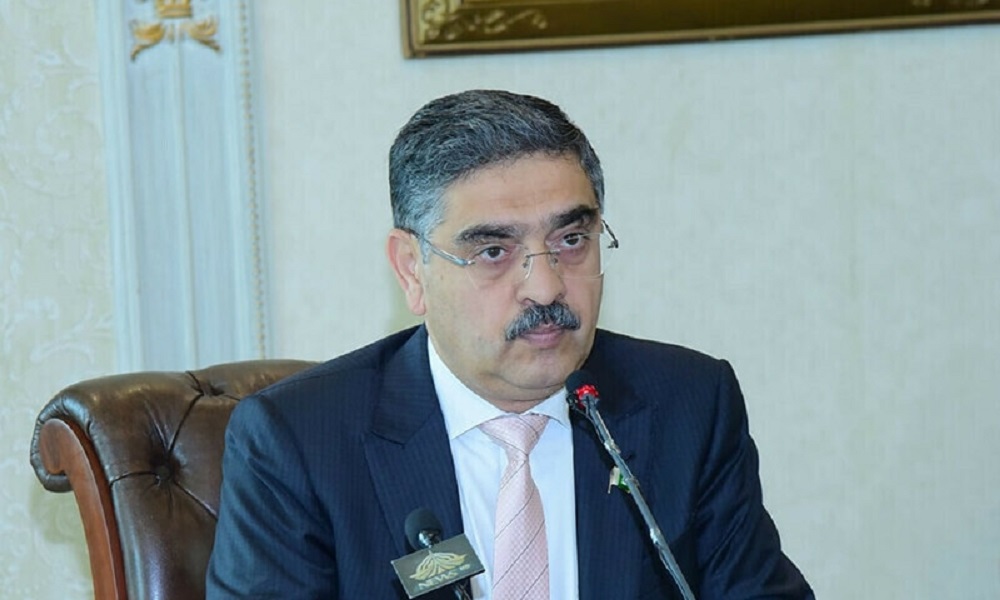
Pakistan’s caretaker Prime Minister Anwaar-ul-Haq Kakar has ruled out a perception that the Islamic Emirate of Afghanistan (IEA) is not listening to Islamabad’s concerns.
“I don’t think that there is a perception that the Taliban (IEA) is not listening to Pakistan, neither there is any such thing Pakistan has some special demand related to the Taliban (IEA),” he said in an interview with the Voice of America Urdu (VOA Urdu) which was aired on Saturday.
He was responding to a query that the IEA were not listening to Pakistan while the South Asian country was urging the world to engage with IEA.
When asked whether there were any options for surgical strikes and drone attacks in Afghanistan were on the cards given the growing threat from Tehreek-i-Taliban Pakistan (TTP), he said: “Pakistan has the right to defence. Wherever we will feel the need for action to protect our land and people, we will take it.”
“I will not go into specifics of the operational decisions that Pakistan can take. But when the need arises due to this threat, we will take decisions accordingly,” he added.
The caretaker PM further said Pakistan’s interests were the top priority in talks with the IEA.
Kakar referred to the Doha deal — under which the IEA agreed not to let Afghan soil be used against other countries — saying he believed that the IEA too were convinced that abiding by this agreement was needed for strong and amicable relations with neighbours in the region.
“Reason behind the agreement’s conditions not being fulfilled could be various … We are playing our role regarding this and are engaged on the rights forums on the role that we expect the other side to play,” he added.
Kakar also maintained that trade ties between Pakistan and Afghanistan, as well as Central Asia, were improving.
Pakistani officials have repeatedly claimed that the Afghan soil is used in attacks against Pakistan. IEA, however, has denied this and asked Pakistan to look for solutions inside their own territory.












Kazakhstan’s Foreign Minister Mukhtar Tileuberdi has called for pragmatic and coordinated international engagement with Afghanistan, saying the country’s long-term stability is closely linked to the security and sustainable development of Central Asia.
Speaking during the general debate of the 81st session of the United Nations General Assembly in New York on Friday, Tileuberdi said humanitarian assistance to Afghanistan remains essential but alone cannot break the cycle of poverty, displacement and dependency.
He said Kazakhstan supports a “pragmatic, coordinated and step-by-step” approach to international engagement with Afghanistan, with the United Nations playing a central role.
Tileuberdi also said Kazakhstan is working with the UN to operationalize the United Nations Regional Centre for the Sustainable Development Goals for Central Asia and Afghanistan in Almaty.
He said the success of the centre should be measured by the results and assistance it delivers to the region.


Abu Muslim Farah defeat Khurasan Faryab 2-0 in ACL season six

Saar: Concerns over Pakistan’s political crisis discussed

Afghanistan Champions League: Omar Zawak Herat beat Toofan Herat 1-0

Blast in Pakistan’s Dera Ismail Khan kills 11, injures 30

Ariana Afghan Airlines increases Kabul-Delhi cargo flights

Saudi energy group signs major Afghanistan deals covering gas exploration and pipeline plans

Trump floats idea of renaming Atlantic or Pacific Ocean

US hits Egyptian bank branches with Iran sanctions as war marks six months

Nepal flood rescue mission enters critical phase as thousands remain missing

Iranian clubs to face Gulf opponents at neutral venues in Asian Champions League Elite
Saar: Concerns over Pakistan’s political crisis discussed

Exclusive interview with Abdul Latif Mansoor, Minister of MRRD

Tawsia: Overview of Afghanistan’s iron mines

Tahawol: Discussion on fresh Pakistani airstrikes on Afghanistan

Saar: Calls for international support for Afghanistan discussed
-

 World5 days ago
CNN, MS NOW and Politico sue Trump, challenging White House ban
-

 Latest News3 days ago
Ariana Afghan Airlines ranks seventh among 45 Central Asian airlines
-

 Latest News5 days ago
UN reiterates call for respect for international law after Kunar airstrikes
-

 Regional4 days ago
US and Iran hold first talks since June after Trump’s ‘annihilation’ threat
-

 Latest News4 days ago
Silk Road highway in Wakhan corridor now reaches the China border
-

 Regional3 days ago
Iran airlines cancel flights as US sanctions hit
-

 Latest News5 days ago
Afghan Official: Pakistan’s airstrikes will not go unanswered
-

 Sport5 days ago
Afghan boxing referee heads to China for international festival